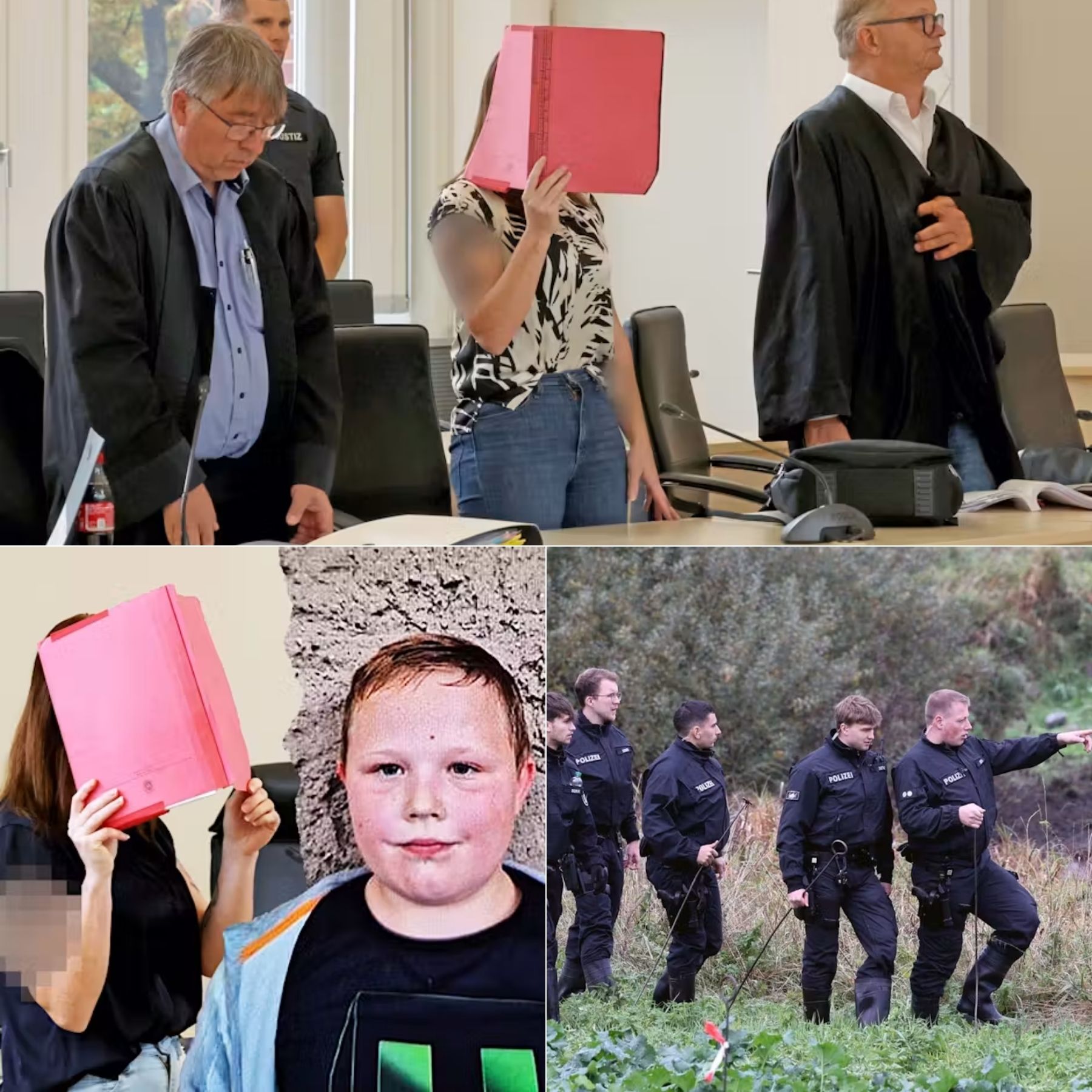
Viele schlimme Dinge sind im Prozess um den kleinen Fabian aus Güstrow bereits ans Tageslicht gekommen. Doch es gibt immer wieder Verhandlungstage, die einfach schwer zu ertragen sind. Erst am Mittwoch wurde es im Mordprozess wieder erdrückend für alle Beteiligten, denn eine Polizistin sagte aus. Die Beamtin war am Tatort, nachdem die Angeklagte Gina H. die Behörden alarmiert und den Leichenfund gemeldet hatte. Sie schilderte nicht nur das Verhalten von Gina H., sondern beschrieb auch auf schreckliche Weise die Leiche des kleinen Fabian.
Mord an Fabian: Gina H. rief am 14. Oktober die Polizei
An dem Tümpel bei Klein Upahl wurde der Junge am 10. Oktober 2025 mit mindestens sechs Messerstichen getötet, anschließend wurde seine Leiche hier verbrannt. Dafür verantwortlich soll Gina H. (30) sein, die Ex-Freundin und jetzt wieder Partnerin von Fabians Vater. Ausgerechnet sie fand die Leiche des Jungen in einem Gebiet, in dem weder sie noch der Junge laut Zeugen häufig unterwegs war. Sie alarmierte die Polizei – und wurde Wochen später wegen Mordverdachts festgenommen.
Sie schilderte auch, welchen Eindruck sie von Fabians Leiche hatte. „Es ist nicht nur der Umstand, dass der Junge gewaltsam zu Tode gekommen ist“, sagte sie bei der Vernehmung. „Entschuldigung, dass ich das so sage. Mein Eindruck war: Er wurde entsorgt wie Müll.“ Fabian sei dort einfach hingelegt worden, an den Rand des Tümpels. „Ihm wurde die letzte Würde genommen, die Ehre genommen.“
Während ihrer Aussage war die Beamtin zuvor schon in Tränen ausgebrochen – als sie beschrieben hatte, wie Gina H. sie zur Leiche führte. „Das war auch eine herausfordernde Situation. Tut mir leid“, entschuldigte sie sich.
Gina H. sagte, ihre Spuren seien am Todes-Tümpel
Gina H. sei am Tatort sehr redselig gewesen. „Ohne, dass ich großartig nachgefragt habe, hat sie erzählt, dass sie mit einer Freundin spazieren war, dass ihr Hund über ein Feld gelaufen ist“, berichtete die Polizistin. Welche Worte sie benutzte – ob Senke, Schweinekuhle oder Suhle – das wisse sie nicht mehr. Aber: „Sie sagte, dass sie auch dort unten war und jetzt ihre Spuren da seien.“ Eine solche Aussage war auch bei der Vernehmung eines anderen Polizisten im Prozess um Fabian aus Güstrow schon Thema.
Gina H. forderte nach Fund von Fabian einen Seelsorger
Laut Prozessbeobachtern habe sie bei den Schilderungen der Polizistin schlucken müssen. Gina H. hingegen habe emotionslos auf den Tisch vor sich geschaut. Für die 30-Jährige gilt bis zu einer Verurteilung durch das Gericht die Unschuldsvermutung.