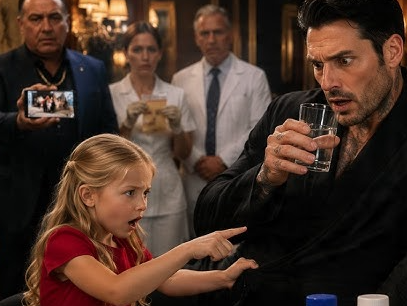
The trap held for eleven days. I played the role of a dying man—coughing in meetings, canceling appearances, accepting Ricardo’s “vitamins” with a grateful smile. All the while, Mateo and Sophia worked in the operations room beneath the east wing, decrypting files from Marco’s hard drive. The evidence painted a damning picture: Ricardo Moretti, the watchmaker, had been Romano’s sleeper for twenty-one years. He had poisoned my father. He had been poisoning me.
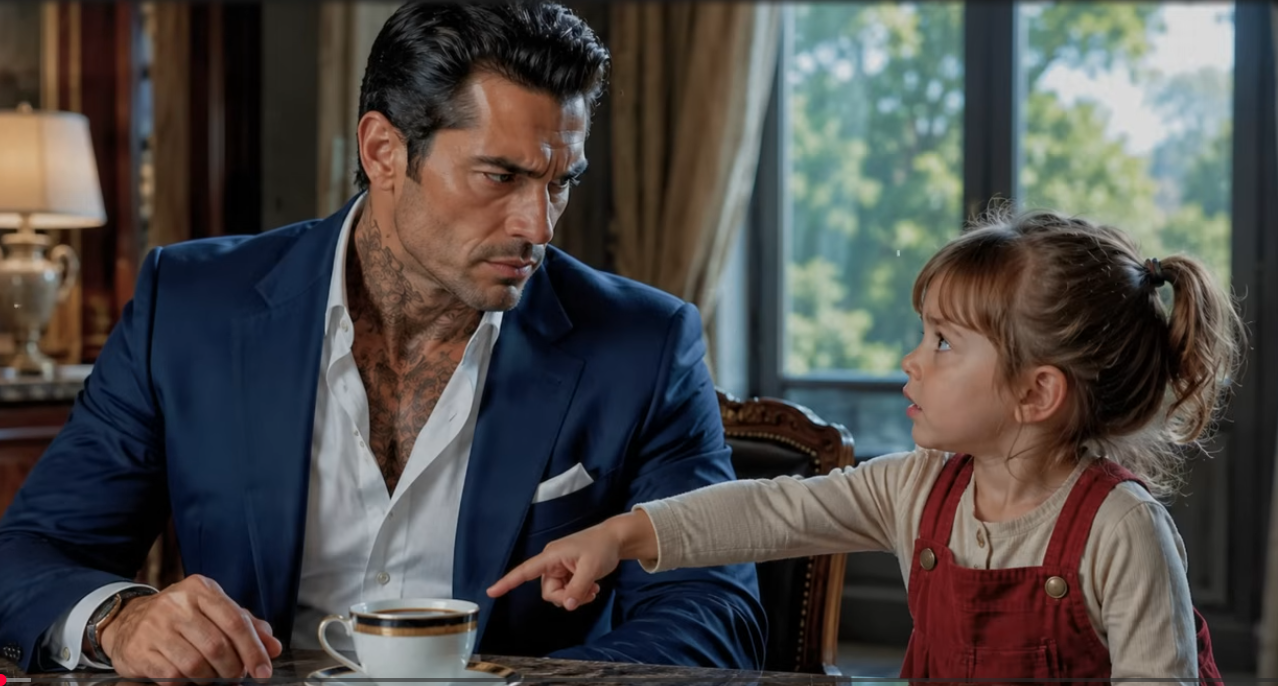
Then a single careless request by a junior accountant exposed the deception. Ricardo tested us, realized the game, and called Romano. At 2:47 a.m., the estate alarms screamed.
I was moving before the second alert. Gunfire erupted across the gardens. Lights died, generators kicked in, and the house became a battlefield. Mateo’s voice crackled over the radio: perimeter breaches on multiple fronts. I grabbed my weapon and ordered full defense, my mind already racing to the guest wing.
“Secure Sophia and Emma,” I barked. “Safe room. Now.”
The battle lasted forty-one minutes. Romano’s men hit hard and died hard. My fortress, built on sixteen years of paranoia, held. By 3:28 a.m., the last vehicles fled, leaving bodies among the hedges. I stood in the shattered front hall amid smoke and blood, receiving damage reports—seven wounded, two dead—when the cold realization hit. The attack had been too loud, too wasteful. A diversion.
“Mateo—the safe room. Confirm it now!”
I ran through the service corridor, boots hammering concrete. The steel door stood open, unlocked from inside. Empty. A juice box dripped onto the floor. In the center lay Emma’s one-eared rabbit.
My phone buzzed. A photo: Sophia bound to a chair, blood at her mouth, Emma clutched in her lap. Six words beneath it: You have something of mine. Trade. V.R.
Rage and fear fused into something colder than ice. I picked up the rabbit, brushed off the dust, and slid it inside my jacket over my heart. “Wake everyone,” I told Mateo. “Every soldier, every ally. We end this tonight.”
We traced the photo’s background using Marco’s ledgers. A decommissioned cannery on the river flats—twenty kilometers north, one of Romano’s hidden armories. We moved by water in the dead hour before dawn. Twelve men in black boats, engines cut, paddles silent. The perimeter fell quietly. Then breaching charges blew the doors.
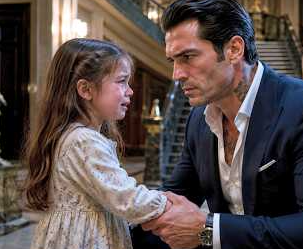
Chaos erupted inside—muzzle flashes, smoke, rusted machinery ringing under gunfire. I moved through it with Mateo at my shoulder, cutting down resistance. In a side room, Emma had been left alone. She later told me she whispered, “He’s coming,” over and over, holding onto the memory of building block towers with me on the rug.
In the main hall, I found Sophia bound beneath a work lamp. Behind her stood Ricardo Moretti, pistol in hand, wearing that same easy smile. “You were always faster than Victoria believed,” he said.
“Twenty-one years,” I replied, rifle steady. “Since before my father died.”
He admitted it without shame. My father had discovered his betrayal and paid with his life. Ricardo raised his pistol. I was faster. One shot, and the man who had stood at my father’s grave with a hand on my shoulder folded into the shadows.
I cut Sophia free and pressed Emma’s rabbit into her hands. “Nobody in this family gets left behind. Not anymore.”
The final wave of Romano’s guards poured in. Crossfire tore through the hall. Then, at the far end, Victoria Romano himself appeared—silver-bearded, immaculate even in defeat. His men fell. He stood alone, raised his pistol, and fired at me.
Sophia moved first. She threw herself forward. The bullet struck her high in the chest. She dropped. My return fire shattered Romano’s hand. What followed was not a fight. It was judgment. I left him alive, broken, to face the full exposure of Marco’s evidence.
I gathered Sophia in my arms, her blood soaking my sleeves, while Emma clung to my jacket. “Stay with me,” I whispered fiercely as we raced toward the boats. “You don’t have my permission to go.”
She survived surgery by two centimeters. In the private clinic, I kept vigil. I learned Emma’s favorite toast, braided her hair with clumsy fingers, and held Sophia’s hand through long nights of real talk. She told me about Marco. I asked about the man he was, honoring him instead of competing with his memory.
Five weeks later, in the same kitchen where Emma had saved me, I dropped to one knee. “I don’t want walls anymore,” I said, opening the velvet box. “I want mornings with you. Both of you. Every day.”
Sophia said yes through tears. Emma threw her arms around us, the rabbit squeezed happily between us.
Six months on, the estate is alive with crayon drawings, a pink bicycle by the garage, and laughter in the east garden where soldiers once fell. Guards step around block towers. Mateo loses at hide-and-seek. I make the coffee myself each morning.
Emma still asks with a clever grin, “Daddy, is your coffee safe today?” I kiss her curls, take a sip, and answer truthfully: “It is, Piccolola. Because now I know exactly who I can trust.”
The walls I built for sixteen years finally came down—not by force, but by the courage to let love in. Sometimes the smallest voice in the room is the one that saves you.