Brennan took them to the Four Seasons and booked a corner suite overlooking the Public Garden with two bedrooms, a full kitchen, and windows that let in real sunlight. Sutton stood frozen in the doorway, unable to step inside, while Indie ran in with delight, touching everything with wide-eyed wonder.
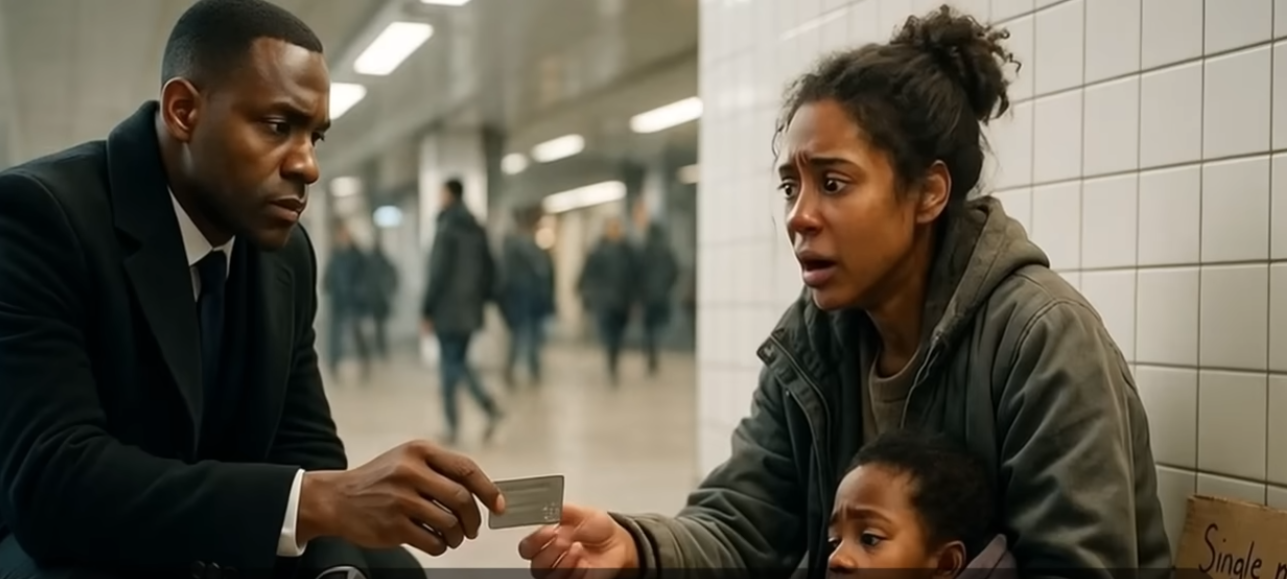
“It’s yours for as long as you need,” Brennan said gently. “No conditions. No expectations. Just safety. For both of you.”
Sutton finally entered, tears streaming down her face. “I don’t understand. Why are you doing this? What do you want from us?”
Brennan had been asked that question a thousand times in business. People always wanted his angle, his strategy. But standing there watching a mother see safety for the first time in months, he realized he didn’t have one.
“You reminded me what money is actually for,” he said quietly. “I’d forgotten. Or maybe I never knew.”
That night, Brennan made phone calls — not to lawyers or financial advisers, but to social workers, housing advocates, job placement specialists, and education coordinators. He used his name as a key to open doors that had been slammed in Sutton’s face for months. By morning, he had real options ready.
He returned to the suite at 9:00 a.m. with coffee and fresh pastries. Sutton looked transformed. Not in her clothes — she still wore the same worn ones — but in her posture. She stood straighter. Her eyes held something other than fear.
Indie was drawing at the table, humming a song about butterflies. Stella the elephant sat proudly beside her.
Brennan laid out the plan while Indie colored: a two-bedroom apartment in a safe neighborhood near good schools, subsidized at first but with a clear path to independence. Job training in medical coding and billing. Full healthcare coverage. Indie enrolled in first grade with before-and-aftercare.
Sutton listened in stunned silence, tears falling into her coffee. “I don’t know how to repay you.”

“You already did,” Brennan replied. “You showed me that goodness still exists in people who’ve lost everything. That desperation doesn’t automatically create monsters. That my father was wrong about everything that actually matters.”
Sutton shook her head, more tears falling. “I just bought what Indie needed.”
“Exactly,” Brennan said. “You had unlimited wealth for 24 hours and you chose love over greed. Do you have any idea how rare that is?”
Three weeks later, Sutton and Indie moved into their new apartment. Two bedrooms on the third floor of a clean, quiet building with a small playground out back. It wasn’t luxury, but it was theirs — walls that didn’t move, a door that locked from the inside, heat that worked.
Brennan helped carry boxes and assemble furniture from IKEA. He laughed when Indie insisted on supervising by placing Stella on every flat surface and declaring each room “decorated.”
“She’s very particular about interior design,” Sutton joked, watching her daughter arrange stuffed animals with complete seriousness.
Brennan didn’t mind. For the first time in years, he felt useful — not powerful, not wealthy, just present and human.

Months passed. Sutton completed her training program with honors and landed a stable job at Boston Medical Center with good benefits and regular hours. Indie thrived in first grade, making friends and bringing home drawings. No longer carrying the weight of homelessness on her small shoulders.
Brennan visited often — not as a benefactor checking on an investment, but as a friend. He attended Indie’s school talent show where she sang “Twinkle, Twinkle, Little Star” off-key but with complete confidence. He helped Sutton fix a leaking sink. He showed up on difficult days without being asked.
He learned things about himself he had never known: that he liked cooking simple meals more than expensive restaurants, that children’s laughter was better than boardroom applause, and that watching someone rebuild their life was more satisfying than watching his stock portfolio grow.
One evening, sitting on Sutton’s modest couch while Indie showed him her science project about butterflies, Sutton handed him back the credit card.
“I kept it,” she admitted, blushing. “I was scared that if I returned it, everything would disappear.”
“Keep it,” Brennan said, closing her fingers around it. “Emergency fund. For Indie. For unexpected expenses. For peace of mind. You’ve proven exactly what you do with it. You’ve proven I can trust you more than I trust most people I’ve known for decades.”
Sutton stared at the card, then at him. “You really mean that?”
“You’re the strangest billionaire I’ve ever met,” she said, laughing through tears.

“How many billionaires have you met?” Brennan teased.
“Just you,” Sutton admitted. “But I’m pretty sure you’re the strange one.”
“Good,” Brennan said. “I’d hate to be predictable.”
Two years later, Brennan stood at a podium in front of hundreds of people — investors, journalists, philanthropists, politicians. He was announcing something new, something that would have made his father turn in his grave: The Ashford Foundation for Family Stability. Comprehensive support for single parents facing homelessness — emergency housing, job training, childcare, healthcare, education support. No degrading applications. Just help extended with dignity.
Sitting in the front row, wearing a simple blue dress she had bought with her own paycheck and holding Indie’s hand, was Sutton Reeves. No longer homeless. No longer desperate. Just a mother who had survived hell and found her footing on the other side.
Brennan caught her eye during the speech. She smiled — the kind of smile that said everything words couldn’t: gratitude, pride, friendship, hope.
After the press conference, reporters swarmed with questions. But Brennan only cared about two people. He found Sutton and Indie outside near the fountain.
“You did it,” Sutton said, tears streaming down her face. “You’re really doing this. You’re going to help so many families.”
“We’re doing this,” Brennan corrected. “I want you on the foundation board. I want your voice, your perspective, your experience. I need someone who’s been there.”
Sutton looked shocked. “Me on a board? Brennan, I don’t have any experience with—”

“You have the only experience that matters,” Brennan interrupted. “You survived. You stayed good. You know exactly what families need because you needed it. You’re perfect for this.”
Indie tugged on Brennan’s sleeve. “Mr. Brennan, does this mean more people will get homes like we did?”
Brennan knelt down to her level. “Yes, sweetheart. Lots of families. Because your mom reminded me what helping actually means.”
Indie smiled and wrapped her arms around his neck in a fierce hug. “You’re like family now, right, Mama?”
Sutton wiped her eyes and nodded. “Right, baby. He’s family.”
Brennan felt something crack open in his chest — the ice his father had built around his heart for decades. Sutton had shattered every assumption he carried. She had shown him that wealth without compassion is empty, and that the richest thing a person can own is the ability to say, “I see you. You matter. I’ll help you stand.”
As they walked through Boston together — a billionaire, a single mother, and a little girl clutching a worn stuffed elephant — Brennan realized he had finally found what he had been searching for his entire life.

Not more money. Not more power. Not more control.
Just meaning. Just purpose. Just the knowledge that his existence made someone else’s life better.
The test he had given Sutton had actually been a test for himself.
And he had finally, miraculously passed.
End of Story