
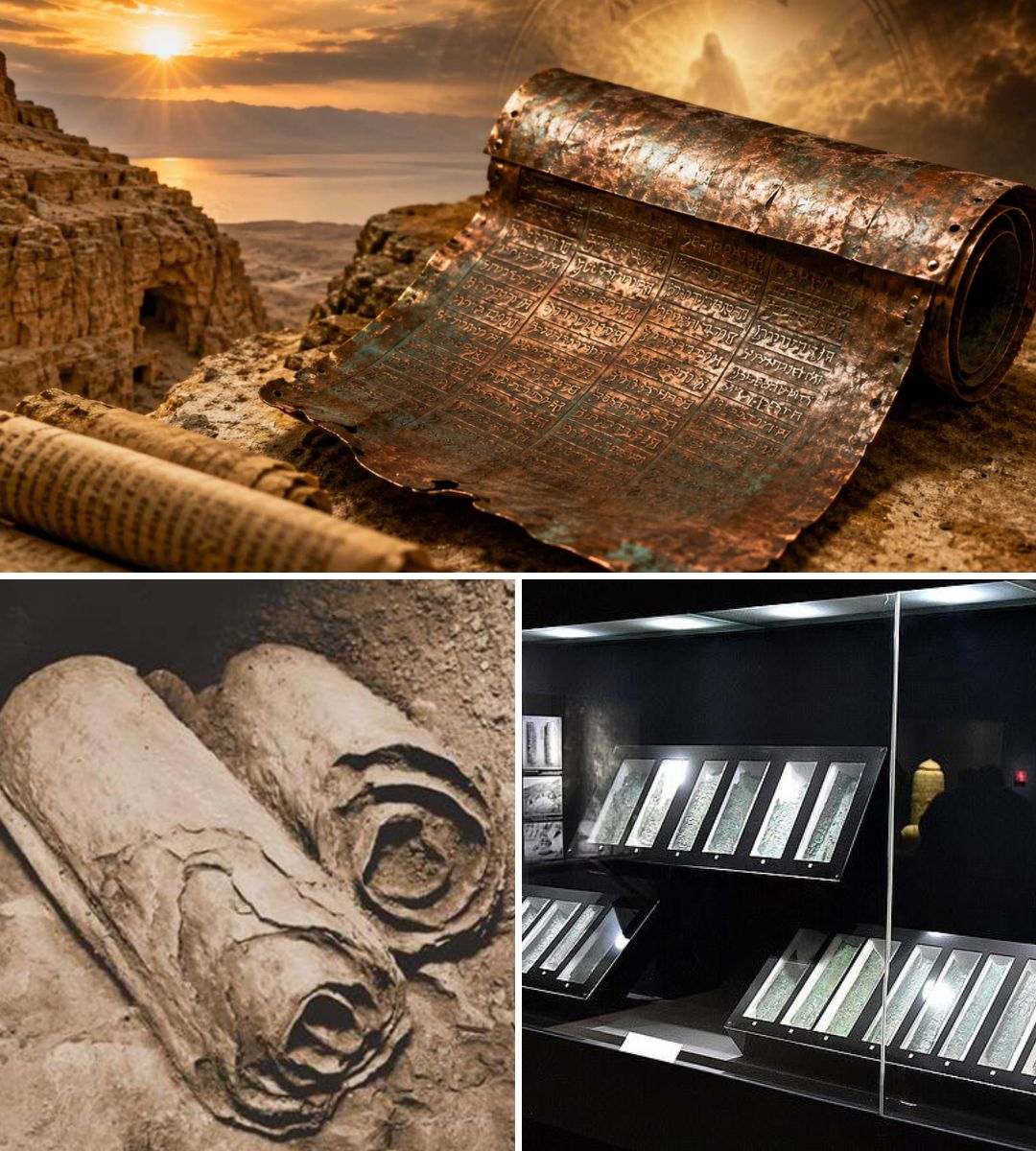
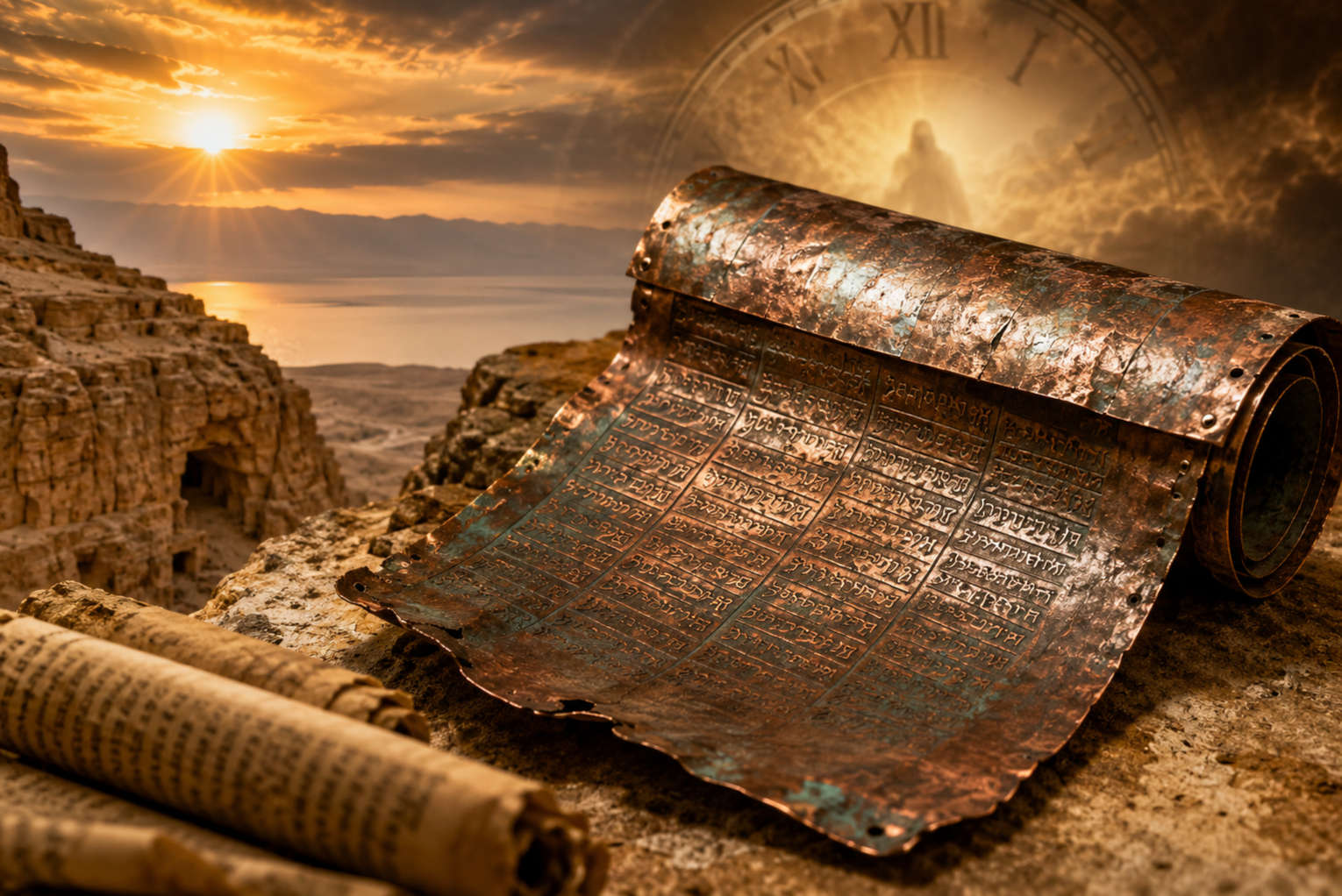
A remarkable discovery from nearly 2,000 years ago is reigniting interest in ancient treasures and the profound prophecies surrounding the biblical “End of Days.” The Copper Scroll, a unique artifact found in a cave near the Dead Sea, has captivated scholars and spiritual seekers alike, raising questions about its true purpose and meaning.
Unlike its parchment and papyrus counterparts, the Copper Scroll is inscribed on metal sheets, a choice that has left experts scratching their heads. Recent insights from archaeologist Shimon Gibson suggest that this enigmatic document may not be a treasure map as previously thought, but rather a covert financial ledger linked to the Bar Kokhba revolt, a fierce uprising against Roman rule.

Gibson posits that the valuables mentioned in the scroll could represent funds secretly amassed to support the rebellion, a theory that carries significant historical and spiritual weight. Discovered in 1952 in Cave 3Q near Qumran, the Copper Scroll stands apart from the other Dead Sea Scrolls, which primarily feature biblical texts and religious writings. Instead, it details 64 cryptic entries about hidden treasures buried across the land.
One intriguing entry mentions: “At Khorrebeh, situated in the valley of Achor below the steps leading to the east, [dig] forty cubits: a coffer [full] of money, the sum of which is the weight of seventeen talents.” Another entry claims there are “100 ingots of gold” in a funerary monument. For decades, scholars have debated whether these references point to actual treasures hidden before the Roman destruction of Jerusalem and the Second Temple in 70 AD, or if they hold deeper symbolic significance.
Now, the narrative is shifting towards a tumultuous chapter in Jewish history. The Bar Kokhba revolt erupted in response to Roman oppression, with many Jews viewing Simon bar Kokhba as a potential messianic figure destined to liberate them and restore Jewish sovereignty in Jerusalem. This period was steeped in apocalyptic fervor and the longing for divine intervention.

The Daily Mail highlights that this violent era has long been associated with expectations of a messianic deliverer. The Scriptures echo this sentiment, revealing humanity’s yearning for salvation amid chaos. The prophet Daniel spoke of kingdoms rising and falling, while Jesus warned that turmoil would precede His return. Yet, amidst this turmoil, He offered reassurance, stating in John 16:33, “In the world you will have tribulation. But be of good cheer. I have overcome the world.”
As archaeologists unveil more astonishing findings related to biblical history, the Copper Scroll’s mystery only deepens. Gibson theorizes that the scroll was never meant for casual reading, as its copper material would crack with repeated handling. Instead, it may have served as a permanent record meant for a select few, transforming it into a cinematic relic from an era marked by war, prophecy, and a quest for redemption.
Yonatan Adler, an expert in ancient Judaism, describes Gibson’s interpretation as “intriguing,” noting that discoveries like the Copper Scroll challenge researchers to think creatively. More than seven decades after its unearthing, this metal document remains one of archaeology’s greatest enigmas, intertwining themes of hidden treasure, secret funding for rebellion, and messianic hope.
While ancient Judea sought political saviors and earthly victories against Rome, the true Messiah has already come, offering a different kind of victory that transcends all earthly struggles. What other secrets might the Copper Scroll reveal about our past and the enduring search for meaning?


