From Selling Crack in the Projects to Becoming Hip-Hop’s First Billionaire: The Incredible True Story of Jay-Z

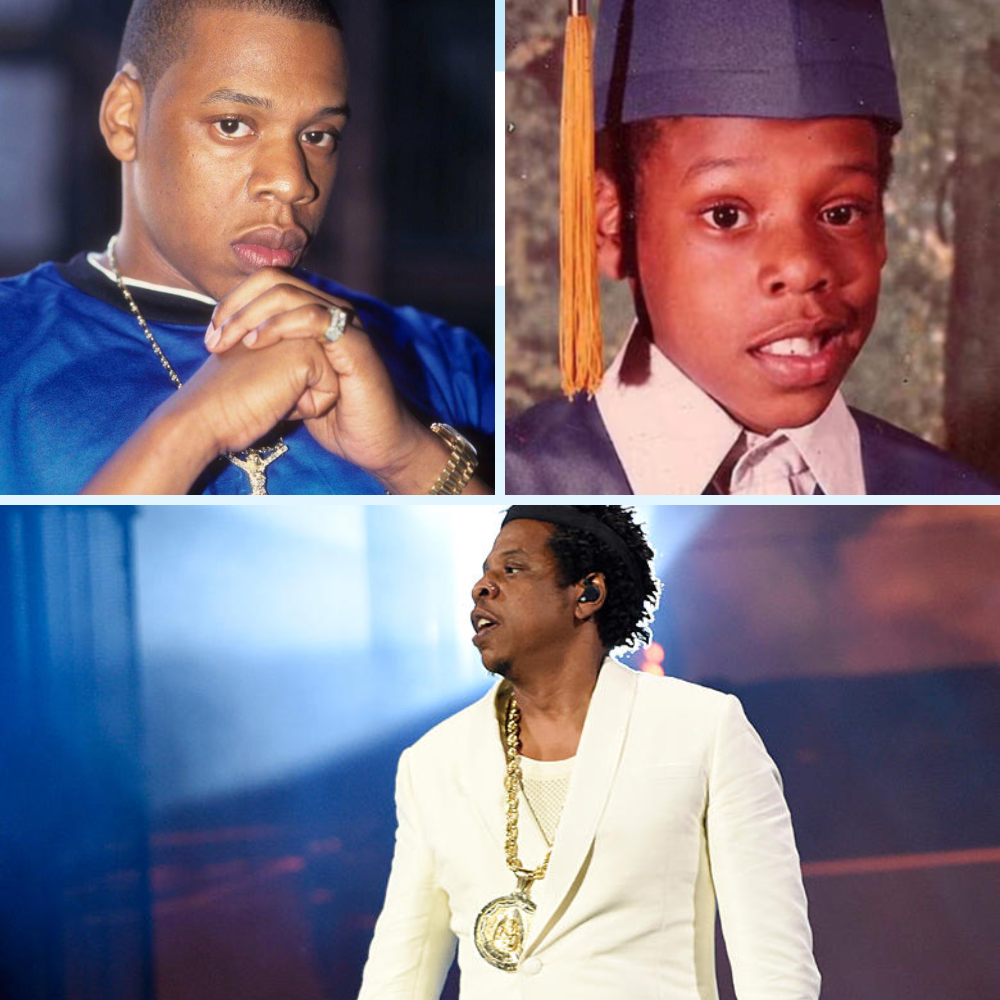
Born Shawn Corey Carter on December 4, 1969, in Brooklyn, New York, Jay-Z grew up in the dangerous Marcy Projects — a public housing complex in Bedford-Stuyvesant that was plagued by poverty, drugs, and violence during the crack epidemic. He was the youngest of four children. When Shawn was just 11 years old, his father Adnis Reeves abandoned the family, leaving his mother Gloria to raise four kids alone in harsh conditions. Money was extremely tight, and survival was a daily struggle.
Life in Marcy Projects was brutal. Jay-Z witnessed his first murder at age 9. He saw friends and neighbors lose their lives to gun violence and drugs. To help his mother put food on the table, Shawn started selling crack cocaine at just 13 years old. He built his own crew, moved product between New York, New Jersey, and Maryland, and lived the dangerous street life he would later rap about in vivid detail. He was shot three times as a teenager but survived.
Despite the chaos, music became his escape. At age 9, after watching another kid freestyle rap, Shawn picked up a pen and never put it down. He read the dictionary to expand his vocabulary and wrote rhymes on anything he could find — napkins, paper bags, even walls. His mentor Jaz-O gave him the name “Jay-Z,” inspired by the J and Z subway lines near his home.

Rejected by the Industry, He Built His Own Empire
Jay-Z took his demos to every major record label, but no one wanted to sign him. They said his music wouldn’t sell and he didn’t have the right image. Instead of giving up, he took matters into his own hands.
In 1995, together with Damon “Dame” Dash and Kareem “Biggs” Burke, he founded Roc-A-Fella Records. He sold his debut album Reasonable Doubt (1996) straight out of the trunk of his car. No fancy marketing, no big budget — just pure hustle. That underground grind turned into a rocket ship. Jay-Z went on to release classic after classic: The Blueprint, The Black Album, American Gangster, and many more.
He achieved historic numbers:
- 14 No. 1 albums on the Billboard 200 (more than Elvis Presley)
- 25 Grammy Awards
- Over 125 million records sold worldwide

The Business Genius
But Jay-Z didn’t stop at music. He became one of the smartest businessmen in entertainment history. He built:
- Roc Nation (a full-service entertainment company)
- Rocawear clothing line
- Armand de Brignac (Ace of Spades) champagne
- D’Ussé cognac
- Investments in Uber, Tidal, real estate, and sports (including part ownership of the Brooklyn Nets)
In 2019, Jay-Z officially became hip-hop’s first billionaire. Today, his net worth is estimated between $2.5 – 2.8 billion, with less than 4% coming from music. The rest is from smart, calculated business moves he learned from the streets.
In 2008, he married Beyoncé, forming one of the most powerful couples in entertainment. They have three children: Blue Ivy, Rumi, and Sir. Jay-Z has used his success to give back through the Shawn Carter Foundation, providing scholarships and support for underprivileged youth. He has also reconciled with his past, including his complicated relationship with his father.
The Real Message
Jay-Z’s story is one of the greatest rags-to-riches tales ever told. From selling crack in the projects as a scared teenager to becoming a self-made billionaire who owns his own destiny, he proves that where you start does not determine where you can finish.
He famously said:
“I’m not a businessman, I’m a business, man.”
And:
“The only way to change your story is to write a new chapter.”
Jay-Z turned every rejection, every loss, and every hardship into fuel. He bet on himself when no one else would. His journey reminds us that talent, relentless hustle, smart decisions, and unbreakable belief in yourself can completely rewrite your life — no matter how dark the beginning.
From the blood-stained streets of Marcy Projects to the highest levels of business and culture, Jay-Z stands as living proof that your past does not define your future.