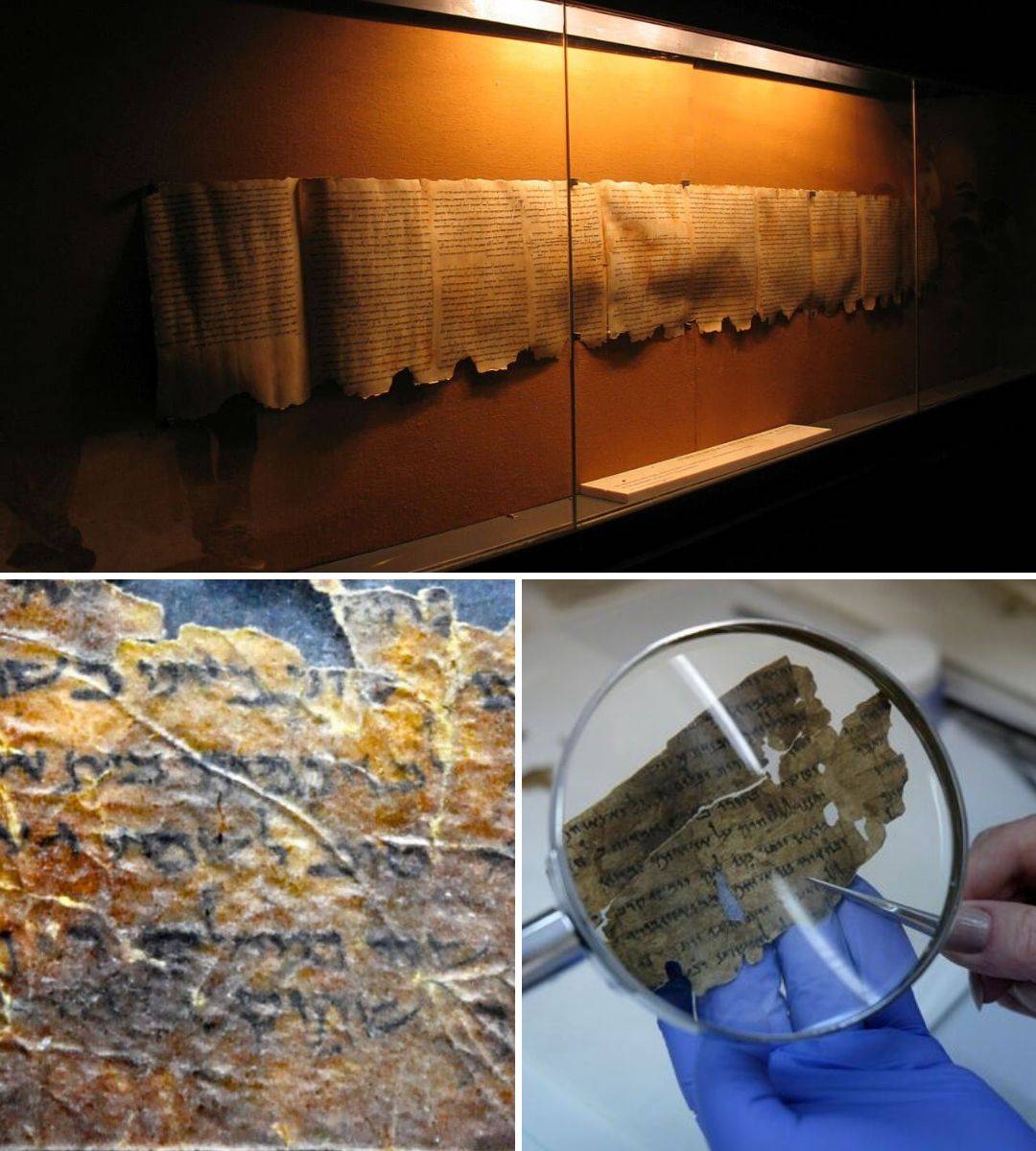

In a groundbreaking revelation that has captivated scholars and enthusiasts alike, a researcher has cracked one of the most elusive codes of the Dead Sea Scrolls. After over 70 years of intrigue, the mysterious ‘Cryptic B’ script has finally been deciphered, unveiling biblical texts that speak to the practices of an ancient community.
Emmanuel Oliveiro, a dedicated researcher from the University of Groningen in the Netherlands, has made history by deciphering the enigmatic script, which had puzzled experts since its discovery in the 1950s. His findings, published in the journal Dead Sea Discoveries, indicate that these writings contained familiar biblical passages rather than the forbidden knowledge many had speculated about.
Oliveiro’s focus was on two specific manuscripts, 4Q362 and 4Q363, the only complete examples of Cryptic B. This achievement comes decades after the successful decipherment of another code, Cryptic A, in 1955. The challenge was immense, as the manuscripts are composed of tiny, damaged fragments that made analysis difficult, raising doubts about whether decipherment was even feasible.

To tackle this monumental task, Oliveiro employed a blend of systematic analysis and what he describes as “intuition.” Drawing inspiration from Józef Milik, the original decipherer of Cryptic A, Oliveiro found that sometimes, a moment of distraction can lead to inspiration.
His initial theory posited that Cryptic B operated on a monographic substitution system, where each Hebrew letter was replaced with a unique symbol. With 22 letters in the Hebrew alphabet, the combinations are nearly infinite. However, Oliveiro narrowed down the possibilities by identifying repetitive patterns and comparing them with known Hebrew texts.
The pivotal moment came when he analyzed a five-letter word in manuscript 4Q362. Realizing he might be looking at the word “Israel,” he pieced together the signs, leading to a breakthrough that allowed him to decode much of the remaining text, although some symbols still pose challenges due to their rarity.

The manuscripts themselves reveal fascinating details. 4Q362 features 21 small fragments with letters drawn in fine ink, while 4Q363 contains larger letters and unusual spacing that raises questions about the text’s original format. The content is rich with biblical language, referencing “Israel,” “the sons of Judah,” and even a “tomb,” hinting at possible funerary themes.
In contrast, 4Q363 is more fragmented, with recurring phrases that are harder to interpret. The name “Benayahu” appears, but its significance remains unclear.
Oliveiro’s work suggests that these texts were not meant to hide heretical knowledge but served as a means of internal communication, perhaps to elevate the status of a select group within the Qumran community. The findings echo earlier observations about Cryptic A, indicating that the content aligns with familiar literature from the region.
While this decipherment raises new questions about the internal variations of the script and its connection to Cryptic A, it also highlights the enduring mystery of why these ancient texts were encoded in the first place.
As Oliveiro concludes, the true intrigue may lie not in the secrets revealed but in the very act of encoding messages that were deemed worthy of preservation. What other mysteries might these ancient scripts hold?