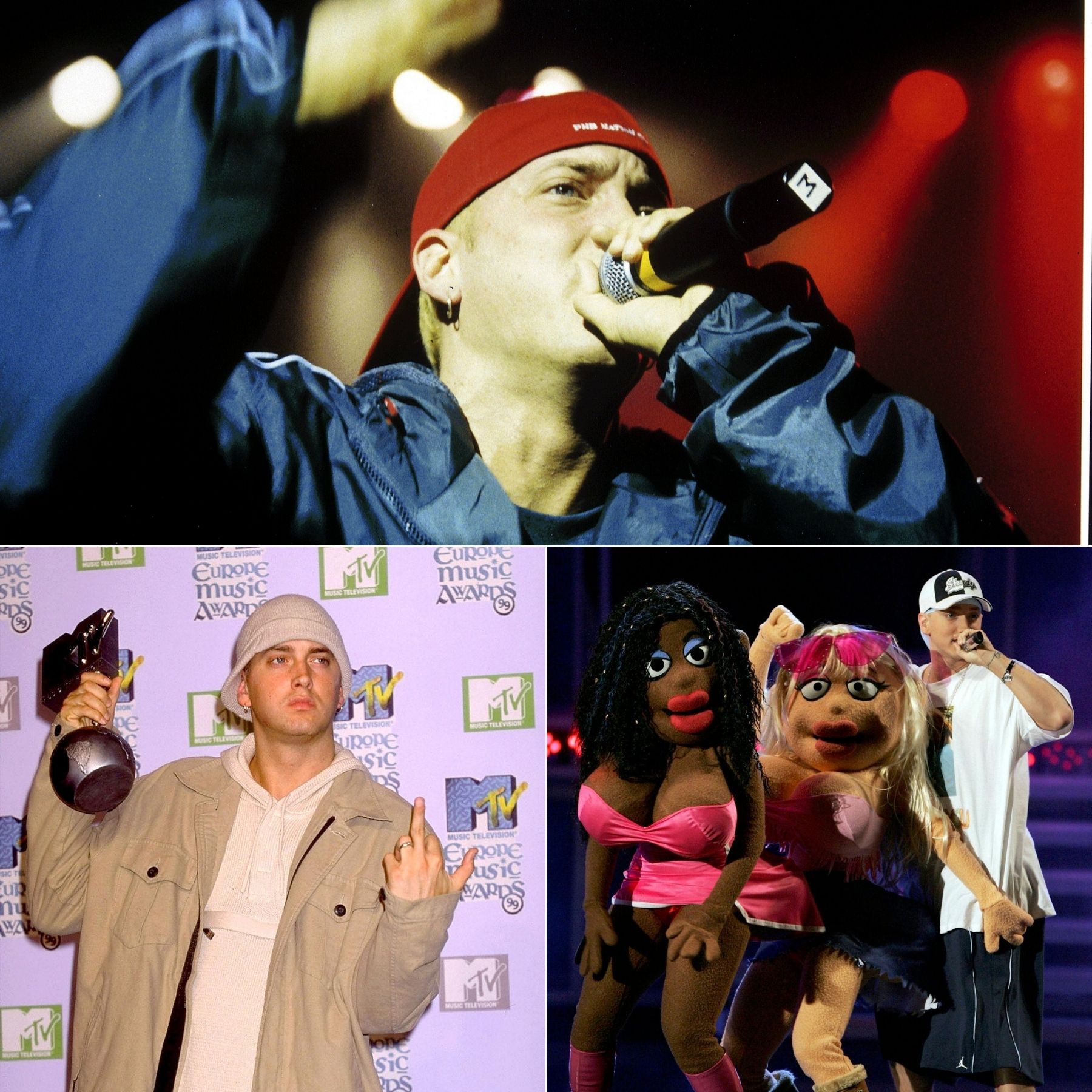
At the beginning of the 2000s, Eminem became one of the most successful — and controversial — artists in the world. Rising from Detroit’s underground rap scene, the rapper shocked audiences with brutally aggressive lyrics, dark humor, and violent storytelling that divided America. While millions of fans praised his creativity and honesty, critics accused him of spreading misogyny, glorifying violence, and attacking celebrities simply for attention.

Eminem first gained major attention after releasing The Slim Shady LP, an album that introduced his chaotic alter ego “Slim Shady.” The character was designed to be offensive, unpredictable, and outrageous. Songs featured graphic fantasies, insults toward public figures, and disturbing jokes that instantly triggered outrage from politicians, parents, and media organizations. Yet the controversy only made Eminem more famous.
His next project, The Marshall Mathers LP, turned the rapper into a global superstar. The album sold millions of copies in record time, but it also became one of the most criticized rap albums in American history. Advocacy groups condemned the violent language used in many tracks, especially lyrics involving women. Several organizations argued that his music normalized abuse and hatred, while radio stations faced pressure to censor certain songs.

One of the biggest controversies involved Eminem’s turbulent relationship with his former wife, Kim Scott. In multiple songs, he described fictional violent scenarios involving her, sparking accusations that he was encouraging domestic violence. Critics claimed the lyrics crossed the line between art and dangerous influence, while supporters argued they reflected emotional pain, satire, and exaggerated storytelling rather than real intentions.
Celebrities were another constant target in Eminem’s music. The rapper mocked singers, actors, and television personalities in interviews and lyrics, creating feuds that dominated tabloid headlines. Pop stars such as Britney Spears and Christina Aguilera were frequently insulted in his songs. Electronic musician Moby publicly criticized Eminem’s lyrics during award shows, leading to one of the era’s most talked-about celebrity feuds.

The controversy surrounding Eminem became so intense that politicians and activists debated whether his albums should face stronger censorship. Parent groups accused the music industry of profiting from violent content aimed at teenagers. Protesters gathered outside some award ceremonies demanding that television networks stop promoting his music. Despite the backlash, Eminem continued winning major awards, including Grammys, and his fanbase kept growing worldwide.
Supporters defended Eminem by arguing that his lyrics represented fictional characters and social commentary rather than real-life beliefs. They pointed out that hip-hop had long used shock value and exaggerated storytelling as artistic tools. Others believed critics were targeting Eminem more aggressively because he was a white rapper succeeding in a predominantly Black genre.
Over time, Eminem’s controversies became a defining part of his public image. Although many of his songs remain debated today, his influence on modern hip-hop is undeniable. He transformed rap into a global commercial force while simultaneously becoming a symbol of America’s ongoing arguments over censorship, artistic freedom, celebrity culture, and the limits of free speech in entertainment.

:max_bytes(150000):strip_icc():focal(773x354:775x356)/wedding-Stunna-4-Vegas-Monaleo-092225-134abc91d4714eb29004c484949d792b.jpg)
