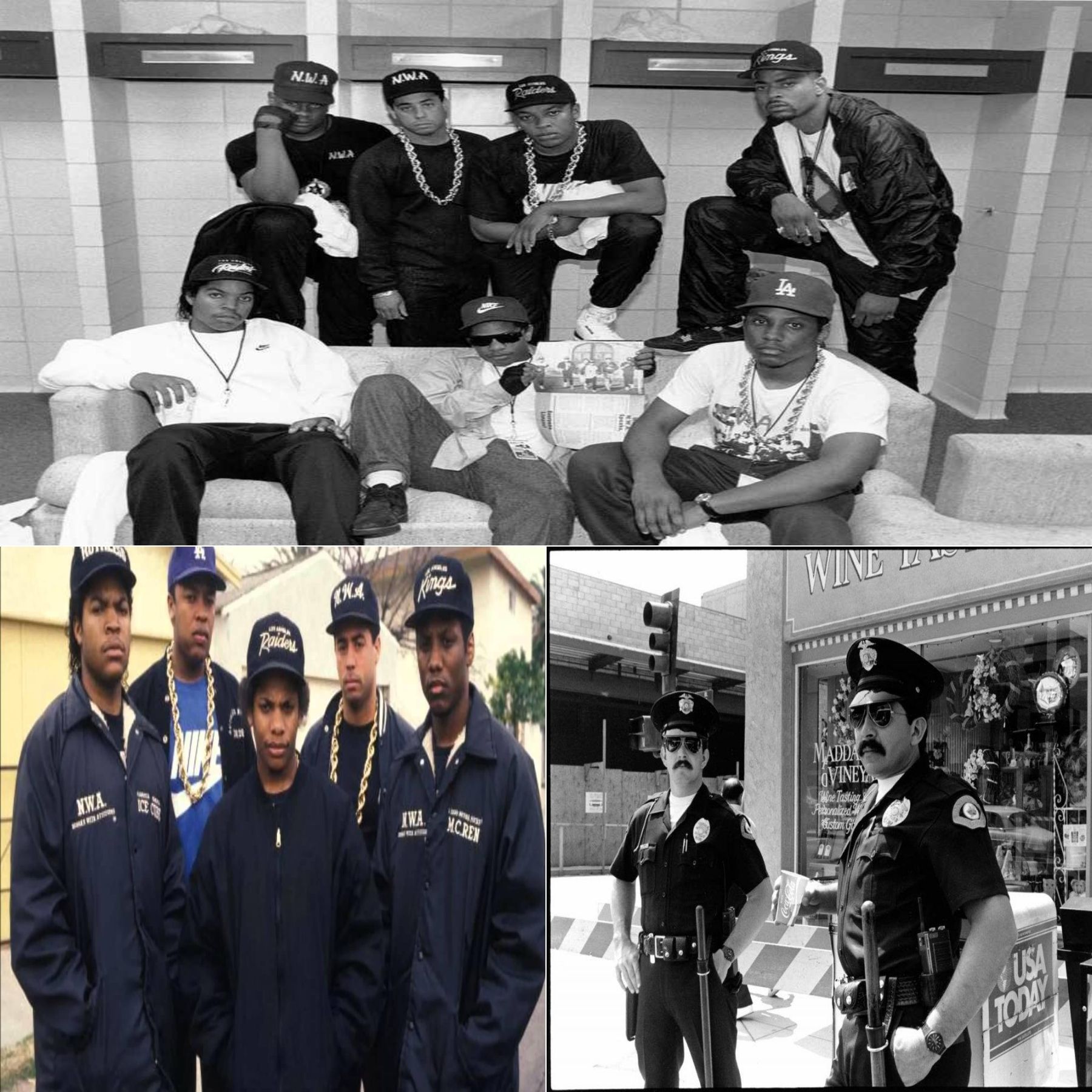
In the late 1980s, N.W.A became one of the most controversial groups in American music history. Formed in Compton, California, the rap group included future superstars such as Dr. Dre, Ice Cube, and Eazy-E. Their raw lyrics about police brutality, gang violence, and life in inner-city neighborhoods shocked mainstream America and transformed hip-hop forever.

The controversy exploded after the release of their album Straight Outta Compton, especially because of the song “F*** tha Police.” The track openly criticized law enforcement and described harassment experienced by young Black men in Los Angeles. While many fans viewed the song as a reflection of real-life frustration and discrimination, police organizations and political figures condemned it as dangerous and anti-police propaganda.
The backlash became national news when the Federal Bureau of Investigation sent a warning letter to the group’s record label in 1989. The letter expressed concern that the song encouraged violence against police officers. Although the FBI did not ban the music, the action was unprecedented and helped turn N.W.A into symbols of rebellion and free speech.

The controversy only increased the group’s popularity. Concerts became tense events, with some venues threatening cancellations and police closely monitoring performances. In certain cities, officers reportedly pressured organizers to prevent the group from performing the controversial song live.
Supporters argued that N.W.A was exposing systemic racism and police abuse long before those issues became widely discussed in mainstream media. Critics, however, believed the lyrics crossed the line into promoting hostility and violence.
Today, N.W.A is remembered as one of the most influential groups in hip-hop history. The FBI letter became a defining moment in the debate over censorship, artistic freedom, and the role of music in challenging authority in America.