
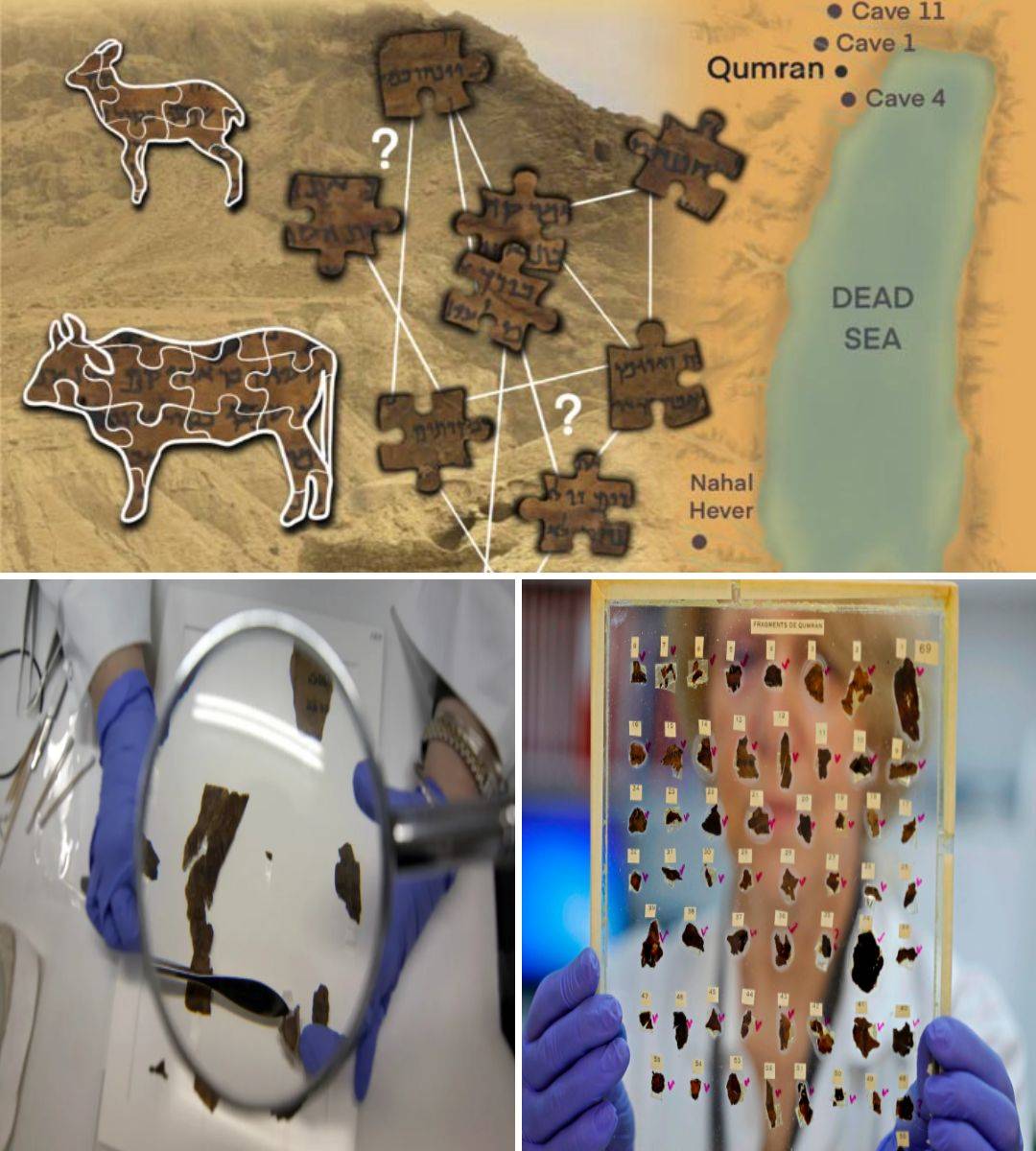

In a groundbreaking revelation, scientists have unlocked the genetic secrets of the ancient Dead Sea Scrolls, shedding new light on their origins and the historical narratives of Judaism and Christianity. This monumental discovery not only enhances our understanding of these revered texts but also poses intriguing questions about their fragmented past.
The Dead Sea Scrolls, a treasure trove of over 25,000 fragments from around 1,000 ancient manuscripts, were unearthed primarily in the Judean Desert between 1947 and the 1960s. Most of these scrolls were found in 11 caves near Qumran, along the Dead Sea’s northwest shore, dating back to the Hellenistic-Roman period, or the late Second Temple era, spanning from the third century BCE to the first century CE.

Professor Oded Rechavi, a prominent researcher from Tel Aviv University, emphasizes the significance of this discovery, calling it one of the most important archaeological finds in history. However, he points out the immense challenges faced by scholars: the scrolls were not discovered intact but rather in thousands of disjointed fragments, making their reconstruction a daunting task. Compounding this issue, many fragments were acquired through antiquity dealers, leaving their original contexts shrouded in mystery.
To tackle these challenges, Rechavi and his team embarked on an innovative journey, utilizing ancient DNA extraction techniques to analyze the animal skins used for the scrolls. Their forensic approach revealed that the majority of the parchments were made from sheep, a detail that had previously gone unnoticed. This discovery allowed researchers to infer that fragments made from the same sheep were likely related, helping to piece together the scrolls more accurately.
In a surprising twist, the team found two fragments of the Book of Jeremiah that were made from cowhide, contradicting earlier assumptions that they belonged to the same scroll. This revelation not only challenges previous theories but also suggests that the cowhide was transported from a different location, raising questions about the scrolls’ origins and the diversity of textual traditions during that era.

Professor Noam Mizrahi, another co-author of the study, notes that the existence of different versions of the same biblical texts in Qumran indicates a fascinating period of textual fluidity, contrasting sharply with the uniformity seen in later Jewish traditions. This finding suggests that the interpretation of sacred texts was a dynamic process, influenced by various sects and communities.
The research also uncovered insights into non-biblical texts, such as the Songs of the Sabbath Sacrifice, revealing genetic links between copies found in Qumran while highlighting the distinct nature of the Masada version. This suggests a rich tapestry of religious thought and poetic expression during a pivotal time in history.
While the DNA analysis has illuminated many aspects of the Dead Sea Scrolls, it also hints at the existence of additional undiscovered sites, as some fragments appear to have originated from locations beyond Qumran.
As the study continues to unfold, the implications of these findings are profound, inviting further exploration into the complexities of ancient texts and their impact on modern religious thought. What other secrets might the Dead Sea Scrolls still hold?


