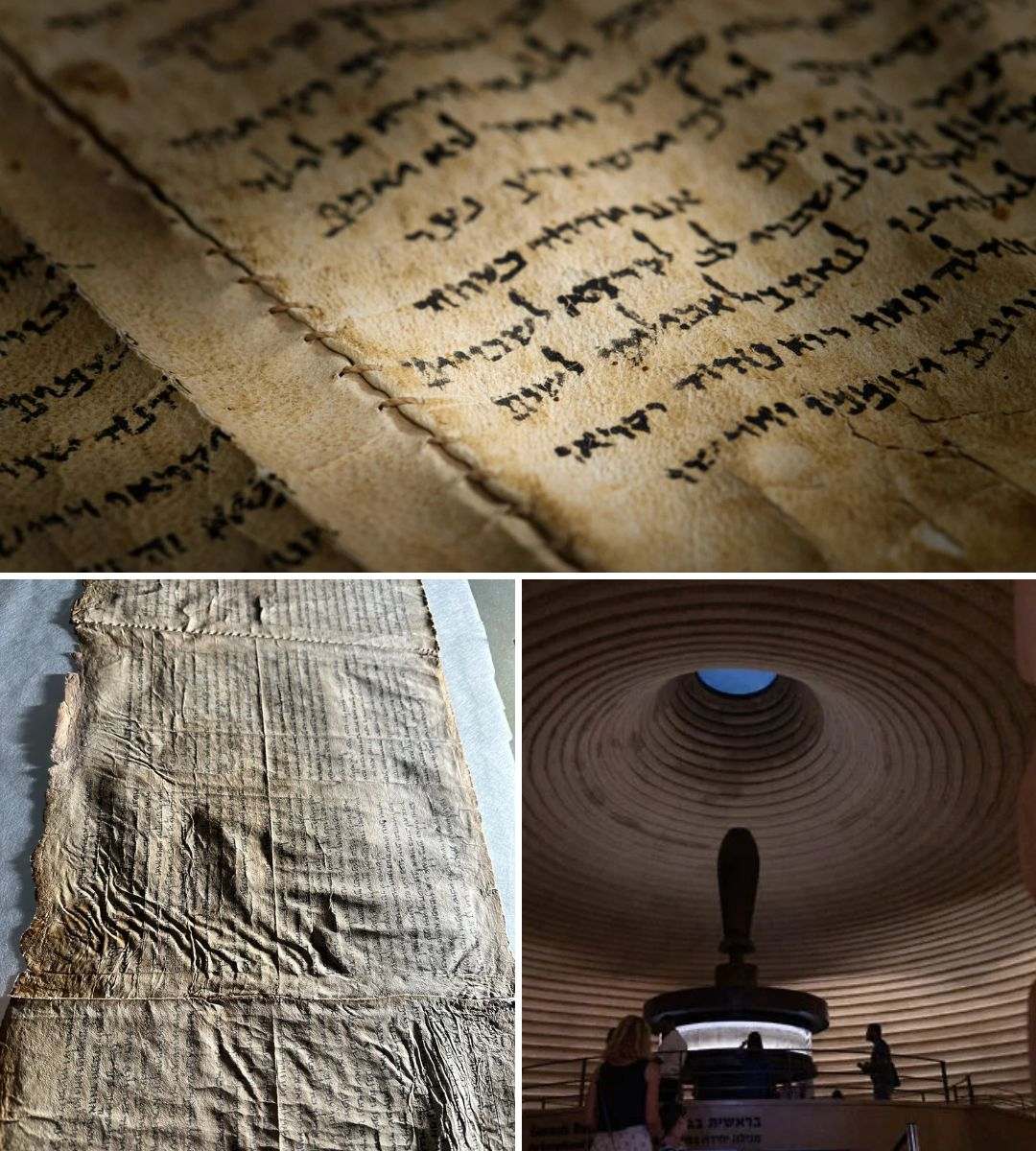
In a stunning revelation that could reshape our understanding of ancient texts, researchers have discovered that the Great Isaiah Scroll, the oldest nearly complete book of the Hebrew Bible, was originally crafted as two distinct scrolls. This groundbreaking insight sheds light on the scroll’s historical significance and its journey through time.

Dating back to the second century BCE, the Great Isaiah Scroll has long captivated scholars since its discovery among the Dead Sea Scrolls in Qumran in 1947. Measuring an impressive 7.34 meters (24 feet), this artifact has been the focus of intense study, with experts eager to unravel its mysteries.
For years, discrepancies between the scroll’s two sections—comprising chapters 1-33 and 34-66 of Isaiah—sparked debate among scholars. Some theorized that these differences were due to the scribe using various manuscripts. However, a revolutionary 2021 study utilizing artificial intelligence suggested that the scroll was likely penned by two scribes attempting to harmonize their writing styles.

Now, Dead Sea Scrolls authority Professor Marcello Fidanzio from the Università della Svizzera Italiana has taken this research further. He asserts that the differences between the scroll’s sections indicate they were originally separate entities before being combined later on. In an interview with The Times of Israel, Fidanzio expressed, “I can now show that the two parts of the scrolls present a different manufacture.”
Fidanzio’s findings will be detailed in his upcoming book, “The Great Isaiah Scroll: A Voice From the Desert,” which features contributions from leading scholars in the field. This work coincides with a highly anticipated exhibition at the Israel Museum, set to showcase the scroll in its entirety for the first time since 1968, with the opening slated for early 2026.

Throughout their research, scholars have noted various inconsistencies between the two sections. For instance, the first part contains a greater number of repairs, while the second section appears more pristine. Additionally, the first part features three blank lines at its conclusion, raising further questions about its creation.
Fidanzio meticulously examined the material characteristics of the scroll, noting that the first eight sheets exhibit both vertical and horizontal folds, while the last nine show only vertical ones. He commented on the scroll’s physical condition, likening the first part’s hide to that of an elderly person, while the second part resembles the smooth skin of a teenager.
Despite previous dating methods suggesting the scroll was created in the last quarter of the second century BCE, recent studies hint it may be even older, potentially dating between 180 and 100 BCE. Although radiocarbon dating has been conducted on both sections, the results revealed no significant discrepancies, leading to intriguing questions about their timeline.

Fidanzio emphasized that the two sections are not equal in length or character count, with the first part being notably shorter. This raises further inquiries into the scroll’s composition and the reasons behind its specific divisions.
As scholars continue to explore the fragments of Isaiah found among the Dead Sea Scrolls, they are left pondering whether the first part’s abrupt ending holds deeper significance. What could this mean for our understanding of the text’s interpretation? The quest for answers continues.