My phone buzzed on a gray Tuesday in April. I was on my lunch break, half-listening to a podcast, when I opened my banking app and saw the balance. $138. 74.

I refreshed the page three times. I called the bank in a panic, certain it was fraud. But the answer that came back was worse. “The funds were legally withdrawn by the co-signatory,” the rep said flatly.
Co-signatory. My parents. The account was a custodial trust in their names until I turned 25. My birthday had been two weeks ago.
They’d had the right to drain every last cent of the $80,000 my grandfather left me, and they did it without a single conversation. I called my mom first. She answered like it was any other day. “Hi honey, how’s work?
”
“Where’s the money? ”
A long pause. Then her voice changed. “Caleb, please don’t be dramatic.
We needed it for Sadie. ”
I couldn’t speak. She went on about Sadie’s credit cards, her student loans, her car about to be repossessed. My dad got on the phone next, cold and stiff as ever.
“You weren’t doing anything with it,” he said. “Sadie needed help. Families help each other. ”
“Why didn’t you ask me?
”
Silence. Then my mother whispered, “We knew you’d say no. ”
I hung up. Something cracked inside me that day, like the first line through ice.
For weeks, I didn’t text them. I threw myself into extra hours at work, stopped ordering takeout, and started rebuilding from nothing. I didn’t tell anyone what happened. I just told them I was saving for a down payment.
I didn’t see them again until Thanksgiving at Sadie’s house. She barely looked up from her phone when I walked in. My mom hugged me too tight. My dad gave me a stiff nod.
Dinner was small talk and awkward silences. Then my mom said, casual as anything, “You better buy a house soon, Caleb. ”
I nearly choked on my water. “Yeah.
If only I had the money. ”
Sadie laughed like she didn’t catch the tone. My dad cleared his throat. “You can always move back home if you need to.
”
I stared at my plate while my blood simmered. Then came Christmas. I went, still hoping for an apology, some acknowledgment, anything. Instead, I overheard Sadie across the room, telling a story and laughing.
“Caleb doesn’t mind,” she was saying. “He’s always been the quiet one. Easygoing. That’s why mom and dad knew they could count on him with the money situation.
”
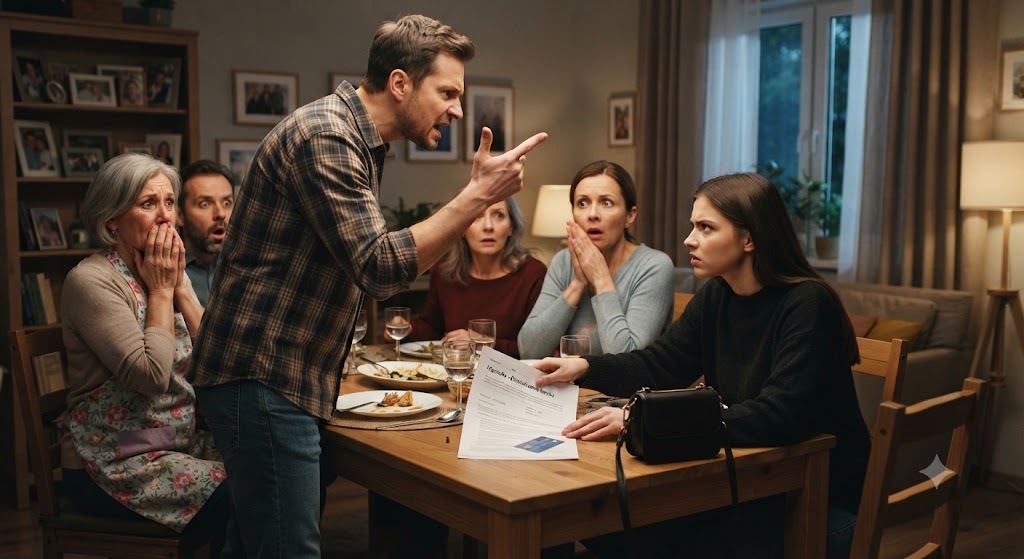
She was telling a room full of people about my inheritance like it was a funny family anecdote. I stepped into the group. “You mean the story where you took the money Grandpa left for me and gave it to Sadie like I didn’t exist? ”
A few people gasped.
My dad’s face turned to stone. “Caleb,” he warned. “Why is it funny that you stole from me? ”
Sadie’s smile vanished.
“It wasn’t stealing. It was helping. ”
“It was my money. I was going to buy a house with it.
”
My mom swooped in, wine glass in hand. “You’ve always been so good with money, Caleb. We knew you’d land on your feet. ”
I laughed then.
A long, bitter, exhausted laugh that silenced the room. Then I left without staying for dinner. I was the fallback plan. The spare key under the mat.
Useful when needed, ignored when not. I spent the rest of the holiday alone, microwaving leftovers and staring at the walls. Still, no apology. No text.
Nothing. Then the call came in early February. My mom, her voice tight. “Caleb, we need to talk.
We’re losing the house. ”
She told me the mortgage was upside down, my dad’s pension wasn’t enough, the interest rates were killing them. Then came the real question. “We need a place to stay.
Just for a while. ”
“What about Sadie? ”
A long pause. “She’s not an option.
”
Of course she wasn’t. Sadie had her perfect house and her perfect life. I was the one they expected to say yes, the one who always bent to their needs. But this time, I didn’t.
I told her I’d think about it. I hung up, stared at my phone, and started planning. Not how to save them. How to show them what they’d taught me.
That actions have consequences. That some doors, once closed, don’t reopen. And that the quiet ones remember everything. In March, she called again.
She didn’t ask. She told. “We’re thinking of driving up next Friday. Hope that works.
”
No question. No “do you have space? ” Just the assumption that I’d rearrange my life around theirs, like I always had. I didn’t respond.
Instead, I opened my laptop and started applying for new jobs. I’d been in IT support for years, stuck in a beige cubicle, repeating the same tired scripts. But I had skills. Systems, automation, data architecture.
I spent my evenings taking online certifications, sharpening my resume, rewriting my portfolio. Rejections came fast. Then more. But each one made me sharper.
I stopped scrolling social media, stopped waiting for texts that would never come. I started sleeping better. Some nights I’d walk the city just to breathe. In April, a startup called.
They wanted a back-end engineer. I aced the interview and got the offer a week later. Sixty percent more pay, remote, full benefits. I took it without hesitation.
In June, I moved. A two-bedroom this time, still modest, but mine. I signed the lease, hired movers, and didn’t tell my parents. I switched my number and only gave it to friends I trusted.
I disappeared. That summer was the first time I felt free. No more guilt texts, no awkward dinners, no expectations. Just silence.
And for the first time in my life, I found peace in it. I started running along the river path at sunset, clearing my head, remembering I was alive. By September, I’d been promoted. By October, I had a side project, a cloud optimization tool that started gaining traction.
A recruiter asked if I’d ever considered founding a startup. At first, I laughed. Me, Caleb, the backup plan, the forgotten son. But something inside me whispered, “Why not you?
”
I started drafting ideas. Wireframes. Business plans. I didn’t want a fortune.
I just wanted something that was mine, something no one could take from me with a signature or a guilt trip. One morning in November, my new phone buzzed with an unknown number. It was my father. “Caleb.
I know things have been tense. We might have made some mistakes. ”
“Might have,” I said flatly. He sighed.
“We’re in town. Things haven’t been easy. We’re staying at a motel. Ran through most of our savings.
Your mother’s been sick. We thought maybe we could talk in person. ”
I could hear rain in the background. I could have said no.
I wanted to say no. But instead, I gave them an address. Not mine. An empty parking lot next to a small park.
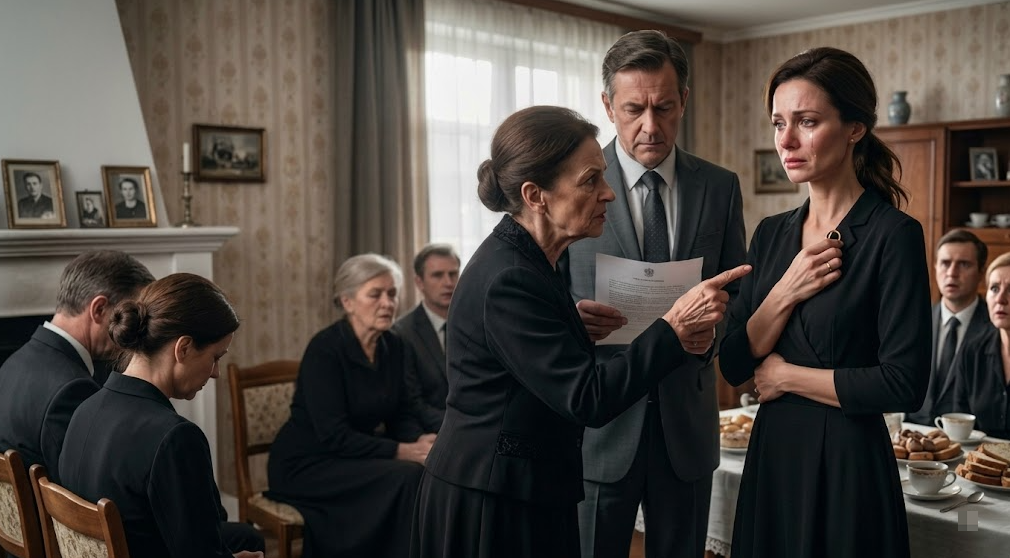
I showed up. They pulled in, their car sputtering. My mother stepped out first, hunched under an umbrella, thinner than I remembered. My father followed, his face unreadable.
“Thank you for coming,” my mom said, her voice trembling. “I’m not here to offer you a room,” I said. Her lips parted. My dad’s jaw clenched.
“We’re your parents. ”
“I was your son,” I replied. “Until you made me an ATM. ”
It started raining harder.
“Caleb,” my mom tried again, her voice cracking. “I’m making a call,” I said, pulling out my phone. “To who? ” She asked, panic creeping in.
I didn’t answer. I walked a few feet away, turned my back to them, and dialed. My fingers hovered over the screen for a moment before I pressed call. I wasn’t dialing the police.
And I wasn’t calling an Uber. I was calling someone who had been waiting for this just as long as I had. “Hey,” I said, voice calm despite the storm. “They’re here in the lot, just like we expected.
”
A pause on the other end. Then, “I’ll be there in ten. ”
I hung up. Behind me, I could feel them staring.
My mom called out first. “Caleb, who was that? ”
I didn’t answer. I turned, looked them both in the eyes, and said, “Someone who remembers what you did.
”
Three months earlier, I had started planning this night. It began when an old college roommate, Jacob, reached out. We’d bonded over cheap ramen and crashed servers back in the day. He’d since built his own property tech firm.
When we met for coffee, he pitched me an idea. “Property, land, development,” he said. “I’ve got investors. But I need someone who knows back-end infrastructure, automation, databases.
You had a knack for clean systems. ”
I told him I’d think about it. I did, for weeks. Not because I needed the money, but because I needed something bigger, a new identity, a legacy that wasn’t about surviving betrayal, but building something stronger in its place.
I started digging. First, I reached out to my grandfather’s estate lawyer. The letter Grandpa wrote wasn’t just sentimental. It was attached to the trust itself.
“This money is to be held for Caleb’s first home, and only to be released to him upon his 25th birthday. ”
That clause meant my parents hadn’t just made a selfish decision. They had committed breach of trust. I had grounds for legal action.
But I didn’t want a courtroom battle. I wanted a public reckoning. Every Sunday that summer, I met with Jacob and we worked on his property platform. While I built the backend, I searched public databases.
Then, in late August, I found something. My parents hadn’t lost their house because of the economy. They had leveraged it against Sadie’s boutique fashion startup, the one with the fancy Instagram and zero actual profits. They co-signed a loan to help her open a second location.
When it flopped because she didn’t pay taxes, didn’t understand payroll, didn’t track inventory, the bank foreclosed on their house. I pulled the public filings. The lien. The bank letters.
The auction date. They weren’t victims. They were victims of their own favoritism. And I had the proof.
Next, I contacted Tasha, Sadie’s ex-best friend. She knew the family. She’d watched Sadie get bailed out again and again, and she’d watched me get treated like a side character. “Sadie venting in our old group chat, bragging about how she convinced your mom to borrow your inheritance,” Tasha told me.
“She called it a rescue mission. Like you were hoarding it. ”
That was entitlement with a megaphone. I gathered everything.
Messages, court documents, bank records, business filings. I built a timeline, a full dossier. Then I posted it anonymously on a financial advice forum. “My parents spent my inheritance to bail out my sister.
Years later, they lost everything because of her again. ”
It went viral. People dissected every detail. Some doubted, others empathized, most were outraged.
It wasn’t about validation. It was about witnesses. And while my parents had no idea it was me, they soon felt the ripple. Sadie’s brand tanked.
People dug. Screenshots surfaced. A local blogger wrote a think piece on generational wealth theft. And Jacob read the post too.
“You wrote that, didn’t you? ” He asked over lunch. I didn’t answer. He just smiled.
“You ready for the next step? ”
The next step was why I made the call in that parking lot. Maya, Jacob’s business partner, had just closed on a dozen foreclosed homes across the city. And guess whose childhood house had recently been auctioned off for a fraction of its value?
She bought it. With funds I helped earn through the platform I built, through the life I rebuilt from the ashes of their betrayal. I wasn’t just going to deny them shelter. I was going to turn the last thing they thought they owned into a monument to their choices.
When I turned away from them in the rain, ending the call, they stood there soaked and silent, their plastic suitcases resting in puddles at their feet. My mom looked smaller than I remembered, eyes darting between my face and the building behind me. My dad was stone-faced, jaw clenched, not in anger, but in shame. “You didn’t have to call anyone,” my mom said softly.
“We’re not here to cause trouble. ”
“But you already did,” I said. A black Tesla rolled up. Maya stepped out in a sharp black coat and heels, holding an umbrella and a clipboard.
My mom’s expression shifted from hopeful to confused. Maya walked up to me, nodded politely, then turned to them. “Mr. and Mrs.
Archer. I’m Maya Calderon, managing director of Axis Living, the property group that recently acquired 412 Bentwood Avenue. ”
Their faces fell. “You bought our house?
” my mom whispered. “Correct. It was acquired via foreclosure auction three months ago and is currently undergoing renovation for a new use. ”
“But that was our house.
”
Maya said firmly, “It’s now part of a community housing project we’re building for displaced veterans. ”
I stepped forward. “I helped design the program,” I added. “Every room is being converted into living quarters, study spaces, or therapy offices.
The garage is becoming a workshop for career training. ”
My dad looked like someone had punched him in the stomach. “You’re turning our house into a shelter? ”
“No,” I said.
“Into something useful. ”
They didn’t say anything. The rain dripped steadily from my dad’s sleeves. My mom’s lips trembled.
“We came to you because we had nowhere else to go,” she finally said. “And I gave you what you gave me,” I replied. Silence. “That’s not fair,” she said.
“Neither was spending my $80,000 inheritance on Sadie and never telling me. Neither was laughing about it at Christmas like it was some joke. Neither was acting like I owed you loyalty after you treated me like the spare part of this family. ”
My dad opened his mouth, then closed it again.
Maya checked her watch. “We have a contractor coming in fifteen minutes. If you’re not off the property, I’ll have to call security. ”
They didn’t move.
“Don’t do this,” my mom pleaded. “We’re still your parents. ”
I let out a slow breath and nodded. “You are.
And I’m still your son. The one you never really saw. The one you only turned to when you had nothing left. ”
I reached into my coat pocket and handed them an envelope.
My mom took it with trembling hands. Inside was a cashier’s check for fifteen hundred dollars. “It’s not a home,” I said. “But it’s enough for a hotel and a bus ticket.
I’m giving you this not because I owe you anything, but because I’m not like you. ”
Tears welled up in her eyes. My dad didn’t say a word. “After this, we’re done.
No more calls. No more surprises. You made your choices, and I made mine. ”
I turned to walk away.
“Caleb,” my father said. I paused but didn’t turn. He spoke quietly, like someone admitting something he’d denied for years. “We were wrong.
”
The rain drowned the rest. I kept walking. A year later, the community center opened its doors. The old house was unrecognizable.
Fresh paint, solar panels, ramps for accessibility, and a new plaque out front with the name I’d chosen. The Archer House for Renewal. It wasn’t about them. It was about reclaiming the name they tried to stain and using it for something good.
I gave a short speech at the opening. “I was once the quiet kid in the background of every family photo,” I said. “The one who was easy to ignore, easy to use. But sometimes the ones who are silent the longest are the ones who hear the most and remember everything.
”
That night, I walked the old hallway where my childhood bedroom had been. It was now a reading room. A boy no older than ten sat cross-legged on the floor, flipping through a book on robotics. He looked up at me and smiled.
“Hey,” he said. “They said you made this place. ”
I smiled back. “Yeah, I helped.
”
He nodded and turned back to his book. I stood there for a long time, just listening to the silence. But this time, it didn’t feel lonely. It felt earned.
Sometimes the best revenge isn’t destruction. It’s transformation. And sometimes the strongest voice is the one that finally decides to speak.