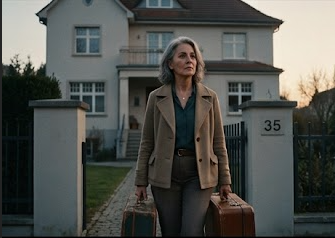
I was 26 when my father called me a mistake in front of fifty people. That wasn’t what hurt the most. It was how everyone laughed along. Growing up, I was the youngest of three, the surprise baby my parents never planned for.

My brother Josh was five years older, the golden boy who went straight into my dad’s company and married his high school sweetheart. My sister Lily was the free spirit who turned Instagram into a career. And me, I was the peacemaker, the one who stayed quiet, got decent grades, and never rocked the boat. I thought if I stayed in my lane long enough, I’d earn a little respect.
But in our house, love was a currency, and I was always overdrawn. The reunion started with a group email from my mom, all caps and exclamation points. She’d rented a big cabin in the mountains for the whole family. I almost didn’t go.
The last family gathering ended with my uncle asking if I still didn’t have a girlfriend and everyone laughing. But guilt is powerful, so I went anyway. The cabin was massive, three stories of rustic fantasy. I parked my used Honda Civic between Josh’s new Escalade and Lily’s leased Tesla.
I worked late the night before, caught a 4 a. m. flight with a layover in Detroit, and hadn’t slept. Still, I smiled and made myself useful.
I carried coolers, grilled burgers, took the little cousins on a hike. I did what I always did. Saturday night hit peak chaos. Fifty people packed into the backyard, kids running around, adults getting tipsy on boxed wine.
My mom wore a floral apron she didn’t need and kept announcing, “This is what family looks like! ” every fifteen minutes, like she was trying to convince herself. That’s when my dad decided it was time for speeches. He’d had a few drinks.
His cheeks were red, and he was swaying just a little. He stood on a wooden bench and clinked his glass with a fork. “All right, all right. Can I get everyone’s attention for a minute?
”
People quieted down. Phones came out. My brother looked smug. My sister struck a pose.
I stood off to the side, sipping my soda, expecting a harmless speech about memories and time flying. Instead, my dad stretched one arm behind my back and pulled me forward like he was about to give me an award. “And this guy,” he said with a loud chuckle. “This guy right here.
”
I smiled awkwardly. “This one’s our family miracle,” he said. “Well, more like a mishap that turned out all right in the end. ”
Laughter rippled across the crowd.
“Yep, the mistake we kept. But hey, he didn’t end up in jail or anything, so that’s a win, right? ”
More laughter, louder this time. My uncle nearly spit out his drink.
My aunt clapped. Even my brother snorted into his glass. Only a few people looked uncomfortable. My cousin glanced at me and mouthed, “I’m so sorry.
” But she didn’t say it out loud. I didn’t laugh. I didn’t say anything. I just stepped away slowly and walked back into the house.
No one followed me. I don’t think they even noticed I was gone. Upstairs, I sat on the edge of the guest bed and stared at the wall. I could still hear them laughing through the windows.
I wasn’t angry yet. It was something heavier, like being twelve again, overhearing my parents argue about money and hearing my dad say, “Well, if we didn’t have to pay for Connor’s stuff. ” I was the footnote in a family that always had a headline. I didn’t say goodbye.
I didn’t pack anything but the essentials. I got in my car, turned off my phone, and drove. I crossed two state lines before I even looked at a map. I ended up in Portland, Oregon, of all places.
I’d never been before. I just picked a spot where no one would think to find me. I got a new phone, a new job, a new apartment. No social media.
I didn’t tell anyone where I went. Most of the messages that came in just said, “Where’d you go? ” as if they didn’t know exactly why. For a while, it worked.
I built a life out there, small, quiet, peaceful. I joined a climbing gym. I got into photography. I made friends who knew nothing about my family.
I even started dating someone. I felt like I was breathing fresh air for the first time in years. Until two years later, when I walked out of my apartment and saw a man sitting on the hood of a rented car across the street. Middle-aged, business casual, holding a folder.
I didn’t know him, but I recognized the look. Private investigator. And just like that, the past was clawing its way back into my life. He slid a manila envelope under my door with a note that read, “Connor, your family just wants to talk.
Please read. ” I threw it in the trash, then walked three blocks to throw it in a different dumpster. The next morning, he was gone. But the door was cracked now, and memories were pouring in like rain through a broken seal.
I started checking my old email account again. Hundreds of messages, most unread. Are you okay? Please come back.
Your cousin’s wedding is in June. We’re worried. But one subject line made me stop scrolling. “Dad had a stroke.
”
I hovered over it for a long time. The preview line read, “He’s okay now, but it was serious. And he keeps asking about you. ”
That night, I didn’t sleep.
I kept going back and forth. I’d made my escape. I’d rebuilt. But what if I’d gone too far?
What if walking away without a word wasn’t strength, but cowardice? The next morning, my phone rang. A number I didn’t recognize. I declined.
It rang again thirty seconds later. I let it go to voicemail. Then a text came through. “Connor, it’s Lily.
Please talk to me. I’m not like them. ”
I stood there for five minutes staring at the screen. Then I turned my phone off and threw it in a drawer.
About a month later, Lily showed up outside my building, wearing oversized sunglasses and holding a to-go coffee. She smiled. “Hey, stranger. ”
I didn’t smile back.
“How the hell did you find me? ”
“I didn’t. Josh did. He hired someone.
”
We ended up sitting in a coffee shop two blocks down, across from each other in a booth near the window. She looked tired, not fake happy like she usually was at family gatherings. “I just wanted to see you,” she said. “You didn’t even say goodbye.
”
“Didn’t think I needed to. ”
“That’s not fair. ”
“Neither was calling me a mistake in front of fifty people. ”
She looked down.
“Dad’s sick. He’s not doing great. The stroke hit harder than we thought. He talks about you.
Keeps asking where you went. Says he didn’t mean what he said. ”
I laughed bitterly. “He meant it.
He just didn’t mean to say it out loud. ”
“Maybe, but Connor, we’re family. ”
I pushed back from the table. “No, we’re relatives.
That’s not the same thing. ”
Three days later, I got a certified letter from my parents’ lawyer about something called a “conditional family trust restructure agreement. ” I ignored it. Two weeks after that, Josh showed up.
I saw him walking up the stairs to my building, opened my window, and yelled, “Leave now. ”
He looked up, smug as ever. “Come on, man. Don’t be a child.
”
“You don’t get to call me that. You never flew across the country for me before. Why start now? ”
“Dad wants to make things right.
”
“Tell him he should have done that before he humiliated me. ”
Josh laughed. “You’re seriously still hung up on that, dude. You’ve always been sensitive.
”
The words hit like a slap. “You’ve always been sensitive. ” That was the phrase I’d heard my whole life. Anytime I pushed back, I wasn’t defending myself, I was too weak to take a joke.
I slammed the window shut and walked away. That night, someone broke into my car. Nothing was missing, but everything had been gone through. I filed a report, changed my locks, and installed a security camera.
I couldn’t prove it was them, but I didn’t need to. The next letter was from my dad. Handwritten, shaky. He apologized, kind of.
Said he missed me, didn’t want to die with bad blood between us. There was a check enclosed, ten thousand dollars. I didn’t cash it. I ripped it in half.
Two days later, another letter arrived, this one from Josh. It wasn’t sentimental. It was business. “If you don’t come home soon,” he wrote, “the company and the estate will pass fully to me.
You will be left out of the new documents. We tried to give you a chance. Don’t expect another one. ”
I stared at the words for a long time.
It wasn’t about family anymore. It was about power, control, ownership. And they were dangling it over my head like a bone in front of a dog. What they didn’t know, what they’d never bothered to ask, was that I didn’t want the money.
I never had. What I wanted was respect, autonomy, peace. But now they were threatening that too. And that changed everything.
Because if they wanted to make this a game, I’d play quietly, strategically, and when I made my next move, it would be one they’d never forget. I hit my lowest point not long after Josh’s letter arrived. I stopped leaving my apartment unless I had to. I’d come home from work, heat up something frozen, and stare at the wall.
I questioned everything. Why had I left? Why hadn’t I screamed back that night instead of slipping away like a shadow? Part of me felt like a coward.
Another part knew that silence had always been my sharpest weapon. But at that moment, I didn’t feel powerful. I felt exhausted. Then one night, something cracked.
It was raining hard, that cold sideways Portland rain that makes your bones ache even through a jacket. I was walking home from the grocery store when I saw a little bookstore on the corner, a flickering neon sign that just said “OPEN. ” I ducked inside to dry off. It was warm and quiet, and it smelled like cedarwood and old pages.
I wasn’t looking for anything in particular, but my eyes landed on a thin paperback tucked between two bigger titles. “The Gift of Being Overlooked. ” I picked it up and flipped through. It was a collection of short essays by people who’d been written off by family, society, whoever, and had gone on to quietly build lives that mattered.
Not loud success. Just meaning. I bought the book, read it in two days, and something shifted. I realized I’d been treating my life in Portland like it was a pause, like eventually I’d be forced to hit play and return to the world I’d left.
But what if this wasn’t the pause? What if that old life was the false start? I wasn’t a failure. I wasn’t broken.
I wasn’t the mistake they kept. I just hadn’t started yet. So I started, slowly, quietly, deliberately. I left my analyst job and went full-time as a freelance photographer.
Weddings, local events, portraits. I didn’t have the best gear, but I had an eye, and I cared. Word of mouth spreads fast when you actually show up on time and treat people like humans. I joined a local co-working space filled with people building things.
That’s where I met Mara. She was a UX designer who always wore mismatched socks and drank some kind of horrifying green juice. We were desk neighbors. She made me laugh.
I made her playlists. One night we stayed late working, and she looked up from her laptop. “You ever think you’re here for a reason? ”
“Like, in Portland?
”
“No, I mean here. Alive. Doing what you’re doing. ”
I said, “Mostly I just feel lucky to be out of the wrong place.
”
She smiled. “That counts. ”
We started dating not long after. She didn’t try to fix me, didn’t pry.
She just saw me. And for someone who’d grown up feeling like wallpaper in his own life, that was a bigger deal than I could explain. Around that time, I got serious about my own project. It started as a blog called “Second Draft.
” Stories, reflections, photos from my shoots. People started reading, subscribing, sharing. One post went kind of mini-viral. It was titled “When You Realize You Were the Family Scapegoat.
” I didn’t name names. I didn’t even say it was my story. But it struck a nerve. Hundreds of comments from strangers saying, “I thought I was the only one.
”
That’s when I realized my story wasn’t unique. It was just unspoken. And speaking it out loud, that was power. I bought better gear, upgraded my website, started taking on clients who aligned with my values, nonprofits, small businesses trying to do something meaningful.
I wasn’t rich, but I wasn’t struggling either. I had purpose. And for the first time in my life, I didn’t feel like I had anything to prove to anyone. Which is why when the final letter came, I didn’t cry.
I didn’t freeze. I didn’t even get angry. I just read it. It was from my mom.
Short, handwritten, shaky but legible. “Your father is dying. Please come home. ”
That was it.
Six words. I sat with the letter for a long time, read it again, then again. And I realized something. They weren’t reaching out to fix what they broke.
They were reaching out because they feared being forgotten. And I had already forgotten them. But this time, I wouldn’t just disappear. This time, I wouldn’t run.
This time, I’d show up. Not because they wanted me to, but because I had something they didn’t expect. Power. I let the letter sit on my desk for a full week.
Every time I walked past it, I caught myself glancing at the slanted handwriting, the way she didn’t even sign it “Love, Mom. ” Just “Please come home. ”
Home. That word had never felt less accurate.
Still, I knew I’d go. Not to make peace. Not to forgive. But because I needed to see how much had really changed, whether they were still clinging to the narrative that I was the problem.
And if I was being honest, part of me wanted to look them in the eyes and let them see what they’d thrown away. But I wouldn’t go unprepared. If this was the endgame, I’d play it like chess. Quiet, deliberate, three moves ahead.
They didn’t know what I’d built in those two years. They didn’t know I wasn’t scared of them anymore. And most importantly, they didn’t know I had something they never expected. Leverage.
It started with the business. Westbrook Industrial, a midsize manufacturing firm based in Ohio. My grandfather started it after World War II. My dad expanded it.
Josh was set to inherit it. I’d never shown interest in it growing up, which suited them fine. I was the artsy one, the dreamer. But I’d been paying attention quietly.
Over the years, I’d absorbed more than they realized. When I got that last letter, I decided to dig. The public business registry took me less than ten minutes. Westbrook Industrial was still privately held, but they’d taken on some investors in the last decade, minority stakeholders listed in dry, boring legalese.
One name stood out, a holding company based in Chicago. I knew that name. I’d done freelance work for a startup that was later acquired by them. That was my opening.
I reached out to an old contact, Sarah, who now worked at the holding company’s venture arm. She remembered me. We caught up, and I asked if she knew anything about Westbrook Industrial. She paused.
“Is that your family’s company? ”
“Long story. Let’s just say I might be involved soon, and I want to know what I’m walking into. ”
She laughed.
“Smart. Honestly, we’ve been a little concerned. They’ve missed two deliverables this quarter. Supply chain’s been shaky since your dad got sick.
We don’t own enough to make big waves, but if you’re about to take some kind of leadership role, let’s just say we’d be happy to have a voice on the inside. ”
That confirmed it. They were vulnerable. My father was declining.
Josh, despite all his arrogance, was fumbling. And the board, handpicked by my dad years ago, was split between loyalty and uncertainty. It was a house of cards. And I was going to blow.
But first, I needed to get closer on my terms. I wrote back a letter, handwritten, simple. “I’ll come and visit, but I need full transparency. I want to see the will, the trust, the business records.
If you truly want me involved, treat me like someone who matters. Otherwise, I won’t step foot in that house again. ”
Three days later, Josh called. I didn’t answer.
He left a voicemail. “You’re being dramatic. Just come home. Dad’s dying.
” I deleted it. A day later, I got an email from their lawyer. “Dear Connor, I’ve been instructed to provide you with full access to the Westbrook Industrial documents per your request. ” It was all there.
PDF after PDF. Financial reports, shareholder breakdowns, executive roles. And buried within it, a clause in the trust that hadn’t been updated since I was a teenager. I was still technically listed as a contingent beneficiary.
Not primary, but not zero. Meaning I had legal standing. I forwarded the documents to a lawyer I’d met through one of my photography clients, a corporate attorney who moonlighted helping small creators with contracts. She got back to me the next day.
“You’ve got more power than you think. They can’t just write you out unless they prove you’re unreachable or have formally declined, and they haven’t done either. If you want to contest any restructuring, you’ve got ground to stand on. ”
I smiled for the first time in days.
Then I started assembling my toolkit. I told Mara everything. She didn’t blink. She just said, “So, what’s the play?
”
“I need to go back. But I need to look like I’m surrendering. ”
She raised an eyebrow. “Connor, you don’t do surrender.
”
“Exactly. That’s why it’ll work. ”
The next few weeks were a blur. I updated my portfolio, built a case study on my most successful projects, and created a private landing page labeled “Westbrook Media Proposal,” a full pitch deck showing how I could modernize the company’s branding and outreach using my skills.
It wasn’t just pretty pictures. It was strategy, analytics, growth projections. I knew Josh would scoff. I wanted him to.
Because while he was busy dismissing me, I’d be planting seeds. I flew out in mid-September, told no one but Mara and my lawyer. When I landed, I rented a car and drove straight to the hospital. My dad was awake, hooked up to machines, thinner than I remembered.
His skin looked gray, but his eyes lit up when I walked in. He opened his mouth, but no sound came. “It’s okay,” I said, sitting beside the bed. “Don’t talk.
”
He grabbed my hand and squeezed weakly. We didn’t say much. Just sat there. And for a moment, I let myself feel it.
The grief. The anger. The leftover love I didn’t know was still there. But I didn’t stay long.
I left him a note before I walked out. “We’ll talk soon. But not here. ”
Next, I went to the house.
Josh opened the door and smirked, like I was a stray dog that finally limped home. “Took you long enough,” he said. “I had things to do. ”
He stepped aside.
“Mom’s in the sunroom. You remember where that is, right? ”
I did. Of course I did.
I remembered everything. I walked through the house like it was a museum of past humiliation. The staircase where I once tripped carrying plates and got mocked for weeks. The dining table where my dad laughed about me taking an art elective.
The hallway where my mom once said, “I just wish you were more like your brother. ”
But I wasn’t that kid anymore. And they didn’t know who they were dealing with. I spent the next three days observing, listening, watching.
Josh clearly thought he was in charge. He barked at staff, talked over the lawyer, treated my mom like a fragile PR problem. But I saw the cracks. The way the accountant flinched when Josh asked about reallocating funds.
The way the board’s emails were peppered with passive-aggressive uncertainty. They didn’t trust him. They were looking for someone else. I gave them a candidate.
Me. Quietly, subtly. Over dinners, I asked questions, took notes, pointed out holes in the marketing strategy, showed them how their competitors were outpacing them digitally. I didn’t criticize.
I offered solutions. Helpful, humble, unthreatening. Until I wasn’t. At the end of the week, I requested a meeting.
Not with my family. With the board. I presented my proposal, not as a hostile takeover, but as an invitation. I showed them how I could create a new division, Westbrook Media, that would bring in new revenue and revitalize the brand.
I showed them my numbers, my growth projections, my case studies. I showed them me. And they listened. Even the ones who remembered me as the mistake.
Because in business, results speak louder than blood. After the meeting, one of the board members pulled me aside. “Connor, I don’t know what happened between you and your family, but I’ll tell you this. What you just presented is exactly what this company needs.
”
I nodded. “That’s all I ever wanted. To be needed. ”
He smiled.
“I think you just changed everything. ”
I had. But it wasn’t over yet. Because now that I had a foot in the door, it was time to kick it open.
I didn’t swing the hammer all at once. That would have been too easy, too obvious. No, I did it slowly, carefully, like someone unpicking a knot that had been tangled for years. After the board meeting, I got provisional approval to begin groundwork on Westbrook Media.
It started as a pet project, something they could test with minimal risk. But in reality, it was my Trojan horse. A sanctioned role, an official title, a seat at the table. And that was all I needed.
Josh didn’t like it, not one bit. He tried to play it cool. “Happy to have you on board, little bro. ” But the way he gripped the arms of his chair during meetings said everything.
He didn’t expect me to stay. He thought I’d drop in, make peace with Dad, maybe collect a check, and go back to Portland. He didn’t realize I was building something real. I worked twelve-hour days.
I hired a skeleton crew of freelancers I trusted, designed a rebranding campaign, ran analytics, optimized logistics. Meanwhile, I met with vendors, legacy clients, even skeptical board members who thought I was just another soft creative. I spoke their language, numbers, ROI, retention. I showed them results.
The board began to shift. And Josh, he began to unravel. The more I succeeded, the more obvious his failures became. He’d been coasting for years on the assumption that he was the heir apparent, but he didn’t understand the modern business landscape.
He micromanaged, pushed loyal employees to the brink, fired anyone who pushed back, surrounded himself with yes-men while the company bled slowly from the inside. I didn’t need to sabotage him. He was doing that all by himself. All I did was document it.
Every complaint, every missed metric, every delayed payment under his leadership. I gathered it quietly, professionally. I was building a dossier. And when the time came, I’d show it to the exact people who needed to see it.
But first, I had to confront my father. He was back home by then, recovering in a private wing of the house. We hadn’t spoken much since my return. The first few weeks, he mostly slept.
But one morning, I found him awake, staring out the window at the backyard like he didn’t recognize it. I sat beside him. He didn’t look at me right away. “I heard you’re turning the company into a media circus,” he said flatly.
I smiled. “Just trying to make it profitable. ”
He exhaled through his nose, half a laugh, half a sigh. “Never thought you’d come back.
”
“I didn’t come back,” I said. “I moved forward. ”
He nodded slowly. “Your mother says you’re doing good work.
”
I waited, then said, “She also told me what you said at the reunion. ”
He winced. “It was a joke. ”
“A bad one.
”
“I said it was the truth. Just not the kind you meant to say out loud. ”
He didn’t reply. I leaned in.
“You wanted to humiliate me. To remind everyone where I stand. ”
He didn’t deny it. I stood to leave.
But before I walked out, I said, “You don’t have to like me. You don’t have to love me. But if you want the company to survive, you’ll need me. ”
He closed his eyes, and I walked out.
That night, Josh cornered me in the garage, red-faced, sweating. “You think you’re clever? Sliding into meetings, kissing up to the board, playing the underdog card. They’re just humoring you.
You’re still the screw-up. You always will be. ”
I looked him dead in the eye. “No, Josh.
I was the backup plan. And now I’m the exit strategy. ”
He stormed off. Three weeks later, I got a call from Sarah.
She was blunt. “We’re voting at the next board meeting. We’re backing your proposal. ”
“What proposal?
” I asked, playing dumb. She chuckled. “Don’t play coy. Your plan to restructure the executive branch, phase out legacy leadership, consolidate operations.
It passed committee with flying colors. Your numbers are airtight. And frankly, no one trusts your brother anymore. ”
It was time.
The final board meeting was a closed session. All executives, no assistants, no distractions. I came prepared. Slide deck, financials, performance data, testimonial letters from longtime vendors who supported my plan.
Then, quietly, methodically, I presented the dossier. I didn’t embellish. I didn’t gloat. I just laid out the facts.
The contracts Josh had mishandled. The employees he’d fired without cause. The suppliers he’d shorted. The clients he’d lost.
The morale he’d tanked. And then I ended with this: “Westbrook Industrial has survived three generations not because of bloodlines, but because of leadership. We can’t afford entitlement. We need stewardship, accountability, vision.
”
I clicked the final slide. It read: “Proposal: Install Connor Westbrook as acting executive director of Westbrook Media and Strategic Operations. Immediate effect. ”
Silence.
Then a board member cleared her throat. “I second the motion. ”
Another voice. “All in favor.
”
Hands went up. Unanimous. Josh looked like someone had slapped him with a brick. He stood up, ready to scream, but Dad, frail, quiet Dad, spoke from the end of the table.
“Sit down, Josh. ”
And he did. He actually sat. Later, in the hallway, Josh tried to corner me again.
But this time there was no venom, just disbelief. “You can’t. You can’t just take this. ”
I shrugged.
“I didn’t take it. I earned it. ”
He stared at me like he didn’t recognize me. Maybe he didn’t.
After all, I wasn’t the mistake anymore. I was the reckoning. Over the next six months, I turned the company around. Revenue increased.
Public image improved. Internal culture shifted. I promoted people who’d been overlooked for years. I created new internships.
I built partnerships with nonprofits. We even launched a scholarship in my grandfather’s name. My dad retired officially. He didn’t say much, but one day he handed me an envelope with a photo inside.
Me at five years old, covered in finger paint, grinning like a maniac. “I didn’t know what to do with you back then,” he said. “I know,” I said. “But I figured it out myself.
”
He nodded. “You did. ”
My mom cried when I told her I was staying in town for now. Not because I felt obligated, but because I had earned my place on my terms.
And Lily, she apologized. Truly. We met for coffee and had the most honest conversation of our lives. She admitted she’d been scared of being on the outside too.
Maybe that’s why she’d stayed silent all those years. I forgave her. Not because she asked me to, but because I was ready. Josh left the company quietly.
He still shows up to family events, still tries to act like the center of attention. But now, the room doesn’t revolve around him. No one laughs at his jokes the same way. And me, I don’t shrink in his presence anymore.
I exist fully, authentically, unapologetically. It took me twenty-eight years, two time zones, and a thousand miles of silence to get here. But in the end, I wasn’t the mistake they kept. I was the lesson they never saw coming.
And now they’ll never forget.