
The Wild West has long been romanticized as a realm of dramatic shootouts and heroic last stands, but the true final moments of its most legendary figures reveal a far stranger and more complex reality. From Buffalo Bill Cody’s body languishing in cold storage for six months to Bat Masterson dying quietly at his desk, the deaths of these 13 icons shatter Hollywood’s glittering myths and expose the gritty, often bizarre truths of frontier life. As new details emerge from historical records and expert analyses, the stories behind their ends are rewriting the narrative of an era that continues to captivate the American imagination.
Buffalo Bill Cody, the showman who brought the Wild West to millions through his traveling extravaganza, did not meet his end in a blaze of glory but rather in a quiet Denver bedroom on January 10, 1917, succumbing to kidney failure. His death, however, was only the beginning of an extraordinary saga. Cody’s will specified burial on Lookout Mountain, a site he cherished for its panoramic views, but a brutal winter buried the road to the summit under deep snow, making transport impossible.
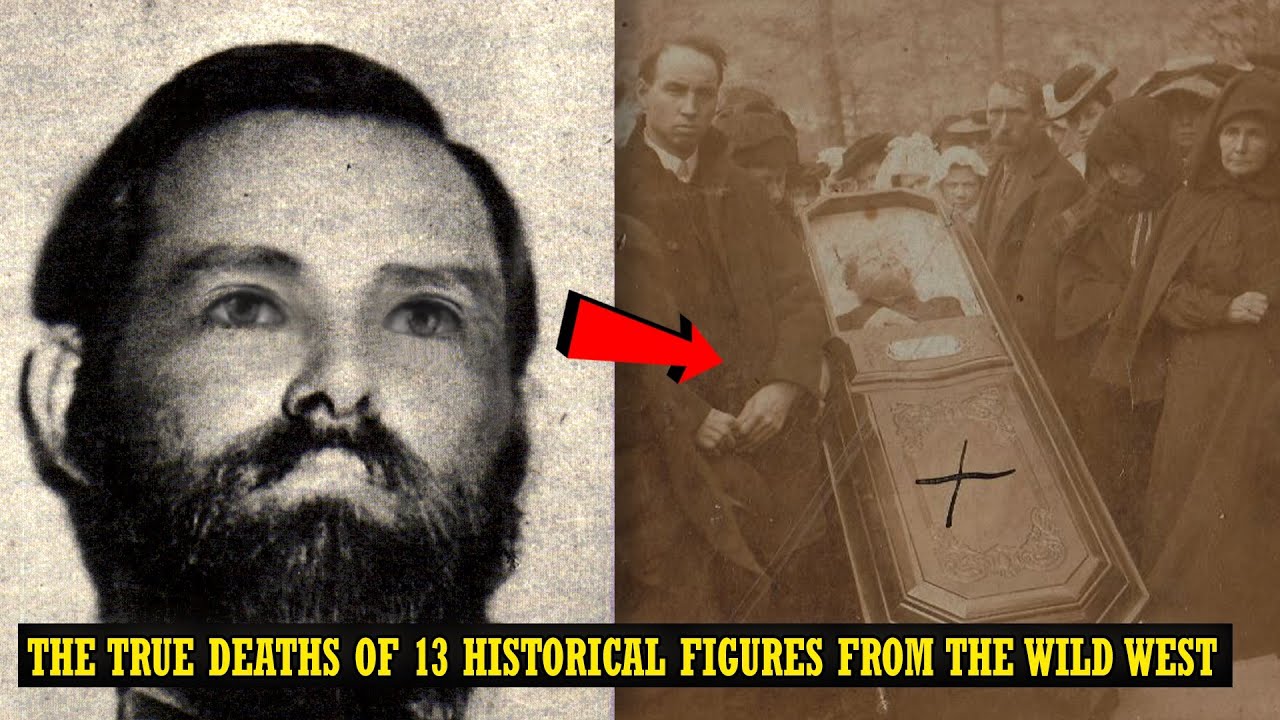 For six months, his body was kept in coal storage at Olinger’s Mortuary, requiring six separate embalming processes to prevent decay. During this period, a fierce debate erupted over his final resting place, with advocates for Cody, Wyoming, the town he founded, arguing that his legacy belonged there. Conspiracy theories swirled that his body was secretly moved, but historical consensus holds that he was eventually laid to rest on Lookout Mountain.
The mortuary building itself later transformed into a trendy restaurant called Linger, a bizarre twist for a man who once embodied the frontier spirit.
Bat Masterson, a gunslinger turned lawman, defied the violent expectations of his youth by transitioning into a peaceful life as a newspaper journalist in New York City. After years of enforcing order in Dodge City, Kansas, alongside his brother Ed, who was murdered in the line of duty, Masterson grew weary of the frontier’s chaos. He relocated to the East Coast with his wife, where he wrote about sports and served as a U.
S. Marshal. On October 25, 1921, at age 67, Masterson suffered a fatal heart attack while sitting at his desk, still dedicated to his work.
His death, far from the gunfire of his past, underscores the quiet end that many Wild West figures sought but few achieved.
Doc Holliday, the consumptive dentist turned gambler, died not from a bullet but from tuberculosis at the age of 36. Born John Henry Holliday, he earned a dental degree in Pennsylvania before the allure of card tables drew him into the saloons of the West. His friendship with Wyatt Earp and involvement in high-stakes poker games defined his notoriety, but his health was a constant adversary.
Tuberculosis, exacerbated by heavy drinking and a turbulent lifestyle, forced him to seek the dry air of Colorado. He checked into a sanitarium in Glenwood Springs, where he died peacefully in bed in 1887. His death, marked by frailty rather than violence, contrasts sharply with Hollywood’s portrayal of a quick-drawing outlaw.
Wyatt Earp, the legendary lawman, lived long enough to see his own myth grow, but his death in 1929 in Los Angeles was a quiet 𝒶𝒻𝒻𝒶𝒾𝓇. Earp, who gained fame after the gunfight at the O. K.
 Corral, spent his later years as an unpaid consultant for Western films, befriending stars like William S. Hart and Tom Mix. When he passed away at age 80, both Hart and Mix served as pallbearers at his funeral.
Tom Mix, one of Hollywood’s greatest cowboys, reportedly wept during the ceremony, a testament to the deep respect Earp commanded. His death, far from the dusty streets of Tombstone, marked the end of an era as the frontier faded into memory.
Annie Oakley, the sharpshooter who inspired generations, died from anemia at age 66, a quiet end for a woman who once hit 25 out of 25 targets in a shooting contest. Born Annie Moses, she married Frank Butler after that fateful competition, and the two performed together for decades with Buffalo Bill’s Wild West show. Her health declined later in life, and she passed away in 1926.
Just 18 days later, Frank Butler also died, likely from a broken heart. They were buried together in Annie’s family plot, a poignant conclusion to a partnership that defied the rugged individualism of the Wild West.
Jesse James, the notorious outlaw, was killed not in a heroic standoff but by a trusted associate in a moment of vulnerability. After a failed bank heist, James’s brother Frank left the gang, forcing Jesse to recruit new members, including Bob and Charlie Ford. Bob Ford, lured by a $10,000 reward from Missouri Governor Thomas Crittenden, plotted with his brother to betray James.
While Jesse stood on a chair to dust a picture, unarmed and unsuspecting, Bob Ford shot him in the back of the head. The murder, which took place in 1882, highlighted the treacherous dynamics of outlaw life and cemented James’s legacy as a victim of betrayal.
Calamity Jane, the sharpshooter and frontierswoman, died from alcoholism at age 51, a tragic end for a woman who lived by her own rules. Born Martha Jane Cannary, she adopted male personas to survive, working as a Pony Express rider and performing with Buffalo Bill’s show. Her heavy drinking, a hallmark of her public image, eventually destroyed her health.
 She was laid to rest beside Wild Bill Hickok, according to popular lore, though the nature of their relationship remains debated. Her death, marked by excess and loneliness, reflects the harsh realities of frontier life for women.
Billy the Kid, the young outlaw linked to 17 killings, was felled by Sheriff Pat Garrett at age 21. After escaping from jail days before his scheduled hanging, killing two guards in the process, Billy went into hiding. Garrett, following a tip, tracked him to the Maxwell ranch in New Mexico.
Under cover of darkness, Garrett entered Billy’s bedroom and shot him dead. The death sparked conspiracy theories, with some claiming the man killed was not Billy but a lookalike. Two individuals later claimed to be the outlaw, but their identities were never verified, leaving his true fate shrouded in mystery.
Belle Starr, the outlaw queen, was ambushed and shot twice in the back while traveling home. Her death, at age 41, remains unsolved, though rumors suggested her own son, Ed, might have been involved. Starr, who was convicted of horse theft but had a sparse criminal record, was known more for her associations with outlaws than for her own crimes.
Her two husbands both died in gunfights, and her life was intertwined with the criminal underworld. Her ambush, a violent end for a woman who navigated a dangerous world, underscores the peril that defined the Wild West.
Butch Cassidy and the Sundance Kid, the legendary outlaws of the Wild Bunch, may have met their end in a Bolivian standoff, but the details remain contested. After years of lucrative heists, they fled to South America for a fresh start. In 1908, they were cornered by Bolivian cavalry after a payroll robbery.
A gunfight ensued, and two gunshots were heard from their hiding place. Authorities found Sundance Kid with a bullet between his eyes and Butch Cassidy with a self-inflicted shot to his temple. However, persistent rumors suggested Cassidy survived, with sightings reported for years, leaving their true fate as one of the West’s great enigmas.
 Henry Plummer, a sheriff whose legacy is bitterly divided, was hanged by a vigilante mob in 1864 after just a year in office. Some accounts paint him as a law-abiding official who met an unjust end, while others describe a corrupt leader who abused his power and committed numerous crimes. His tenure was brief, and his death came at the hands of a crowd convinced of his guilt.
The conflicting narratives surrounding Plummer highlight the blurred lines between law and lawlessness in the frontier.
Wild Bill Hickok, the gunslinger and card player, was shot in the back of the head while playing poker in Deadwood, South Dakota, in 1876. His killer, Jack McCall, entered the saloon and fired a single fatal shot, with subsequent rounds misfiring. At the time of his death, Hickok held a hand of aces and eights, now known as the dead man’s hand.
His death, a sudden act of violence, cemented his legend as a symbol of the Wild West’s unpredictability.
Davy Crockett, the frontiersman and congressman, died at the Battle of the Alamo in 1836, but the circumstances remain disputed. The traditional narrative holds that he fought heroically alongside 200 defenders against a vastly larger Mexican force. However, some historians suggest he may have surrendered, hoping for clemency, only to be executed.
The debate over his final moments underscores the complexity of historical memory, as the Alamo remains a symbol of sacrifice and controversy.
These 13 stories reveal a Wild West far removed from Hollywood’s fantasies, where death came not always in a blaze of gunfire but often in quiet, unexpected, or tragic ways. From Buffalo Bill’s six-month wait for burial to Billy the Kid’s controversial shooting, the true ends of these figures challenge our understanding of an era that continues to shape American identity. As historians dig deeper, the myths give way to a richer, more nuanced history, reminding us that the frontier was as strange as it was wild.


