It was 7:42 in the morning when my phone rang. I was buckling my son into his car seat, half-listening to him talk about his science fair volcano, when I saw the name on the screen: Robert Callaway, my parents’ estate notary. In twenty years, he had handled exactly two transactions for my family, and he had never once called me directly. “Elena, listen to me,” he said.

No hello. No small talk. Just the voice of a man who had been awake far too long. “Have you signed anything in the last seventy-two hours?
Anything at all related to your parents’ estate? ”
“No,” I said. “I haven’t signed anything since probate closed. ”
“Good.
Do not sign a single piece of paper that comes your way. Not from your brother. Not from his wife. Not from anyone claiming to represent the estate.
Someone walked into my office yesterday with a brand-new will. It has your father’s signature on it. But Elena, your father was in a medically induced coma on the date this will was supposedly executed. Whoever made this document committed a felony, and I think I know who.
”
The car ahead of me moved in the school drop-off line. I shifted into drive with a hand that didn’t feel like mine. I promised Robert I’d call him back in fifteen minutes, smiled at Ethan in the rearview mirror, told him his volcano was going to be amazing, and watched him disappear through the front doors of Ridgemont Elementary. Then I sat in the parking lot with the engine idling, the radio playing something I couldn’t hear.
I drove straight to Robert’s office. He was waiting at the door, dark circles under his eyes, and he led me to a conference room where a single document sat in the center of the table, sealed in a clear plastic sleeve like evidence at a crime scene. Because that’s exactly what it was. It was titled *Last Will and Testament of Richard Allen Vasquez*.
My father’s name, typed in the same font his real attorney used. But this wasn’t the will I knew. The real will, probated eight months earlier, left the family home on Crescent Hill to me. The house my grandparents built in 1961.
The house where I learned to ride a bike. The house my father sat on the porch of every Sunday morning reading the paper until his heart gave out. This new will left everything to my brother Daniel and his wife Monica. Every asset.
Every account. The house. My mother’s jewelry. Even the small life insurance policy my father had kept since his twenties.
The signature at the bottom looked perfect. It looked exactly like his handwriting. But the date next to it was March 14th. On March 14th, my father was lying in the ICU at Saint Catherine’s Medical Center with a breathing tube down his throat.
He had suffered a massive cardiac event three days earlier. The doctors had placed him in a medically induced coma. He couldn’t open his eyes. He couldn’t squeeze my hand.
He certainly could not sit up and sign a six-page legal document in front of two witnesses. Robert showed me the witness signatures. Two names I had never heard. Janet Kolb and Gregory Fenn.
He shook his head. “Janet Kolb died in 2019. Gregory Fenn doesn’t appear to exist at all. ”
A dead woman and a ghost had witnessed my father’s impossible signature.
The room tilted slightly. Not from shock. I’m a pediatrician; I’ve held dying children in my arms and kept my voice steady. No, it was from the sheer audacity of it.
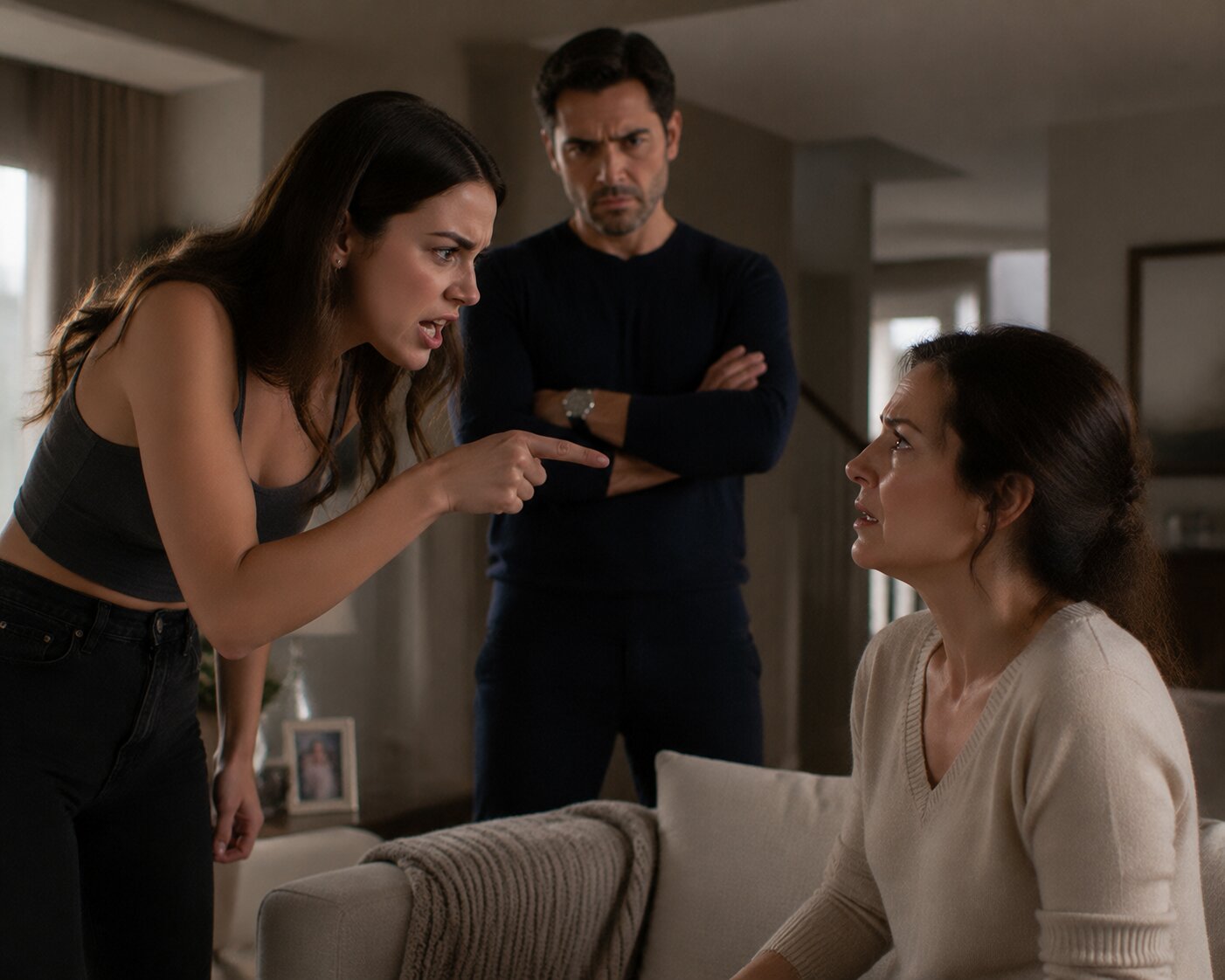
My brother Daniel, who I had fed and clothed during his worst years, who I had bailed out of debt three separate times, who had stood next to me at our father’s funeral and whispered, “I’m here for you, Lena”—that man had forged our dead father’s will to steal everything our parents left behind. But suspicion is not evidence. So I did what I always do when the world stops making sense. I went home, put on a pot of coffee, and pulled records.
The first thing I checked was my father’s medical file. I still had access to his patient portal. I pulled up the admission notes from March 11th through March 22nd. Intubated.
Sedated. Non-responsive to verbal stimuli. No visitors permitted except immediate family, and even then, limited to fifteen-minute windows. The attending physician’s note from March 14th read: *Patient remains in medically induced coma.
No change in neurological status. Glasgow Coma Scale score of 3. Family updated. *
A Glasgow Coma Scale of three is the lowest possible score.
No eye opening. No verbal response. No motor response. As far from conscious as a living person can be.
And yet, according to this will, my father had enough presence of mind that day to disinherit his only daughter, rewrite his entire estate plan, and sign his name in front of two witnesses, one of whom had been dead for four years. I saved everything. Screenshots. PDFs.
Timestamps. Then I called Marcus Sato, the estate attorney who had handled the original probate. When I told him what Robert had found, the line went quiet for ten seconds. Then he said something I will never forget.
“Elena, I need you to check your bank accounts. Right now. All of them. ”
My hands were shaking as I logged in.
The joint savings account my father had set up for me and Daniel years ago, the one that held the emergency fund, showed a balance of $211. 47. Three weeks earlier, it had held $86,000. I scrolled through the transactions—five wire transfers, each between fifteen and twenty thousand dollars, spread across ten days, all sent to an account I didn’t recognize.
The memo lines were blank. Then I checked the mortgage records for the Crescent Hill house. My stomach dropped so hard I thought I was going to be sick. Someone had applied for a home equity line of credit against the property.
The application was filed under my father’s name, using his social security number, his date of birth, and a mailing address I didn’t recognize. The amount requested was $800,000. It was still pending. It hadn’t been approved yet.
They weren’t just trying to steal the house. They were trying to borrow against it before they even had title. They were leveraging a property they didn’t own, using the identity of a man who was dead. I closed my laptop.
My hands were steady now. In place of the shaking was something cold and precise. The same feeling I get when I look at a child’s blood work and the numbers don’t add up. You don’t panic.
You don’t guess. You follow the data, and you let the data tell you the truth. Okay, Daniel, I said to the empty kitchen. You want dad’s house?
Let’s see how far you’re willing to go to get it. I didn’t confront him. That’s the mistake most people make. They call.
They scream. They send the angry text at 2:00 in the morning, and all they accomplish is giving the other side time to destroy evidence and rehearse their lies. Instead, I waited. I documented.
I watched. Three days later, Monica called me. Her voice was warm and bright, the way it always was when she wanted something. “Lena, hey.
Danny and I were thinking. The anniversary of your dad’s passing is coming up. We thought it might be nice to have a little family dinner at the house, just us. Maybe go through some of dad’s old things, divide them up so nothing gets lost.
What do you think? ”
I said I thought that sounded lovely. I told her I’d bring a dish. She said she’d set the table with mom’s china.
We hung up, and I sat in my car in the hospital parking lot and pressed my palms against my eyes until I saw stars. She wanted me at that house so I would sign something. The dinner was the setup. The documents would come out after the second glass of wine, wrapped in sentimentality and sibling love.
*Just some paperwork to simplify things, Lena. Dad would have wanted it this way. *
I called Marcus. He told me to go.
“But don’t sign anything. Don’t argue. Don’t let them know you know. Just watch and remember every word.
”
The dinner was on a Saturday. I arrived at six. The house smelled like garlic and lemon. Monica had made chicken piccata, one of my mother’s recipes—a detail so calculated it made my teeth ache.
Daniel hugged me at the door. He looked thinner than I remembered. His eyes had that hollow, hunted look I’d seen before, the look he used to get when he was over his head financially. I hugged him back and felt the bones of his shoulders through his shirt.
We ate. We talked about Ethan’s school. We talked about the new fence the neighbors were building. Monica poured wine and laughed at all the right moments.
And then, as I had predicted with the precision of a lab result, Daniel cleared his throat and reached under the table. He pulled out a Manila folder. “So, Lena. I know this isn’t the most fun topic, but Monica and I have been talking, and we think it might make sense to consolidate some of the estate stuff.
Just to keep things clean. Our accountant drew up a few forms. Nothing major. Just a transfer of interest on the property so we can handle maintenance and taxes on our end.
Take the burden off you. ”
He slid the folder across the table. I opened it. The document inside was a quitclaim deed.
It would transfer my entire ownership interest in the Crescent Hill property to Daniel and Monica for the sum of $1. One dollar for a house appraised at 1. 2 million. I looked at the deed.
I looked at my brother. His eyes were locked on mine with an intensity that bordered on desperation. Monica was gripping her wine glass so tightly her knuckles had gone white. “This is a lot to process,” I said.
“Can I take it home and read through it? ”
Daniel’s face twitched. Just for a second. A micro-expression of frustration that vanished as quickly as it appeared.
“Sure,” he said. “No rush. Just whenever you’re ready. ”
I took the folder home.
I scanned every page. Then I sent it to Marcus with a single line: *They made their move. *
What happened next is the part of this story I never expected. Because the person who cracked the case open wasn’t me.
Wasn’t Marcus. Wasn’t Robert Callaway. It was my ten-year-old son. It was a Wednesday evening, four days after the dinner.
Ethan was lying on the living room floor with his iPad, supposedly doing math homework. I was in the kitchen reviewing bank statements when he called out to me. “Mom, why is Uncle Danny on a video talking about selling Grandpa’s house? ”
He turned the iPad toward me.
He had been playing a game earlier that day at Daniel’s house—Monica had picked him up from school as a favor, and the iPad had automatically connected to their home Wi-Fi. When he opened his cloud photos later, the device had synced several files from the shared household network. One of them was a video. I pressed play.
The footage was shaky, recorded on a phone propped against a stack of books. Daniel and Monica were sitting at their kitchen table. Between them was a man I didn’t recognize—heavy-set, bald, wearing a polo shirt with a real estate company logo on the breast pocket. Daniel was talking.
“The timeline is tight. We need her to sign the quitclaim by the end of the month. Once the title transfers, we close with your buyer on the fifteenth. The developer already has the demolition permit lined up.
”
Monica leaned forward. “What’s the number again? ”
The man in the polo shirt checked his phone. “1.
1 cash. They want the lot, not the house. They’re putting up townhouses. Twelve units.
”
Daniel nodded. “And our cut after your commission? ”
“Just under a million even. ”
Monica smiled.
It was the kind of smile that made the air in my lungs feel like glass. “And what about Elena? What if she doesn’t sign? ”
Daniel waved his hand.
“She’ll sign. She always does what I ask. And if she doesn’t, we’ve got the new will. Once the court accepts it, we don’t need her signature at all.
We just probate it, take the title, and she can fight it from the outside. ”
“And the equity line? ” Monica asked. “Already in process.
We used Dad’s social. By the time anyone checks, the money will be moved. ”
The man in the polo shifted uncomfortably. “I don’t want to know about that part.
”
“You don’t have to,” Daniel said. “You just have to sell the lot. ”
The video ended. Ethan was looking up at me with wide, confused eyes.
“Mom, is Uncle Danny doing something bad? ”
I knelt down next to him. I kept my voice steady, the way I do when I tell a parent their child needs surgery. “You did the right thing showing me this, baby.
I’m so proud of you. Can I borrow your iPad for a little while? ”
He nodded. I kissed his forehead and carried the iPad to my office.
Then I called Marcus. Then I called Robert. Then I called the FBI. What followed was the most precise, methodical dismantling of a fraud scheme I have ever witnessed.
Marcus filed a challenge to the forged will within forty-eight hours, attaching my father’s complete ICU records, the attending physician’s sworn declaration that Richard Vasquez was physically incapable of signing any document on March 14th, and the death certificate of Janet Kolb, the supposedly living witness. Robert submitted his own affidavit confirming the forged will had never passed through his office and bore none of the procedural markings his firm used. But the real hammer came from the FBI. The wire transfers from the joint savings account were traced to a shell company registered in Monica’s maiden name.
The home equity application was flagged as identity theft—they had used a dead man’s social security number to apply for credit. And the video from Ethan’s iPad, authenticated by a digital forensics team, showed Daniel, Monica, and a licensed real estate agent conspiring to sell a property they did not own using fraudulently obtained title. The arrest happened on a Tuesday morning. I know because Marcus called me at 8:15 to tell me it was done.
Federal agents arrived at Daniel’s house at 7:30 a. m. Monica answered the door in her bathrobe, holding a cup of coffee. Daniel was still in bed.
They were both taken into custody in front of their neighbors, in front of the school bus pulling up to the corner, in front of the life they had built on lies. The real estate agent, whose name turned out to be Craig Delvecchio, was arrested at his office later that afternoon. He cooperated immediately. The charges were severe.
Wire fraud. Identity theft. Forgery of a legal instrument. Conspiracy to commit real estate fraud.
Attempted theft by deception. For Daniel and Monica together, the federal prosecutors estimated a combined exposure of fifteen to twenty-five years. Craig Delvecchio, who turned state’s witness within a week, was looking at three to five. The court hearing was on a Thursday.
I sat in the second row. Daniel was brought in wearing an orange jumpsuit. He looked at me once. Just once.
His eyes were red, and for a split second, I saw my little brother—the kid who used to climb into my bed during thunderstorms, the teenager I drove to his SATs, the young man who cried at our mother’s funeral and held my hand so tight it left a mark. But then I remembered the video. I remembered his voice saying *she always does what I ask*. I remembered $86,000 disappearing from an account my father had set up to protect both his children.
And I looked away. Monica’s attorney tried to argue that she was under Daniel’s influence, that she had been coerced. The judge wasn’t buying it. The shell company was in her maiden name.
The forged will had been printed on paper purchased from a specialty stationery shop where her credit card was on file. She wasn’t a victim. She was an architect. Daniel was sentenced to twelve years federal.
Monica got nine. Craig Delvecchio received eighteen months and a permanent revocation of his real estate license. The forged will was declared null and void. The home equity application was canceled.
The $86,000 in stolen funds was frozen and eventually returned. The Crescent Hill house was saved. I stood on the porch the evening after the sentencing, the same porch where my father used to read his paper. Ethan was inside working on his volcano, spreading papier-mâché over a wire frame with the intense concentration of a surgeon.
The sun was going down behind the elm trees my grandfather had planted, and the light coming through the branches made everything look golden and ancient and impossibly fragile. My phone buzzed. A text from an unknown number. *Lena, it’s Danny.
I’m sorry. Please don’t let Ethan forget me. *
I stared at that message for a long time. A year ago, I would have cried.
I would have driven to the detention center. I would have promised to visit, to write, to keep the door open. But I had learned something in the last three months that changed the way I understood love and family. Forgiveness is not the same as access.
You can forgive someone from across a locked door. You can wish them well without handing them the keys to your life. My father didn’t leave me this house because it was valuable. He left it to me because I was the one who understood that some things aren’t for sale.
A home is not a price tag. A legacy is not a transaction. And a family is not a group of people who share blood. It’s a group of people who protect each other, even when it costs them something.
Two months later, I filed the paperwork to establish the Vasquez Family Scholarship Fund, managed through the community foundation, funded by the rental income from the small apartment above my father’s old workshop behind the house. The first scholarship went to a girl named Priya from Ethan’s school—a quiet kid with perfect grades and a father in prison. The letter she wrote to thank us made me cry for the first time since all of this started. Ethan won second place at the science fair.
His volcano erupted beautifully, bright orange foam pouring over the sides while the judges clapped and the other parents recorded on their phones. He ran over to me afterward, covered in baking soda and food coloring, grinning so wide I could see the gap where he’d lost a tooth the week before. “Mom,” he said, “do you think Grandpa would have liked my volcano? ”
I pulled him into a hug.
“I think he would have loved it,” I said. “I think he’s watching right now. ”
We drove home to Crescent Hill. The porch light was on.
The elm trees were budding, and the house stood exactly where it had always stood—not because it was worth a million dollars, but because someone had decided it was worth fighting for.