Step into the chaotic pages of the Old West, where legends are born and outlaws roam the borders. Among the notorious figures that emerged from this violent and lawless era, one name stands out with a particular kind of dark mystique: Jose Chavez y Chavez. This mysterious outlaw, known for his ruthlessness and cunning, has left an indelible mark on the history of the Wild West.
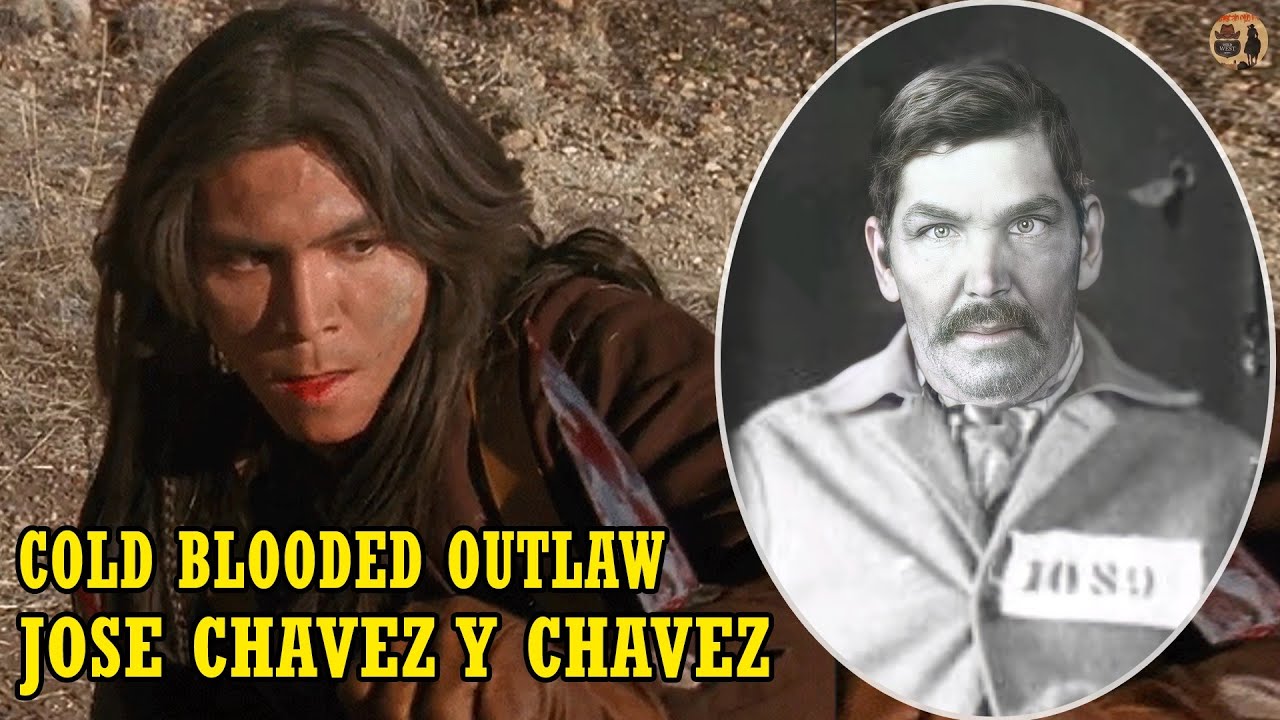 In this deep dive, we explore the fascinating life story of Jose Chavez y Chavez, a man who was not only a cold-blooded killer but also a good friend of the legendary Billy the Kid. His story is one of shifting loyalties, brutal violence, frontier justice, and a final, unexpected turn toward peace.
Jose Chavez y Chavez emerged as a notorious outlaw, a Mexican-American from the New Mexico Territory, which is now recognized as the state of New Mexico in the United States of America. Historical documents suggest that he was born to a Spanish father and an Apache mother, a heritage that perhaps contributed to his fierce independence and his deep understanding of the harsh borderlands. This mixed lineage placed him on the fringes of both cultures, a position that may have shaped his life as a man who operated outside the bounds of conventional society.
He was a figure who moved between worlds, never fully belonging to the Anglo settlers, the Hispanic villagers, or the Apache tribes, yet he carved out a fearsome reputation in each sphere he touched.
Chavez became an outlaw at a relatively young age when he joined the Lincoln County authority, a decision that would set the course for the rest of his life. Born in 1851 in Cibola, New Mexico, Jose Chavez y Chavez’s early years remain a mystery, with very little reliable information available to historians. The void of knowledge about his childhood is filled only with speculation, but it is clear that he grew up in an environment where survival was paramount and the law was often a distant, corrupt concept.
Initially, he worked as a hired laborer, but he quickly realized the arduous nature of manual work, which came with very low pay and offered no path to prosperity. The drudgery of honest labor held no appeal for a man of his ambition and restless energy, and so he gradually turned to petty theft and cattle rustling to make a living.
In his 20s, Chavez became a member of the Regulators, a vigilante group formed during the Lincoln County War, and became involved in a series of petty thefts and various criminal activities. It was during this period that he proved himself useful to Billy the Kid’s gang, earning a place among the most feared men in the territory. Alongside Billy the Kid, Doc Scurlock, Charlie Bowdre, and others connected to the administration, Chavez was actively involved in the Lincoln County War that lasted from 1878 to 1879.
This conflict, which began as a commercial rivalry between two factions, quickly devolved into a bloody feud that consumed the entire region. Chavez met Billy the Kid, Jim French, Fred Waite, Charlie Bowdre, John Middleton, and Tom O’Folliard after he decided to join the Tunstall-McSween group in their fight against the Dolan group, a decision that would cement his place in Western lore.
Within the Tunstall-McSween group, a faction had emerged aiming to replace the Dolan faction and reap financial benefits. This group was called the Regulators, and it included 45 gunmen, with Chavez among their ranks. During his time as a member of this governing body, Chavez developed close relationships with Billy the Kid and Jim French, bonds of friendship that were forged in the heat of gunfire and the constant threat of death.
These were not mere acquaintances; they were brothers in arms who trusted each other with their lives in a world where betrayal was common and loyalty was the highest currency.
On February 18th, 1878, the murder of John Tunstall took place, an event that ignited the conflict into open warfare. Tunstall, a young Englishman who had invested heavily in the region, was killed by a posse sent by the Dolan faction, and his death galvanized the Regulators into action. This was followed by the murder of Sheriff William Brady of Lincoln, a Dolan supporter, on April 1st of the same year.
 Chavez later admitted responsibility for Brady’s murder, a confession that solidified his reputation as a cold-blooded killer who was willing to take on the most dangerous targets. The assassination of a sitting sheriff was a bold and reckless act that demonstrated Chavez’s fearlessness and his willingness to do whatever was necessary to win the war.
A series of retaliatory murders ensued from both sides, with each act of violence spawning another. The conflict reached a tragic climax with the burning of McSween’s house on July 19th, 1878. The house served as a shelter for 14 people, including the McSween couple and 12 cowboys, leading to the tragic deaths of six people in the ensuing firefight.
The flames consumed not only the building but also the hopes of a peaceful resolution, and the violence only deepened the divide between the factions. However, all the members of the Billy the Kid gang managed to escape from the burning house, slipping away into the darkness to fight another day. The escape was a testament to their survival instincts and their intimate knowledge of the terrain, but it also meant that the war would continue.
By March 1879, the Governor of New Mexico, Lew Wallace, had begun his war on crime in the territory, and one of his priorities was to stop the ongoing war between the Dolan and Tunstall-McSween supporters. Wallace, a man of letters and politics, was determined to bring order to a region that had descended into chaos. With this in mind, Wallace founded the Lincoln County Mounted Rifles, a group of which Chavez became a member as a private.
It was a strange turn for an outlaw to serve under the authority of the very government he had been fighting against, but such was the fluid nature of loyalty in the Old West. However, the Mounted Rifles failed in their purpose, and the group only lasted about three months, a time during which Chavez remained with Billy the Kid’s gang. The failure of the Mounted Rifles demonstrated the deep-rooted nature of the conflict, which could not be solved by a simple show of force.
Chavez allegedly testified alongside Billy the Kid in court to try to insinuate the US Army’s involvement in the McSween home fire and the subsequent deaths that occurred in the fire. This testimony was a calculated attempt to shift blame and muddy the waters, but it ultimately did little to change the course of events. The legal system was just as corrupt and ineffective as the law enforcement agencies, and justice remained elusive for all parties involved.
It is believed that in 1880, Chavez murdered a dangerous prisoner in a prison in New Mexico, an act that further cemented his reputation as a man who would 𝓀𝒾𝓁𝓁 without hesitation, even within the confines of a jail cell. The murder of a fellow prisoner was a chilling display of his cold-blooded nature, suggesting that he viewed violence as a practical solution to any problem.
After the death of Billy the Kid in 1881, Chavez embarked on a journey across the American Southwest, often with no specific destination in mind. The loss of his friend and leader left a void in his life, and he drifted from place to place, a ghost haunting the borderlands. Finally, he arrived in Las Vegas, New Mexico, where a chance encounter awaited him.
There, he met Bob Ford, the man infamous for killing Jesse James. Ford, who had betrayed his own leader, was living in constant fear of retribution, and his meeting with Chavez was fraught with tension. Legend has it that the two men agreed to enter a shooting competition, a test of skill that would determine who was the better gunman.
 However, Ford was so amazed by Chavez’s marksmanship that he fled shortly after being asked to duel, unwilling to face a man who was clearly his superior with a firearm. The encounter was a testament to Chavez’s legendary skill, which was so formidable that even the killer of Jesse James would not dare to face him.
Chavez later assumed the role of deputy sheriff, but he was said to be unable to give up his life as an outlaw. The transition from criminal to lawman was a difficult one, and the lure of easy money and violence was too strong to resist. He built a friendship with Vicente Silva, a notorious criminal mastermind, and became affiliated with two of Silva’s factions, including Las Gorras Blancas, or the White Caps.
While many English-speaking settlers viewed this group as a band of robbers, many Hispanic Americans in New Mexico saw them as freedom fighters who were resisting the encroachment of Anglo land grabbers. The group operated as a kind of shadow government, enforcing their own brand of justice on the frontier. Silva’s other organization, known as the Society of Bandits, faced charges from Anglo immigrants in the New Mexico Territory, those who accused them of operating like a mafia by forcing people to give up their assets for illegal profit.
The Society was a ruthless criminal enterprise that extorted and murdered its way to power, and Chavez was a key enforcer within its ranks.
By the order of Vicente Silva, Patricio Maes was killed on October 22nd, 1892, at the hands of Jose Eugenio Alerid and Julian Trujillo. The murder was part of a larger scheme to consolidate power and eliminate rivals, and it demonstrated the cold, calculating nature of Silva’s organization. In February 1893, the group received instructions to remove Silva’s brother-in-law, Gabriel Sandoval, for fear that he might discover the murder and alert the authorities.
Sandoval was a liability, and Silva was unwilling to take any chances. The untimely death of Gabriel Sandoval had a profound effect on Silva, as his wife grew increasingly concerned about her brother’s whereabouts. The disappearance of her brother drove a wedge between Silva and his wife, and her persistent questions became a threat to the organization’s secrecy.
In a complicated turn, Silva ordered Chavez, Alerid, and Trujillo to 𝓀𝒾𝓁𝓁 his wife, a command that shocked even these hardened criminals. The three men became concerned about Silva’s mental state, realizing that he was willing to 𝓀𝒾𝓁𝓁 his own family to protect his criminal empire. While digging a grave for Silva’s wife, they came to a decision: they would also end Silva’s life.
The betrayal was a cold and calculated move, born of self-preservation and a recognition that Silva had become too unstable to be trusted. When Silva arrived at the burial site with his wife’s lifeless body, the trio shot him mercilessly, placing them both in the same grave. It was a fitting end for a man who had ordered so many deaths, and the double burial was a grim symbol of the violence that had consumed them all.
The following year, 1894, saw the arrest of an individual for the murder of Maes, implicating Chavez, Alerid, and Trujillo in the death of Gabriel Sandoval. The web of conspiracy began to unravel, and the authorities closed in on the remaining members of the gang. In April 1894, Alerid and Trujillo had to appear in court, which resulted in their convictions and life imprisonment for said murder.
 The justice system, which had been so ineffective during the Lincoln County War, finally caught up with the outlaws, and they were sentenced to spend the rest of their lives behind bars. Upon learning of their arrest, Chavez quickly chose to flee, with a substantial award of $500 placed on his head. The bounty was a significant sum in those days, and it attracted the attention of bounty hunters and lawmen across the territory.
Finally, on May 26th, 1894, he was arrested in Socorro, New Mexico, bringing an end to his life on the run. The arrest was the culmination of a massive manhunt, and Chavez was taken into custody without incident. The jury found him guilty, and he received the death sentence by hanging.
The sentence was a stark reminder that the law had a long memory, and that even the most notorious outlaws could not escape justice forever. Chavez then underwent a retrial by the Territorial Supreme Court, which again sentenced him to death. The courts were determined to see him executed, and it seemed that his fate was sealed.
However, Governor Otero, affected by the public outcry surrounding the case and under growing public pressure, reduced Chavez’s sentence to life in prison. The decision was controversial, but it reflected a growing sentiment that the death penalty was too harsh a punishment for a man who had become something of a folk hero to the Hispanic population.
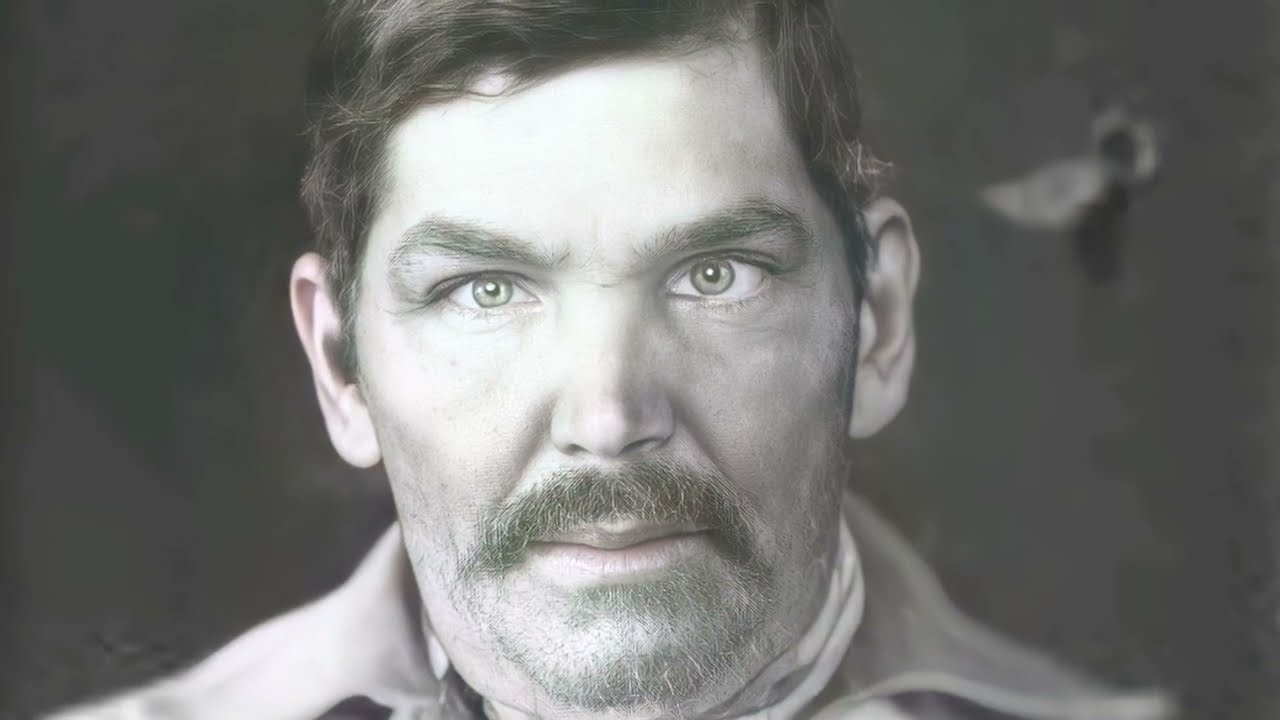
Thus, on November 23rd, 1897, Jose Chavez y Chavez entered the Territorial Prison as prisoner number 1089, where he would be held until the age of 57. The prison was a harsh and unforgiving place, but Chavez adapted to his new life, finding a strange kind of peace within its walls. At the age of 57, on January 11th, 1909, Governor George Curry pardoned Chavez, despite him having served only 11 years.
This act of leniency was granted to him due to the help and support he provided the prison guards during a violent uprising. Chavez, who had spent his life fighting against authority, had become a protector of order, a final twist in a life full of contradictions. His actions during the riot demonstrated that even the most cold-blooded outlaw could find redemption, and that loyalty and courage were not limited to the right side of the law.
After serving his prison term, Chavez returned to Las Vegas, where he spent the remaining 15 years of his life with loyal friends, embracing a peaceful life. The man who had once been a feared gunman became a quiet member of the community, living out his days in relative obscurity. In 1924, at the age of 72, Chavez died peacefully, nestled in his comfy bed beside his companion, Liberato Baca.
Baca, perhaps the only individual who has faced Chavez in a duel and is alive to tell the story, is a witness to their enduring friendship. The fact that a man who had once been his opponent became his closest companion is a testament to the complex nature of relationships in the Old West, where enemies could become friends and friends could become enemies. Chavez found his final resting place in a modest cemetery located in Malro, Guadalupe County, New Mexico, a quiet end for a man who had lived such a violent life.
His grave, marked by a simple headstone, is a reminder of a bygone era, when the borderlands were a lawless frontier and men like Jose Chavez y Chavez carved their names into history with gunfire and blood.