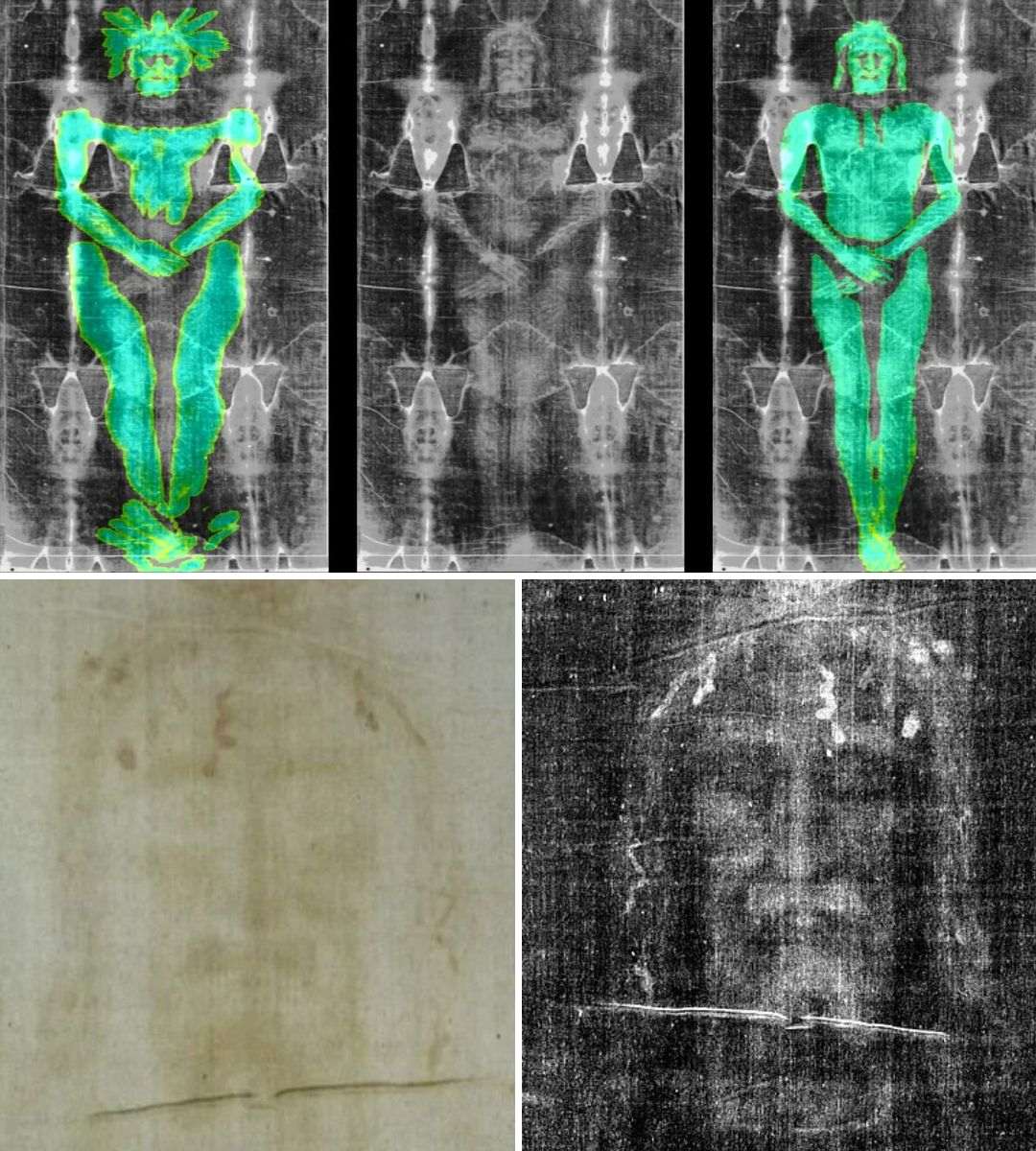
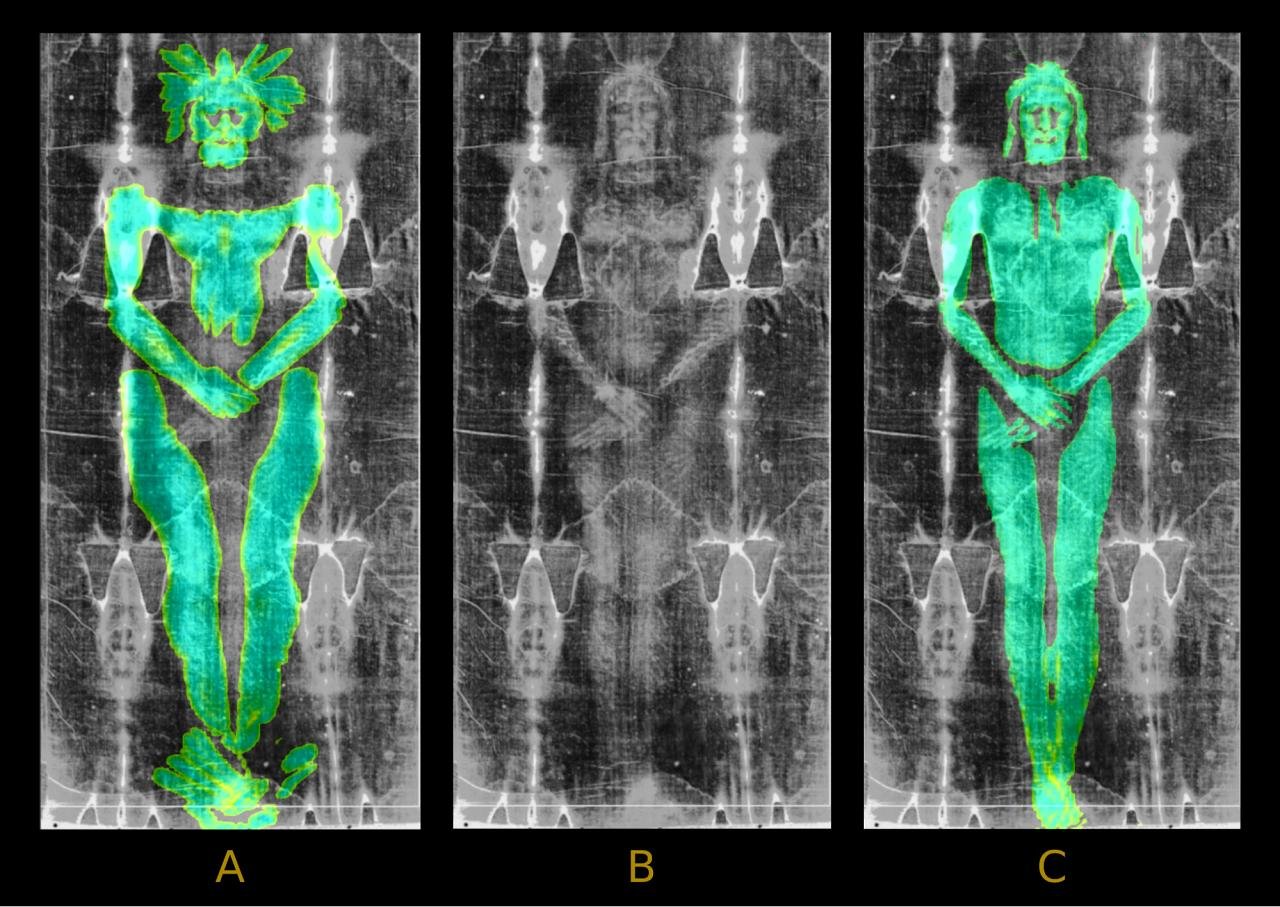
A groundbreaking 3D analysis has emerged, suggesting that the iconic Shroud of Turin—long revered by many as the burial cloth of Jesus—may not have originated from a human body at all. Instead, this new research indicates it could be a remarkable piece of medieval religious art, crafted with skill and intention.
Published in the journal Archaeometry, the study led by Brazilian digital graphics expert Cicero Moraes employs advanced modeling software to explore the shroud’s origins. Utilizing tools like MakeHuman and Blender, Moraes simulated how fabric interacts with both a full human form and a low-relief sculpture, revealing striking differences in the resulting images.

The Shroud of Turin, measuring an impressive 14.5 feet by 3.7 feet, bears the faint imprint of a man displaying wounds consistent with crucifixion. For centuries, it has been believed to have enveloped Jesus after his death over two millennia ago. However, the shroud’s history has been steeped in controversy since it first appeared in the 14th century. A radiocarbon dating test conducted in 1989 suggested its origins lie between 1260 and 1390 CE, a finding that has been hotly debated, with some researchers claiming the sample may have come from a repaired section of the cloth.
In Moraes’s innovative analysis, the virtual draping of a cloth over a 3D human model resulted in a warped image, a phenomenon known as the “Agamemnon Mask effect.” This distortion occurs when fabric is placed over a three-dimensional body. Conversely, the imprint created from a low-relief sculpture closely mirrored the dimensions and contours of the image found on the shroud.
Moraes noted in his findings, “The contact pattern generated by the low-relief model is more compatible with the Shroud’s image.” He suggested that a shallow sculpture, possibly made of wood, stone, or metal, could have served as a mold for the shroud. By applying heat or pigment to only the raised areas of the sculpture, an imprint could easily have been transferred onto the fabric, explaining the smoothness of the shroud’s image as opposed to the distortions expected from a real body.
 While Moraes acknowledged the slim possibility that the image could have originated from an actual body, he emphasized that the evidence leans towards the shroud being an artistic creation. He refrained from speculating on the specific materials or techniques used but concluded that the artifact should be viewed as a funerary object and a “masterwork of Christian art.”
This perspective aligns with the artistic practices of the medieval period, where low-relief representations of religious figures were commonplace, particularly on tombstones. Although Moraes’s study does not settle the debate over the shroud’s age, it sheds new light on how its image may have been produced.
His research does not dismiss the religious significance of the Shroud of Turin, but rather provides a scientific lens through which to view this enigmatic relic. Whether regarded as a medieval creation or a sacred artifact, the shroud continues to captivate and mystify, leaving many to wonder what more modern technology might uncover about its true origins. What do you think this means for the future of such historical artifacts?