
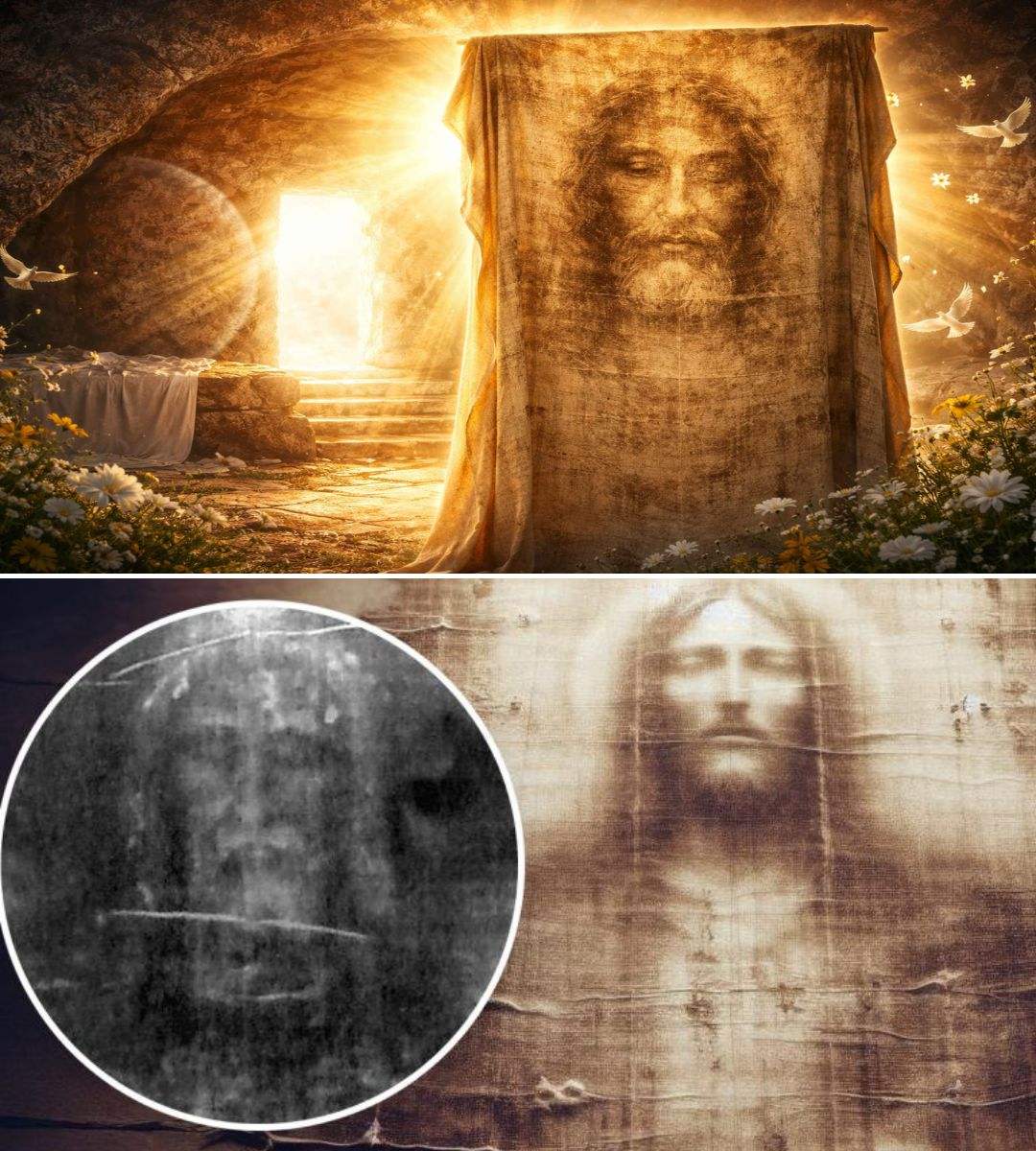
The Shroud of Turin, a relic shrouded in mystery and believed by many to be the burial cloth of Jesus Christ, is once again capturing public attention. Recent scientific analysis has revealed an intricate tapestry of DNA embedded in its fibers, raising more questions than answers about this age-old artifact.
According to a report from the Daily Mail, researchers have discovered genetic material from a variety of sources on the linen, including humans, animals, plants, and fungi. The team behind the study remarked, “This research provides original insights into the diversity of DNA extracted… revealing its biological complexity.”

This new DNA evidence adds yet another layer to the ongoing debate surrounding the Shroud. For centuries, this 14-foot cloth, housed in Turin, Italy, has attracted both believers and skeptics. The faint image on the fabric seems to depict a man with wounds resembling those of a crucifixion, leading many to associate it with Jesus. However, others argue that it may be a medieval forgery.
The latest findings confirmed the presence of several human mitochondrial DNA lineages, particularly those common in Western Eurasia and the Near East. Yet, the researchers acknowledged the cloth’s extensive history of contact with numerous individuals, making it nearly impossible to pinpoint any original DNA source.
In addition to human DNA, traces from animals such as cats, dogs, and livestock were also found. Plant DNA from crops like cereals and carrots suggests the Shroud may have traveled through the Mediterranean region, further complicating its origin story. The researchers concluded that the overall results indicate a diverse mosaic of genetic traces.
Amidst this scientific exploration, Christian researcher L.A. Marzulli, who has dedicated years to studying the Shroud, offered a different perspective. While he expressed skepticism about the report’s authenticity, he engaged with its core findings. “So I don’t know whether this is AI, whether it’s real… take this with a grain of salt,” he stated.

Marzulli pointed out the peculiar nature of the reported DNA sequences, noting their incomplete or unusual structure. He argued that if the Shroud were indeed a forgery, the DNA would likely align with known European populations from the medieval period. Instead, the findings suggest a genetic map that stretches across the ancient world.
For Marzulli, the Shroud is more than just an artifact; he believes it serves as a divine message. “The Shroud of Turin is God’s calling card,” he declared, asserting it as evidence of the resurrection of Jesus Christ. He also highlighted what he perceives as a reluctance within scientific communities to fully explore the implications of these discoveries.
“The Shroud actually looks more advanced, not less,” he noted, referencing decades of research and the insights of Barrie Schwortz, a key figure from the 1978 Shroud of Turin Research Project.
The ongoing dialogue surrounding the Shroud reveals a fascinating tension. On one side, scientists uncover complexities and unresolved questions, while on the other, researchers like Marzulli see deeper meanings and connections that transcend ordinary understanding.
As new technologies and methodologies continue to emerge, the ancient past is revealing itself in unexpected ways. With every new discovery, the Shroud of Turin remains a focal point of intrigue, inviting us to ponder the mysteries that history still holds. What secrets might the future unveil about this enigmatic relic?


