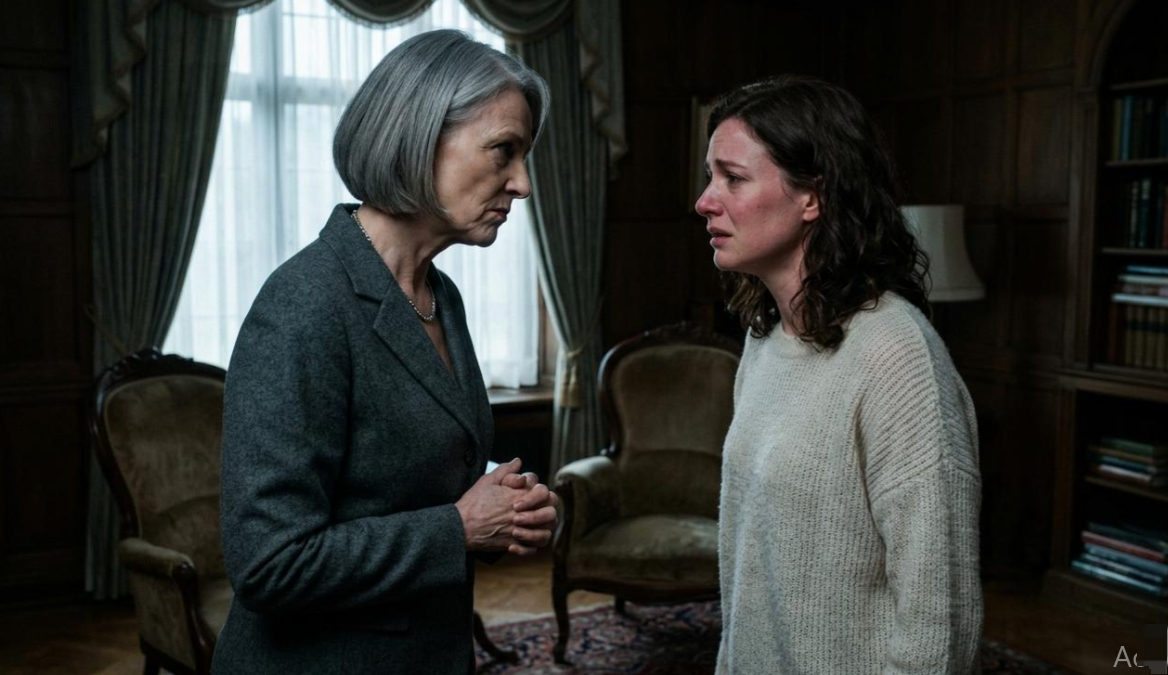
The laughter hit Austin like a physical blow. Eight hundred guests were watching his brother, Samuel, stumble in the aisle after Brent Becker’s voice had boomed across the ballroom. “Can’t even walk straight. What kind of trashy—” Morren had cut her husband off, but her version was worse.

“That’s the groom’s brother. You know, they come from difficult circumstances. ”
Then Christina, his bride, joined in from the back of the room. “Oh my god, did you see that?
” she giggled, whispering with her bridesmaids. “That’s not a man, that’s gutter trash. ”
Austin was standing at the altar. Samuel was the only real family he had left.
The kid born with a twisted spine, who’d endured seven surgeries before age twelve, who’d been written off by half the medical establishment. The brother who’d taught him that someone had to care. Austin walked away from the altar. The crowd fell silent as he strode down the aisle.
He reached Samuel first, standing beside his brother without a word. Then he turned to face the guests. “This wedding is canceled. ”
Morren gasped.
“Austin, don’t be ridiculous—”
“Cancelled,” he repeated, louder. “All of it. You can leave. ”
Christina pushed through her veil.
“Are you insane? We can’t just—”
“You laughed when your father humiliated my brother. You laughed. ”
“It was just a joke, Austin.
God, you’re so sensitive about—”
“About people I love? Yeah, I am. ”
He looked at Brent and Morren. “You wanted to marry your daughter to a doctor.
Congratulations. You get nothing instead. ”
Brent’s face purpled. “You ungrateful little—do you have any idea what this wedding cost?
”
“My world has people in it worth respecting,” Austin said. “I don’t want to be from yours. ”
He started to leave, Samuel beside him. That was when his brother spoke for the first time.
His voice was quiet, almost conversational, but it carried across the silent ballroom. “Mr. Becker, Mrs. Becker,” Samuel said, adjusting his glasses.
“I should probably mention something. You know that investment firm that bought controlling interest in Becker Industrial Solutions three months ago? The one that’s been keeping your company solvent? ”
Brent’s expression shifted from rage to confusion.
“Titan Capital Holdings. What about them? ”
Samuel’s smile was small and dangerous. “I am Titan Capital Holdings.
I own sixty-eight percent of your company. As of three months ago, I’m your boss. ”
The silence was absolute. Austin stared at his brother as pieces clicked into place.
The late-night calls. The new office space he’d never explained. The quiet confidence that had grown over the past year. Morren’s face went white.
“That’s—that’s not possible. You’re nobody. ”
“I’m the son of a factory worker who died trying to give his family a better life,” Samuel said softly. “I’m the kid who spent his childhood in hospitals because his spine grew wrong.
I’m the brother of the best man I know, who just walked away from the woman he thought he loved because she couldn’t extend basic human decency. And yes, I’m also the person who controls whether your family business survives the next board meeting. ”
Brent lunged forward, but Austin stepped between them. The older man froze.
Austin had four inches and thirty pounds on him. “Walk away,” Austin said quietly. “While you still can. ”
The ballroom erupted.
Guests pulled out phones. Morren clutched her husband’s arm. Christina screamed about contracts and lawyers. But Austin heard none of it.
He looked at his little brother, who’d been protecting him all along, and started to laugh. “You bought their company three months ago. ”
“They were hemorrhaging money after losing those automotive contracts. I offered them a lifeline, and they took it without doing due diligence on who Titan Capital really was.
”
“You didn’t tell me. ”
“I wanted to see if you’d walk away on your own first. If you’d choose me over them without knowing I had leverage. ” Samuel’s eyes were bright.
“You did. You chose right. ”
They walked out of the Riverside Estate together, leaving eight hundred guests and one furious Becker family behind. In the parking lot, Austin stopped.
“What happens now? ”
Samuel pulled out his phone, scrolling through spreadsheets and legal documents. “Now we go have dinner at Chang’s like we always do. Tomorrow, I have a board meeting at Becker Industrial.
And next week—” he looked up, his smile sharp— “next week, things get interesting. ”
They drove to Chang’s in Samuel’s old Camry, still wearing their formal wear, and ordered enough food for five people. Mrs. Chang, who’d known them since they were kids, took one look at Austin’s tuxedo and Samuel’s grin and brought out a bottle of rice wine.
“Bad wedding? ” she asked in broken English. “Cancelled wedding,” Austin corrected. “Best decision I ever made.
”
She poured them each a shot. “Good. That girl, I see her once when she pick you up. She look at my restaurant like it smell bad.
You better without her. ”
They drank to that. Austin’s phone buzzed. Seventeen missed calls from Christina.
Forty-three text messages ranging from apologetic to furious to desperate. He blocked the number and ordered more spring rolls. The next morning, Austin woke up with a headache from rice wine and a clarity that felt almost spiritual. No wedding.
No Christina. No more pretending to be someone he wasn’t for people who’d never truly accept him. His phone had been blowing up all night. He made coffee first—strong, black, hospital grade—then turned it on.
Sixty-seven missed calls. A hundred and twenty-three text messages. Fifteen voicemails. Most from Christina, several from Morren, three from Brent, and oddly, one from someone named Eddie Combs at the Riverside Estate.
“Dr. Perez,” Eddie’s voicemail said, “I just wanted to say what you did yesterday was the gutsiest thing I’ve seen in twenty years of wedding coordination. Also, the Beckers are refusing to pay their bill. They’re saying you cancelled, so it’s your responsibility.
Officially we do need someone to settle the account. ”
The wedding had cost north of two hundred thousand dollars. Austin didn’t have that kind of money. But before he could worry, a text came through from Samuel.
Already handled the Riverside bill. Paid in full. Consider it a gift. You just saved yourself from a lifetime of misery.
Also, board meeting moved to today. 3:00 p. m. Becker Industrial Solutions headquarters.
You should come. Bring popcorn. Austin texted back: You paid over two hundred thousand for a wedding that didn’t happen. Samuel’s reply: I paid over two hundred thousand to permanently sever your ties to people who treated you like garbage.
Best investment I ever made. See you at three. Austin showed up to Becker Industrial Solutions at 2:45 in surgical scrubs, coming straight from a shift. The receptionist looked at him with confusion.
“I’m here for the board meeting. ”
“Are you Dr. Perez? ” She was clearly trying to place him from the wedding.
The cancelled wedding. “Yes. ”
Her expression shifted to barely suppressed delight. “Oh my god, everyone’s been talking about it.
Morren came in this morning looking like she’d aged ten years. Brent locked himself in his office. And some guy showed up an hour ago and just took over the conference room like he owned the place. ”
“He does own the place.
That’s my brother. ”
The conference room was glass-walled, overlooking the factory floor. Through the windows, Austin could see the manufacturing equipment sitting idle. Inside, Samuel sat at the head of a massive mahogany table, perfectly comfortable in a suit that Austin now realized probably cost more than the entire wedding.
Three other people were already seated. “Everyone, this is my brother, Austin. Austin, this is our legal team. Benjamin MacIntosh, corporate law.
Hector Schaefer, contracts and acquisitions. And Bonita Schwarz, who specializes in making sure everything we do is ironclad and irrefutable. ”
The door burst open. Brent Becker stormed in, Morren right behind him, both looking like they hadn’t slept.
Christina followed, her eyes red and swollen. “What the hell is this? ” Brent demanded. “You can’t just call a board meeting without—”
“I can actually,” Samuel said calmly.
“I own sixty-eight percent of voting shares. I can call a board meeting whenever I want. Please sit down. We have a lot to discuss.
”
“I’m not sitting anywhere until you explain—”
Bonita’s voice was pure ice. “You will sit down, or you will be escorted out of this building by security and permanently barred from the premises. Your choice. ”
Brent sat.
So did Morren, though she looked like she wanted to flip the table. Christina stood behind them, looking lost. Samuel pulled up a presentation on the large screen. “Let’s start with where we are.
Becker Industrial Solutions is insolvent. You’ve been operating at a loss for eighteen months. Your two largest contracts were lost due to consistent quality control issues and missed deadlines. Your workforce has declined from two hundred thirty employees to a hundred forty-seven because you’ve been doing rolling layoffs rather than addressing the core problems.
And your personal spending—” he clicked to the next slide— “has continued at an unsustainable rate. ”
Morren’s face went red. “You have no right to—”
“I have every right. I own this company.
But let’s talk about why I bought it. ”
Another click. “Three months ago, you received an offer from Titan Capital Holdings. We offered you a lifeline: take controlling interest, but leave you in operational control.
You took the deal without asking questions because you were desperate. You assumed Titan was just another investment firm that would let you keep running things into the ground while we absorb the losses. ”
“Who are you really? ” the older board member asked quietly.
Samuel’s voice was soft. “Samuel Perez. Son of Thomas and Maria Perez. Thomas died of a heart attack at forty-six, working eighty-hour weeks in a factory not unlike this one to pay for his son’s medical bills.
Maria died at fifty-two—cancer, because she couldn’t afford proper treatment until it was too late. I was that son, the one with medical bills. I spent my childhood watching people like you treat people like my parents as disposable. So when I made my money, I decided to do something about it.
”
“This is blackmail,” Brent said. “I’m trying to save this company despite you. Let me be clear. Becker Industrial Solutions can survive.
It has good infrastructure, skilled workers, and relationships with vendors. What it doesn’t have is competent leadership. So here’s what’s going to happen. Effective immediately, Brent Becker is removed as CEO.
Morren Becker is removed from the board of directors. You’ll both retain a token percentage of non-voting shares—enough that you’re not completely destitute, but not enough to interfere with actual business operations. ”
“You can’t do this,” Morren hissed. “I can, and I am.
Benjamin, show them the paperwork. ”
Benjamin slid a thick folder across the table. “Everything is legal and binding. You signed over control when you accepted Titan’s investment.
The terms were very clear. ”
“We’ll sue,” Brent threatened. “We’ll take you for everything. ”
“With what money?
” Hector asked pleasantly. “Your personal assets are mortgaged to the hilt. Your wife’s trust fund is nearly depleted. And any lawsuit would require discovery, which means every questionable decision you’ve made in the last five years becomes public record.
Including the embezzlement. ”
The room went quiet. “What embezzlement? ” the younger board member asked nervously.
Hector smiled. “Turns out Mr. and Mrs. Becker have been quietly siphoning company funds into personal accounts.
Nothing massive—a few thousand here, a few thousand there. Hidden expense reports, inflated vendor charges, fake consulting fees. Over three years, roughly four hundred thousand dollars. We have all the records.
”
Christina gasped. “Dad. ”
Brent’s face had gone from red to gray. “That—we were going to pay it back.
”
“Were you? ” Samuel’s voice was soft but dangerous. “Because according to these bank statements, you were using company money to fund your country club memberships, your daughter’s wedding, your wife’s shopping habits, and your own stock portfolio losses. You were stealing from a failing company, from the employees who depended on you.
So yes, Mr. Becker, we could prosecute. But we’re not going to. ”
“Why not?
” Austin asked, genuinely curious. “Because prosecution would hurt the company. It would scare off vendors, tank what’s left of our reputation, and put a hundred forty-seven people out of work. The Beckers aren’t worth that.
” Samuel turned back to Brent and Morren. “Here’s the deal. You sign over all remaining shares. You leave quietly.
You never use the Becker name in connection with this company again. And in exchange, we don’t prosecute. You get to keep your house, your cars, and whatever is left of Morren’s trust fund. You walk away from this with something, which is more than you deserve.
”
“And if we don’t agree? ” Morren asked, her voice shaking. “Then we prosecute. You go to prison for embezzlement and fraud, and you lose everything anyway.
The only difference is which ending you prefer. ”
Brent looked at his wife, then at his daughter, then back to Samuel. “You did this because of yesterday. Because of what I said about—about my brother.
”
“That was just the trigger. I’ve been watching you for a year, Mr. Becker. I knew who you were long before yesterday.
The wedding was just when you finally showed everyone else. ” Samuel leaned forward. “You wanted to know what kind of man my brother is. He’s the kind who walked away from a woman he loved because she laughed when you humiliated me.
He’s the kind who chose loyalty over comfort, family over status. And you mocked him. You tried to make him feel small so you could feel big. So yes, I’m taking your company.
But I’m not doing it for revenge. I’m doing it because I can run it better than you ever did, and because the people who work here deserve better than you. ”
The older board member cleared his throat. “I’m Ernest Crawford.
I’ve been on this board for fifteen years, and I’ve watched the Beckers run this company into the ground. If you’re serious about turning things around, Mr. Perez, you have my support. ”
The younger member nodded.
“Brian Holland. Same. I’m honestly just relieved someone’s finally doing something good. ”
“Because we start tomorrow,” Samuel said.
“New management structure, new operational protocols, new everything. Ernest, Brian, you’ll stay on the board if you want. We’re going to need institutional knowledge. ” He slid a paper across to Brent.
“Sign here. Walk away. It’s your only option. ”
Brent stared at the paper for a long moment.
Then, hands shaking, he signed. Morren did the same, tears streaming down her face. “One more thing,” Samuel said as they stood to leave. “Stay away from my brother.
If I hear that any of you have contacted him, harassed him, or spread rumors about him, the embezzlement charges come back. Are we clear? ”
They nodded. Christina tried to meet Austin’s eyes, but he looked away.
There was nothing left to say to her. After they left, the room exhaled collectively. “Jesus,” Brian muttered. “That was necessary,” Samuel corrected.
“Ernest, Brian, I want you both to meet with me tomorrow morning. We’re going to rebuild this company, but we’re doing it right. Fair wages, good conditions, transparent accounting. I want the people who work here to actually want to work here.
”
Ernest smiled. “Your father would be proud of you. ”
Samuel’s expression softened. “I hope so.
Austin, can you stay for a minute? ”
After everyone else filed out, Samuel collapsed into his chair. “I’ve been planning that for three months, and I was still terrified it would go wrong. ”
“It was perfect,” Austin said.
“Brutal, but perfect. ”
“I didn’t want to be brutal. I wanted to be fair. They stole from their own company, from their own employees.
They deserved worse. ” He looked at Austin. “Are you okay? I know this is a lot.
”
“I’m better than okay. I’m free, and I’m watching my little brother take down the people who tried to make us feel worthless. It’s the best I’ve felt in months. ”
Samuel grinned.
“Good, because I have another surprise. I want you to join the board. ”
“What? Sam, I don’t know anything about—”
“About integrity?
You know about putting people first. You know about fighting for what’s right even when it costs you everything. That’s exactly what this company needs. ” He pulled out another folder.
“I’m creating an employee welfare program. Health coverage, profit sharing, education assistance. I want you to oversee it. You’re a doctor.
You understand healthcare better than anyone else in this building. And you’re my brother, which means I trust you more than anyone else in this building. Will you do it? ”
Austin looked at the folder, then at Samuel.
“Partners? ”
Samuel extended his hand. “Partners. But I’m keeping my residency.
I’m not giving up medicine. ”
“I wouldn’t ask you to. We’ll work around your schedule. ”
They left the office together as the sun set over the factory floor.
Through the windows, Austin could see the manufacturing equipment still idle. But tomorrow, it would run again. Six weeks later, Austin stood in the Becker Industrial Solutions parking lot at 6:00 a. m.
, watching the morning shift arrive. Inside, Samuel had assembled the entire workforce in the main hall. A hundred forty-seven people, many of whom had been with the company for decades, all looking nervous. Under the Beckers, town halls meant layoffs and bad news.
Samuel began. “I know the last few months have been uncertain. New ownership, new management. You didn’t sign up for any of this, so I want to be transparent about where we are and where we’re going.
” He pulled up a slide showing the company’s financial status. “Six weeks ago, this company was three months from bankruptcy. The previous leadership had been operating at a loss, cutting corners, and burning through capital. You all knew things were bad.
What you didn’t know was how bad. ”
A murmur ran through the crowd. “But here’s the good news. We’re turning it around.
We’ve renegotiated contracts with our vendors, brought in new clients, and streamlined operations. We’re not out of the woods yet, but we’re profitable again. And because we’re profitable, I want to invest in the people who made that possible. ” He nodded to Austin.
Austin stood up. “Many of you don’t know me. I’m Austin Perez, Samuel’s brother. I’m a doctor, and I’m also now on the board of directors.
We’ve created something called the Becker Industrial Benefits Program. Effective immediately: full health coverage for all employees and their families. No co-pays, no deductibles for preventive care. If you’re sick, you get treated.
Period. ”
The room was silent. “Second: profit sharing. This company does well, you do well.
Every quarter, ten percent of net profits gets distributed among all employees based on seniority and performance. Third: education assistance. You want to get your GED, we’ll pay for it. You want to go to trade school, we’ll pay for it.
You want your kids to go to college? We have scholarship programs. ”
A woman in her fifties raised her hand. “Is this real?
Because the Beckers used to promise things and then—”
“It’s real,” Samuel said. “And it’s legally binding. Austin’s reviewed every contract personally. This is happening.
”
The silence broke into applause. A man named Clyde Murray, who’d been with the company for twenty-three years, approached Austin afterward. “My daughter has diabetes,” he said quietly. “We’ve been rationing her insulin because our old insurance was garbage.
You’re saying that’s covered now? All of it? ”
“Insulin, test strips, doctor visits, everything. Send me her information, and I’ll personally make sure she’s set up with the best endocrinologist in the city.
”
Clyde’s eyes welled up. “I don’t know what to say. ”
“Say you’ll keep making excellent parts. That’s all we ask.
”
Word spread fast. Within a week, Becker Industrial Solutions had applications from skilled workers at other companies. Samuel hired back twenty of the people the Beckers had laid off. The factory floor hummed with energy Austin had never seen.
Eight weeks after the board meeting, Austin got a call from Benjamin MacIntosh. “We have a problem. Brent Becker is talking to competitors, trying to sabotage our vendor relationships. He’s telling people that Titan Capital is unstable, that we’re going to fold.
”
“Can we stop him? ”
“Legally, not unless he says something defamatory that we can prove. He’s being careful. He’s also been posting on business forums under fake names.
”
Samuel swore quietly. “I should have seen this coming. He’s bitter and he has nothing to lose. ”
“What’s our play?
”
“We outperform him,” Austin said. “Let our results speak for themselves. Any vendor who listens to Brent’s nonsense over our actual track record isn’t someone we want to work with anyway. ”
“That’s the high road,” Samuel said.
“I’m not sure I want to take the high road anymore. ”
“Then take the smart road,” Bonita interjected, joining the call. “Brent is making himself look desperate. Every time he badmouths us, and we keep succeeding, he looks worse.
Let him dig his own grave. ”
She was right. Within a month, Brent’s attempts at sabotage had backfired spectacularly. Vendors saw his desperation and started avoiding him.
Meanwhile, Becker Industrial Solutions landed a major contract with a national automotive manufacturer, a deal that guaranteed stability for the next three years. The local business journal ran a story, “From Crisis to Comeback: How New Leadership Saved Becker Industrial. ”
Morren took it the hardest. She started calling Austin, leaving rambling voicemails that ranged from apologetic to accusatory.
“Please just talk to me. We made mistakes, but we’re family—or we were supposed to be. Don’t you believe in forgiveness? ”
Austin deleted them without responding.
Samuel had been right. Forgiveness didn’t mean allowing toxic people back into your life. It meant letting go of anger, not letting them hurt you again. Three months after the cancelled wedding, Christina showed up at the hospital at 2 a.
m. , looking exhausted and desperate. “I need to talk to you,” she said when Austin emerged from a trauma surgery. “I’m working, and we don’t have anything to say to each other.
”
“Please, just five minutes. ” Her eyes were red-rimmed. “I know I don’t deserve it, but please. ”
Against his better judgment, Austin led her to the doctor’s lounge.
“Five minutes. ”
“I’m sorry,” she began. “I know that’s not enough, but I am. What I said at the wedding—laughing when my father—I was wrong.
I’ve been wrong about a lot of things. ”
“You humiliated my brother, the person I care about most in the world, and you laughed. ”
“I know. I was trying to fit in with my parents’ expectations, and I lost myself.
I lost us. ” She looked at him pleadingly. “I’ve been in therapy, working on things, trying to understand why I did what I did. I want to make this right.
I want another chance. ”
“No. ” Austin’s voice was firm, but not angry. “You don’t want me.
You want the idea of me. You want to fix your guilt, to prove you’re a better person than you were. But that’s not my job. I’m not your redemption arc.
I watched you become someone cruel because it was easier than standing up to your parents. And maybe you’re working on that now, and that’s good. But it doesn’t change what happened. It doesn’t change that when it mattered, you chose them over basic human decency.
”
Tears streamed down her face. “I made a mistake. ”
“You made a choice, and I made mine. I chose my brother, my integrity, my self-respect.
And I’d make that choice again every single time. ” He stood up. “I hope you figure yourself out, Christina. I hope therapy helps.
But I’m not going to be part of that journey. Find someone else to prove you’ve changed. I’m done. ”
He walked away.
For the first time since the wedding, he didn’t look back. Six months after the cancelled wedding, Becker Industrial Solutions was thriving. The factory was running at full capacity. They’d hired fifty new employees, and profits were up thirty-seven percent.
Samuel had been featured in Forbes as one of “30 Under 30 to Watch” in the manufacturing sector. Austin’s employee wellness program had become a model other companies were trying to replicate. They celebrated at Chang’s, naturally. Mrs.
Chang brought out her special dumplings, the ones she only made for family, and refused to let them pay. “You boys make me proud. Your mama and papa, they watch from heaven. They see what you do.
They proud, too. ”
Austin raised his beer. “To dad, who taught us that work means something. And to mom, who taught us that people mean everything.
”
“To family,” Samuel added. “The one we’re born with and the one we choose. ”
As they ate, Austin’s phone buzzed. An unknown number.
He almost didn’t answer, but something made him pick up. “Dr. Perez, this is Ernest Crawford from the board. Brent Becker just filed for bankruptcy.
Personal bankruptcy, not business. Apparently, he’s been gambling, trying to make back what he lost. Didn’t work out. He’s lost everything—the house, the cars, all of it.
”
Austin felt a complex mix of emotions. Not satisfaction, exactly. Not quite sadness either. Just a resigned acknowledgment that consequences were real.
“What about Morren and Christina? ”
“Morren’s moved in with her sister in Connecticut. Christina is apparently working retail somewhere, living in a studio apartment. She’s cut ties with both parents, from what I hear.
Trying to start over. ”
After he hung up, Samuel asked, “Bad news? ”
“Depends on your perspective. The Beckers lost everything.
”
“For real this time? ” Samuel was quiet for a moment. “Do you feel bad about it? ”
“A little, maybe.
I don’t know. ” Austin pushed his beer around the table. “They made their choices. We made ours.
But it’s still sad, you know, to watch people destroy themselves. They had every opportunity to do better. We gave them an out. They could have walked away with something, but Brent kept gambling, kept making bad decisions.
At some point, that’s on him. ”
“Yeah. ” Austin looked at his brother. “You know what, though?
I’m glad we didn’t destroy them. I’m glad we just removed them from power and let them destroy themselves. ”
“Because if we crushed them directly, you’d feel worse. This way, they had agency.
They had choices. They made bad ones. ”
“That’s because you’re a better person than they deserve,” Samuel said. “But I’m glad, too.
Revenge is supposed to feel good. But I think this feels better—knowing we built something good instead of just tearing something down. ”
Austin pulled out a folder. “Speaking of building something, I have an idea.
What if we expand the employee wellness program—not just here, but partner with other companies? Consult with them on building similar programs. We could create a whole new standard for how manufacturing treats workers. ”
Samuel’s eyes lit up.
“A consulting division. We’d be helping more people, spreading the model, and making money while we do it. Win-win. I love it.
Let’s build a proposal for the board next month. ”
One year after the cancelled wedding, Austin was asked to give a talk at a medical conference about integrating healthcare into workplace wellness programs. He almost said no—public speaking wasn’t his thing—but Samuel convinced him. “You’ve helped transform an entire company.
People need to hear how you did it. ”
So Austin found himself on a stage in Chicago, looking out at three hundred healthcare administrators and HR professionals. He started with the story of the cancelled wedding. “A year ago, I was standing at an altar about to marry someone I thought I loved.
And my future in-laws humiliated my brother in front of eight hundred people. Called him trash, laughed at him, and my fiancée joined in. ” He paused. “I cancelled the wedding.
Best decision I ever made. ”
He had their attention now. “But this isn’t a story about a wedding. It’s a story about values.
My brother, who’d been mocked and dismissed, turned out to own my in-laws’ company. And when he took control, he didn’t destroy it. He saved it, by implementing programs that valued employees as humans instead of expenses. And it worked.
The company went from near bankruptcy to record profits in under a year. Healthcare costs down. Productivity up. Employee retention through the roof.
Here’s what we learned: taking care of people isn’t charity. It’s good business. When workers don’t have to choose between seeing a doctor and paying rent, they perform better. It’s not complicated.
Treat people well, and they’ll deliver excellence. ”
The talk went viral. Within a week, Austin had fielded calls from fifty companies wanting to know more. Samuel’s consulting division launched with more business than they could handle.
Eighteen months after the cancelled wedding, Austin met someone. Her name was Tanya House, and she was a social worker at County General. He’d seen her around for months. She was the one who fought with insurance companies to get patients the care they needed, who found housing for homeless patients being discharged, who somehow made miracles happen with no resources and endless determination.
They met officially when they both arrived at 6 a. m. to check on the same patient, a teenager who’d been in a car accident and had no family. Austin was handling the medical side.
Tanya was handling everything else. “You’re Dr. Perez,” she said, shaking his hand. “I’ve heard about you—the surgeon who operates on hope and stubbornness.
”
“And you’re the social worker who makes the impossible happen. We should collaborate more often. ”
They did. And somewhere between patient consultations and rush-hour cafeteria coffees, Austin realized he was looking forward to seeing her every day.
Not because she was beautiful, though she was, but because she was good. Genuinely, thoroughly good, in a way that didn’t require fanfare or recognition. When he finally asked her out three months later, she laughed. “I was wondering when you’d get around to it.
I’ve been dropping hints for weeks. ”
“I’m a little gun-shy after my last relationship imploded spectacularly. ”
“I heard about that. Everyone has.
You’re kind of a legend around here. The guy who cancelled his wedding because his fiancée was terrible to his brother. ”
“That’s romantic? ”
“Hell yes.
You chose love and loyalty over social pressure and convenience. You walked away from someone who didn’t deserve you. That’s not just romantic, it’s heroic. ”
Their first date was at Chang’s.
Mrs. Chang took one look at Tanya and beamed. “You bring nice girl. Smart girl, good girl.
” She turned to Tanya. “You keep him. He good man. Heart of gold.
I can tell. ”
Samuel showed up halfway through dinner. Austin suspected Mrs. Chang had called him.
He slid into the booth, extending his hand to Tanya. “I’m the brother. The one from the wedding story. ”
“I’ve heard so much about you.
Austin talks about you constantly. ”
“Good things, I hope. ”
“The best things. He says you’re the smartest person he knows and the only one he completely trusts.
”
They spent two hours talking about work, family, dreams, failures. Tanya shared that she’d grown up in foster care, bouncing between homes until she aged out at eighteen. “That’s why I became a social worker—to be the advocate I never had. ”
“I get it,” Samuel said quietly.
“The system failed you, so you became the system you needed. Austin did the same thing. The medical establishment failed our family, so he became the doctor who doesn’t fail people. ”
“And you?
” Tanya asked. “I became someone who makes sure workers aren’t treated like my father was. We all have our origin stories. The question is what we do with them.
”
By the end of the night, Samuel gave Austin a subtle thumbs-up. Tanya had passed the test. Over the next six months, Austin and Tanya built something real. When he introduced her to the Becker Industrial team, she fit in immediately, offering suggestions for expanding the wellness program to include mental health services and childcare assistance.
“She’s perfect for you,” Samuel said after one board meeting. “She gets it. She gets us. I know it’s terrifying.
”
“Why terrifying? ”
“Because I screwed up so badly last time. What if I’m wrong again? ”
Samuel shook his head.
“You weren’t wrong about Christina. You saw what you wanted to see because you were lonely. But you’re not lonely anymore. You’re happy.
And you’re choosing Tanya with clear eyes, not desperate ones. That’s the difference. ”
Austin proposed at Chang’s, naturally. Mrs.
Chang cried. Samuel recorded the whole thing on his phone, grinning like an idiot. Tanya said yes before Austin finished asking, pulling him into a kiss that tasted like hot and sour soup and happiness. “One condition,” she said.
“Your brother has to be your best man. ”
“Obviously. Who else would I ask? ”
“And we’re not inviting eight hundred people.
We’re inviting about thirty. The people who actually matter. ”
“Perfect. Then yes.
A thousand times, yes. ”
They got married six months later at a small ceremony at a botanical garden. Thirty guests—doctors and nurses from the hospital, workers from the factory, Mrs. Chang and her family, Samuel and his girlfriend Eva, and Tanya’s foster sister.
Ernest Crawford, who’d become a mentor to both brothers, officiated. His speech was short and perfect. “Marriage is about choosing someone every day, not just on the wedding day, but every morning after. It’s about standing beside them when the world tries to push you apart.
Austin and Tanya already know this. They’ve both fought too hard and survived too much to take love for granted. ”
At the reception, Austin found a quiet moment with his brother. “Thank you.
For everything. For saving the company, for having my back, for not letting me marry the wrong person. ”
“You would have figured it out eventually,” Samuel replied. “You’re too good to stay with someone who diminishes you.
But I’m glad I could speed up the timeline. ”
“Still, I owe you. ”
“You don’t owe me anything. You’ve been saving my life since we were kids.
This is just me returning the favor. ”
They stood there, two brothers who’d survived poverty and loss and people who tried to make them feel small, watching the people they loved celebrate love itself. “Dad would have loved this,” Austin said. “He would have cried through the whole ceremony.
Mom too. ”
“They’re here, though. I feel them. ”
“Me too.
”
When Austin and Tanya left for their honeymoon—a week in Costa Rica, nothing fancy—Samuel handed them an envelope. “Don’t open until you land. ”
On the plane, they opened it together. Inside was a deed to a house.
A beautiful craftsman in a good neighborhood with a yard and enough space for the family they’d talked about starting someday. “He bought us a house,” Tanya whispered, stunned. Austin wasn’t surprised. “That was Samuel.
Quiet, thoughtful, always ten steps ahead. ”
The note inside said simply: “Every family needs a home. Love, Sam. ”
Austin called him as soon as they landed.
“You bought us a house. ”
“I bought you a wedding gift. There’s a difference. ”
“Samuel, you gave up everything for me once.
Let me do this for you, please. ”
“Just be happy, Austin. That’s all the thanks I need. ”
Two years after the cancelled wedding, Austin and Tanya’s house was full of life.
They’d adopted a dog, a three-legged rescue named Lucy. They were talking about kids, about the future. Becker Industrial Solutions had grown into a regional powerhouse. Samuel had acquired four more companies, implementing the same transformation at each one.
The consulting business had expanded internationally. They’d literally changed industry standards. One evening, Austin came home from a particularly brutal shift to find Tanya in the kitchen cooking dinner. The house smelled like garlic and tomatoes and home.
“Bad day? ” Tanya asked, reading his expression. “Lost a patient. An eight-year-old with leukemia.
We tried everything. ”
She pulled him into a hug, letting him feel it. “I’m sorry. ”
This was what healing looked like.
Not grand gestures or dramatic victories, but quiet moments with people who loved you through the hard parts. Samuel called. “He wants us to come to the office tomorrow. Says he has news.
”
The next day they gathered in Samuel’s office. Samuel looked nervous, which was unusual. “I’ve been thinking about expansion,” he began. “We’ve proven the model works.
We’ve changed how manufacturing treats workers. But I want to go bigger. ” He pulled up a presentation. “I want to create a foundation.
The Thomas and Maria Perez Foundation for Worker Welfare. We’ll fund research into workplace health, provide grants to companies wanting to implement better programs, and offer direct support to workers in crisis. Healthcare, education, emergency funds—all of it. ”
Austin felt his eyes burn.
“You’re naming it after Mom and Dad. ”
“They started this. Their sacrifice, their struggle. It’s why we do what we do.
I want their names attached to something that helps people like them. ”
“How much are you putting in? ”
“Twenty million to start. But I want you to run it.
You understand health. You understand workers. You understand the mission. Will you do it?
”
Austin looked at Tanya, who was crying. Then at Samuel, his little brother who’d grown into the most remarkable person Austin knew. “On one condition. You let me put in five million.
This is our legacy. Both of us, equal partners. ”
Samuel’s eyes widened. “Austin, I’m serious—”
“We do this together, or not at all.
”
Samuel walked around the desk and pulled Austin into a fierce hug. “Together, then. Always together. ”
The foundation launched three months later with a gala that was actually meaningful.
Not socialites pretending to care, but actual workers, actual families whose lives had been changed by the programs they’d implemented. Clyde Murray spoke about how his daughter’s diabetes care had saved her life. Laura Johnson talked about how the education assistance had let her get her nursing degree. Pedro Graham shared how the emergency fund had kept his family housed when he’d been injured on the job.
“These aren’t just programs,” Pedro said, his voice breaking. “This is proof that someone gives a damn about people like us. That we matter. That our lives have value.
”
When Austin took the stage, he looked out at a room full of faces. People who’d been invisible to the Beckers, to people like the Beckers, to a system that treated workers as expendable. “Two years ago, I was supposed to get married,” he began. “And my soon-to-be in-laws humiliated my brother in front of eight hundred people.
They called him trash. They treated us like we were less than human because we came from nothing. And I walked away from that wedding, from that family, from that life. ” He paused.
“Best decision I ever made. Because it led me here—to this work, to these people, to understanding that wealth isn’t measured in country club memberships or social status. It’s measured in the lives you touch, the people you help, the changes you make. My parents died too young, broken by a system that didn’t value them.
But they taught us, my brother and me, that every person has dignity. Every person deserves respect. Every person matters. This foundation is how we honor that lesson—by making sure other families don’t have to sacrifice what ours did.
”
The applause was thunderous. That night at home, Austin’s phone buzzed. An unknown number. He answered cautiously.
“Dr. Perez? ” A woman’s voice, hesitant. “This is Christina.
I know I probably shouldn’t call, but I wanted you to know I saw your speech tonight online. I wanted to say I’m sorry for everything. You deserve so much better than how my family treated you, than how I treated you. And I’m so happy you found it.
”
Austin was quiet for a moment. “Thank you for saying that. I hope you’re doing well. ”
“I am.
I’m working as a teacher now. Elementary school. It’s not glamorous, but it’s real. And I’m in therapy, actually working on myself instead of just talking about it.
I’ll never forgive myself for what I did, but I’m trying to be better. ”
“That’s all anyone can do. Be better than they were yesterday. ”
“Your brother—is he happy?
”
“Incredibly. He’s with someone who sees his worth. They’re building a life together. ”
“Good.
That’s good. ” She paused. “I won’t bother you again. I just wanted you to know that what you’re doing—the foundation, all of it—it matters.
You’re changing lives. And I’m grateful I got to witness even a small part of your journey. Even if I was on the wrong side of it. ”
After she hung up, Tanya asked, “You okay?
”
“Yeah. ” Austin smiled. “That was closure. Real closure.
She’s not the villain anymore. Just someone who made bad choices and is trying to do better. I can let that be enough. ”
“That’s growth.
We choose growth over bitterness, progress over revenge, love over hate. ”
“Very wise, Dr. Perez. ”
“I learned from the best.
”
They curled up on the couch together, Lucy between them, and watched mindless TV. Austin realized something profound. He’d won—not by destroying the Beckers, not by crushing his enemies, but by building something so beautiful, so meaningful that their small-minded cruelty became irrelevant. By choosing love and purpose over anger and revenge.
That was the victory. Not their downfall, but his rise. Not their punishment, but his peace. Samuel’s text lit up his phone: “Foundation raised $2.
1 million tonight. We’re going to change so many lives. ”
Austin smiled. This was what winning looked like.
This was what happiness felt like. This was home.