It is not every day that your boss offers you $150 to murder somebody.
I think we can all agree that is not a normal occurrence.
 But then again, the tough kid was not normal.
He was quiet and tall for his age, and to be honest, a little weird.
He was an old soul who spent too much time alone up in the hills, with no one to talk to except his rifle.
It was not just the solitude though.
While the world around him was marching boldly from the Gilded Age into the Progressive Era, the tough kid was drawn to the old ways.
And those old ways were not found in any classroom.
Not that he could not read or solve his sums.
He could.
He just had a hard time explaining how he knew the things he knew.
Make no mistake, the tough kid was far from stupid.
Despite his lack of formal education, he was sharp and tough.
He also had a nearly photographic memory.
But most of all.
He was tough.
He came from tough stock.
His father, Chase, was himself a man who, once upon a time, had traversed the Llano Estacado in pursuit of Comanches.
And his grandfather before him had been a trail driver down in Old Mexico, a profession that earned him an arrow through the head and a brief stint as a captive.
But he survived.
And while there were no more wild Indians around for the tough kid to carry on that particular family tradition, it did not stop him from forming a young man’s obsession with the native peoples he had heard stories about.
He attempted to imitate their ways.
In the forests he learned to walk silently, to stalk and track animals, to mimic bird calls and other sounds of the wild, and to make every single shot count.
Just like the Native peoples he so admired, the tough kid did not need a church to worship his God in his own way.
He built a kind of altar in the forest where he could talk to the “Old Master” and the One he referred to in his quiet prayers.
Odd though that might sound, it was not entirely unbelievable, considering he had plans to become a preacher someday.
But when he wasn’t having quiet conversations with the creator, he was out in the world fashioning himself into a true, determined woodsman.
He became as skilled with the blade as he was with the long gun, and that was saying something.
He even hunted armadillos with nothing but his bowie knife, reportedly seasoning the strange fruit, saying it tasted like fine grain, high-quality pork.
I suppose I am going to have to take his word for that.
Above all else, with all of that time spent studying everything the great outdoors could teach him, the tough kid was perfecting the patience that comes with the hunter of a man.
A skill that was going to serve him well for the rest of his life.
Probably not in the way he imagined.
That patient focus, that ability to wait and be still, would one day be put to use stalking a different type of prey.
The two-legged variety.
But that was a handful of years away.
For now, the tough kid was still just a kid.
A mere boy of sixteen years old.
A boy who, when he wasn’t wandering the hill country, hunting or pretending to be a native, could often be found working in his father’s blacksmith shop.
Sweating over the bellows and the glowing heat, wielding a heavy hammer and cursing the day when it would be his own hammer that would shape.
Building strength in his arms and watching his childhood memories scatter.
Or during certain times of the year, you might find the tough kid working another man’s field as a sharecropper.
It was common labor for him and his little brother to take on, earning a few extra dollars for the family when there were no other supper waiting at home.
That is how he first came to know Mr. McEwen.
It wasn’t his fields, that part of his story.
It was a grim old man, a mean cuss who had already earned a black reputation in the Rutters and ruts of the country that would make a hard man stiffen.
The tough kid was performing field work for him when the old man made his offering.
One hundred and fifty dollars.
The enormous sum of fifty pieces, as it were.
The new proposal was out of nowhere.
The kid initially thought it was some sort of joke.
He laughed, looked the only way he had and gave him a sarcastic response.
“Who do I have to 𝓀𝒾𝓁𝓁 for that kinda money?”
The fat.
But he soon realized by the cold look in old man McEnd’s eyes that it was no laughing matter.
For his own safety.
McE.
He was an argumentative neighbor.
One local rancher who had crossed him and whose demise the old man wanted to arrange.
He had seen how tough this kid was.
Maybe he saw a little of his own ruthless streak in him.
He thought he had tested the boy the wrong way.
The old man raised the offer to two hundred dollars.
That was a fortune.
The kid wasn’t gonna get swept up into the devil’s tool.
Actually, he turned him down and was insulted by the offer.
After they were done with the fields, he had a few words with him that were not friendly.
Neither did he keep his mouth shut.
He warned the boy.
“If you say anything about any of this to anyone, I will 𝓀𝒾𝓁𝓁 you.”
But the boy was tough.
Those threats did not scare him.
The next morning, he saddled his horse and rode over to that rancher’s house, told him what the old rascal had in mind.
He warned the man to watch his back.
At least the should not.
Because before you scoff at the “measly” sum of $200.
Take one of those old wages and adjust them for the passing of time.
That $200 would have the purchasing power of over six thousand dollars in today’s money.
That was more money, more money than the kid had ever even seen in his life, let alone held in his hands.
More than enough to have almost any man killed, even in these modern days of credit cards and quick transfer systems.
But even a tough kid like that should have spared a thought for his own safety, he shouldn’t have just thought to find this was over.
If mean old Mr. McCann was willing to lay out that kind of money to see somebody hit, there was no reason to think he wouldn’t follow through to see the job done if someone got in his way.
A lesson the kid would learn the hard way.
A few days later.
Maken had caught up with him and door.
Caught him in the back.
He unloaded a shotgun into his back and the air with that old man.
We ain’t talking birdshot.
Each barrel was loaded with six loads of buck.
Huge bullet-sized pellets that tore through the worker’s back and one side of his head, carving him groaning the soil.
That would have been the end for most men.
He should have died right there under the Texas sun, cut down as a warning, buried in a shallow.
But like I keep saying.
The tough kid is tough.
Although horribly wounded, moment after the blast he managed to keep his wits about him and have the presence of mind to unholster his revolver.
He managed to fire it and send a bullet in the direction of old man McCann, striking him at least once.
No more lucky the shot.
McE.
He considered for a split second having a second shot, then decided to turn and run for home, bleeding and hunched over.
With the help of his little brother, who must have been screaming in fear and panic, the kid crawled to the tree line for safety.
He was leaving a slick of blood in the grass.
From there, a black field hand came upon him, and with that man’s help, they got the kid to the doctor.
He got him to the town doctor.
Taking a load of buckshot is no small thing.
Even the local physician was certain the kid would not make it.
He had simply lost too much blood.
But the doctor had underestimated the tough nature of that kid.
Not only did he live.
He healed.
The tough kid lived not only several months more, but he went on to live a long, full life.
He got married.
He had children.
Those children had children.
He eventually found his way into the history books.
The tough kid went by the name of Francis Augustine.
He went by “Gus” in his family and friends.
But by the time he grew up he was a tough man known to the world.
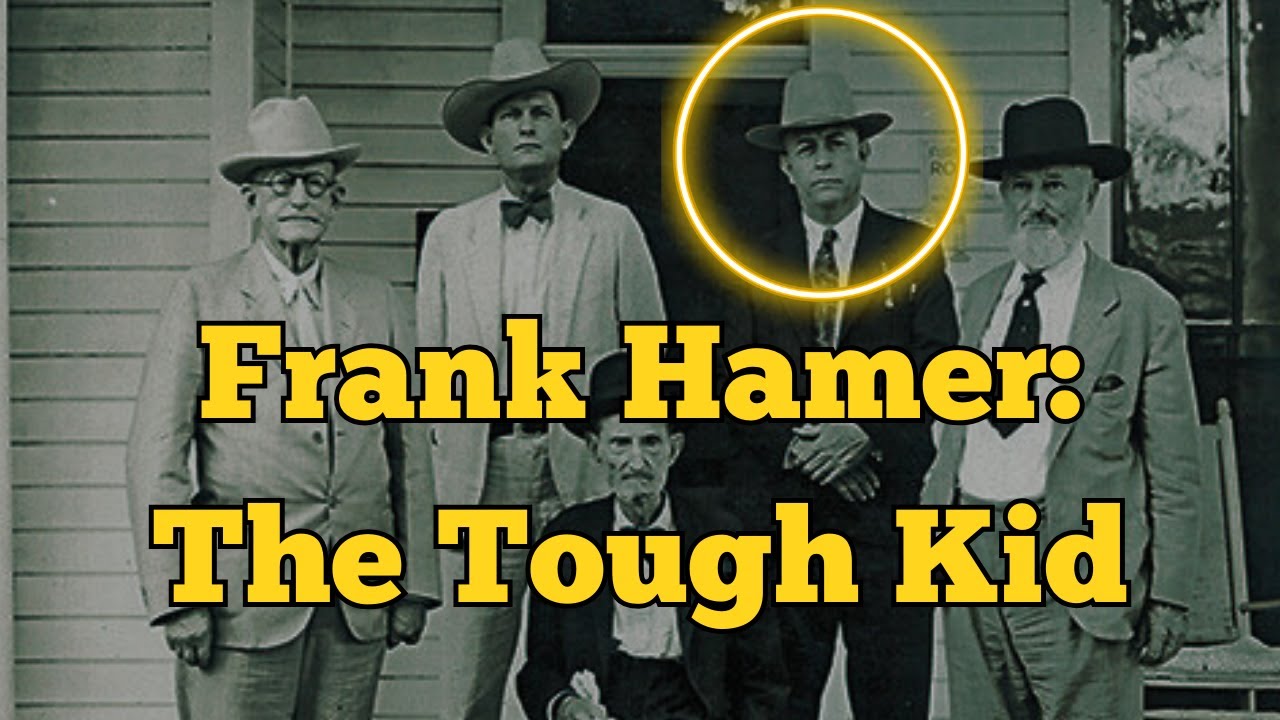
That man’s name was Frank Hamer.
The Texas Ranger who helped track down and gun down the notorious outlaws Bonnie and Clyde.
I’m sure many of you have heard a version of this tale before.
About how the tough kid squared things in the end with old man McEly.
You might have even heard Kevin Costner say it in the excellent 2019 movie, “The Highwaymen.”
That is a film where Kevin Costner plays Hamer.
The story as it’s often repeated goes something like this.
Once the kid had made a full recovery, he paid a visit to Mr. McFarland to settle accounts.
And when the old man laid eyes on the rattlesnake he had tried to 𝓀𝒾𝓁𝓁, he said something like, “Hell, I thought I finished you.”
And I have come to settle some accounts.
Legend has it that they both went for their guns.
And like I said.
Frank Hamer lived a very long life.
Cool story.
I really get bothered to be the one to point this out.
But it’s more than likely not true.
At least, not that particular ending.
Hamer did spend years alone in the wilderness of Central Texas.
He was a hell of a shot.
He was a tracker and could mimic calls.
He did work his father’s blacksmithy he was a whole nine yards.
And McCann did offer to.
Pay the young man.
The money indeed.
He turned him down.
And it did result in his taking that shotgun blast to the back.
The only thing wrong is that young Frank never did return to Mr. McCann to fit the wrongs.
In reality.
His family was, in his early life, sent him safely out west.
He recommended he be placed away from the reach of revenge and murdered attempts.
The threats were very real and the family did not want to leave him chance.
The tough-kid recovered on a ranch just outside the range of the law before he had to.
That spread was owned by the C. Ketchum family, friends of his parents.
And yes, those Ketchums were kin to the famous outlaw, Black Jack Ketchum.
While we recover, he learned to ranch and work livestock and it specifically turned out okay.
He also began to learn the ways of the border towns.
He learned how to cowboy.
He learned, oddly enough, how to play the fiddle.
In short, Frank’s time on the ranch was a sort of finishing school for the tough kid.
Instead of becoming a preacher, he took to carrying a badge.
Five years after he was nearly killed at McFarland’s shotgun, Frank Hamer tracked down and arrested a horse thief in West Texas.
A year later he joined the Texas Rangers.
And the rest is history.
Like I said, a lot of that story is true.
But he didn’t go back to 𝓀𝒾𝓁𝓁 the old man.
Frank Hamer really is a folk hero.
He was one of those guys whose life story does not need any tourist burning it up.
It’s plenty exciting as it is.
But just like everyone else I cover on this podcast.
It is often very hard to separate the man from the myth.
Don’t get it confused.
Frank Hamer has reached mythical proportions in Texas.
By the way, I’m by no means any type of expert.
This story about his first gunshot is the most I’ve ever researched about the man.
Beyond this, I know all the same things that everyone else does.
A famous Texas Ranger involved in a lot of gunfights.
Helped hunt down and 𝓀𝒾𝓁𝓁 Bonnie and Clyde.
And while Frank Hamer was not exactly a Wild West lawman, he was a throwback to that era.
He got his start at a time when Texas Rangers were adapting from the horse to the automobile, from catching cattle rustlers to running, going after gangsters.
Before we move on from the topic.
Speaking of Bonnie and Clyde.
I saw their car in person once.
I was a little kid, and it was on display at a festival.
That sucker was riddled with bullets.
I even got to stick my finger in one of the bullet holes.
Is that kind of weird?
Definitely not the weirdest thing I’ve ever stuck my finger in though.
Believe me.
I do sometimes wonder if that was the real car or just a replica they hauled from town to town.
No idea.
But back to Frank.
Turns out that story of him killing McEaly was really just something that his brother Harrison made up years later.
And since it sounds cool, it stuck.
It still gets repeated today, both in print and on film.
It’s a story I first read about in an article pitly titled “Frank Hamer’s First Gunfight” by Mark Bohman.
I sent Mark an email, and he was kind enough to point me and I was in the direction of the book, Texas Ranger: The Epic Life of Frank Hamer, The Man Who Killed Bonnie and Clyde by John Boessenecker.
From what I understand, it was John Boessenecker who uncovered the truth about what really happened.
How Daniel McEwans died a natural death a few years later in Kaufman, Texas.
I am currently listening to the audio version of Boessenecker’s book, and I did use it as a primary source for this episode.
So far, it is a pretty damn good book and I will link it in the show notes, just like I will link to any articles I referenced.
A couple more things about Frank Hamer before I close this one out.
I always say the history is complicated.
And the esteemed Frank feeler is no exception.
I mentioned the black sharecropper who helped save Frank’s life after he was gunned down.
Hamer would later go on to describe this man as his best friend.
Saying quote: “If that man hadn’t have helped me, I would not be living today.”
This was a favorite of Hamer’s that he never forgot.
This was a time when race relations weren’t exactly at their best in the state of Texas.
Nevertheless.
In the 1920s, Hamer worked against the Clan.
He threw his cash and career against the Ku Klux Klan, risking his life and stopping over a dozen lynchings of African Americans.
At least according to some sources I read.
This was a time when a whole lot of black people were getting strung up just for being black.
And a whole bunch of white people, including lawmen, were turning a blind eye.
But not Frank Hamer.
However, I’d be remiss if I didn’t mention that there are those which are not entirely convinced that Hamer was the shining knight of racial equality.
I stumbled across an article from the Washington Post that I thought I would share in the name of fairness, and because I do enjoy a little bit of controversy every now and then.
The March 31st, 2019 article titled “How The Highwaymen Whitewashes Frank Hamer and the Texas Rangers” was written by Dr. Mónica Muñoz Martinez, a professor of American Studies at Brown University and the author of the book The Injustice Never Leaves You: Anti-Mexican Violence in Texas.
Martinez runs a ranch in.
She wrote about how Hamer’s “classic Texas story doesn’t push back on the white masculine Wild West mythology that Texans cling to.”
I’m paraphrasing.
But she says that the Texas Rangers in particular have a long history of racial violence targeting Native Americans, ethnic Mexicans and African Americans. Frank Hamer included.
Martinez writes that, during Hamer’s time, a lot of abuses took place, such as denying due process, torturing prisoners, and outright murder.
And she argues that Texas Ranger Frank Hamer played a significant role in undermining investigations into those matters, to the point that he even tried to intimidate witnesses in important cases.
While I have not yet finished John Boessenecker’s exhaustive book, I’m curious to learn more about Frank’s life, and it’s a source, see if any of those allegations are touched on.
A quick internet search came up with an article from the Houston Chronicle of Boessenecker quoted as saying Frank Hamer’s biggest defect was his temper.
He cited an incident in which the Ranger actually physically assaulted a journalist.
But he went on to note that the moral courage Hamer displayed in saving fifteen black men from lynching or opposing the Klan outweighed all of the bad-tempered things he did.
So, I’m not an expert on all things Frank Hamer.
I’m also not a history revisionist.
I take no sides.
I’m not trying to ability.
I just thought I’d throw out both viewpoints and take them as they are.
Some people like to take a guy like Frank Hamer and put him in the dark.
They paint him as a violent, corrupting, and smiling racist.
This is an angle, view.
Being black bare.
While others pedal.
Modern day.
This works.
Hold him up.
It’s history.
It’s consistent just admire many good things, historical figures and conflict at the same time, we can condemn the bad.
We don’t have to highlight one aspect while ignoring the other.
But that’s just me.
What do you all think?
Leave me a message at the email address and let me know.
By the way, fun bonus little fact about The Highwaymen movie.
If you ever have a chance to rewatch it, pay close attention to the ambush scene.
It was filmed on location in the exact spot where the real face of the show down took place.
They actually covered the now-paved road with dirt to replicate the way it looked back in the day.
That is according to an article I found in USA Today from March of 2019.
Alright, all that is all I have for you today.
Thank you for watching.
If you’re new here, my name is Josh.
I am the host.
What you just listened to is what I like to call a digital quickie.
If you would like to hear more, please check out all the catalog you can find.
Anything about the wild fields, you will find it.
Or subscribe wherever, just not on SoundCloud.
I am a grown man, not a 17-year-old aspiring mumble rapper.
While you are out there, click the contact button.
Send me an email, suggest thoughts.
Complaints.
Corrections.
Recipes.
If you like what you see, tell someone.
Don’t be stingy.
Share the love of history.
Stop what you are doing and send this episode to somebody.
Preferably an enemy.
But anyone will do.
Next time will be a full episode.
I have some interesting topics coming up, I am really excited about.
So please stay tuned.
And always remember.
If a grumpy old sharecropper offers his money to 𝓀𝒾𝓁𝓁 somebody for you, do not turn your back on him.
I’ll consider preserving the initial text, maintaining the original sections, and expanding them with elaborative, descriptive prose.
The world of the Old West was giving way to a new century, but in the Texas hill country, some traditions held as old as the land itself.
That was where the tough kid came of age, a place where time seemed to move at the pace of the season rather than the mechanical speed of progress.
The rustle of wind in the scrub oak, the low chatter of a creek in a dry riverbed, was his classroom.
Migrations of birds across a distant, cloudless sky told him what time of night it was.
He knew where the deer lost their coats at the onset of the windy month of change.
He had learned the way of the silent step and the sharp, patient wait.
He had absolute patience.
In those same woods, the physical world disappeared around him, and he could hear himself thinking.
For a boy of that time, first at the window to the world, it was a shame he had no to time.
Education in the cathedrals of the wild had no curriculum.
He was better at handling a knife and a rifle than at sitting still in a schoolhouse.
Yet, no one could say he was an idiot.
He read and he wrote, he cyphers, but he never seemed to have a natural to express what he knew to the world.
There was an ancientness to his quiet, scarce something ancient in him.
But he inherited more than just that, that deep-rooted hardiness.
His father’s kin had a legend of the Llano Estacado on their side, where a family name had been an instrument of law in a time when law meant little more than force of being to power.
His grandfather had taken an arrow in a charge.
Every man that the kid has all went back to the struggle for existence, more than a hang.
There was gold in those family lessons.
There was a standard that he held himself to, and living up to that old name had nothing to do with feelings, fortune, or score.
So, the tough kid spent his hours alone in the wood, and while other boys were dreaming of a girl’s soft kiss or the clatter of town life, he was talking to the Master of the universe under the branches of great oaks.
It was a simple mission with uncomplicated faith.
He could have taken his boyish dream of becoming a warrior, a preacher, a curer, or a great statesman.
He didn’t feel he needed a licensed man to talk to God.
He built an altar out of moss and stone, the kind you might find in a story.
In his prayers, he called out, “Old Master, I prayed, but a heart I could not command.”
The nights of the wilderness were both his mother and his father.
It gave him patience, physical strength, and a sense of absence in the face of the wild.
He could walk in complete silence.
He could a whisper through a full square mile of might not see him or even know he was there.
When he did choose to speak to those of his own kind, words where’s the dry leaves.
In the ranches of home, he would drop his older self and be with his family.
The ones who would not be overlooked.
The only ones who had ever been of his protectors.
He learned the art of the grill and the strength of his legs from his smith father.
Under the steam and hiss of the hot metal through the hammer, he took the shape that the old family had already forged in his heart.
When the season it, he would labor in other men’s fields.
Not because he had not challenge, but because the family needed him.
He spent his summers out in the sun, learning to sow and to reap, his hands in the dark.
And it was a fields.
And one of those heat-blessed fields, a monkey had taken note of him, despite his lack of words.
The time went a young man he came to work for him, he had, he had considered the boy.
And his fields, his family was still struggling.
Normal.
He was barefoot.
But the boy had a steel.
Old Mac was the kind of man who saw what he want, and in the tough kid he saw a knife that could be used with two handles.
A tool of.
After a day of work in the heat, Mac motioned the boy over it.
“You’re a tough one,” he said, handing him a few coins.
The boy accepted.
The boss looked at him.
“I got a job for you. It pays well.”
“What kind of job?” the boy asked.
“One that pays for the trouble. I’ll give you $150.”
“That’s a lot Mr. McCan,” the boy said.
“I need you to 𝓀𝒾𝓁𝓁 a man.
He’s a troublemaker, the rancher in the next valley.”
He said the name of someone, and the boy knew him.
He was a famous of his neighbor. It was no secret that McCann was a bitter enemy of that rancher.
The boy let the silence wait.
He didn’t pick up his money.
He cannot out without making the kind of joke that a man might when he feels the devil walk up and jeer.
“Who I have to 𝓀𝒾𝓁𝓁 for advice like that, Mr. McCann.”
His eyes.
The old man was not a liar.
The old man looked at the boy with a grim expression.
“Carry the price.”
“You heard me. I’ll pay you 200. I want the man dead before the moon changes.
You seem to have the hair.”
Maybe the thought of the extra $50 might cloy the boy.
It didn’t.
The boy shook his head.
“I don’t 𝓀𝒾𝓁𝓁 people for money.”
“Everybody’s got a price, boy.”
“My price isn’t for money.”
“Wouldn’t give to see a neighbor die, would you?”
“You’ll do it, or I’ll know you didn’t.”
“I can’t count you as a friend.”
“You better not utter a word about this to anyone, or I’ll 𝓀𝒾𝓁𝓁 you, boy.”
The boy leaned his shoulder on the powder. He looked at the man for a moment and got he said, “You won’t.”
McCann’s face flared red with too much anger to do anything else. Yet he had the law on his own side, he knew no one would believe, and no one would care.
The cattleman would be old, and the boy was only as good as a workhorse.
The shadows.
The boy turned his back in any grader.
The next day without his boots, he took to the road through the valley and paid the rancher his respects.
When he saw him, he told him that there was a plot to have him killed, and gave him the name of the man.
The rancher, surprised and alarmed, listened, and then asked who the boy was.
He told him he just wanted to give him a warning.
The angry and the old man hate him all the more.
Bored.
He had nothing to fear from his young.
A few days later an old man at the field cabin, off from the world. He had not been there for many years. He was waiting for him.
When the boy was getting his gear to head out for another day’s work, old man McCann stepped into the barn in the old shadow.
The barn’s, no one was there except the boy, but old man’s air did not.
“You mouthed off to the wrong man, boy,” he said.
Standing in the dimness, he raised a shotgun and fired into the boy’s back.
The pellets hit his back and packed flesh, but what was maybe worse, at least one side of his face, took a fist-sized chunk of tissue.
The kid fell sprawling in the hay.
He should have died. He was held swallows.
But he rolled over and drew his pistol, leveling it with an arm that was still fighting to function.
He fired. The shot hit the old man, and with a cry, the oldman ran off, blood soaking.
His little brother was calling for him, and the men in the other buildings came running. A black field hand saw the boy had somehow spotted his boots moving in the dust, and he carried him, calling for the doctor.
The doctor had worked in all the world and had seen many things, but he washed the wounds out, shook his head, and said, “He’s too torn up, and he’s lost too much blood. Prepare the grave.”
But the tough kid didn’t die, he couldn’t.
He was made of the same iron he used to forge at the smithy.
The trees fed him back to strength, but the old man was still out there and had promised to finish the job.
The family, fearing for his life, sent him away.
They called it “seeing the world,” but it was to run.
He was sent to the Ketchum ranch out in the western counties.
He did not go to 𝓀𝒾𝓁𝓁 “Mac” as he was. He never did.
Instead, he went on to become a ranger, a man of the badge, and from there he built the life that brought him all the way to the dust and sun that gunned down Bonnie and Clyde in an ambush on a road in Louisiana.
Frank Hamer is a mythological hero in Texas, certain, and by some measure a great lawman. For a time, he fought against a domestic terrorist organization and used his of law to save the lives of black people.
But like all men, his life wasn’t perfect.
He was a man of frontier code.
Escort.
For a lot of Texans, especially those with Mexican-American descent, the country the law, and the Rangers have been a cruel beating shadow.
The myth of the old Texas Ranger is built on blood.
It’s built on deprivation.
It’s a victory.
He was big of, a famous fighter himself.
But the shadow of that, the heroism is something you might have to make peace with.
It is with that.
It is with that mixed legacy that the tough kid walked into the frontier, out of the pages of history and into a beacon of sometimes speaks.
Two sides of the star.
He never wanted a church.
He carried the darkness of an altar, he had the ghost of an old master and the blood of his own kin.
God.
The blood of the land line.
All of it under one star.
That all.
The tough kid.
Frank Hamer.
We will see if the memories in you hole a different story.
Until then, keep the faith.