
The long, brutal odyssey of Sara Baartman, the South African woman paraded across Europe as the “Hottentot Venus” under the cruel glare of 19th-century scientific racism, reached its final, solemn chapter on August 9, 2002, when her remains were laid to rest in the Eastern Cape Province of her birth. The burial, which coincided with South Africa’s National Women’s Day, closed a painful circle that began over two centuries ago when Baartman was lured from her homeland under the false promise of fortune, only to be subjected to a life of dehumanizing exhibition, exploitation, and ultimately, post-mortem dissection. Her return, secured after an eight-year campaign that involved a direct appeal from former President Nelson Mandela, marked a profound moment of reckoning for a nation still grappling with the legacy of colonial violence.
Born in 1789 in the Camdeboo Valley of the Cape Colony, Baartman’s life was defined by loss from its very inception. She belonged to the Khoikhoi people, a pastoral indigenous group whose traditional way of life was systematically dismantled by the encroaching tide of European colonization. Her parents, stripped of their autonomy, were forced into servitude on a colonial farm, and her mother died when Sara was just two years old.
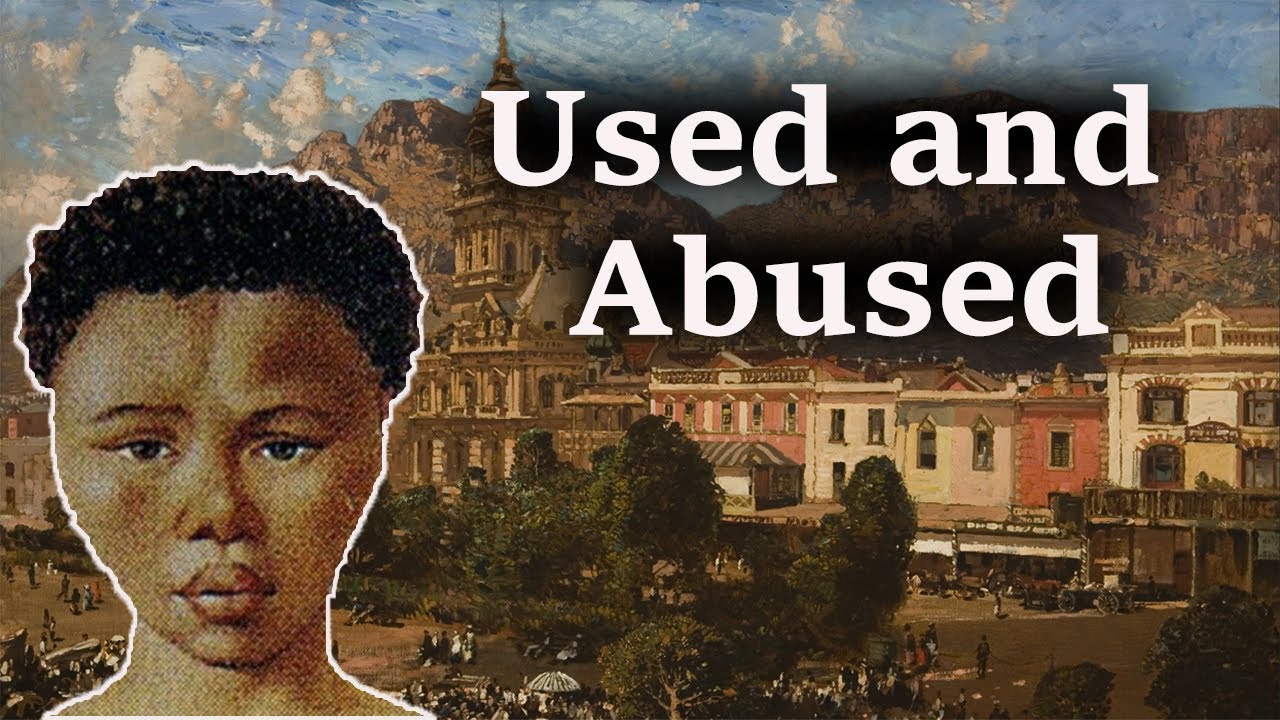 Described as independent and hardworking from a tender age, her resilience was forged in the crucible of a society that offered her no other choice. The fragility of her world was further 𝓮𝔁𝓹𝓸𝓼𝓮𝓭 when her father, working as a cattle driver, was killed by San bushmen, the region’s oldest inhabitants, when she was a teenager. She married young, as was customary, but her infant child died shortly after birth, a harbinger of the sorrows that would define her short life.
The pivotal and tragic turn in Baartman’s life occurred in the early 1800s when a free Black trader named Peter Cesars persuaded her to move to Cape Town, which had recently fallen under British control. While records suggest she was convinced, the power dynamics of the time make it far more likely that coercion played a significant role. In Cape Town, she worked for two years, first as a nursemaid and then as a servant, enduring poor conditions that mirrored the lives of the enslaved.
It was here that her Dutch masters renamed her “Saki,” a diminutive form of her name, a small but symbolic act of control that stripped her of her identity. The murder of her fiancé by colonists around this time further cemented her isolation, leaving her with no familial anchors in a hostile world.
Baartman’s fate was sealed when she caught the eye of William Dunlop, a Scottish military surgeon who also supplied British showmen with exotic animals. Dunlop recognized that Baartman’s steatopygia, a condition resulting in the accumulation of fat on her buttocks, would be a lucrative curiosity for the British public, who were fascinated by the “weird and wonderful.” After initially refusing, Baartman agreed to travel to England under the condition that Hendrik Cesars, Peter’s brother, accompany her.
Cesars, drowning in debt, agreed. In October 1810, Baartman signed a contract written in English—a language she could not read—that stipulated she would work as a servant and exhibit herself for entertainment. The contract, which she did not keep a copy of, was easily manipulated by the men who intended to exploit her, providing them with a legal shield against any accusations of wrongdoing.
Upon arriving in London in November 1810, Baartman was immediately thrust into the degrading world of public exhibition. She was displayed in a cage at the Egyptian Hall in Piccadilly Circus, where paying crowds of two shillings could watch her sing, walk, and gawk at the anomalies of her body. Attendees were even permitted to poke her with sticks, while wealthier patrons paid a premium for private viewings at their homes.
The flyers advertising her show were steeped in racist pseudo-science, describing her as a curiosity from a distant land, reinforcing the colonial narrative of African inferiority. The shows were a sensation, but they also drew the attention of the African Association, an abolitionist group led by the influential Zachary Macaulay, who took the case to court on the grounds that Baartman was being exhibited against her will.
 The trial, held on November 24, 1810, was a farce of justice. Despite strong evidence of coercion, Baartman, with Dunlop present in the room, testified that she was not under restraint and had come to London of her own free will. The signed contract, though incomprehensible to her, was used to dismiss the case.
While the contract was amended to grant her a larger share of profits and better living conditions, it is doubtful these terms were ever honored, as the men quickly moved her to Manchester. The trial, however, only increased her notoriety, and she was paraded across Great Britain and Ireland. In 1814, she was baptized in Manchester, a hollow gesture of Christian salvation that did nothing to alleviate her suffering.
After Dunlop’s death, Baartman was brought to Paris by a man named Henry Taylor, who believed the French public deserved the chance to see this “celebrity.” Within weeks of her arrival, however, she was sold to an animal trainer named S. Rio, who exhibited her as if she were a circus animal, locked in a cage alongside baby rhinos.
In Paris, her degradation reached new depths. She was presented nearly naked, with reports suggesting a collar was sometimes placed on her neck. She was sexually abused and became pregnant by her exhibitor, but her son, named Okuro, died at just five years old.
The French scientific community, led by the naturalist Georges Cuvier, became obsessed with her, examining her as a supposed “missing link” between animals and humans, a cornerstone of the emerging field of racial studies.
Baartman’s life ended on December 29, 1815, in Paris, at the age of 26. The cause of her death remains debated, with records citing an inflammatory disease following smallpox, while others suggest alcoholism, pneumonia, or syphilis. Her misery was absolute, her life a testament to the brutal intersection of racism, sexism, and colonial exploitation.
 After her death, Cuvier dissected her body, preserving her brain and genitals in jars of formaldehyde. Her remains were displayed at the Musée de l’Homme in Paris until 1974, a grotesque monument to the scientific racism that had defined her existence. For nearly two centuries, her body was a spectacle in death as it had been in life, a tool for reinforcing the very ideologies that had destroyed her.
The campaign to repatriate Baartman’s remains began in earnest in the 1990s, spearheaded by South African activists and politicians who viewed her return as a necessary act of restorative justice. The process was long and fraught with diplomatic and legal complexities, but the personal intervention of Nelson Mandela proved decisive. In 2002, France finally agreed to return her remains, a landmark decision that acknowledged the profound injustice done to her.
Her burial in the Eastern Cape, on a day dedicated to celebrating the strength of women, was a powerful symbol of national healing and a reclamation of her dignity. The ceremony was attended by government officials and members of the Khoikhoi community, who honored her as a daughter of the soil who had been wrongfully taken from them.
The story of Sara Baartman is not merely a historical footnote; it is a stark reminder of the dehumanizing power of prejudice and the enduring legacy of colonial violence. Her life was a brutal spectacle, her body a site of exploitation for both entertainment and pseudo-science. Yet her return home has transformed her into a symbol of resilience and a catalyst for conversations about race, identity, and the restitution of cultural heritage.
The apology issued by France, while symbolic, cannot undo the horrors she endured, but her burial on South African soil offers a measure of peace that was so cruelly denied to her in life. Her grave now stands as a memorial to a woman who was robbed of everything, yet whose story continues to resonate as a powerful indictment of a past that must never be forgotten.
The scientific community’s role in Baartman’s exploitation remains a stain on its history. Cuvier, a pioneer of comparative anatomy, used her body to advance theories of racial hierarchy that would have devastating consequences for generations. His decision to preserve her remains for public display was an act of profound disrespect that extended her suffering far beyond her death.
 The eventual repatriation of her remains was a repudiation of this legacy, a recognition that human dignity must supersede scientific curiosity. The fact that it took over 180 years for this acknowledgment to occur underscores the deep-seated nature of the racism that permeated European institutions. Her case has since become a touchstone in debates about the ethics of museum collections and the repatriation of human remains, forcing institutions to confront the violent origins of their acquisitions.
Baartman’s life, though short, was marked by an extraordinary capacity to endure. She learned to speak Dutch, English, and French, a testament to her intelligence and adaptability in the face of unimaginable adversity. She navigated a world that saw her as a freak, a specimen, a commodity, yet she retained a sense of self that her exploiters could never fully extinguish.
Her refusal to be presented fully naked, insisting on a small apron-like garment, was a final act of defiance, a desperate attempt to preserve a shred of dignity in a system designed to strip it away. This quiet resistance, though largely unrecorded, speaks to a strength of spirit that her tormentors could not comprehend. Her story is not one of victimhood alone, but of a woman who fought to maintain her humanity in a world that denied it at every turn.
The legacy of Sara Baartman extends far beyond the borders of South Africa. She has become an international symbol of the fight against racism and the exploitation of Black women’s bodies. Her image, once used to demean and dehumanize, is now reclaimed by artists and activists as a symbol of defiance and resilience.
The term “Hottentot Venus,” once a slur, is now recognized as a tragic marker of colonial brutality. Her story is taught in schools and universities around the world, serving as a cautionary tale about the dangers of scientific racism and the commodification of human beings. Her grave in the Eastern Cape is a pilgrimage site for those who seek to honor her memory and reflect on the lessons of her life.
In death, she has achieved a measure of justice that was so cruelly denied to her in life, her story serving as a beacon for those who continue to fight against oppression in all its forms.


