One hundred and fifty Comanche warriors lined the canyon rim at dawn, surrounding a lone campfire where Jack Flint Morrison sat with his rifle across his lap. He was fairly certain he was about to die. The strange part was that he could not remember doing anything wrong. All he had done was share his fire with a freezing child.

In the Texas borderlands of 1868, that apparently could be enough to get a man killed. Twelve hours earlier, Jack had been just another man trying to disappear into the wilderness. At 29, he had the kind of face that made decent folks cross the street—not because he was ugly, but because he wore his past like a scar that never healed. Three years before, he had been a cavalry scout stationed at Fort Richardson.
Then came the incident that changed everything: a botched raid, friendly fire, and seven soldiers dead because someone gave the wrong coordinates. That someone was Jack. At least, that was what the official report said. A court-martial cleared him of criminal charges, but not of guilt.
His commanding officer made it clear that while he was not going to hang, he was not welcome anywhere civilized either. So Jack headed west into the empty spaces where nobody asks questions and nobody cares about your past. He had been riding alone for six weeks, taking odd jobs where he could find them and avoiding towns when he could not. His horse was a grey mare named Ash, stubborn and mean, which meant they got along just fine.
His supplies were running low, but a man on the run does not have the luxury of being picky. The evening Jack’s life changed started like any other. He made camp in a small canyon about 40 miles from the nearest settlement. He had chosen the spot carefully—good sight lines, water nearby, easy to defend if it came to that.
Old habits died hard, and despite everything, Jack was still a soldier in his bones. He had just gotten his fire going when he heard it: a sound so faint he almost missed it. A cough, weak and wet, coming from somewhere beyond the firelight. Jack’s hand moved to his revolver instinctively.
In this part of Texas, unexpected sounds after dark usually meant trouble. He waited, perfectly still, listening. There it was again—another cough, followed by what might have been a whimper. Jack stood slowly and moved toward the sound with his gun drawn and his nerves on edge.
What he found was not what he expected. Huddled behind a cluster of rocks was a boy, no more than ten years old. Native American, most likely Comanche based on the cut of his clothing. The kid was soaked through, shivering so hard his teeth clattered, and his lips had that bluish tint that meant hypothermia was not far off.
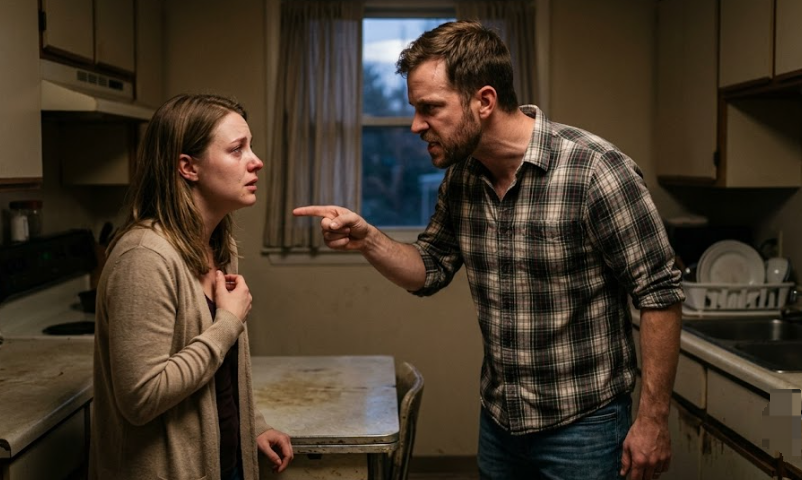
Jack lowered his gun and approached slowly. The boy’s eyes went wide with terror, and he tried to scramble backward, but his legs would not cooperate. He was too cold, too weak, too far gone to run even if he wanted to. “Easy now,” Jack said quietly, holstering his weapon.
“I’m not going to hurt you. ”
The boy said something in Comanche, his voice barely a whisper. Jack did not understand the words, but fear is a universal language. This kid thought he was about to die—and not from the cold.
Jack crouched down a few feet away, keeping his movements slow and deliberate. He could see the boy’s clothes were torn in several places, and there was a nasty gash on his forehead that had bled down the side of his face. Whatever had happened to him, it had not been good. “Look, I don’t know what you’re doing out here alone, and I don’t know if you can understand a word I’m saying,” Jack continued.
“But you’re going to freeze to death if you stay out here. I’ve got a fire going, hot coffee, some beans left over from dinner. ”
The boy stared at him with wide, terrified eyes. Jack sighed and made a decision that his old commanding officer would have called foolish and his fellow soldiers would have called treason.
He took off his own jacket and held it out. “Here, take it. You need it more than I do. ”
For a long moment, nothing happened.
Then slowly, the boy reached out with shaking hands and took the jacket. It was too big for him, practically swallowing his small frame, but the warmth was immediate. Jack could see the relief flood the kid’s face. “Come on,” Jack said, standing up and gesturing toward the fire.
“Let’s get you warmed up. ”
He sat the boy down close to the fire, wrapped his own bedroll around the kid’s shoulders, and poured a cup of coffee with sugar from his dwindling supply. “Drink this. Slow sips.
Your stomach’s probably empty, and I don’t want you throwing it all back up. ”
The boy took the cup with both hands, and Jack watched as the warmth started bringing color back to his face. Up close, he could see more details. The kid had been through hell.
His clothes were shredded like he had been running through thorns. His hands were cut and bleeding, and that head wound looked at least a day old. “What happened to you? ” Jack asked, knowing he would not get an answer but needing to ask anyway.
The boy looked up and spoke in Comanche again, his voice stronger this time, but the words were still meaningless to Jack. The kid seemed to realize this and switched tactics. He made gestures with his hands—horses running, men shooting, people falling. It did not take a genius to figure out what he was trying to say.
Raiders had attacked his camp, probably killed his family, and he had been running ever since. Jack felt something twist in his chest. He had seen too many raids in his years with the cavalry, participated in more than he cared to remember. The official story was always about protecting settlers and maintaining peace.
The reality was usually a lot messier and a lot bloodier. “I’m sorry, kid,” Jack said quietly. “I’m real sorry that happened to you. ”
He heated up the last of his beans and gave them to the boy, who ate like he had not seen food in days.
Probably because he had not. Jack watched the fire and tried not to think too hard about what he was doing. Helping a Comanche boy was not just dangerous—it was potentially suicidal. If settlers found out, they would assume he had gone native.
If the cavalry found out, they would court-martial him again, and this time they would not be so lenient. But sitting there watching the scared, injured kid try to get warm by his fire, Jack could not bring himself to care about consequences. He had already lost everything that mattered—his reputation, his career, his sense of purpose. What was one more stupid decision on top of all the others?
The boy finished eating and looked at Jack with an expression that might have been gratitude. He said something else in Comanche, and this time Jack caught a word he recognized. “Thank you” sounded pretty similar across most languages. “You’re welcome,” Jack replied.
“You can sleep here tonight. I’ll keep watch. ”
The boy’s eyes were already drooping. Within minutes, he was curled up by the fire, wrapped in Jack’s bedroll, breathing steadily.
Jack sat with his back against a rock and his rifle across his lap. He told himself he was just being cautious, that keeping watch was standard procedure for any night in hostile territory. But deep down, he knew the truth. He was protecting this kid.
And if anyone came looking for trouble, they were going to find more than they bargained for. The night passed slowly. Jack dozed in fits and starts, never fully asleep, always aware of every sound in the darkness. Twice he heard coyotes in the distance.
Once he thought he heard horses, but they never came close enough to be a real threat. Dawn came gradually, painting the canyon walls in shades of orange and gold. Jack stood up to stretch, his muscles stiff from a night spent on rocks. The boy was still sleeping, which was probably for the best.
That was when Jack noticed the silence. It was not the normal quiet of early morning. It was something heavier—the kind of silence that comes right before a storm or right before violence. Jack picked up his rifle and turned slowly in a circle, scanning the canyon rim above him.
At first, he saw nothing. Then, as the sun climbed higher, he began to make out shapes. Human shapes. Lots of them.
Warriors on horseback lined every accessible point around the canyon. They sat perfectly still, their silhouettes dark against the brightening sky. Jack started counting and stopped when he hit 30. There were too many to count, too many to fight, too many to outrun.
One hundred and fifty was probably a conservative estimate. Jack’s mouth went dry. This was it. This was how he died—surrounded in a canyon, killed for the crime of showing mercy to a child.
The boy woke up suddenly, probably sensing the change in atmosphere. He looked at Jack, then followed his gaze upward. When he saw the warriors, his face transformed. Fear disappeared, replaced by something that looked like relief mixed with worry.
He jumped up and started shouting in Comanche, waving his arms. The warriors did not move. They just sat there like statues. Then one of them started down the canyon wall.
His horse picked its way carefully over the rocks, moving with the confidence of an animal that had done this a hundred times before. The warrior was older than most, maybe 50, with gray streaking through his long black hair and a face that had seen every kind of hardship the frontier could offer. He rode straight toward Jack’s camp and dismounted about 20 feet away. The boy ran to him immediately, speaking rapidly in Comanche and gesturing back toward Jack.
The warrior listened without interrupting, his expression unreadable. When the boy finished talking, the warrior looked at Jack with eyes that could have cut glass. He studied him for what felt like an hour but was probably only a few seconds. Then he spoke in surprisingly good English.
“My name is Stone Bear. That boy is my grandson. He has been missing for three days. We thought him dead.
”
Jack found his voice, though it came out rougher than he intended. “He showed up at my camp last night, half frozen. I gave him food and warmth. That’s all.
”
Stone Bear nodded slowly. “He tells me you gave him your jacket, your bedroll, your food. He tells me you protected him through the night when you could have easily left him to die—or worse. ”
“I couldn’t just leave a kid to freeze,” Jack said simply.
“Didn’t matter who he was or where he came from. ”
“It matters to us. ” Stone Bear gestured toward the warriors still watching from above. “Those men came here expecting to find a white man who had taken or harmed a Comanche child.
They came prepared for war. Instead, they find a man who showed kindness when he could have shown cruelty. ”
Jack was not sure where this was going, but he kept his rifle lowered and his mouth shut. Sometimes the best thing to do is let other people talk.
“My grandson tells me something else,” Stone Bear continued. “He says you have sad eyes. The eyes of a man who carries ghosts. He says you looked at him the way his father used to look at him before his father died.
”
That hit harder than Jack expected. He swallowed hard and nodded. “Lost some people. Made some mistakes.
Been running ever since. ”
“Running from what? ”
“From everything. From everyone.
From myself, mostly. ”
Stone Bear was quiet for a long moment. Then he made a decision that surprised everyone, including probably himself. He turned toward the canyon rim and shouted something in Comanche.
The warriors began to withdraw, disappearing back over the edges like smoke dissipating in wind. “You saved my grandson’s life,” Stone Bear said, turning back to Jack. “That creates a debt between us. A debt that must be honored.
”
“You don’t owe me anything,” Jack replied. “I did what any decent person would do. ”
“You did what almost no white man would do in these times. ” Stone Bear’s voice was firm.
“You saw a Comanche child and instead of seeing an enemy, you saw someone who needed help. That is rare. That is valuable. That is worth remembering.
”
The old warrior walked to his horse and pulled something from his saddlebag. It was a small leather pouch decorated with intricate beadwork. He handed it to Jack. “Keep this.
If you are ever in danger from Comanche people, show them this. They will know you are under my protection. They will know you are a man of honor. ”
Jack took the pouch, feeling the weight of it in his hand.
It was more than just leather and beads. It was a lifeline, a reminder that maybe he was not as lost as he thought. “I don’t know what to say,” Jack admitted. “Say nothing.
Just remember that mercy is never wasted, even when it seems foolish. Especially when it seems foolish. ”
Stone Bear mounted his horse and looked down at Jack one last time. “The world needs more men like you.
Men who choose kindness when hate would be easier. ”
The boy ran to Jack and hugged him quickly, then said something in Comanche that sounded like a goodbye and a promise all at once. Stone Bear translated without being asked. “He says you are brave like a warrior but gentle like a father.
He says if he grows up to be half the man you are, his ancestors will be proud. ”
Jack felt his throat tighten. He watched as the boy climbed up behind his grandfather, and together they rode up and out of the canyon. Within minutes, they were gone, leaving Jack alone with his campfire and his thoughts.
Inside the pouch was a single eagle feather and a small carved stone shaped like a bear. Symbols of courage and strength. Things he thought he had lost forever. Jack packed up his camp slowly, taking his time.
He was not running anymore. He was not quite sure where he was headed, but for the first time in three years, he did not feel like he was being chased by ghosts. Jack Morrison never became famous, never got his name cleared officially. But word spread among the Comanche tribes about the white man with sad eyes who had saved Stone Bear’s grandson.
Three different times over the next five years, that leather pouch saved Jack’s life when he stumbled into hostile territory. Each time, the warriors who could have killed him chose mercy instead, remembering that mercy had been shown to one of their own. Jack eventually settled down near the Brazos River, working as a scout for traders who needed safe passage through Comanche lands. He never got rich, never stopped carrying the guilt of those seven dead soldiers.
But he learned to live with his ghosts instead of running from them. Stone Bear’s grandson grew up to become a respected warrior and peacemaker in his tribe. He never forgot the cold night when a stranger gave him warmth and asked for nothing in return. Years later, when tensions between settlers and tribes threatened to explode into all-out war, it was that grown boy—now a man—who argued most passionately for finding peaceful solutions.
He had learned on that freezing night that enemies are just strangers who have not been given a chance to show their humanity. Sometimes all it takes is one person brave enough, or foolish enough, to share their fire. Jack lived to be 58, dying quietly in his sleep, that leather pouch still hanging around his neck.
At his funeral, both settlers and Comanche people came to pay their respects to the man who had proven that kindness is not weakness and mercy is not stupidity.