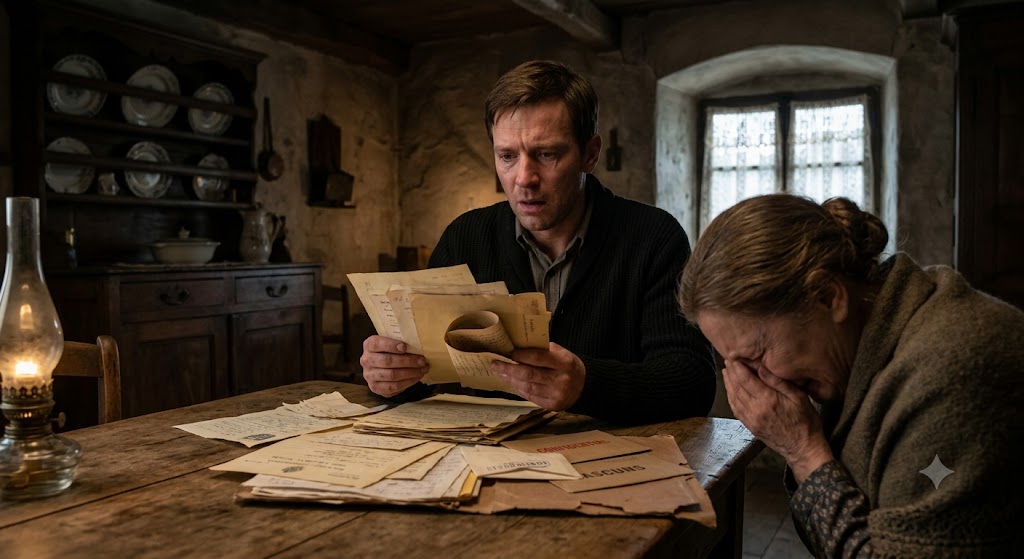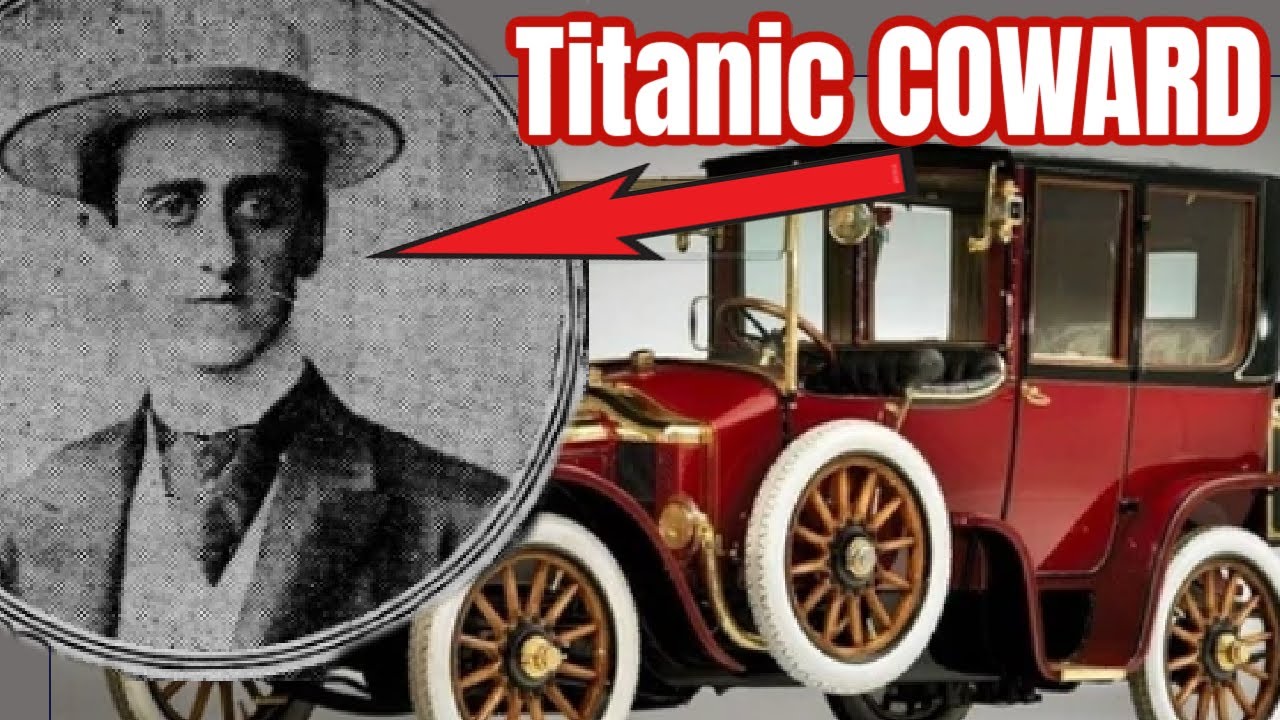
“I never thought you’d make it.”
Lucile Carter froze.
She had just survived the sinking of the Titanic.
She had spent hours in a freezing lifeboat with her two terrified children, pulling an oar through the darkness while more than a thousand people were dying behind her.
She believed her husband was dead.
Then, aboard the rescue ship Carpathia, she saw him.
William Carter.
Alive.
Comfortable.
And according to Lucile’s later testimony, he casually told her that he had already enjoyed—
“a jolly good breakfast.”
There was no desperate embrace.
No frantic question about their fourteen-year-old daughter.
No question about their twelve-year-old son.
Because William hadn’t helped them escape.
He had abandoned all three of them aboard Titanic and saved himself.
And for almost two years, Lucile helped him hide it.
The newspapers called William Carter a hero.
But when their marriage finally collapsed, his own wife revealed what she said really happened on Titanic that night.
And that was only the beginning.
Because once Lucile started talking, she exposed a marriage filled with humiliation, infidelity, alcohol, alleged cruelty—and one extraordinary lie that had fooled the public after the world’s most famous maritime disaster.
But strangely enough, this story begins with a car.
A very expensive car.
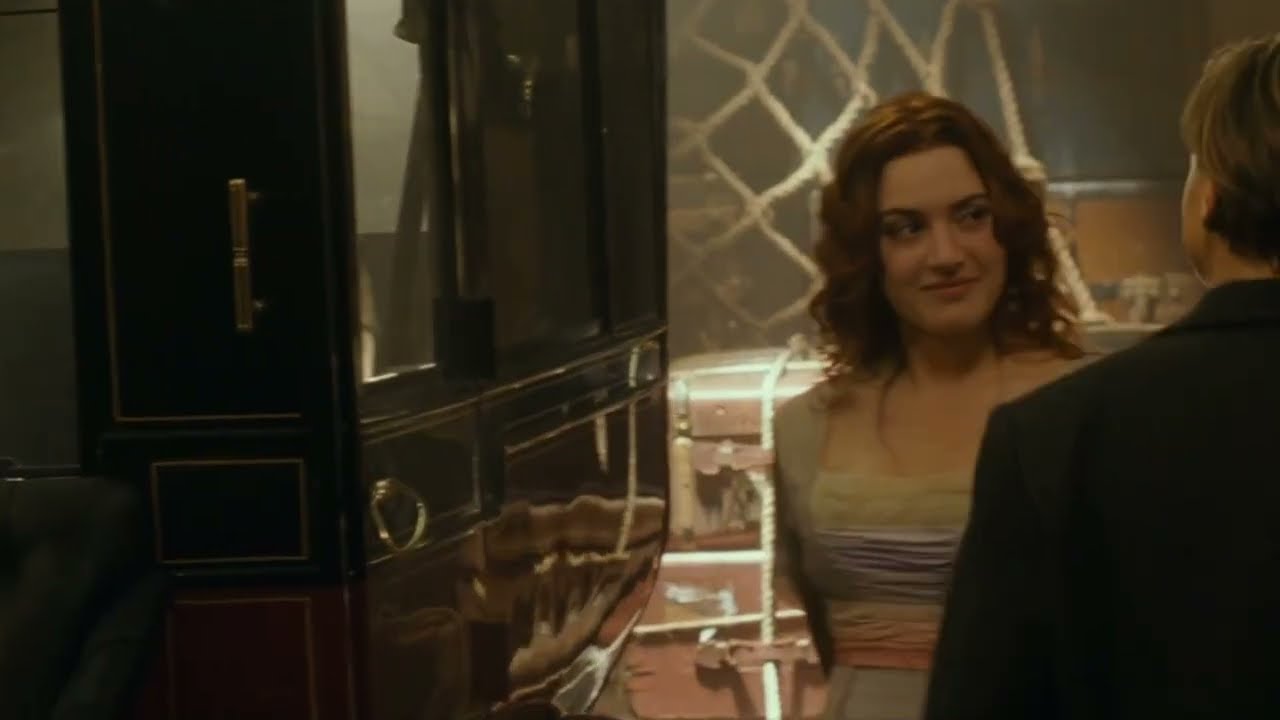
If you’ve seen James Cameron’s Titanic, you probably remember the famous 1912 Renault inside the ship’s cargo hold.
The automobile became the setting for one of the movie’s most recognizable fictional scenes.
But the car itself wasn’t invented for Hollywood.
A 1912 Renault Type CB Coupé de Ville really was being transported aboard Titanic.
It was reportedly the only automobile listed on the ship’s cargo manifest.
And its owner was William Ernest Carter.
William was from Bryn Mawr, Pennsylvania.
He was young.
Wealthy.
Well-connected.
And unlike many men who built great fortunes, William didn’t have to create his.
His father had already done that for him.
William’s father, William Thornton Carter, had made his fortune in Pennsylvania’s iron and coal industries.
When he died in 1893, his son inherited enough money to live an extraordinarily comfortable life.
William attended the University of Pennsylvania but did not finish his degree.
He had other interests.
Polo.
Hunting.
Exclusive clubs.
Travel.
Society.
Work simply wasn’t necessary.
And then William acquired something else society considered enviable.
A beautiful wife.
Her name was Lucile Stewart Polk.
Born in Baltimore in 1875, Lucile came from wealth and social standing of her own.
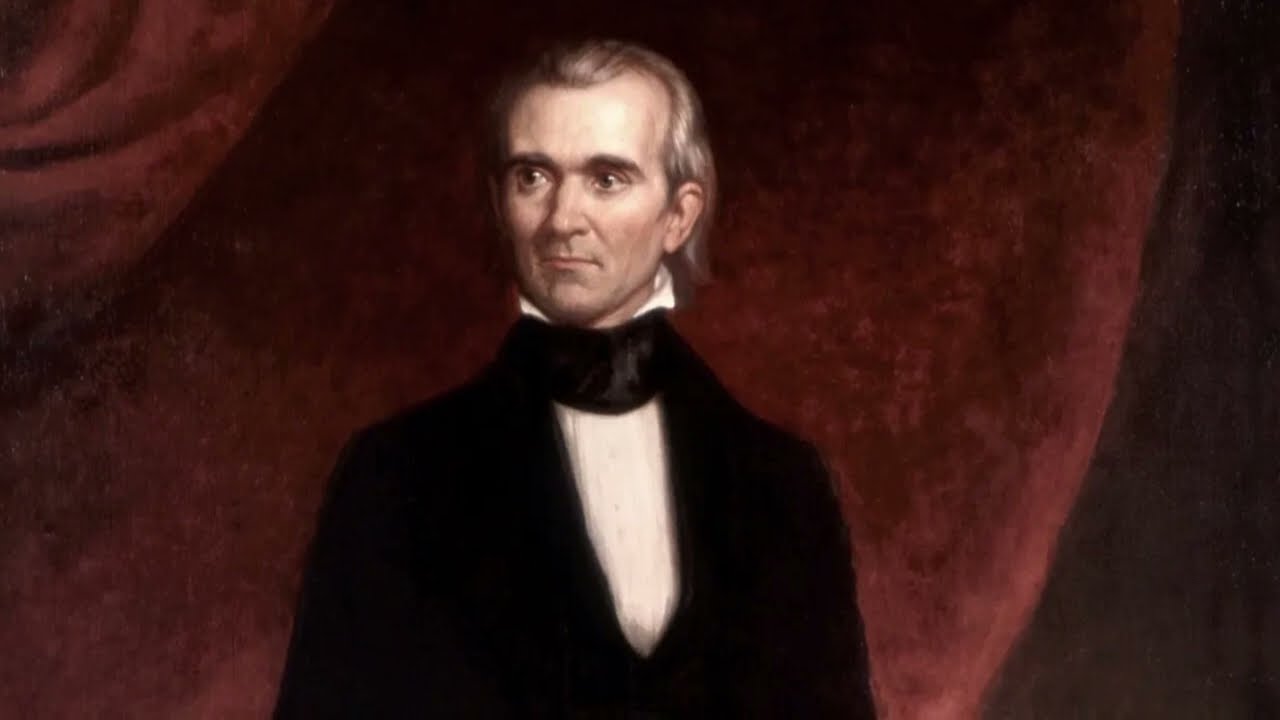
Her father had served in the Navy, worked in insurance, and came from a prominent family line associated with President James K. Polk.
But newspapers seemed even more fascinated by something else.
Lucile’s appearance.
Again and again, society columns described her as exceptionally beautiful.
She was fashionable, blonde, elegant, and a familiar presence at elite social gatherings.
Then she met William.
They reportedly fell for each other quickly.
By the autumn of 1895, they were engaged.
In January 1896, they married in Baltimore.
And everything about the wedding announced wealth.
Franklin Street Presbyterian Church was decorated with lilies and roses.
Lucile arrived in heavy white satin.
Champagne flowed.
Prominent families attended.
William presented his bride with an enormous silver loving cup.
Then the newlyweds disappeared into a honeymoon that lasted for months.
They spent time at William’s country estate.
They traveled to Florida.
They planned European adventures.
It looked like a fairy tale.
And money wasn’t going to be their problem.
William came into full control of his inheritance around the same period.
He didn’t need to build a career.
Instead, his life revolved around elite clubs, horses, polo, hunting and society.
Lucile became the glamorous hostess beside him.
Their country residence in Bryn Mawr became a gathering place for wealthy guests.
Their names appeared alongside families such as the Vanderbilts and Astors.
Then came children.
Their daughter, also named Lucile, was born in 1897.
Their son, William II, arrived in 1900.
The photograph was complete.
Rich husband.
Beautiful wife.
Two children.
Mansions.
Servants.
European travel.
Money.
Status.
Everything.
But behind that photograph, their marriage was deteriorating.
And eventually, Lucile would describe a completely different William.
Not the polished society gentleman newspapers saw.
A man she claimed drank heavily.
A man who disappeared for extended periods.
A man who pursued other women.
A man capable of frightening cruelty.
Yet in public, the Carters continued performing the role expected of them.
Then came 1912.
By that point, the family had spent several years living partly in Europe.
Every year, they returned to America for portions of the social season.
Their original plan in 1912 was to sail aboard the Olympic.
Then they changed their plans.
A newer ship was available.
Bigger.
More luxurious.
More impressive.
Titanic.
So William, Lucile and their children booked first-class passage.
And they weren’t traveling lightly.
They brought Lucile’s maid, Augusta.
William’s valet, Alexander.
Their chauffeur, Augustus.
Two dogs.
And William’s brand-new Renault.
The chauffeur would presumably drive the car once they reached America.
Their servants occupied separate accommodations.
The automobile was packed into the cargo hold.
The Carters themselves occupied luxurious first-class cabins.
The cost of transporting this wealthy household across the Atlantic was enormous.
But money wasn’t an issue.
On April 10, 1912, they boarded Titanic at Southampton.
Their daughter was fourteen.
Their son was twelve.
For several days, their lives aboard the ship represented the absolute peak of Edwardian luxury.
Breakfast.
Promenades.
Lunch.
Afternoon tea.
Formal dinners.
Multiple wardrobe changes every day.
Lucile would have relied on her maid to prepare her elaborate clothing and hair.
William had his valet.
First-class passengers could dine in spectacular restaurants, exercise in the gymnasium, visit the Turkish baths, stroll the promenade or spend evenings drinking, smoking and playing cards.
The Carters belonged perfectly in this world.
And on Sunday, April 14, William and Lucile attended one of Titanic’s most exclusive dinners.
It was hosted by George and Eleanor Widener in honor of Captain Edward Smith.
Other prominent passengers were there.
After dinner, the women retired.
The gentlemen remained behind.
William went to the smoking room.
Lucile returned to her cabin and went to sleep.
At 11:40 p.m.—
Titanic struck the iceberg.
Lucile felt the impact.
And what happened next would eventually become the central wound of her marriage.
But not according to the story she initially told the newspapers.
Days after the disaster, Lucile gave the press an extraordinary account.
According to that version, William came to the cabin after the collision.
He warned her that Titanic had struck an iceberg.
He helped her and their children reach the deck.
Then came the heartbreaking farewell.
Lucile described husbands escorting their wives toward the lifeboats.
Men kissing women goodbye.
John Jacob Astor reportedly helped his pregnant wife Madeleine into a boat.
Other husbands did the same.
And William Carter supposedly behaved just as honorably.
Lucile said he kissed her goodbye.
Then he stood back.
She entered Lifeboat No. 4 with her children.
William remained aboard Titanic like a gentleman prepared to sacrifice himself.
Once the lifeboat reached the water, Lucile discovered another problem.
There weren’t enough men rowing.
So she grabbed an oar.
Other women did the same.
They pulled away from Titanic.
The freezing darkness surrounded them.
Behind them stood the most magnificent ocean liner in the world.
Except now its bow was disappearing into the Atlantic.
Lucile kept rowing.
Then Titanic vanished.
She believed William had vanished with it.
For hours, she sat in that lifeboat believing herself a widow.
Her children had lost their father.
Her old life was gone.
Eventually, daylight arrived.
Then came Carpathia.
The rescue ship.
Lucile and her children were brought aboard.
And then—
she saw William.
Alive.
This should have been one of the happiest moments of her life.
Except years later, under oath during divorce proceedings, Lucile told a radically different version of their Titanic story.
William had not lovingly escorted her to safety.
He had not kissed her goodbye.
According to Lucile, when Titanic struck, William entered their cabin and essentially told her:
“Get up and dress yourself and the children.”
Then he disappeared.
Lucile said she did not see him again until approximately eight o’clock the next morning aboard Carpathia.
He had saved himself.
She had been left to save their children.
And when they finally reunited, according to her testimony, William didn’t tell her how desperately he had searched for them.
He didn’t tell her he had feared they were dead.
Instead, she remembered him saying that he’d had—
“a jolly good breakfast.”
And that he never thought she would make it.
Imagine hearing those words.
Lucile had spent the night believing her husband had died honorably aboard Titanic.
Meanwhile, her husband had apparently reached safety before her.
She had rowed through freezing water.
She had protected their children.
She had watched other husbands say final goodbyes to their wives.
Then she arrived aboard Carpathia and discovered that William had survived without them.
Yet when the newspapers came calling—
Lucile protected him.
She constructed the image society expected.
William Carter, gentleman.
William Carter, husband.
William Carter, father.
William Carter, Titanic hero.
And the newspapers believed it.
Even Lucile’s own mother proudly repeated the story that William had kissed his wife goodbye and stepped aside like other honorable men.
Why would Lucile lie?
The answer becomes clearer when you understand 1912.
Male survivors of Titanic faced enormous public scrutiny.
Among wealthy first-class men especially, chivalry wasn’t merely romantic language.
It was a social expectation.
Women and children first.
A wealthy gentleman who survived while women remained aboard could face humiliation.
Some male survivors spent years defending themselves.
William’s reputation was at risk.
So Lucile gave him something priceless.
A heroic story.
But she could only protect him for so long.
Because Titanic wasn’t the beginning of their problems.
It was the moment that apparently destroyed whatever remained of their marriage.
Only months after the sinking, William suffered another serious accident.
This time, he was playing polo.
He was thrown from his horse, and the animal reportedly fell on him.
His injuries were severe.
Some feared he might die.
He survived.
But while William recovered at home, newspapers noted that Lucile traveled to Newport.
To outsiders, that may have seemed strange.
Why wasn’t the devoted wife beside her injured husband?
The answer might have been simple.
She was already emotionally finished.
Friends reportedly knew the marriage had been troubled even before Titanic.
At one public event before the disaster, Lucile was said to have loudly complained that she would rather leave than have a “wet dishrag” for a husband.
Then came Titanic.
And William left her.
By 1914, Lucile filed for divorce.
That’s when the polished society marriage finally cracked open.
And Titanic was only one allegation.
Lucile described years of disturbing behavior.
She accused William of heavy drinking.
Infidelity.
Verbal abuse.
Physical cruelty.
Long unexplained disappearances.
She described one particularly disturbing incident involving a grasshopper.
According to her testimony, William deliberately tortured the insect in front of her.
When Lucile begged him to stop, she alleged that he punished her with a horsewhip.
She said he struck her on other occasions.
She accused him of kicking her in the back.
She said he frequently became intoxicated.
During one period in England, she claimed William remained in bed for weeks drinking whiskey.
She accused him of pursuing multiple women.
During a trip to Monte Carlo, Lucile became ill.
Instead of caring for her, William allegedly disappeared for the night and returned intoxicated the following morning.
When she confronted him, according to Lucile, he essentially told her he hadn’t come there to serve as her maid.
He had come to see attractive women.
Then there were his disappearances.
William might say he was leaving for a polo match or hunting trip.
Then vanish far longer than expected.
Sometimes he traveled overseas.
Lucile was left behind with their young children.
The glamorous marriage celebrated in society columns looked very different inside the home.
And then Titanic supplied the final symbol of everything Lucile believed was wrong with her husband.
When the ultimate emergency came—
he saved himself.
Even their son William II would later recount the evacuation without placing his father beside the family.
He remembered his mother waking him.
He remembered dressing quickly.
He remembered staying close to her.
He remembered the frightening crowd on deck.
He remembered getting into the lifeboat.
He remembered his mother and sister.
His father was absent from that part of his recollection.
Lucile eventually won her divorce.
And then she did something that must have been especially painful for William.
She moved on.
Quickly.
In 1914, she married another wealthy Philadelphia society man, George Brooke.
This time, the marriage appears to have been far quieter.
Lucile and George had a daughter together.
They remained married until Lucile’s death in 1934.
William Carter never achieved the same redemption.
His survival aboard Titanic followed him.
Newspapers continued referring to the accusations that he had abandoned his family.
The heroic image created immediately after the disaster had collapsed.
He even publicly defended J. Bruce Ismay, another Titanic survivor whose reputation was devastated by accusations that he had saved himself while others died.
William became involved in lawsuits.
His name continued appearing in newspapers for reasons that had little to do with the glamorous society life he once enjoyed.
And then came one almost comical reminder of his failed marriage.
After the divorce, William was reportedly sued over an expensive lingerie bill Lucile had incurred in Paris while they were still married.
The lingerie had been delivered.
The bill hadn’t been paid.
Meaning William potentially had to pay thousands of dollars for clothing his former wife might now wear during her new life with another husband.
Meanwhile, the Carter children grew up.
Their daughter Lucile eventually married and created a family of her own.
Like many Titanic survivors, she rarely spoke publicly about that night.
Their son William II entered banking and also married.
He reportedly remained an animal lover throughout his life.
The loss of the family’s dogs aboard Titanic stayed with him deeply.
And what became of the famous Renault?
It went down with Titanic.
The automobile had been stored in a crate in the forward cargo area.
Some have speculated that remnants of it could still exist somewhere inside the wreck.
More than a century later, people remain fascinated by the possibility of finding Titanic’s legendary car.
But the Renault isn’t really the most interesting thing William Carter lost that night.
Cars can be replaced.
Fortunes can survive.
Mansions can remain standing.
William lost something far more difficult to recover.
His reputation.
When Titanic departed Southampton, William Carter was a wealthy Philadelphia sportsman with a beautiful wife, two children, servants, dogs, mansions and an expensive automobile.
He appeared to have everything.
When Titanic sank, his Renault disappeared beneath the Atlantic.
But according to the testimony that emerged from his divorce, something else sank with it.
His wife’s remaining trust in him.
For nearly two years, Lucile helped preserve the illusion.
She told newspapers that her husband had escorted her to safety.
She described a loving farewell.
She allowed society to believe that William Carter had behaved like the other men who placed their families aboard lifeboats and prepared themselves to die.
But when their marriage finally collapsed, Lucile stopped protecting him.
And suddenly the heroic Titanic story became something very different.
A frightened wife.
Two children.
A husband who disappeared.
Hours in a freezing lifeboat.
A rescue ship appearing through the morning mist.
And then Lucile spotting the husband she believed had died—
already aboard.
Alive.
Fed.
Safe.
While she had spent the entire night fighting to keep herself and their children alive.
Titanic took William Carter’s Renault to the bottom of the Atlantic.
But according to Lucile, William Carter destroyed his own reputation with one decision:
When disaster came…
he left his wife and children behind.