The romanticized image of the Old West often overlooks the brutal reality of daily survival. Beyond the famous gunfights, settlers faced a host of lethal dangers that made life remarkably short and precarious. From the complete absence of medical care to the ever-present threat of mob violence, the risks were constant and unforgiving. One of the most significant threats was the medical treatment itself.
Doctors on the frontier often had no formal training, performing surgeries on wooden tables without gloves, anesthesia, or any form of sterilization. The same tools were used on multiple patients without being cleaned, meaning that more people died from infections like gangrene days after a procedure than from the original wound or injury. Justice was equally dangerous to encounter in a land without established law. Between 1850 and 1900, an estimated 4,000 people were lynched across the American West.
These acts were frequently carried out by vigilante mobs based on a rumor, a personal grudge, or simple prejudice, without any trial or chance for the accused to defend themselves. Innocent people were hanged within minutes of being accused, and the community often saw this as a normal way to maintain order. The most significant killer, however, was not a bullet but a glass of water. Cholera, dysentery, and typhoid fever ravaged entire towns because water sources were routinely contaminated with sewage from nearby latrines and animal pens.
In places like Dodge City, outbreaks could kill dozens in just a few weeks. Doctors, unaware of the cause, often blamed bad air, leaving families to watch their children die from diseases with no dignity. For many, economic survival came at a terrible cost. Coal and silver mines relied on the labor of boys as young as seven or eight, who were sent into tunnels too small for adults to carry dynamite and push heavy carts.
They worked 12-hour shifts breathing in rock dust without any protection. These children frequently developed lung disease before they turned 12, and the son would often take his father’s place in the mine after a cave-in killed the older man. Even a simple dental problem could prove fatal. With no trained dentists, the town barber would extract a tooth with a regular pair of pliers, using whiskey as the only anesthetic.
The procedure was a painful, brutal experience that often led to severe and deadly infections. A single rotten tooth could turn into a fatal abscess that killed a person within days, causing many to endure the pain rather than risk the “treatment. ”
Fire was another catastrophe that could erase a lifetime of work in hours. Towns built from dry, green wood and filled with open flames were tinderboxes.
With no fire department, a single tipped lantern could consume entire city blocks. Towns like Deadwood and Virginia City were destroyed by fire, only to be rebuilt immediately with the same highly flammable materials. The frontier also held dangers for the African Americans who migrated west after the Civil War. While up to one in four cowboys was Black, their contributions were often erased from history.
They also faced the constant threat of violence in “sundown towns,” where non-white people had to leave before nightfall or risk being lynched with complete impunity. Even a successful lawman like Bass Reeves, who arrested over 3,000 criminals, had his name unrecognized for decades. Indigenous communities faced a calculated threat of extermination. Beyond military conflict, contaminated blankets were deliberately given to native peoples, most notoriously at Fort Pitt in 1763.
This biological warfare devastated tribes whose immune systems had no defense against the virus, sometimes reducing entire populations to just a few dozen survivors in a matter of weeks. Even the iconic gunfight was a hazard to everyone nearby. The revolvers of the era were terribly inaccurate, firing low-velocity bullets easily thrown off by the wind. Most shots missed their intended target, and the stray bullets would crash through windows and doors, often killing civilians and children.
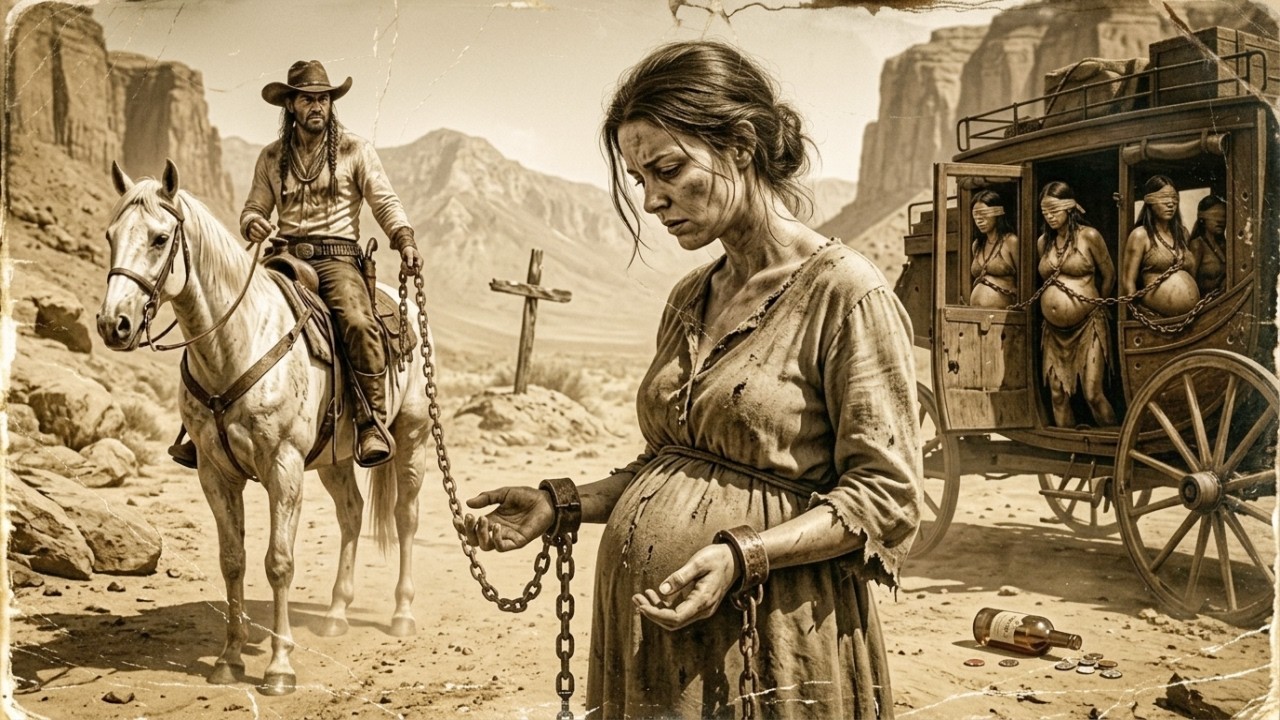
Records show that innocent bystanders died more frequently than the combatants themselves. Behind the saloon doors was another hidden world of exploitation. Women were often brought to mining towns under false promises of work and then forced into prostitution. They faced unchecked violence, rampant disease, and were buried in unmarked graves after their deaths.
The gold rush itself also poisoned those who sought it, as miners handled mercury with bare hands. This toxic metal caused a slow, agonizing death marked by tremors, confusion, and madness, a condition known as “miners’ disease. ”
The legal system was also deeply corrupt. Sheriffs were often just hired guns for wealthy ranchers and mine owners.
Judges would hold trials in saloons, and the verdicts depended on who was paying for the drinks. Without money, an ordinary worker had no real defense and could be hanged on baseless accusations, while a connected criminal could kill without ever seeing a jail cell. The journey west was its own brutal ordeal. The Oregon Trail took four to six months to cross, and of the 400,000 who attempted it, many never arrived.
Cholera outbreaks, storms, and impassable rivers killed entire families. So many died that along certain stretches, there was an average of one grave every 80 meters, a constant, grim reminder for those who kept going. The horror of scalping was also not exclusive to any one group. Settlers, soldiers, and bounty hunters also scalped, and several state governments created official payment charts for indigenous scalps, with set prices for men, women, and children.
This funded an economy of terror that did not discriminate, and many innocent people were killed by hunters chasing a bounty. Daily life was a constant struggle against starvation and disease. Food was infested with maggots, meat rotted quickly, and homemade canned goods were a lottery with botulism. Scurvy, malnutrition, and chronic intestinal infections killed more people than any gun.
On the Great Plains, the weather was equally merciless. The Children’s Blizzard of January 1888 killed hundreds when a mild morning suddenly turned into a brutal storm, trapping children walking home from school in blinding snow within sight of their houses. Untreated diseases, particularly syphilis, were a slow death sentence. After an initial sore that disappeared, the disease would attack the brain years later, causing insanity.
The only “cure,” mercury, was almost as deadly as the disease itself, poisoning the body and destroying the teeth. It was a situation many preferred to endure without treatment. Government policy toward Native Americans continued its destructive course after the wars ended. People were forced onto reservations on lands no one else wanted, where promised rations often arrived spoiled or were stolen by agents.
Compounding the starvation, children were forcibly taken to boarding schools where they were forbidden to speak their native languages under the official motto “Kill the Indian, save the man. ”
For miners, every shift could be their last. Methane gas, unseen and odorless, could be ignited by a single spark, causing an explosion that killed instantly or trapped survivors in the dark to suffocate. Accidents that killed dozens of men at once were tragic news for a week and then forgotten, with mine owners rarely paying any compensation to the families.
Communication was also a high-risk endeavor. Pony Express riders traveled alone through dangerous territory, carrying valuable mail and money. They faced constant ambushes and attacks, and dozens lost their lives in the line of duty. The operation was so perilous it only lasted for under two years.
In the absence of real law enforcement, citizens formed vigilance committees that they claimed were defenders of order. In reality, these were organized revenge mobs. In San Francisco, they hanged dozens of people without trial, typically targeting immigrants, the poor, and other vulnerable groups. It was persecution that dressed itself up as justice, and no one dared question it.
Isolation on the frontier had its own unique terror. Families living in sod houses on the endless plains could go months without seeing another person. The constant wind and unchanging horizon drove many into a state of madness known as “prairie madness. ” Some stopped speaking, while others walked off into the fields and were never seen again.
Ultimately, the most common fate was to be utterly forgotten. Thousands of miners, immigrants, and children died and were buried in unmarked graves without any record of their existence. While history remembers the gunfighters, the vast majority of ordinary people who toiled and died building the West became nameless dust, their lives lost to the frontier and then to history itself.


