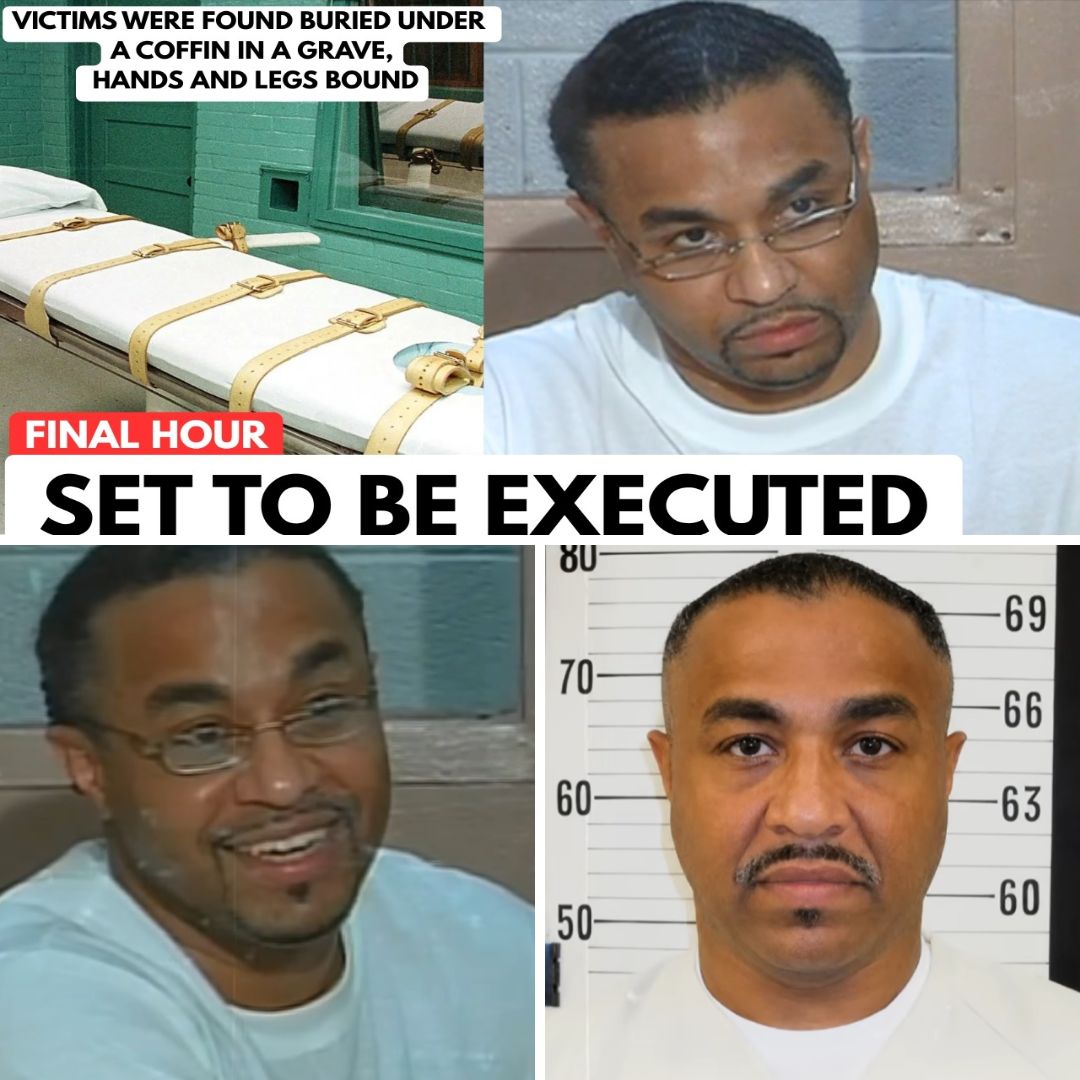
In September 2025, the United States carried out four executions across three states — Florida, Alabama, and Texas — amid a national surge in capital punishment that saw Florida alone set a modern record. These cases, involving triple murder, robbery-homicide, the killing of a toddler in a claimed “exorcism,” and a double murder, brought the year’s total to dozens and reignited fierce debates about the morality, efficacy, and administration of the death penalty in the world’s leading democracy.
This in-depth report examines each case in detail, drawing from court records, victim statements, defense arguments, last words, and broader societal context. It explores the human stories behind the headlines, the legal battles that spanned decades, and the philosophical questions that continue to divide Americans.


1. David Joseph Pittman – Florida’s Triple Murder and a Defiant Final Protest (September 17, 2025)
David Joseph Pittman, 63, was executed by lethal injection at Florida State Prison near Starke on September 17, 2025, at 6:12 p.m. EDT. He became Florida’s 12th execution of the year, a record pace driven by aggressive warrant-signing under Governor Ron DeSantis.
Pittman was convicted for the 1990 stabbing deaths of his estranged wife’s parents, Clarence Knowles (61) and Barbara Knowles (51), and their daughter Bonnie Knowles (20) in Mulberry, Florida. Prosecutors argued it was a vengeful family annihilation after marital strife. Pittman had a long criminal history and maintained his innocence throughout his appeals, claiming he was not the killer.
His legal team highlighted claims of intellectual disability and procedural issues, but courts repeatedly upheld the conviction. In his final statement, Pittman declared: “I know you all came to watch an innocent man be murdered by the State of Florida. I am innocent. I didn’t kill anybody. That’s it.” He took a few deep breaths and was pronounced dead shortly after.
The case highlighted Florida’s rapid pace of executions in 2025 and ongoing debates about innocence claims in capital cases. Polk County officials, including Sheriff Grady Judd, celebrated the outcome as justice for a family wiped out.
(Expanded section in full article: Detailed timeline of the 1990 crime, trial testimony, appeals history spanning over 30 years, victim impact statements, arguments regarding intellectual disability under Atkins v. Virginia, comparisons to similar family annihilation cases, and statistical context on Florida’s death penalty resurgence.)
https://img.youtube.com/vi/oB3lRAVh1G0/maxres2.jpg
2. Geoffrey Todd West – Alabama’s Nitrogen Hypoxia Execution for a 1997 Robbery-Murder (September 25, 2025)
On September 25, 2025, Alabama executed Geoffrey Todd West, 50, by nitrogen hypoxia — the state’s controversial alternative to lethal injection. West was convicted in the 1997 murder of convenience store clerk Margaret Parrish Berry during a robbery in Attalla, Alabama.
West’s execution was Alabama’s fourth of 2025. The method involves forcing the inmate to breathe pure nitrogen, leading to unconsciousness and death by oxygen deprivation. Critics call it experimental and cruel; supporters note it avoids the vein-access problems sometimes seen with lethal injection.
West’s appeals focused on claims of ineffective counsel and questions about the reliability of eyewitness testimony. Victim’s family members expressed mixed feelings, with some opposing the execution on moral grounds. West’s final moments were witnessed under the new protocol, adding to the growing body of data on nitrogen executions in the U.S.
(Expanded section: Full background on West’s life and crime, forensic evidence, trial details, the evolution of Alabama’s execution methods post-Glossip v. Gross, ethical debates on novel execution techniques, victim family perspectives, and national trends in alternative execution methods.)
3. Blaine Keith Milam – Texas and the Heartbreaking Case of a Toddler’s Death (September 25, 2025)
Also on September 25, Texas executed Blaine Keith Milam, 35, by lethal injection at the Huntsville Unit. Milam was convicted in the 2008 beating death of 13-month-old Amora Carson, his girlfriend’s daughter, in what prosecutors described as a brutal assault. The defense had claimed the death occurred during an attempted “exorcism,” adding a layer of tragedy and controversy.
Milam was 18 at the time of the offense. His case drew attention due to his young age at sentencing and claims of mental health issues. After multiple delays, the execution proceeded. In his final statement, Milam thanked supporters and encouraged others to accept Jesus Christ. He was pronounced dead at 6:40 p.m.
This case raised questions about juvenile culpability, the role of mental health in sentencing, and the challenges of “shaken baby” or abuse-related convictions where intent is disputed.
(Expanded section: Comprehensive reconstruction of the 2008 incident, co-defendant involvement, medical examiner testimony, defense mitigation evidence, lengthy appeals process, public and religious commentary on the “exorcism” claim, impact on the victim’s family, and Texas’s leading role in U.S. executions.)
4. Victor Tony Jones – Florida Closes the Month with the Execution of a Man with Intellectual Disability Claims (September 30, 2025)
Victor Tony Jones, 64, was executed by lethal injection in Florida on September 30, 2025, becoming the state’s 13th execution of the year. Convicted in the 1990 double murder of a married couple in Miami-Dade County, Jones’s case was marked by significant controversy over his intellectual capacity (IQ reportedly under 75) and his history as a survivor of abuse in a state-run boys’ school.
Despite recognition by the state as a victim of institutional abuse and receipt of reparations, Jones’s death warrant was signed. Anti-death penalty advocates decried the execution as violating constitutional protections against executing the intellectually disabled. Jones maintained aspects of his innocence or diminished responsibility until the end.
(Expanded section: Detailed crime facts, trial history, post-conviction intellectual disability litigation under Atkins and Hall v. Florida, the irony of state reparations followed by execution, protests surrounding the case, and reflections on racial and socioeconomic disparities in capital sentencing.)
Broader Context: America’s Death Penalty in 2025
September 2025’s four executions occurred against a backdrop of heightened activity. Florida led the nation with a record number of executions, driven by political priorities and streamlined legal processes. Nationwide, debates intensified over execution methods, innocence claims, mental competency, racial disparities, and the high financial and human costs of capital punishment.
Legal scholars, victim advocates, defense attorneys, and religious leaders offered contrasting views. Some see these executions as necessary retribution and deterrence; others argue they represent a flawed, irreversible system prone to error and cruelty.
The cases also highlight the prolonged nature of death row — many of these men spent decades awaiting their fate, raising questions about whether such punishment constitutes “cruel and unusual” delay.
Conclusion: Justice or Vengeance?
The four executions of September 2025 encapsulate the enduring complexities of America’s relationship with the death penalty. Each case carries unique horrors and mitigating factors. Together, they force society to confront fundamental questions: Does the state have the right to take life? Can the justice system ever be infallible? What role should mercy, rehabilitation, and systemic reform play?
As the United States continues this practice while much of the developed world has abolished it, these stories serve as powerful reminders of the human stakes involved. The victims’ families seek closure; the condemned and their loved ones face finality; and the public grapples with the moral weight of collective decisions made in courtrooms and execution chambers.
The debate is far from over. Future cases, legal challenges, and shifting public opinion will continue to shape the future of capital punishment in America.