There is a building in Washington, D.C. that raises a question most people never think to ask.
Look at it.
Granite columns.
Massive vaulted interiors.
Hand-carved stone.
A clock tower rising more than 300 feet above the city.
The Old Post Office was completed in 1899 at a cost of millions of dollars.
And here’s the strange part:
The federal government built it before Americans paid the modern federal income tax.
Not just that building.
Before 1913, America built monumental courthouses, post offices and government buildings.
It expanded its Navy.
It fought wars.
It subsidized infrastructure.
It administered a rapidly expanding nation.
And yet the Sixteenth Amendment—the constitutional foundation for the modern federal income tax—wasn’t ratified until 1913.
So where did Washington get its money?
Ask that question in a history class and you’ll usually receive a straightforward answer:
Tariffs.
Excise taxes.
Land sales.
Other federal receipts.
And historically, those sources really did provide enormous amounts of government revenue.

But the document we’re examining makes a much more provocative claim.
It argues that when you start comparing the government’s reported revenues with the extraordinary construction and spending of the period, something appears not to fit.
And according to the story, buried somewhere inside old Treasury reports, congressional investigations and forgotten ledgers may be the answer.
Or perhaps—
a mystery that was never there at all.
Let’s follow the money.
Travel back to 1890.
There is no modern federal income tax.
America is industrializing at extraordinary speed.
Railroads stretch across the continent.
Cities explode in population.
Factories multiply.
Washington’s responsibilities expand.
The government collects enormous sums through customs duties.
Imported goods entering American ports are taxed.
Alcohol and tobacco generate internal excise revenue.
Public lands and miscellaneous fees produce additional money.
For much of the nineteenth century, customs duties are among Washington’s most important revenue sources.
That part isn’t mysterious.
But now look at what America was building.
Across the country appeared monumental federal buildings that looked less like practical government offices and more like declarations of national power.
Granite.
Marble.
Bronze.
Domes.
Columns.
Elaborate interiors.
Even relatively small cities could receive impressive post offices, customs houses and courthouses.
Washington itself was filling with architecture designed to last for generations.
Then consider America’s other expenses.
Military forces.
Naval expansion.
Pensions.
Federal administration.
Public works.
War.
Expositions.
And infrastructure.
The source behind this story asks a deceptively simple question:
Did tariffs, excise taxes, land sales and conventional government receipts really explain all of it?
Its answer is:
Maybe not.
And that’s where the story becomes controversial.
Consider the World’s Columbian Exposition held in Chicago in 1893.
The White City.
More than 600 acres.
Hundreds of structures.
Millions of visitors.
An architectural spectacle designed to demonstrate America’s arrival as a modern industrial power.
Private money and local financing played enormous roles in creating the exposition.
The federal government also appropriated millions.
One federal government building alone occupied an enormous footprint and was designed in monumental neoclassical style.
Then, after the exposition—
much of it disappeared.
Temporary grandeur.
Built rapidly.
Used briefly.
Demolished.
The document argues that expenditures like these become suspicious when compared with reported federal revenues.
But this is exactly where we have to be careful.
A government’s finances aren’t determined by comparing one revenue category with a handful of impressive buildings.
Budgets include numerous revenue streams, expenditures, surpluses, deficits, borrowing and appropriations accumulated across different years.
Still, the question posed by the source remains intriguing:
If the conventional explanation is complete, can every dollar be followed through the surviving records?
According to the document—
not always.
And it claims that some people working inside the old system noticed the same thing.
Imagine Washington around 1900.
No computers.
No digital databases.
Government finance exists in paper.
Ledgers.
Receipts.
Appropriation books.
Handwritten entries.
Thousands upon thousands of pages moving through federal offices.
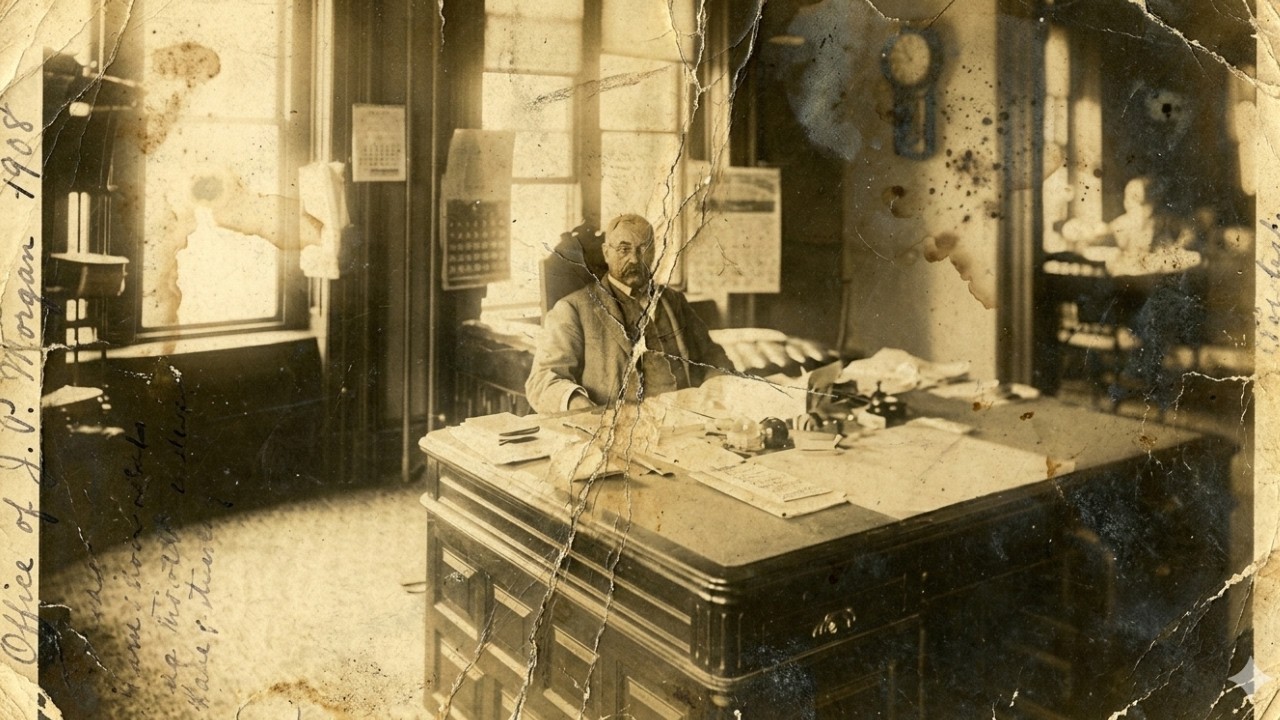
Somewhere behind a desk sits a clerk.
Perhaps she’s been working there for twenty years.
Every morning she opens another enormous ledger.
Customs receipts in one column.
Expenditures in another.
Land revenues.
Fees.
Special appropriations.
She understands the system because she lives inside it.
Then one day, someone asks:
“Where did this money come from?”
And suddenly the answer becomes complicated.
The source describes alleged oral histories from former federal employees who supposedly remembered secondary categories of revenue and separately maintained records.
One purported former customs clerk describes “other columns.”
Another alleged Treasury employee remembers money associated with asset management.
Others supposedly recall mineral rights, harbor fees, leases and federal land revenues moving through accounting channels that weren’t obvious in ordinary public summaries.

These stories sound explosive.
But there’s an important problem.
The document does not provide enough verifiable archival information to establish all of these testimonies as authentic.
That distinction matters.
A dramatic quotation isn’t historical proof simply because an archive is named beside it.
To establish that, we’d need the collection.
The interview number.
The original transcript.
The page.
The provenance.
Without those things, what we have is a claim that needs verification.
But suppose, for a moment, that we don’t accept or reject it.
Suppose we simply keep investigating.
Then another question appears.
Gold.
At the end of the nineteenth century, gold was central to American monetary policy.
The Treasury maintained gold reserves.
International trade moved gold.
Banks held gold.
Currency and government confidence were intimately connected to it.
And over the decades surrounding 1900, America’s monetary position changed dramatically.
The source argues that the growth in federal gold holdings cannot be explained merely by rising tariff collections.
Therefore, it suggests another pool of federal wealth must have existed.
Again, that conclusion doesn’t automatically follow.
Gold reserves can change for reasons far beyond tariff revenue alone.
International capital flows.
Monetary policy.
Bond transactions.
Gold production.
Trade balances.
Banking operations.
Changes in statutory reserve arrangements.
All can matter.
But the source isn’t really asking us to solve nineteenth-century monetary economics.
It wants us to notice a pattern.
Government revenues appear complicated.
Certain records allegedly disappear.
Other categories are supposedly reclassified.
Then—
1913 arrives.
And suddenly the entire financial architecture of the United States begins changing.
February 1913.
The Sixteenth Amendment is ratified.
Congress now has explicit constitutional authority to impose taxes on incomes without apportioning them among the states according to population.
Later that year, the Revenue Act establishes a federal income tax.
Initially, it looks almost unrecognizable compared with the system Americans know today.
Rates are low.
Most ordinary Americans don’t pay it.
The burden falls overwhelmingly on higher incomes.
Supporters present it as a fairer way to finance government.
A progressive tax.
Those with more income contribute more.
But opponents worry about something larger than percentages.
Power.
Once Washington can reach directly into individual income, what happens to the relationship between the citizen and the federal government?
Would the tax remain small?
Would it remain limited to the wealthy?
Would the administrative machinery required to collect it eventually expand?
Those debates were real.
But 1913 wasn’t finished.
Because in December came another enormous transformation.
The Federal Reserve Act.
Within the same year, the United States had fundamentally altered both federal taxation and central banking.
That coincidence is central to the source’s argument.
It portrays 1913 almost as a dividing wall.
On one side:
The old America.
Tariffs.
Excise taxes.
Public lands.
Decentralized banking.
A federal government supposedly capable of building monumental infrastructure without taxing ordinary personal income.
On the other:
Income taxation.
The Federal Reserve.
A rapidly evolving modern fiscal state.
The source asks:
Was the new system simply added because America had become larger and more complicated?
Or did it replace financial mechanisms that have since been forgotten?
That’s the mystery.
But then the document makes its darkest allegation.
It claims that pieces of the old paper trail began disappearing.
Records destroyed.
Records discarded.
Accounting categories changed.
Ledgers consolidated.
Old terminology replaced.
And as decades passed, another archive disappeared naturally.
Human memory.
Picture a federal clerk hired in 1890 at twenty years old.
By 1913, she’s forty-three.
She remembers the old accounting system perfectly.
By 1935, she’s sixty-five.
Retired.
By 1950, she’s eighty.
Her grandchildren ask:
“Grandma, how did the government pay for everything before income tax?”
She smiles.
“Tariffs, mostly.”
Then perhaps she pauses.
“And some other things.”
“What other things?”
Land receipts.
Mineral revenues.
Fees.
Leases.
Special funds.
Accounting categories no longer used.
To her, none of this is mysterious.
It was simply how the office worked.
But her grandchildren learned a cleaner version in school.
Before 1913: tariffs.
After 1913: income taxes.
Easy.
Memorable.
And incomplete—at least according to the source.
Then the old clerk dies.
Another witness disappears.
Another ten years pass.
Another archive is reorganized.
Another ledger is reclassified.
Eventually, almost nobody remembers what the original categories meant.
And that’s when ordinary accounting can begin looking like conspiracy.
Because context disappears faster than paper.
But there is one witness that doesn’t die.
Architecture.
Walk through an American city and you’ll still see it.
A courthouse built in the nineteenth century.
An enormous post office.
A customs house resembling a Roman temple.
Government buildings with marble corridors and bronze details.
Structures so durable that they’re still functioning more than a century later.
The document treats those buildings almost like financial fossils.
Someone paid for them.
Workers were paid.
Stone was purchased.
Architects were hired.
Contracts were signed.
Money moved.
And therefore, the source argues, somewhere there should be receipts capable of explaining exactly how the federal government financed itself before 1913.
That’s the strongest version of the mystery.
Not:
“There definitely was a secret source of money.”
The source doesn’t prove that.
The better question is:
Can the surviving federal accounts reconstruct the entire system clearly enough that no mysterious gap remains?
Because if they can—
the conspiracy disappears.
But if they can’t—
then historians have another problem.
They must determine whether missing information represents hidden revenue…
or simply the messy accounting of a nineteenth-century government.
And those are two completely different conclusions.
Perhaps that’s why the Old Post Office is such an effective place to begin.
Stand beneath its clock tower.
Look at the stone.
The arches.
The workmanship.
The enormous physical scale.
It feels expensive because it was expensive.
Then remember:
No paycheck in America was being subjected to the modern federal income-tax system when it was constructed.
Yet the government still found the money.
Not only for this building.
For thousands of obligations across a growing continental nation.
That fact itself isn’t secret.
America unquestionably financed its federal government before the Sixteenth Amendment.
The real historical question is how the different revenue streams, borrowing mechanisms and expenditures fit together.
And that answer can’t be discovered through a dramatic building alone.
It requires something far less glamorous.
Receipts.
Appropriation acts.
Treasury statements.
Debt records.
Customs reports.
Land accounts.
Congressional hearings.
Page after page after page.
Which creates an interesting possibility.
Maybe there was no hidden fortune.
Maybe there was no secret Treasury.
Maybe the apparent mystery dissolves once every category is correctly reconstructed.
Or—
perhaps somewhere inside those millions of forgotten entries is a revenue stream historians have consistently underestimated.
Either way, the answer isn’t hiding in a theory.
It’s hiding in accounting.
And more than a century after Americans began paying federal income tax, the challenge posed by this story remains surprisingly simple:
Take the federal budgets from before 1913.
Take the appropriations.
Take the debt.
Take every documented source of revenue.
Then follow the money.
Dollar by dollar.
Because if the conventional explanation is correct, eventually the books should balance.
And if they don’t—
then the most interesting part of this story hasn’t been written yet.