
The final gunshots echoed through the thin Andean air just before midnight, two distinct reports that sliced through the chaos of the standoff. When the Bolivian soldiers kicked in the splintered door of the mudbrick house at dawn, they found two bodies crumpled on the dirt floor, their blood long since dried into the dust. One man had a bullet through his temple, the other bore wounds to the forehead and arm, a scene that would be hastily interpreted as a murder-suicide pact between two cornered outlaws.
The dead were buried within hours in unmarked graves, their identities never officially confirmed, their bodies never claimed, their story left to fester into legend. But the men who died that night in San Vicente were not anonymous drifters, they were Robert Leroy Parker and Harry Alonzo Longabaugh, the men history remembers as Butch Cassidy and the Sundance Kid, the architects of the most audacious crime spree the American West had ever witnessed.
 The official account handed down by Bolivian authorities claimed the wounded man, Sundance, had shot his dying partner to spare him from capture, then turned the revolver on himself, a grim mercy killing born of desperation. Yet even that conclusion was built on sand, as no autopsy was performed, no dental records were ever requested from American authorities, and no photograph was taken of the deceased to confirm their identities. The Pinkerton National Detective Agency, the very organization that had hunted these men across two continents for nearly a decade, refused for years to accept the Bolivian report as definitive, with agency chief William Pinkerton himself stating as late as 1921 that he believed Sundance was imprisoned in Peru and that Cassidy was still alive, roaming the American West under an assumed identity.
This uncertainty, this stubborn refusal of the historical record to close the case cleanly, has transformed the deaths of these two outlaws into one of the most enduring mysteries of the American frontier, a puzzle that remains unsolved more than a century later.
To comprehend how two cowboys could vanish so completely, only to resurface in a bloody firefight at an altitude of eleven thousand feet, one must first understand the world that forged them, a world of open ranges, relentless railroads, and a frontier that was rapidly disappearing beneath the march of civilization. Robert Leroy Parker was born on April thirteenth, 1866, in a modest log cabin in Beaver, Utah Territory, the first of thirteen children born to Maximillian and Ann Parker, devout English Mormon immigrants who had journeyed west with the pioneer wagon trains seeking religious freedom and a new beginning. The family later relocated to a hardscrabble ranch outside Circleville, Utah, where young Bobby learned to ride horses before he could properly read, growing up fast in a landscape that demanded resilience, cunning, and an intimate understanding of the natural world.
When Bobby was approximately thirteen years old, a drifting horse thief named Mike Cassidy took employment at a neighboring ranch, and the seasoned outlaw took the impressionable boy under his wing, teaching him the subtle arts of shooting, roping, spotting weak horses, and identifying weaker men, lessons that would shape the boy’s destiny. Bobby idolized the older man, absorbing his every lesson, and when Mike Cassidy eventually fled Utah, one step ahead of the law, the young Parker adopted his mentor’s surname as his own, later adding the nickname Butch, earned during a brief stint working at a butcher shop in Rock Springs, Wyoming, thus erasing Robert Leroy Parker from history and birthing the legend of Butch Cassidy
Butch’s transformation from ranch hand to outlaw began in earnest on June twenty-fourth, 1889, when at the age of twenty-three, he rode into Telluride, Colorado, accompanied by three partners, Matt Warner, Tom McCarty, and Bob McCarty, and they walked boldly into the San Miguel Valley Bank at high noon, drew their revolvers, and exited with over twenty thousand dollars in cash and gold, a sum equivalent to nearly seven hundred thousand dollars today, escaping into the mountains at a deliberate walking pace to avoid drawing attention before breaking into a hard gallop. That robbery was a revelation, not just of the potential riches to be stolen, but of the methodology required to steal them successfully, as Butch had meticulously planned every detail, from reconnaissance of the target to the staging of fresh relay horses along the escape route, a level of strategic thinking virtually unheard of among the impulsive, violent outlaws of the era. Butch Cassidy did not rob banks like a cowboy, he robbed them like a project manager, carefully calculating risks, rewards, and escape routes with a precision that would make him the most successful bandit of his generation.
 His only major misstep came in 1894, when he was arrested in Wyoming for buying a stolen horse worth a mere five dollars, a trivial offense that landed him in the Wyoming Territorial Prison in Laramie with a two year sentence, of which he served eighteen months before receiving a pardon from Governor William Alfred Richards on January nineteenth, 1896, an experience that would fundamentally reshape his criminal philosophy
Upon his release from prison, Butch Cassidy was done with small time cattle rustling, he was determined to build something far grander, a criminal enterprise that would dwarf anything the Old West had ever seen. He rode north into the rugged mountain country straddling the borders of Wyoming, Utah, and Colorado, a region blessed with three natural fortresses, Robert’s Roost in southern Utah, Browns Park along the Colorado line, and most famously, a narrow red rock canyon in Johnson County, Wyoming, known as Hole in the Wall, a hideout with a single trail in and a single trail out, where one rifleman on the pass could hold off an entire army. From these remote sanctuaries, Butch began recruiting a network of independent horse thieves, bank robbers, and gunmen, welding them into a cohesive, disciplined organization that he dubbed the Wild Bunch, a crew that would become the most feared and most celebrated gang of outlaws in American history.
The core membership of the Wild Bunch read like a rogues gallery of the era’s most dangerous men, led by Harvey Logan, better known as Kid Curry, a small, dark, quiet killer who personally shot and killed at least nine lawmen over the course of his violent career, making him the deadliest member of the gang. There was Elzie Lay, Butch’s closest friend and the only man he ever fully trusted, along with Ben Kilpatrick, known as the Tall Texan, and finally, the newest recruit, a slim, blue eyed Pennsylvania cowboy named Harry Alonzo Longabaugh, who had drifted west at age fifteen, served eighteen months in the Sundance jail in Wyoming for stealing a horse, a saddle, and a revolver, and had adopted the name of that town as his own, becoming known to history as the Sundance Kid
Sundance was born on May twenty-fourth, 1867, in Montclair, Pennsylvania, the youngest of five children in a poor Baptist family, and he left home at fifteen aboard a covered wagon headed for Colorado, seeking adventure and fortune in the untamed West. He was in almost every way the opposite of Butch, where Butch was warm, charismatic, and famously averse to killing anyone during a robbery, Sundance was cold, reserved, and quick tempered, earning a reputation as the fastest gunhand in the Wild Bunch, though no reliable record exists of him killing a man before the final shootout in Bolivia. He and Butch became partners around 1896, and from that moment forward, they were rarely apart, their partnership built on mutual respect, complementary skills, and an unspoken understanding that they could trust each other with their lives, a bond that would endure through countless robberies, narrow escapes, and eventually, a flight to another hemisphere.
 The crime that would cement their legend and seal their fate came on June second, 1899, at two in the morning, near a lonely siding called Wilcox, Wyoming, just west of Medicine Bow, when six masked riders flagged down the Union Pacific Overland Limited number one using a red lantern, tricking the engineer into stopping the train by simulating a washout ahead. When the locomotive ground to a halt, six revolvers came through the cab window, and the robbers swiftly uncoupled the passenger cars, forced the engineer to pull the express car across a wooden bridge, and then dynamited the bridge behind them to cut off any pursuit. Inside the express car, messenger Ernest Woodcock refused to open the safe, so the robbers blew that, too, with two charges of dynamite that tore the roof clean off the car, sending unsigned banknotes fluttering across the sagebrush like snowflakes in the moonlight, with the reported take ranging from thirty thousand to fifty thousand dollars in cash, gold, and unsigned currency, a sum worth well over a million dollars in modern money
It was the most spectacular train robbery of the decade, and it was the moment the Union Pacific Railroad decided that the Wild Bunch had to be destroyed at all costs. Union Pacific’s President, E. H.
Harriman, took two decisive actions, first, he authorized the construction of a specially outfitted train kept steamed up around the clock at Cheyenne, Wyoming, carrying tracking horses, deputy marshals, and armed guards, ready to launch in pursuit within one hour of any reported robbery, and second, he opened his checkbook to the Pinkerton National Detective Agency in Chicago, hiring the most feared private man hunting organization on Earth to bring down the outlaws who had humiliated his railroad. The Pinkertons, founded in 1850 by Alan Pinkerton, a Scottish barrel maker turned lawman, had grown by 1899 to employ more agents than the entire United States Army, maintaining a card index of criminals that was the largest such database on the planet, and they had a track record of success, having helped capture Jesse James’ gang and smashed the Molly Maguires labor organization, making them the perfect weapon to deploy against Butch Cassidy’s Wild Bunch. The Pinkertons assigned a former Denver police detective named Charles Angelo Siringo to the case, a cowboy turned manhunter who could speak the language of any drifter, rustler, or gunslinger he encountered, and over the next four years, Siringo would ride by his own count over twenty five thousand miles in pursuit of the Wild Bunch, coming close to capturing them on multiple occasions, but never quite succeeding, because Butch Cassidy was always one step ahead, his intelligence network of sympathetic ranchers and small town residents warning him of approaching posses, allowing him to slip away time and again into the vast, unforgiving wilderness
Despite the mounting pressure from the Pinkertons, the Wild Bunch continued their audacious crime spree, on August twenty ninth, 1900, near Tipton, Wyoming, they stopped Union Pacific train number three using the same method as at Wilcox, flagging it down, uncoupling the express car, and dynamiting the safe, making off with approximately fifty thousand dollars in cash and gold, and just twenty one days later, on September nineteenth, 1900, three men, most historians agree they were Sundance, Bill Carver, and Harvey Logan, walked into the First National Bank of Winnemucca, Nevada, at midday, and walked out with over thirty thousand dollars in gold coin and paper, while Butch, most researchers now believe, remained outside holding the relay horses, because Butch Cassidy had a strict personal rule, he would rob you, he would take everything you had, but he would not 𝓀𝒾𝓁𝓁 you, and in over a decade of robberies, no bank teller, no train messenger, no passenger was ever shot dead in a robbery that Butch Cassidy personally planned, a singular fact that endeared him to the American public, who began rooting for him as a modern day Robin Hood, even though the honest historical answer is that he was not literally a Robin Hood, he did not distribute his loot to the poor, but he did target what he called the impersonal rich, railroads, mining company payrolls, and cattle barons who had squeezed small ranchers off their land, and he tipped ranch families generously when he hid out on their property, paid for meals with gold coin, returned favors, and was unfailingly polite to women, understanding public relations before the term was even coined, making him untouchable in a hundred small towns across the West
 The peak of the Wild Bunch’s arrogance, and the beginning of their downfall, came in late 1900, when five of them, Butch, Sundance, Harvey Logan, Bill Carver, and Ben Kilpatrick, walked into the John Schwarz photography studio at 705 Main Street in Fort Worth, Texas, and posed for a formal group portrait, dressed in bowler hats, wool suits, and gold watch chains, looking for all the world like a group of prosperous young bankers rather than the most wanted outlaws in America, with Butch seated on the right, half smiling like a man who has just heard a good joke. That photograph became the most famous outlaw picture ever taken in the United States, because Schwarz, the photographer, displayed it in his shop window, and within weeks, a Wells Fargo detective walked past that window, recognized the faces, and copies of the photograph were soon on Pinkerton wanted posters from San Francisco to New York, making the Wild Bunch instantly recognizable to every lawman in the country, a catastrophic security breach that they knew spelled the beginning of the end. In February 1901, Sundance walked into Joseph B.
De Young’s photography studio in New York City, on his arm a slender, dark haired, composed woman wearing a tight fitting dress and holding a small lapel watch that Sundance had purchased for her at Tiffany & Company on Union Square for one hundred fifty dollars, a woman known to history only as Etta Place, whose true identity remains one of the great unsolved mysteries of the Old West, as no one then or now knows her real name, where she was born, or where she was buried, with the Pinkertons believing she may have been a school teacher or possibly a prostitute from a boarding house in San Antonio run by a madam named Fanny Porter, though she was in her early twenties, refined, quiet, and by every account, deeply in love with Sundance, also apparently a superb writer and a good shot with a Winchester rifle, a woman who would follow them to the ends of the earth, literally
Because in February 1901, Butch, Sundance, and Etta boarded the British steamer Herminius under false names, and sailed for Buenos Aires, Argentina, recognizing that the frontier was closing, that barbed wire, telegraphs, automobiles, and photographs on wanted posters had made the age of the horseback bandit in North America finished, so Butch, ever the strategist, decided to reinvent himself, and in Cholila, in the Chubut province of Patagonia, over one thousand miles south of Buenos Aires, the three of them purchased a fifteen thousand acre ranch, where for four years, they lived as respectable settlers, with neighbors describing Butch as courteous and generous, raising sheep, cattle, and horses, giving a Christmas party for the local children, and being, for the first time since he was a teenager, not running from anyone, living a quiet, legitimate life that must have felt like a dream after years of constant pursuit. But the dream shattered in 1903, when a Pinkerton agent named Frank Dimaio traced them to Argentina by following Eta’s Tiffany watch through a jewelry receipt and interviews with Fanny Porter’s girls, arriving in Buenos Aires with an arrest warrant, only the South American rainy season, which had washed out the roads to Cholila, prevented him from bringing local police to the ranch, forcing him to leave the arrest paperwork with the Argentine authorities and return to Chicago, and in 1905, when Butch got word that the Argentine police were finally coming, he sold the ranch, packed up, and disappeared into the Pampas with Sundance and Etta once again, sliding back into the old life of an outlaw
In February 1905, three or four masked English speaking bandits robbed the Banco de Terra Nova in Rio Gallegos, Argentina, of approximately one hundred thousand pesos, and in December 1905, the same crew robbed the Banco de la Nacion in Villa Mercedes, with Etta Place, sick and homesick, reportedly escorted by Sundance back to the United States in 1906, where he put her on a boat, and he never saw her again, with her ultimate fate unknown, whether she settled in Denver, San Francisco, or vanished under yet another assumed name, her death record never located, leaving her as phantomlike in death as she had been in life. Butch and Sundance then drifted into Bolivia, where they took jobs guarding payroll shipments at the Concordia tin mines, a fact that never fails to astonish historians, that the two most wanted train robbers on Earth were for a brief period being paid to protect mine payrolls from other bandits, a delicious irony that underscores how completely they had managed to disappear from the world’s attention. Then on November fourth, 1908, at a lonely spot on the trail from the Aramo Silver Mines, two masked North American robbers held up a mule train carrying the mine’s payroll, with the reported take being around fifteen thousand Bolivian bolivianos, small money compared to their past scores, and more importantly, the larger payroll they had hoped to grab, said to be closer to eighty thousand bolivianos, had been sent the day before, leaving them with a paltry sum for their efforts, a sign that their luck was finally running out
Three days later, on November sixth, two dusty gringos arrived at the tiny mining town of San Vicente and asked for lodging, but a local official named Cleto Bellot recognized their descriptions as matching the Aramo robbers, and he alerted a small detachment of Bolivian soldiers from the Abaroa regiment quartered nearby, and that night, the soldiers surrounded the little mudbrick house, shots were exchanged, one soldier, Victor Torres, was killed, and the two gringos retreated inside, barricading themselves behind the thick adobe walls, and around midnight, from inside the little room, two final shots were heard, one after the other, then silence, and when the soldiers entered at dawn, they found both men dead, one with a bullet through the temple, the other with a bullet in the forehead and one in the arm, leading the local prefect to conclude that the wounded man had shot his dying partner to spare him capture, then killed himself, a grim but tidy explanation that was accepted by the authorities, though it left many questions unanswered. The Bolivian authorities never officially identified the bodies as Cassidy and Longabaugh, the dead men were buried in unmarked graves in the San Vicente Cemetery, no photographs were taken of the bodies, no dental records were requested from the United States, and no effort was made to positively confirm their identities, leaving the door open for doubt, a doubt that has only grown over the decades, as in 1991, forensic anthropologist Clyde Snow, the same man who identified the bones of Joseph Mengele, exhumed skeletal remains from what was believed to be the Cassidy and Sundance grave in San Vicente, and DNA testing against samples from the Parker and Longabaugh families produced no match, indicating that the bones belonged to someone else, possibly a German miner named Gustav Zimmer, who had been buried in the same cemetery, a finding that has only deepened the mystery surrounding their fate
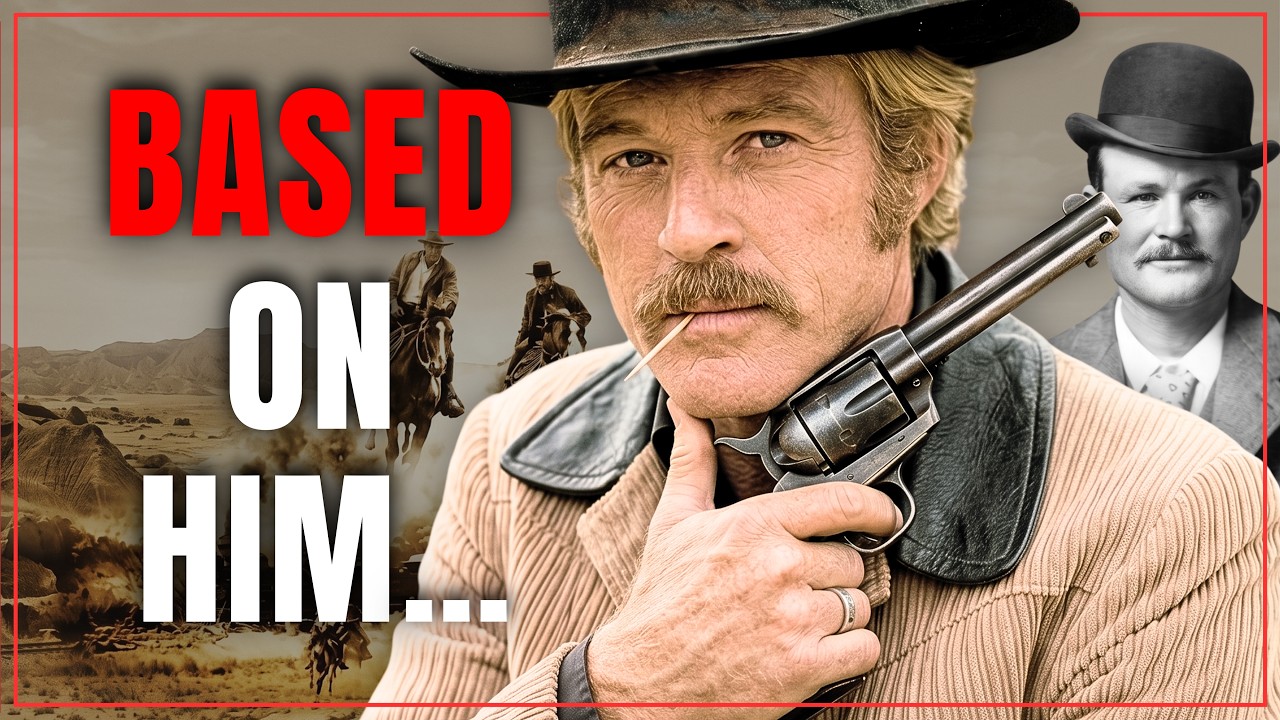
This forensic discrepancy has breathed new life into the claims of Butch’s own family, who always maintained that he did not die in Bolivia, with his sister, Lula Parker Bettinson, writing in her 1975 book that Butch came home to Circleville, Utah, in the fall of 1925, visiting his father, Maximillian, then eighty one years old, eating blueberry pie in the kitchen, staying for a few days, and telling his family he had faked his death in Bolivia to escape the Pinkertons for good, having been living quietly in the American Northwest under a new name, with Lula claiming he died of pneumonia in Spokane, Washington, in 1937, aged seventy one, and was buried under an assumed name, that name, according to some researchers, being William T. Phillips, a Spokane machinist who wrote an unpublished manuscript called The Bandit Invincible that contained details about the Wild Bunch that only an insider could have known, with handwriting experts arguing about its authenticity for over fifty years, unable to definitively confirm or deny whether Phillips was indeed Butch Cassidy, leaving the question of his true fate tantalizingly unresolved. The 1969 film starring Paul Newman as Butch and Robert Redford as Sundance took the legend and gave it a beautiful, bittersweet ending, a freeze frame of Bolivian bullets, two friends dying together in slow motion, winning four Academy Awards, making Redford’s career, and becoming, for what it was, a nearly perfect movie, but it was a movie, and the real Butch Cassidy was warmer, smarter, and more strategic than Newman’s charming rogue, while the real Sundance Kid was colder, quieter, and more dangerous than Redford’s grinning gunfighter, and Etta Place was not just a school teacher on a bicycle, but a phantom whose real name may never be recovered, and the shootout in San Vicente, the emotional climax that made a generation weep, may not even have been them at all, leaving us with a final, haunting possibility, that Robert Leroy Parker was born in a Utah log cabin to a Mormon pioneer family, robbed banks and trains from Colorado to Nevada, built the last and greatest of the Old West gangs, outran the largest private detective agency on Earth, fled to another hemisphere and ran a ranch in Patagonia, and when the last frontier closed on him, too, he either died in a South American mud hut at the age of forty two, or he came home to eat pie with his father and lived quietly for another thirty years under a name we may never confirm, that is the real story behind Butch Cassidy and the Sundance Kid, not the freeze frame, but the disappearance, because the truth about the last great outlaws of the American West is not that they died with their boots on, it is that after 1908, nobody could ever prove they had died at all


