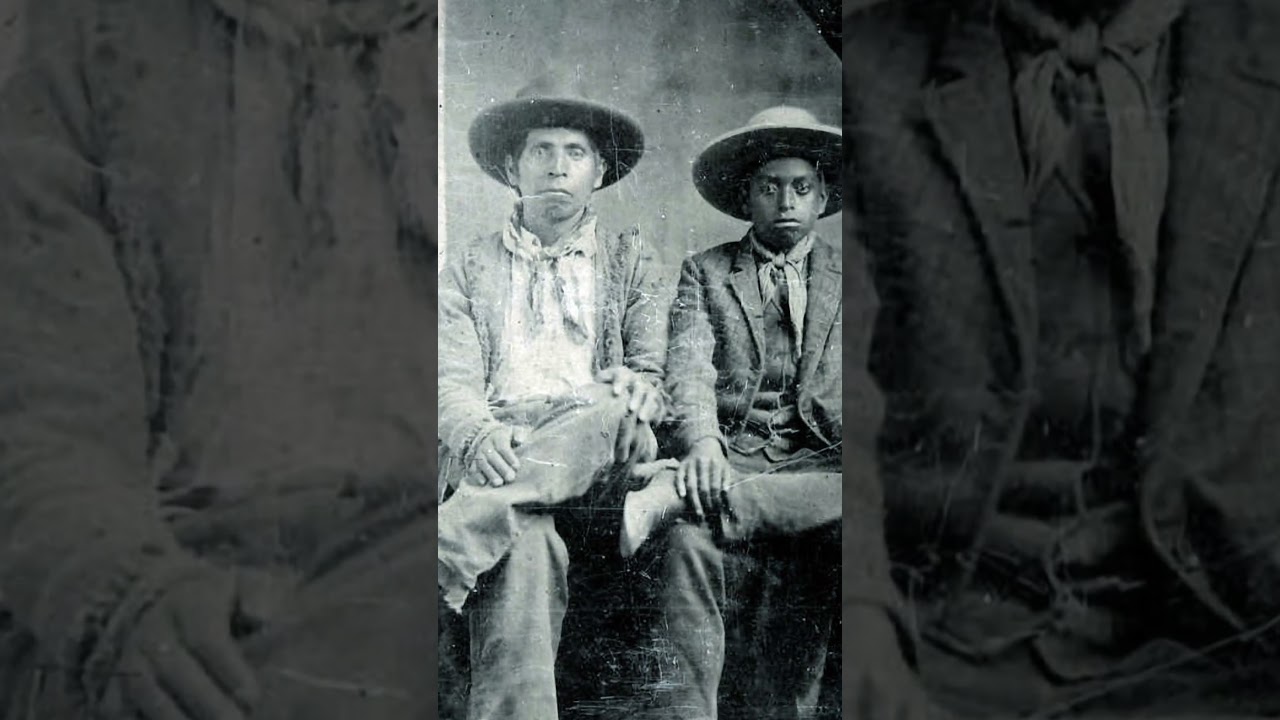
A census taker in 1880 recorded the name of a 12-year-old girl living in a Wild West brothel, then closed his notebook and moved on. No investigation followed. The official federal document still exists today, evidence that the government itself logged the situation as routine. These are just two of the forgotten stories of women in the American West, a world far removed from Hollywood’s glamorized saloons.

Most of these women died before turning 20, trapped in debts they could never repay. Few survived more than five years in that life. In Virginia City, Nevada, during the silver mining boom, prostitutes lived and died without anyone recording their names. One woman, known only as Mary, carved a message into the wooden wall of her room before she died.
It read, “I was someone’s daughter. ” She knew nobody would claim her body or print her obituary, so she turned that wall into a document—her only way of saying she had a family and an origin. In Tombstone’s Boot Hill Cemetery, workers dug up a locket alongside the remains of a nameless woman. Inside was a picture of another woman, perhaps a mother or sister.
Records list her only as a “soiled dove,” the era’s term for prostitutes. No last name, no story, no proper funeral. That locket is the only proof she existed as something more than a police record. Ah Toy arrived in San Francisco during the 1849 Gold Rush and built her own business in a male-dominated territory.
When customers tried to pay with fake gold, she did the unexpected: she sued them in the American legal system. A Chinese immigrant woman taking white men to court in mid-19th-century California drew such crowds that officials had to control courtroom access. She didn’t ask for favors; she learned the rules and used them against people who thought she had no rights. In 1886 Deadwood, a mining camp without official law, Irish Mag stabbed a man who attacked her.
No one expected her to walk free. But a jury of men—miners and merchants—deliberated for just 10 minutes and found her not guilty. In a time when women could barely testify in court, that makeshift jury set a precedent: no matter your job, nobody is anyone’s property. Squirrel Tooth Alice, born Mary Elizabeth Haley, started out in 1850s Texas with nothing.
At a time when a woman couldn’t open a bank account, she saved every penny and invested in property. In the roughest parts of the West, where most women were used and discarded, she understood that whoever controls the money controls the rules. Alice Ivers was born in England in 1851 with a formal education, rare for women then. In the American West, she discovered a talent few men could match: the math behind poker.
With a cigar between her fingers and a face that gave nothing away, she cleaned out the toughest tables. She claimed she never needed to cheat because the men already played badly enough honestly. With her winnings, she opened Alice’s Palace, a casino and brothel—but every Sunday, she shut the doors to read the Bible. She lived to 79, never apologizing for the path she chose.
In 1907, Ellen London spoke up. After surviving a suicide attempt in a Chicago brothel, she went straight to reporters and detailed how the debt system worked from the inside. Madams charged women for room, food, clothes, and fines for refusing customers. The more they worked, the more they owed.
Her newspaper account caused an uproar that did more for reform than years of moral preaching. Molly Johnson ran a “hog ranch” in 1880s Wyoming—a roadside bar selling cheap booze and female company to soldiers and cowboys. She ruled with an iron fist, beating customers, threatening workers, and reportedly involved in at least one murder. Military authorities at Fort Laramie knew what was happening but did nothing for years.
In a gray zone where civilization hadn’t arrived, she built a small empire on fear. Molly May was a Black woman in Deadwood, one of the most brutally prejudiced towns in the West. She chose to live by passing as white, running her own business for years among people who would never have accepted her if they knew the truth. Every conversation was a calculated risk.
No one around her suspected a thing. Fanny Porter ran one of the most strategically placed establishments in San Antonio in the late 1890s. It was a meeting spot where members of the Wild Bunch, including Butch Cassidy and the Sundance Kid, hid between robberies. Police knew, but never got proof.
Fanny moved money, helped set up escapes, and kept connections across states. When pressure ramped up, she vanished—nobody knows where she went or what name she lived under afterward. Julia Bulette lived in Virginia City, Nevada, during the 1860s silver rush. She organized fundraisers for volunteer firefighters, cared for the sick during epidemics, and paid out of pocket to help families who lost everything.
The firefighters named her an honorary member, something no other woman achieved. In January 1868, she was found strangled in her own bed. The town stopped. Firefighters carried her coffin down the main streets, and stores closed in respect.
A French immigrant named John Millain was hanged for the crime, but many doubted he acted alone. In 1899, Pearl Hart robbed a stagecoach in Arizona—one of the last such robberies in the Wild West. Her reason: she needed money to care for her sick mother. When arrested, she used the newspapers to her advantage, giving interviews from jail and building an image as an outlaw with a cause.
Reporters and the public loved it. After her release, she disappeared without a trace. Big Nose Kate, born Mary Katherine Horony in Hungary in 1850, met Doc Holliday in the saloons of the West. It’s said she once set a building on fire in Fort Griffin, Texas, to create chaos and pull him out of trouble that could have ended with a hanging.
For decades, journalists tried to get details about the OK Corral shootout and her life with Holliday. She refused almost all requests. She died in 1940 at age 89, taking her version of the facts to the grave. Dodge City, 1880.
Dora Hand was a saloon singer who also sang at church on Sundays, respected on both sides of the street. One October night, a gunman named Spike Kennedy fired at Mayor Dog Kelly’s house to settle a personal score. The bullet killed Dora while she slept in the mayor’s bed—he wasn’t even there. Bat Masterson and Wyatt Earp captured Kennedy, but he was acquitted.
Dora’s death showed how feuds between powerful men made nearby people, almost always women, pay the price. Kitty Leroy was 28 when her own husband shot her dead in Deadwood, South Dakota, in 1887. The story is often told as a love-and-jealousy drama, but the facts show a different picture. Kitty owned a saloon, played cards better than most men, and carried several pistols.
Her fifth husband couldn’t handle a woman who didn’t need him. After killing her, he turned the gun on himself. Today, the pattern is clear: it wasn’t passion—it was possession. Belle Siddons was born into a Southern family with formal education.
She spoke French, played piano, and worked as a Confederate spy during the Civil War. Afterward, she ended up in the saloons and brothels of towns like Deadwood. But she wrote—letters describing the women in that world as “walking dead. ” Almost no woman in that situation left her own record.
Belle did, and what she described was anything but glamorous. Eleonore Dumont, known as Madame Mustache, came from France and dominated the gambling tables of the West. As a young dealer, miners lined up to play at her table. But the West didn’t forgive women for aging.
Hair grew on her upper lip, and the cruel nickname followed. She worked for decades, growing tougher but accumulating debts. One day, she left town with a bottle of wine and a dose of morphine. She didn’t come back.
Mattie Blaylock lived with Wyatt Earp as his wife for years, following him to Arizona and standing by him during the tensest days in Tombstone. When Earp met Josephine Marcus, Mattie stopped existing in the story. He left and never looked back. Alone with no money or support, she relied on laudanum and died at 30 from an overdose, probably intentional.
In the decades that followed, biographers built the Earp legend while Josephine actively worked to erase Mattie from the books. Josephine Hensley arrived in Helena, Montana, in 1867, when it was little more than a gold-crazy mining camp. With little money and no connections, she understood that whoever controls a city’s entertainment controls the city. Within years, she owned property and establishments that high society visited in secret but condemned in public.
She funded construction projects and loaned money, helping Helena become the state capital. Her fortune matched any local tycoon’s, but the town she helped build erased her name from the official story. Calamity Jane, born Martha Jane Cannary in 1856, was an orphan by 12, surviving on her own in Wyoming mining camps. Her real life was marked by hard labor and heavy alcoholism.
But she understood that a good story is worth more than the truth. She spread exaggerated versions of herself, claiming to have been an army scout who saved soldiers in combat—no military record backs this up. Her last request was to be buried next to Wild Bill Hickok, a man who barely knew her. Belle Ryan ran one of the best-known brothels in Denver in the late 1800s, but what stood out was how she ran it.
She paid doctors to care for her workers, made sure no customer abused them, and set rules most legitimate establishments couldn’t imagine. She profited from a system that ruined lives but used that money to soften the damage it caused. She wasn’t a hero or a villain—she operated in a gray zone. In the 1870s, a Chinese girl was sold by her own family and brought to the United States.
She arrived in Idaho speaking no English, knowing no one, treated like property. Her real name was Lalu Nathoy; here she became Polly Bemis. A miner named Charlie Bemis reportedly won her in a poker game. A human being’s fate decided by a hand of cards.
She got lucky—Charlie turned out to be decent, and they married. But if another player had won that hand, her life would have been completely different. That was the reality for many Asian immigrants then. The so-called American dream didn’t start with opportunity for them.
It started with pure survival, where everything depended on who had the best cards that night.