The envelope arrived after thirty years of work.
He opened it at the kitchen table.
His wife was standing behind him.
For decades, the company had told him the same thing:
“Stay with us. Work hard. When you retire, you’ll be taken care of.”
So he stayed.
He missed birthdays.
Worked overtime.
Watched younger men quit.
Turned down other jobs.
Because somewhere in the future was a pension.
A monthly check.
Security.
A reward for giving the best years of his life to one company.
Then the factory collapsed.
And the pension he had built his entire future around—
almost disappeared with it.
Thousands of workers discovered that the money they had been promised was never fully there.
Some received only a fraction of what they expected.
Others received nothing.
Men in their fifties stood outside a closed factory realizing something terrifying:
They were too old to start over.
Too young to stop working.
And the retirement they thought they had earned had vanished.
This wasn’t the Great Depression.
It wasn’t the 1800s.
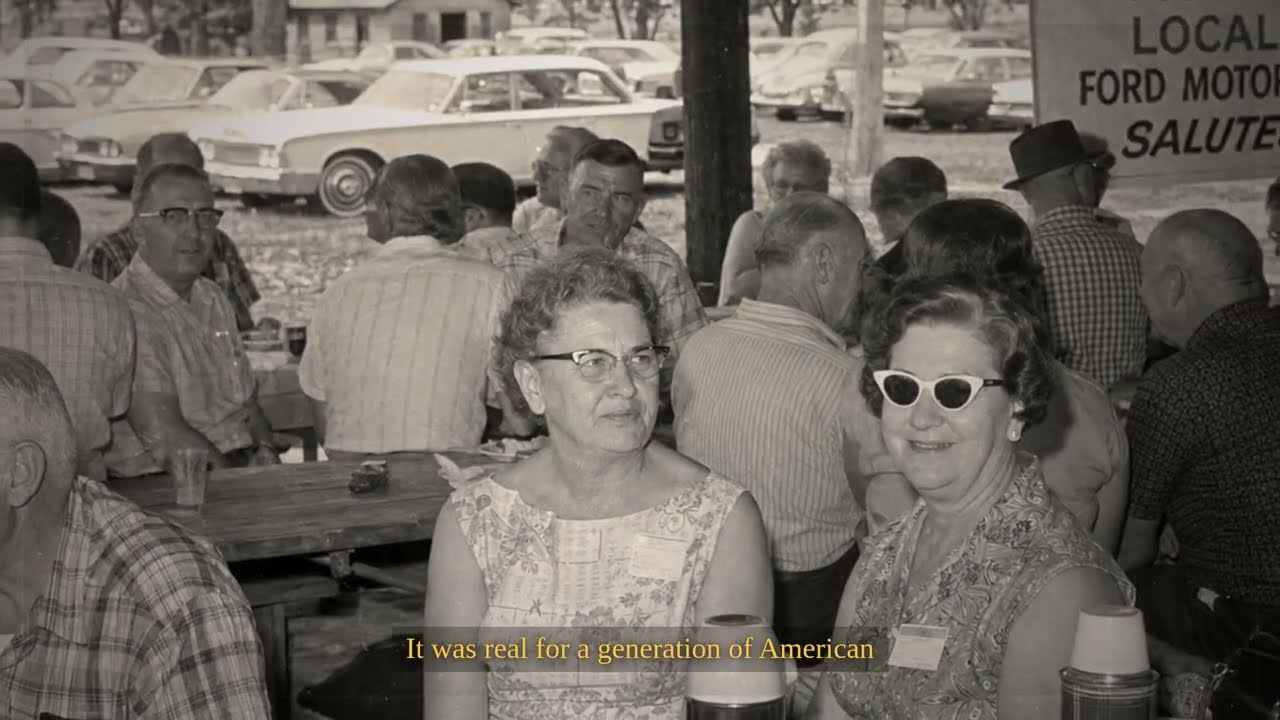
This was America in the 1960s.
And that disaster helped expose a truth that would eventually reshape retirement for every generation that followed:
For most of American history, nobody guaranteed that you would ever get to retire.
Not your employer.
Not the government.
Not the financial system.
For generations, if you became too old to work, you had four possibilities.
Your children supported you.
Charity supported you.
You kept working.
Or you went somewhere Americans feared almost as much as death.
The poorhouse.
And somehow, from that brutal world, America eventually created pensions, Social Security, Medicare—
and finally the 401(k).
But here’s the twist:
The 401(k) wasn’t originally designed to become America’s main retirement system.
It grew out of a tiny section of tax law almost nobody noticed.
A benefits consultant found a loophole-like opportunity.
Employers realized it could save them from carrying enormous pension risk.
Wall Street realized billions—then trillions—could flow through investment accounts.
And over time, one of the biggest financial risks in American life was quietly transferred from corporations—
back to workers.
To understand how that happened, you have to understand what retirement looked like before anyone promised you one.
For most of history, people didn’t retire.
They stopped working when their bodies stopped allowing them to work.
And then they depended on family.
In agricultural America, this system made a kind of brutal sense.
The family farm was both workplace and retirement plan.
A father grew old.
His sons took over the hardest labor.
His daughters and daughters-in-law helped maintain the household.
He might no longer plow fields, but he could repair tools, manage livestock, teach younger children, or supervise work.
Aging happened inside the family economy.
Then industrialization shattered that arrangement.
Young people left farms.
They moved to cities.
Factories pulled sons and daughters hundreds of miles away from their parents.
Pittsburgh.
Chicago.
Cleveland.
New York.
Detroit.
The family safety net became geographically scattered.
And suddenly, an elderly person who could no longer work could find themselves completely alone.
No pension.
No Social Security.
No Medicare.
No retirement account.
No adult child living down the road.
And when the money ran out—
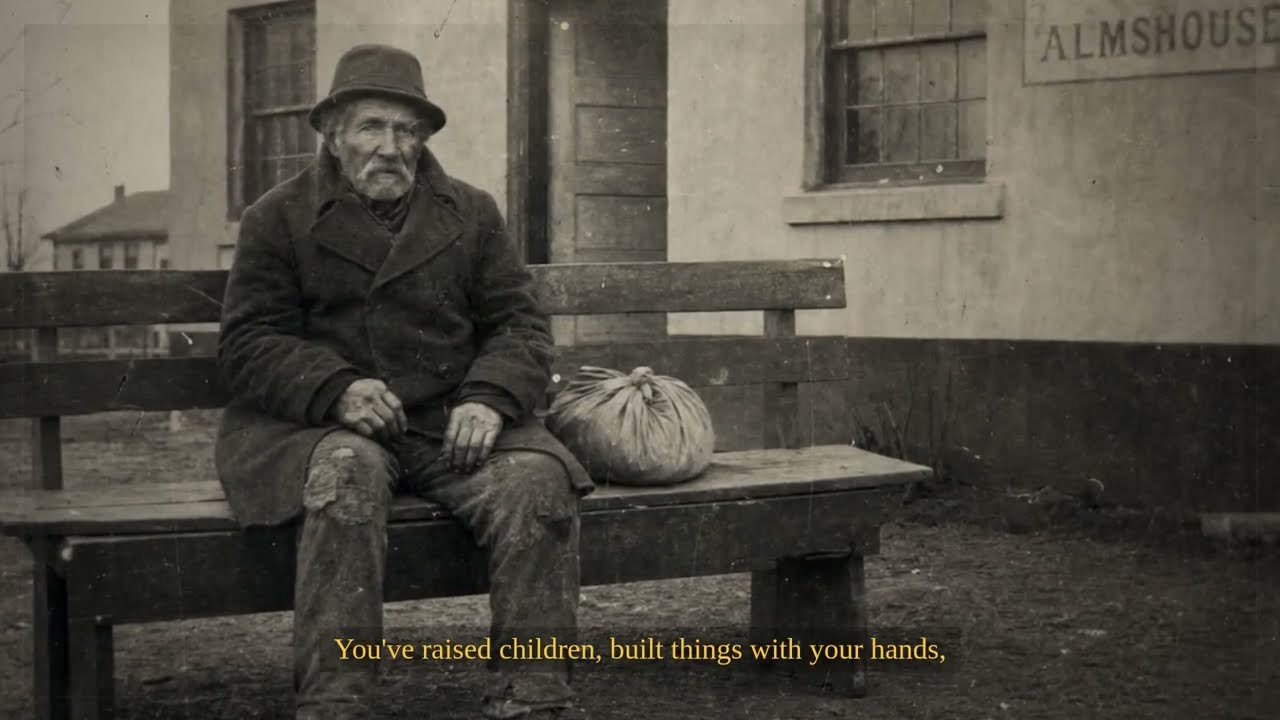
there was the poorhouse.
Poorhouses and almshouses existed across America for generations.
They housed almost everyone society didn’t know what else to do with.
The elderly.
The sick.
People with disabilities.
Widows.
Orphans.
People suffering mental illness.
The extremely poor.
They were often called inmates.
Not residents.
Inmates.
That word tells you almost everything about how these places were viewed.
You didn’t move into a poorhouse because you were beginning a peaceful retirement.
You went there because every other option had failed.
Imagine reaching seventy after a lifetime of work.
Your hands are damaged.
Your back is bent.
Your eyesight is fading.
Then one morning you leave the house you’ve known for decades and enter an institution filled with strangers.
A narrow bed.
Shared rooms.
Institutional meals.
No privacy.
No real independence.
And almost no way back out.
For many older Americans, the poorhouse wasn’t merely poverty.
It was humiliation.
The culture treated dependence like a character flaw.
If you ended up there, people could assume you had failed to save.
Failed to work hard enough.
Failed to raise children who would support you.
Failed at life.
That fear became so deeply embedded in American culture that stories and songs about being abandoned “over the hill to the poorhouse” became famous.
People weren’t just afraid of dying.
They were afraid of surviving too long.
Because longevity without money could destroy your dignity.
Then private groups began trying to solve the problem themselves.
Religious organizations.
Ethnic associations.
Fraternal societies.
Mutual-aid groups.
Members paid dues during their working years.
When they became sick, disabled or old, the organization helped support them.
It was an early form of pooled social insurance.
But it only worked if you belonged.
Millions didn’t.
Then corporate America entered the picture.
In 1875, American Express created one of the first significant private pension plans in the United States.
At the time, American Express wasn’t the credit-card company people imagine today.
It was deeply connected to the movement of freight and valuables.
Its pension plan was limited.
You needed long service.
You needed to reach a certain age.
Management still had enormous discretion.
But the idea itself was revolutionary.
The corporation was saying:
“Your relationship with us does not necessarily end the moment your body can no longer produce.”
Other companies followed.
Standard Oil.
U.S. Steel.
AT&T.
Eastman Kodak.
General Electric.
Goodyear.
Pensions slowly spread.
And workers began building their lives around a new idea.
Company loyalty could purchase future security.
Stay twenty years.
Thirty years.
Maybe forty.
Then the company would keep sending checks after you stopped coming to work.
But there was a problem hidden inside the promise.
Nothing necessarily forced the company to have enough money waiting.
The pension could be underfunded.
The business could fail.
Management could change.
The worker might spend three decades building a benefit that existed more securely on paper than in cash.
And then America entered the Great Depression.
October 1929.
The market collapsed.
Banks began failing.
Savings disappeared.
Businesses closed.
Unemployment exploded.
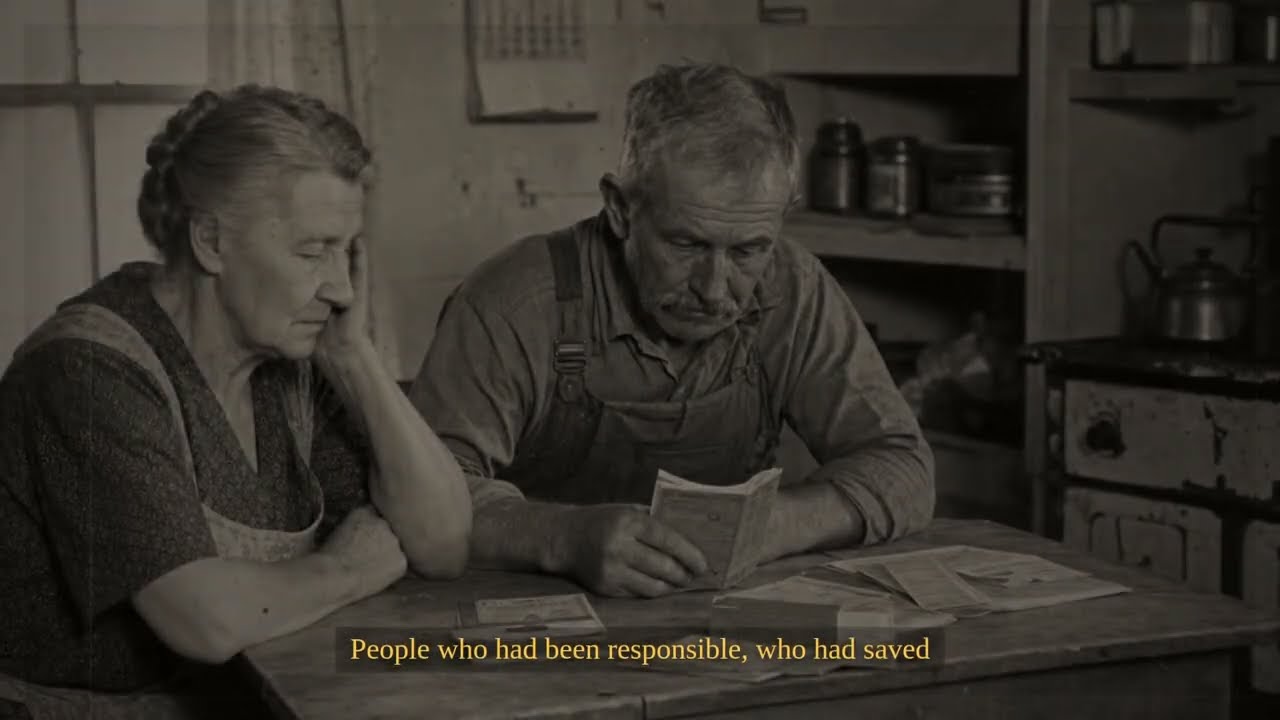
People who had spent entire lives doing what society told them was responsible—
working—
saving—
avoiding debt—
suddenly watched everything vanish.
Older Americans were hit especially hard.
If a company had to choose between keeping a thirty-year-old worker and a sixty-year-old worker—
the older employee often lost.
And once unemployed, older workers were much harder to rehire.
Families that traditionally supported elderly parents were themselves struggling.
The old answer—
“Your children will take care of you”—
was collapsing at exactly the same moment people needed it most.
By the early 1930s, enormous numbers of elderly Americans were financially insecure.
The poorhouse, which reformers had hoped would fade into history, filled again.
The crisis became too large to dismiss as individual failure.
Franklin Roosevelt’s administration reached a conclusion that would permanently change American society.
Growing old was not merely a private problem.
It was a national risk.
August 14, 1935.
Social Security became law.
For the first time, the federal government created a national structure designed to provide ongoing retirement income to workers.
Employees contributed.
Employers contributed.
Later, eligible retirees would receive monthly benefits.
It was modest.
It did not initially cover everyone.
Millions of agricultural workers, domestic workers and others were excluded from the first version.
Those exclusions had enormous racial and gender consequences.
But the principle had changed.
Old-age poverty was no longer being treated solely as charity.
You paid into a system.
Then the system paid you.
The first monthly Social Security payments arrived in 1940.
And for millions of Americans, something psychologically profound happened.
The poorhouse was no longer the only institutional answer waiting at the end of working life.
Then the system expanded.
Survivor benefits.
Disability coverage.
And in 1965—
Medicare.
Another nightmare of old age had finally been partially addressed:
Getting sick after retirement.
But Social Security was never supposed to carry everything.
The ideal retirement began to look like three supports.
Social Security.
Employer pension.
Personal savings.
Three legs.
Together, they could support a worker after employment ended.
And for a brief period after World War II—
that model looked almost perfect.
Factories were booming.
Unions were powerful.
Companies competed for workers.
A pension became one of the strongest tools an employer could offer.
“You give us thirty years.
We’ll give you security.”
That bargain shaped an entire generation.
A man could enter General Motors at twenty-two.
Work.
Raise a family.
Buy a house.
Then retire with a pension check.
Add Social Security.
Maybe some savings.
And old age suddenly looked different.
Fishing.
Gardening.
Travel.
Grandchildren.
A house paid off.
The gold watch.
The retirement party.
That image became so powerful that later generations assumed it had always existed.
It hadn’t.
And it was far more fragile than workers realized.
Then came Studebaker.
South Bend, Indiana.
Studebaker had been part of American industrial history for more than a century.
Wagons.
Military equipment.
Cars.
Thousands of families in South Bend depended on it.
Then the automobile business deteriorated.
Competition from General Motors, Ford and Chrysler became brutal.
Studebaker struggled.
The company was losing money.
And beneath all of those business problems was another problem workers couldn’t see:
The pension plan wasn’t adequately funded.
Then automobile production in South Bend ended.
And the promise collapsed.
More than ten thousand workers were connected to the pension plan.
Some already-retired employees were protected because annuities had been purchased for them.
But thousands of middle-aged workers weren’t so lucky.
Around four thousand workers received only a fraction of what they had expected.
Some received roughly fifteen cents on the dollar.
Others with shorter service received nothing.
Now picture one of them.
Fifty-two years old.
Twenty-three years inside the factory.
He has spent half his adult life believing one sentence:
“My pension will be there.”
Then suddenly—
it isn’t.
And there was almost nothing he could do.
No federal pension insurance.
No modern funding standards.
No guarantee that another institution would step in.
Studebaker exposed something terrifying:
A pension promise wasn’t the same thing as a pension.
The outrage lasted for years.
Then Congress finally responded.
September 2, 1974.
President Gerald Ford signed ERISA.
The Employee Retirement Income Security Act.
The law imposed new protections.
Funding requirements.
Vesting standards.
Disclosure rules.
Fiduciary responsibilities.
And perhaps most importantly, it created the Pension Benefit Guaranty Corporation.
If many covered traditional pension plans failed, PBGC could provide guaranteed benefits within legal limits.
A Studebaker-style disaster was supposed to become much harder.
Workers had finally won protection.
But there was an unintended consequence.
Traditional pensions became more expensive and complicated for employers.
Now the company wasn’t just promising future benefits.
It had to follow stricter rules about how those promises were funded and managed.
Corporations began thinking differently.
Why carry decades of retirement risk for every employee?
Why promise a specific lifetime benefit?
Was there another way?
Four years later—
the answer was buried inside the tax code.
Congress passed a large tax law.
Inside it was a relatively obscure provision.
Section 401.
Subsection K.
401(k).
No national announcement.
No president standing at a podium saying:
“We are about to reinvent American retirement.”
Almost nobody understood what the provision would eventually become.
Then a benefits consultant named Ted Benna read it closely.
Benna saw something other people had missed.
What if ordinary employees could redirect part of their wages into a tax-deferred account?
What if employers matched some of that contribution?
The employee would own an account.
The money could be invested.
Taxes would be deferred.
And the corporation wouldn’t necessarily owe that worker a guaranteed monthly pension for the rest of their life.
Benna knew the interpretation was aggressive.
His first client was nervous.
What if the IRS rejected it?
So Benna implemented the concept at his own company.
Then regulators clarified the rules.
By the early 1980s, the door was open.
And corporate America ran through it.
Johnson & Johnson.
PepsiCo.
Honeywell.
Then hundreds more.
Thousands more.
The mutual fund industry noticed.
Banks noticed.
Brokerage firms noticed.
Insurance companies noticed.
Because suddenly, American workers were going to direct enormous portions of their wages into investment accounts for decades.
And somebody would get paid to manage those accounts.
Wall Street had found a river.
Corporate America had found something else.
An exit.
Under a traditional pension, the company promises the worker a benefit.
Maybe $2,000 a month.
Maybe more.
Maybe less.
But the crucial word is:
Promise.
If investments disappoint—
the pension still owes the benefit.
If retirees live longer—
the pension still owes the benefit.
If markets crash—
the employer may need to contribute more money.
The risk sits heavily with the institution.
A 401(k) changes the sentence.
The company doesn’t promise your retirement income.
It promises a contribution arrangement.
Maybe it matches 3%.
Maybe 5%.
Maybe nothing.
After the contribution enters your account—
the corporation’s responsibility shrinks dramatically.
Now the questions become yours.
How much did you save?
What did you invest in?
Did you panic during a crash?
Did you pay high fees?
Did you start early?
Did you stop contributing?
Did you borrow against the account?
Did inflation destroy your purchasing power?
Did you retire during a bear market?
Did you live longer than expected?
The employer stopped guaranteeing the destination.
It helped buy you a vehicle—
then handed you the steering wheel.
And over the next several decades, the American retirement system quietly flipped.
Traditional pensions shrank.
Defined-contribution plans exploded.
One generation expected a guaranteed monthly check.
The next generation got a login password.
That transformation didn’t feel revolutionary because it happened gradually.
Nobody came to millions of workers on one morning and said:
“Your employer is no longer going to carry most of your retirement investment risk.
You are.”
Instead, new hires received different benefits.
Existing pension plans froze.
Companies offered 401(k) matches.
Financial advisers told employees how powerful compound growth could be.
And they weren’t wrong.
A well-funded 401(k) can be an extraordinary wealth-building tool.
Start young.
Save consistently.
Receive an employer match.
Invest sensibly.
Keep fees low.
Stay invested for forty years.
A worker can accumulate serious wealth.
Some retirees have balances that old pension workers could barely imagine.
But the system contains a brutal mathematical truth.
You cannot invest money you don’t have.
If rent consumes half your paycheck—
the 401(k) waits.
If your child needs surgery—
the 401(k) waits.
If you’re supporting elderly parents—
the 401(k) waits.
If wages remain low—
the 401(k) waits.
Then one morning you’re fifty-five.
You log in.
And the balance isn’t what the retirement calculator says you need.
That’s when the ancient fear returns.
Not the poorhouse itself.
The fear behind it.
What happens if I become too old to work before I become rich enough to stop?
For generations, Americans had slowly moved the risk of old age away from the individual.
The family carried it first.
Then mutual-aid societies carried part.
Then employers.
Then Social Security.
Then Medicare.
For a few decades, risk was distributed across several institutions.
Now a large portion has returned to individuals.
That is the central story of the 401(k).
Not that it is evil.
Not that pensions were perfect.
They weren’t.
Pensions could collapse.
Workers lost benefits.
Jobs tied workers to one company.
Portability was poor.
A 401(k) solved real problems.
But it solved them partly by changing who loses when things go wrong.
A pension can fail because the employer mismanages funding.
A 401(k) can fail because life happens to the worker.
And that’s a very different kind of failure.
Ted Benna, the man widely associated with pioneering the modern 401(k), later became critical of what the system evolved into.
Complexity.
Fees.
Workers being forced to make investment decisions they often weren’t equipped to make.
And perhaps most importantly—
the 401(k) becoming something it had never really been designed to become:
The primary retirement vehicle for tens of millions of Americans.
It was supposed to supplement retirement.
Instead, for many workers, it became retirement.
The pension disappeared.
Social Security remained.
And the third leg of the stool—
personal savings—
had to become strong enough to replace what corporations no longer guaranteed.
For wealthy workers, that can work beautifully.
For everyone else—
the outcome can be frightening.
Because the market doesn’t care how tired you are.
It doesn’t care that you’ve worked forty years.
It doesn’t care that your knees hurt.
It doesn’t care that your spouse is sick.
It doesn’t care that you desperately need to retire next year.
Your balance is simply your balance.
And once again, America has arrived at a question older than Social Security.
Older than pensions.
Older than the 401(k).
Who carries the risk of you growing old?
In 1880, the answer might have been:
Your children.
In 1930:
Your savings, if the bank survived.
In 1955:
Social Security and maybe your company pension.
In 1985:
Your pension, Social Security and this new 401(k) thing.
Today?
Your retirement account.
Your Social Security benefit.
Your home equity.
Your savings.
Your ability to keep working.
And whatever luck life gives you.
The poorhouse is gone.
But the fear never left.
It just changed shape.
A century ago, an elderly worker feared a wagon ride to the almshouse.
Today, a sixty-year-old worker opens a retirement calculator.
Current balance:
$184,000.
Projected need:
$1.1 million.
Years until retirement:
And suddenly the screen becomes very quiet.
That’s the modern version of the same ancient terror.
You did everything you were told.
You worked.
You paid taxes.
You contributed when you could.
But growing old has arrived faster than the money.
And maybe that’s the most important thing to understand about America’s retirement system.
It was never one master plan.
It was built in pieces.
A poorhouse here.
A pension there.
A Depression-era federal program.
A corporate collapse.
A new pension law.
A few obscure lines of tax code.
A consultant’s interpretation.
An IRS regulation.
Employers reacting to costs.
Wall Street reacting to opportunity.
One decision after another.
Until millions of Americans woke up inside a system nobody had originally designed as a complete system at all.
And now they depend on it.
Every paycheck.
Every market cycle.
Every year closer to retirement.
So the next time that 401(k) deduction disappears from your salary—
look at it differently.
That number isn’t just savings.
It’s responsibility.
Responsibility that once belonged to your family.
Then partly to your employer.
Then partly to the government.
And now—
more and more—
belongs to you.
Because the biggest change in American retirement wasn’t the invention of the 401(k).
It was the moment corporations discovered they no longer had to promise you retirement.
They only had to give you an account—
and hope you could build one yourself.