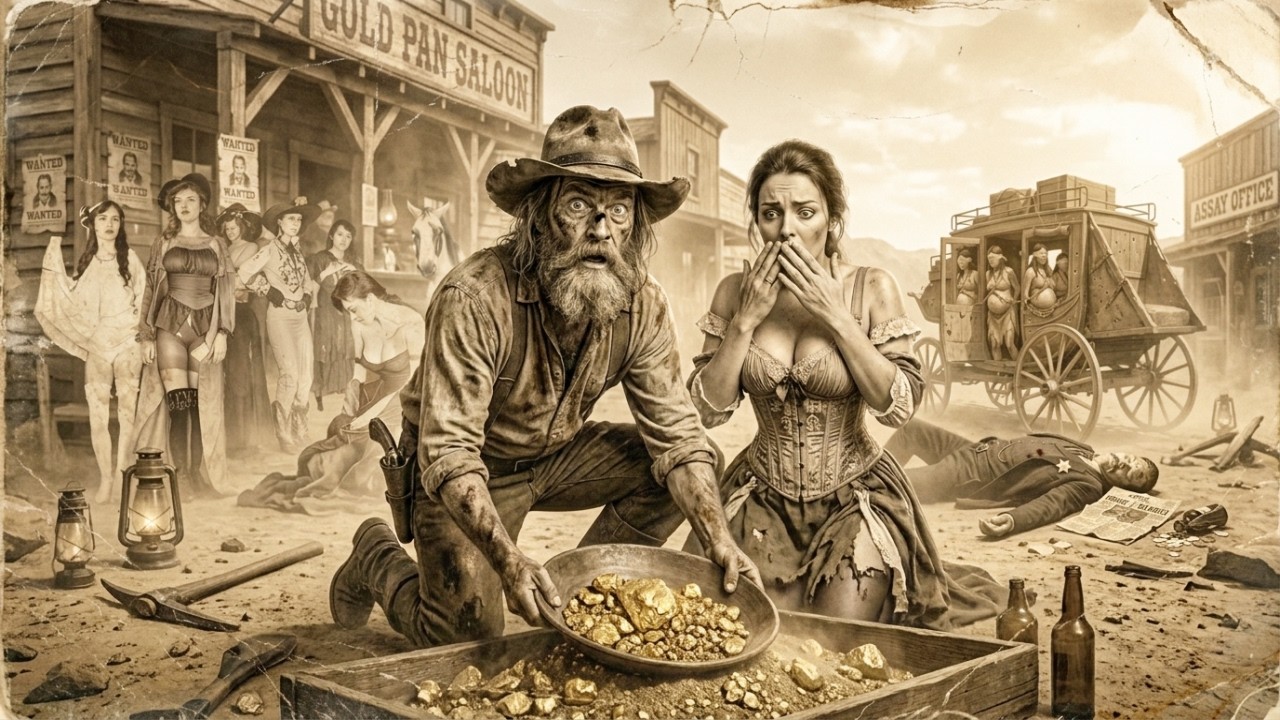
The merchant stared at the stack of money on the counter.
Then he pushed it back.
“I can’t take this.”
The farmer frowned.
“What do you mean? That’s fifty dollars.”
The merchant shook his head.
“It was fifty dollars yesterday.”
He reached beneath the counter, pulled out a small booklet, flipped through several pages, and pointed to one line.
The bank that printed the notes had failed.
The money was now worthless.
The farmer stood there in silence.
Months of work.
An entire harvest.
Food for his children.
Seed for next year.
Everything he had earned was still sitting in front of him—
but it was no longer money.
And this was not some isolated scam.
This was America.
Before the green dollar bill.
Before one national currency.
Before Americans could reach into their pockets and assume that a dollar in Ohio was worth the same thing as a dollar in New York.
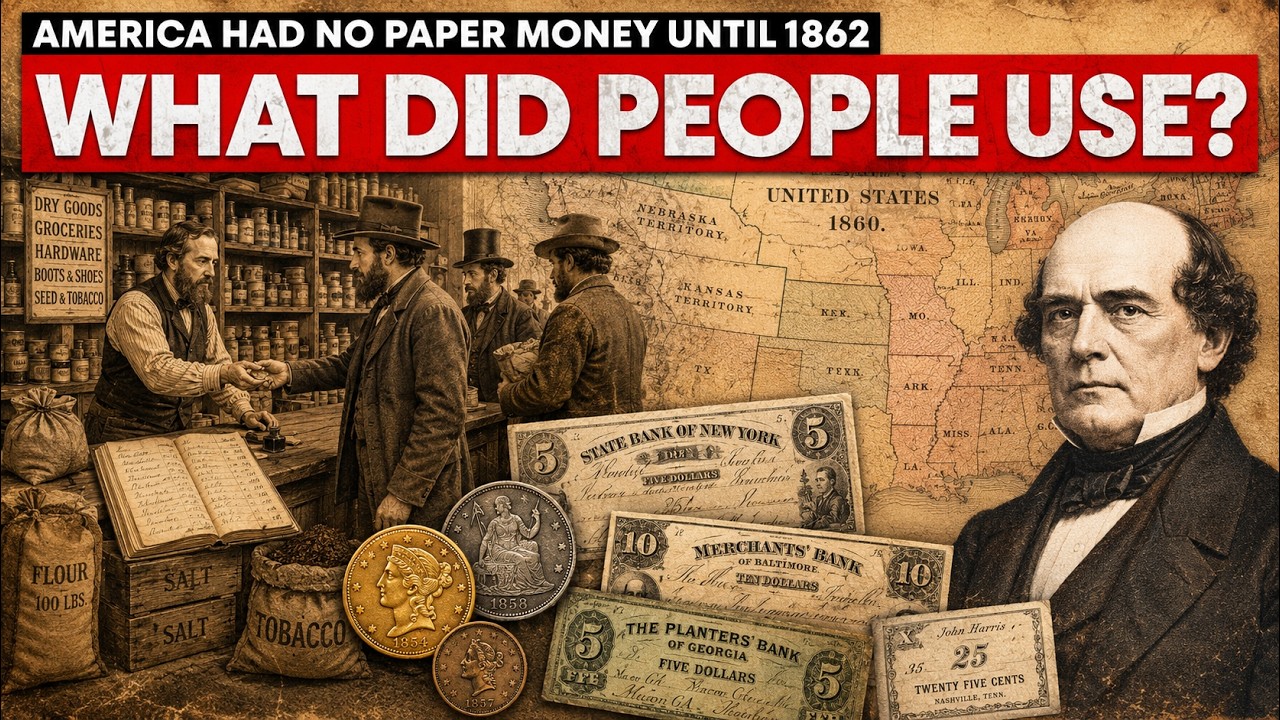
At one point, thousands of different banknotes circulated across the country.
Some were genuine.
Some were counterfeit.
Some came from banks that had already disappeared.
A merchant might need a printed guide just to decide whether the bill in your hand was worth ten dollars—
eight dollars—
or absolutely nothing.
And this chaos came after an even greater disaster.
During the American Revolution, Congress printed so much paper money that the currency collapsed almost completely.
People mocked it.
Used it as decoration.
And created a phrase that survived for generations:
“Not worth a Continental.”
The humiliation was so deep that America’s founders built a monetary system designed to avoid repeating it.
Gold.
Silver.
Hard money.
Something politicians could not create with a printing press.
Then—
less than eighty years later—
the United States faced a choice.
Print paper money again—
or risk losing the Civil War.
And on February 25, 1862, Washington crossed the line.
For the first time, the federal government issued paper notes and effectively told Americans:
You will accept this as money.
Not because there is a bank down the street promising to redeem it.
Not because there is a piece of silver hidden behind it.
Because the United States government says it is money.
Those notes were green on the back.
People called them—
greenbacks.
And every modern dollar in your wallet traces part of its story back to that desperate decision.
But America’s strange relationship with money began long before the Civil War.
It began when the colonies barely had money at all.
Early seventeenth century.
English settlers arrived in North America.
They had land.
Timber.
Farms.
Tools.
Labor.
What they did not have was enough coin.
England’s silver and gold did not magically pour into the colonies.
What little coin arrived often flowed right back across the Atlantic to pay for imported goods.
So the colonies faced an obvious problem.
How do you build an economy when almost nobody has money?
At first—
you trade.
A farmer has grain.
A blacksmith has tools.
A butcher has meat.
Simple.
Until the blacksmith needs flour—
and the miller does not need horseshoes.
Now the blacksmith has to find someone who wants horseshoes and owns something the miller wants.
Then make one trade.
Then another.
Then another.
Barter worked in a tiny settlement.
It became a nightmare as the colonies grew.
So people began turning useful objects into money.
In Virginia—
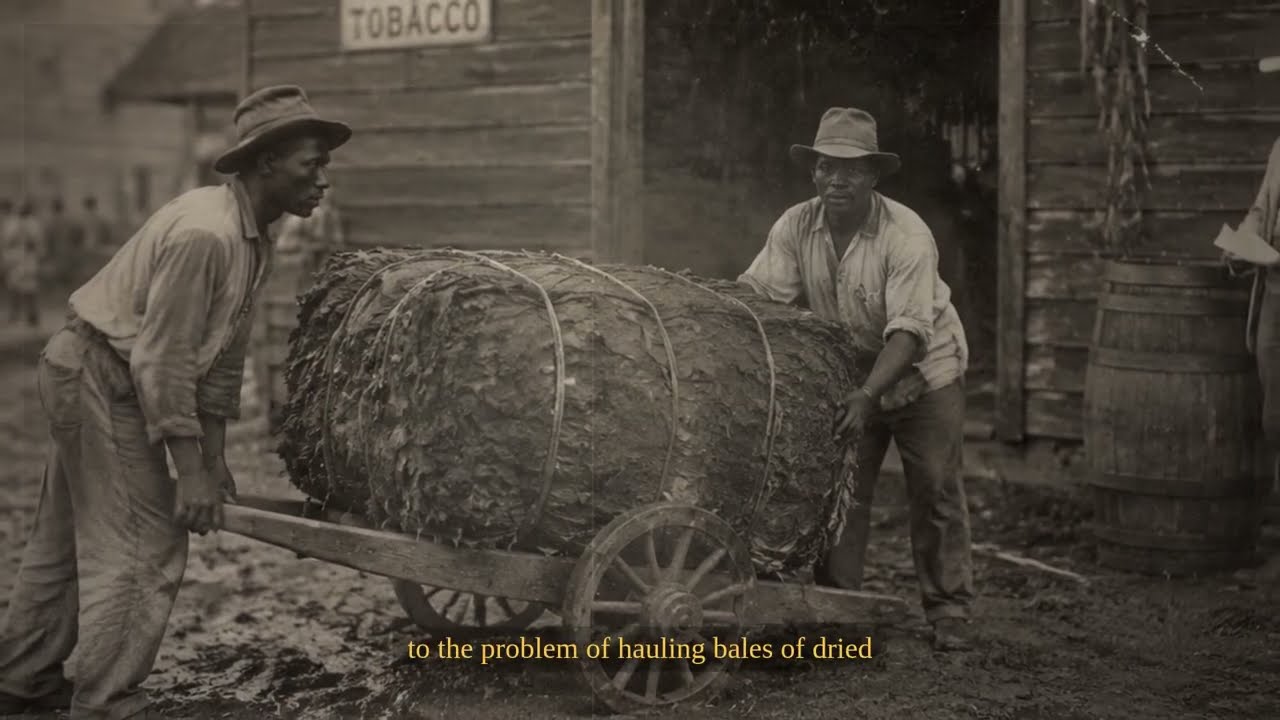
that object was tobacco.
Tobacco could pay taxes.
Settle debts.
Purchase goods.
It was so important to the colonial economy that its value could function almost like a monetary unit.
But imagine saving your wealth in tobacco.
Too much rain?
Problem.
Bad harvest?
Problem.
Excellent harvest?
Also a problem.
Because if everyone suddenly produced twice as much tobacco—
your “money” became less valuable.
And tobacco rotted.
It took up space.
You could not casually carry hundreds of pounds into a tavern.
So colonists invented something clever.
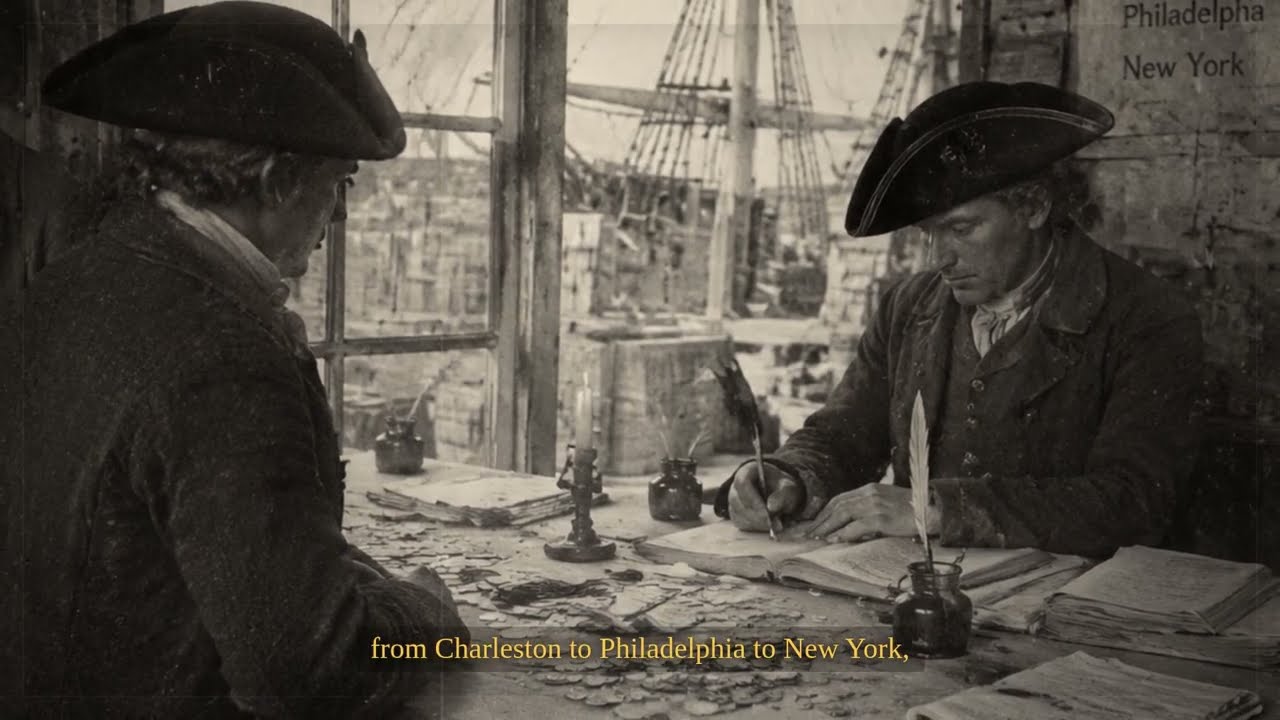
Warehouse receipts.
The tobacco stayed in storage.
The paper moved.
A man could hand you a receipt representing tobacco without physically moving the tobacco itself.
Already, something fundamental was changing.
Value no longer had to be inside the thing you carried.
The paper could represent value somewhere else.
That idea would return again and again.
But farther north, colonists were using something completely different.
Shells.
Wampum.
Carefully crafted beads made from shells.
For Indigenous peoples, wampum had deep diplomatic, ceremonial, and cultural meanings far beyond commerce.
Europeans increasingly used it as a medium of exchange.
For a time, colonial authorities even recognized fixed values.
White beads.
Purple beads.
Different rates.
Imagine buying something with strings of carefully worked shell.
It sounds primitive only because we are used to paper.
The logic was identical.
People accepted it because other people accepted it.
But wampum suffered from the same fatal problem as almost every form of early money.
Supply.
European tools made production easier.
More beads entered circulation.
Scarcity weakened.
Value declined.
So America kept searching for something more reliable.
And eventually one coin became more trusted than almost anything else.
Not British.
Not American.
Spanish.
The Spanish dollar.
The famous piece of eight.
Silver mined in Spain’s vast colonial empire.
Reliable enough to circulate across oceans.
Merchants trusted the weight.
They trusted the silver.
And in North America, Spanish dollars became so important that when the United States eventually created its own dollar—
it modeled the new currency on the Spanish one.
Sometimes the coins were literally cut into pieces to make change.
One-eighth of a dollar became a “bit.”
Two eighths—
two bits.
A quarter.
The language survived after the practice disappeared.
But even Spanish silver could not solve America’s larger problem.
There simply was not enough hard coin.
So in 1690, Massachusetts tried something radical.
Paper.
The colony had launched a military expedition.
The expedition failed.
Soldiers came home expecting payment.
The treasury did not have enough gold or silver.
Angry armed men were waiting.
So Massachusetts printed bills of credit.
Essentially government IOUs.
The notes would be accepted later for taxes.
And surprisingly—
they worked.
At least at first.
Other colonies copied the idea.
Soon different colonies were printing different currencies.
Different designs.
Different exchange rates.
Different levels of credibility.
A Pennsylvania note was not necessarily worth the same as a Massachusetts note.
Cross a colonial border—
and your money could immediately change value.
Merchants hated it.
Governments abused it.
And some colonies discovered the most seductive trick in politics.
If you need more money—
print more.
At first, the new notes solve the shortage.
Then prices begin rising.
Then trust weakens.
Then people rush to get rid of the paper before it loses even more value.
The British government became increasingly alarmed and restricted colonial paper currency.
The colonists became increasingly furious.
Then came revolution.
And America took the printing press to an entirely different level.
War.
The Continental Congress needed everything.
Muskets.
Gunpowder.
Uniforms.
Food.
Horses.
Wagons.
Pay for soldiers.
But Congress had almost no reliable power to tax.
Hard currency was scarce.
Foreign loans were limited.
The army could not wait.
So Congress printed money.
Continental dollars.
At first, Americans accepted them.
The Revolution would succeed.
The states would raise taxes.
The notes would eventually be redeemed.
That was the promise.
Then Congress printed more.
Then more.
Then more.
States printed their own money too.
War dragged on.
Confidence weakened.
Prices exploded.
Soon a pair of shoes could cost sums that would have seemed absurd only a few years earlier.
Soldiers were being paid in money that lost value before they could spend it.
Farmers were reluctant to sell food to an army offering paper that might be worth half as much next month.
By 1781—
the Continental dollar had essentially collapsed.
Imagine fighting for independence and being paid in money that becomes a national joke.
Stories spread of people using Continental notes as wallpaper.
One story described worthless notes being attached to a dog and paraded through the street.
And Americans created a phrase:
“Not worth a Continental.”
That collapse did something deeper than destroy savings.
It traumatized the men who would later design the Constitution.
They had seen what uncontrolled paper money could do.
And when they gathered in Philadelphia in 1787—
they remembered.
The new Constitution sharply restricted the monetary powers of the states.
States could not simply print their own bills of credit and declare them legal tender.
The federal government received authority over coinage.
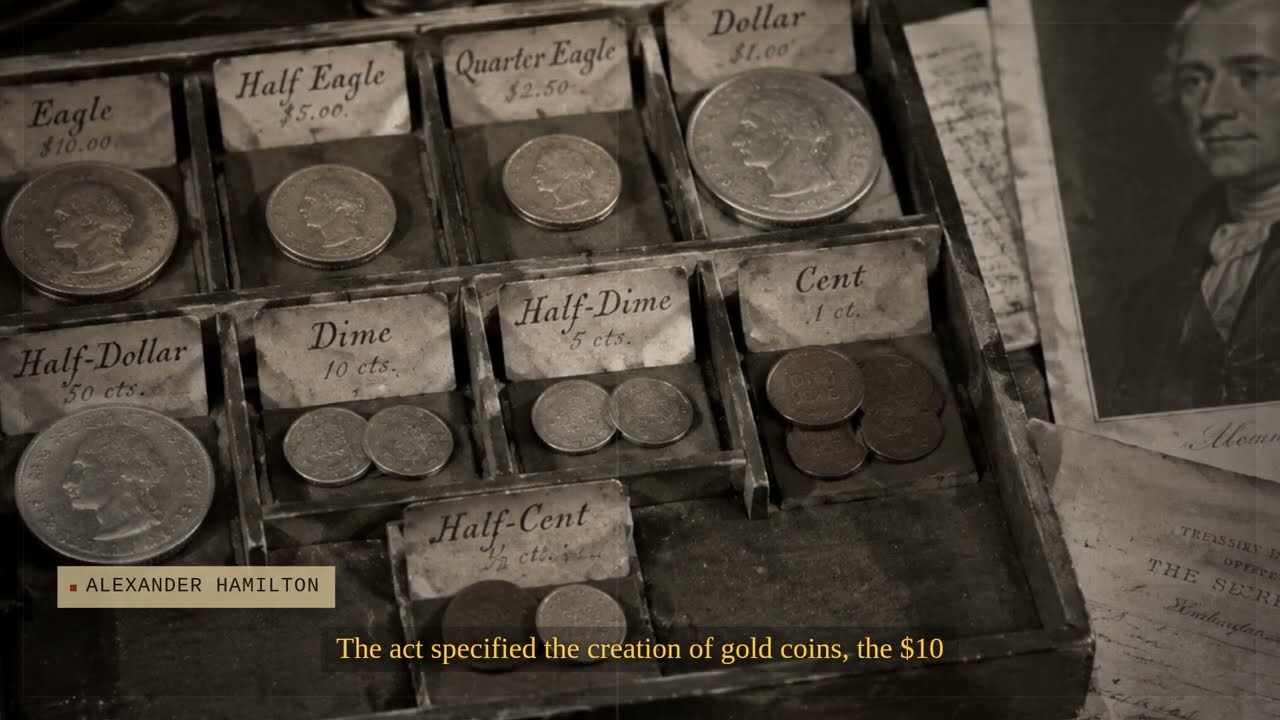
And when Congress created the U.S. Mint in 1792, the young nation placed enormous emphasis on gold and silver.
Money you could weigh.
Test.
Melt.
Metal with value independent of a politician’s signature.
The idea was confidence through physical substance.
A ten-dollar gold coin contained gold.
A silver dollar contained silver.
You could distrust Congress—
but still trust the metal.
And penalties for corrupting the nation’s coinage were extraordinarily severe.
America had learned its lesson.
Paper had failed.
Hard money would protect the republic.
There was just one problem.
There was never enough of it.
The United States was expanding too fast.
Population grew.
Farmers pushed west.
Cities grew.
Businesses needed loans.
Merchants needed working capital.
Factories needed investment.
But gold and silver could not expand at the same speed.
Worse, coins disappeared overseas whenever their metal value became more attractive elsewhere.
People melted them.
Exported them.
Hoarded them.
The new American economy was starving for currency.
So private banks stepped in.
And suddenly—
America returned to paper.
Except this time, the government was not printing it.
Banks were.
Imagine walking into a bank in 1825.
You deposit silver.
The bank issues notes.
The note says something like:
The bearer may redeem this for ten dollars in specie.
If people trust the bank—
the paper circulates.
Now imagine hundreds of banks doing this.
Then thousands.
Each printing its own money.
Different colors.
Different artwork.
Different denominations.
Different promises.
By the nineteenth century, the United States was drowning in private banknotes.
And the face value printed on the note did not necessarily equal what the note was actually worth.
Distance mattered.
A ten-dollar note from a respected New York bank might be accepted at almost full value in Manhattan.
Take that same note hundreds of miles away—
and a merchant might discount it.
Why should he accept the full ten dollars?
He has to somehow get the note back to New York if he wants redemption.
Maybe the bank will fail before then.
Maybe the note is fake.
Maybe the institution does not exist at all.
So he offers you eight dollars.
Take it or leave it.
Now imagine doing this every single day.
You own a store.
A customer hands you a bill.
You have never seen it before.
You do not ask:
“Is this a five-dollar bill?”
You ask:
“What bank printed it?”
“Is that bank still alive?”
“How far away is it?”
“What is its current discount?”
“And is this note even real?”
Merchants needed help.
So publishers created banknote reporters.
Small directories listing banks.
Discounts.
Counterfeit warnings.
Imagine standing at a nineteenth-century counter while the shopkeeper flips through pages trying to determine whether your money exists.
That was normal.
And then there were the counterfeits.
Thousands of designs meant counterfeiters had an extraordinary advantage.
A fake note did not need to fool someone familiar with the real version.
It only needed to reach a town where nobody had ever seen the original.
A counterfeit “Ohio banknote” might circulate perfectly well in Pennsylvania.
A fake from some obscure frontier institution could travel hundreds of miles before anyone realized something was wrong.
And there was an even worse possibility.
The note could be completely genuine—
but the bank behind it had failed yesterday.
Now your authentic money was worthless.
That was the terror of the system.
The paper itself gave you no certainty.
Its value depended entirely on an institution you might never have seen.
Then Andrew Jackson looked at this financial world—
and decided one giant bank was even more dangerous.
The Second Bank of the United States had been established in 1816.
It helped discipline state banks.
It served as the federal government’s fiscal agent.
And under Nicholas Biddle, it became one of the most powerful financial institutions in the country.
Supporters said it brought stability.
Jackson saw something else.
A financial monster.
An institution with enormous power over farmers, workers, businesses, and politicians—
without enough democratic accountability.
Jackson hated concentrated banking power.
He also hated paper money.
Earlier financial experiences had helped convince him that gold and silver were the only money he could truly trust.
So he attacked the Bank.
The Bank War became one of the defining battles of his presidency.
Jackson won.
The federal charter expired in 1836.
And what came next looked like vindication to his enemies.
More banks.
More paper.
More instability.
The Free Banking Era.
The Wildcat Bank.
Some frontier banks were legitimate.
Others were barely banks at all.
A small institution could open in an inconvenient location—
print thousands of dollars in notes—
push them into circulation—
and make redemption as difficult as possible.
The legend said some banks were so remote that only wildcats lived nearby.
Hence the name.
Whether every colorful frontier story is true is less important than the reality behind them.
Banks failed regularly.
Notes collapsed.
Reserves could be inadequate.
Fraud was real.
Financial panics could destroy entire institutions.
Banks fail.
Businesses collapse.
Families lose money.
Another panic.
More failures.
More worthless paper.
America had become an economic power.
But its money still looked like the Wild West.
Then April 1861 arrived.
Civil War.
And suddenly monetary chaos was not merely inconvenient.
It became a threat to national survival.
The Union needed money at a scale Americans had never imagined.
Armies had to be raised.
Hundreds of thousands of soldiers paid.
Railroads coordinated.
Weapons manufactured.
Food purchased.
Ships constructed.
Every day of war burned through enormous sums.
Hard money was not enough.
Private banknotes were fragmented.
Government borrowing helped—
but the Treasury needed something that could circulate immediately.
The government first issued demand notes.
Paper that could theoretically be redeemed for specie.
Then people began demanding the specie.
Gold reserves fell.
Banks suspended redemption.
The promise was breaking.
Washington faced a brutal choice.
Either find another form of money—
or risk being unable to finance the war.
February 25, 1862.
Congress passed the Legal Tender Act.
And America crossed a monetary line it had feared since the collapse of the Continental.
The government printed paper money.
United States Notes.
Legal tender.
The notes were not ordinary private bank promises.
They were federal money.
Green ink covered the reverse.
Greenbacks.
And their message was revolutionary.
This note is money because the United States says it settles debts.
You no longer had to trust an obscure bank in Indiana.
You had to trust the country itself.
That sounds comforting now.
In 1862—
it terrified people.
Because Americans remembered what had happened the last time Congress printed money during a war.
Would the greenback become another Continental?
For a while, it looked possible.
Its value against gold fell.
Inflation rose.
Prices moved with the war.
Bad battlefield news could hurt confidence.
Good news could strengthen it.
At one point during the war, the paper dollar traded at a steep discount against gold.
Imagine being a Union soldier.
You signed up when your pay had one purchasing power.
Months later—
the same number of dollars buys much less.
But the greenback did not disappear.
Why?
Because the government behind it was fundamentally stronger than the Continental Congress had been.
Washington could tax.
Borrow.
Collect tariffs.
Enforce laws.
Issue bonds.
And if the Union survived—
its promises might survive too.
Then Congress did something equally important.
It began destroying the thousands-of-banknotes system.
The National Banking Acts created federally chartered banks and a more uniform national banknote structure.
Then a heavy tax made state-bank note issuance uneconomic.
Gradually—
the bizarre forest of private currencies disappeared.
For the first time, Americans could travel across huge distances with money that looked familiar.
Same country.
Same monetary unit.
Same basic system.
That seems mundane today.
It was revolutionary then.
Imagine a man born in 1835.
As a child, he watches his father inspect private banknotes.
He sees adults argue over whether a bill is worth five dollars or four.
He hears stories of failed banks.
Counterfeiters.
Worthless notes.
He grows up carrying banknote guides.
Then, in his twenties, Civil War begins.
And suddenly federal green paper appears.
At first, he distrusts it.
Everyone distrusts it.
But the war ends.
The United States survives.
The notes remain.
Years pass.
The paper becomes familiar.
His children grow up assuming national currency is normal.
His grandchildren cannot imagine the country without it.
That is how radical systems become invisible.
One generation experiences the revolution.
The next calls it ordinary.
And yet the argument over money never stopped.
Gold versus paper.
Creditors versus debtors.
Tight money versus easy money.
Farmers wanted more currency circulating.
Bankers worried about inflation.
The Greenback Party emerged.
Then came the silver battles.
Then the gold standard.
Then the Federal Reserve.
Then the final break from gold convertibility in the twentieth century.
But beneath every debate was the same question.
What gives money value?
Metal?
Law?
Scarcity?
Government?
Trust?
The answer changes depending on the era.
But one element never disappears.
Trust.
Tobacco worked because people believed another person would want it.
Spanish dollars worked because people trusted the silver.
Colonial bills worked because people expected governments to accept them later.
Private banknotes worked when people trusted the bank.
Continental dollars failed when that trust collapsed.
Wildcat notes died when the issuing institutions died.
Greenbacks survived because the institution behind them survived.
And today—
the dollar in your wallet is still built on exactly that invisible foundation.
Trust.
The paper itself is nearly worthless.
The green ink is not worth one dollar.
There is no gold coin inside.
No silver waiting for you.
No tobacco warehouse.
No merchant weighing precious metal.
Yet you hand the bill to a stranger.
And the stranger accepts it.
Why?
Because they believe the next stranger will accept it too.
That chain of confidence is money.
Break the chain—
and the paper becomes paper again.
And America learned that lesson over centuries—
one failed currency at a time.
Now go back to the farmer at the counter.
The man holding fifty dollars that suddenly became nothing.
That scene feels impossible today because modern Americans have grown up inside a unified currency system.
But for him—
money could die.
A rumor.
A bank failure.
A newspaper headline.
And your savings vanished.
That is what the greenback ultimately changed.
It did not eliminate financial risk.
It did not eliminate inflation.
It did not make governments incapable of mismanaging money.
What it did was move the central question of trust.
Away from thousands of banks.
Toward one nation.
Instead of asking:
“Can I trust the bank that printed this?”
Americans increasingly asked:
“Can I trust the United States?”
And that is still the question hidden inside every dollar bill today.
The portrait distracts you.
The number distracts you.
The paper distracts you.
What you are actually holding is not wealth.
It is an agreement.
An agreement between millions of strangers that this piece of paper means something.
America spent two centuries building that agreement.
It failed repeatedly.
Tobacco inflated.
Colonial notes depreciated.
Continentals collapsed.
Private banks vanished.
Counterfeiters flourished.
Financial panics destroyed savings.
Then war forced the country into one final experiment.
Green paper backed not by a bank—
but by the survival of the nation itself.
And somehow—
that experiment became normal.
So normal that this morning you may have handed over a dollar for coffee without even looking at it.
A man in 1779 would have looked.
A merchant in 1840 definitely would have looked.
Because they understood something we rarely think about anymore.
Money is not the paper.
Money is whether someone still believes the paper tomorrow.
And when that belief disappears—
even fifty dollars can become nothing before you reach the next store.