The clock is ticking in a Texas prison cell, and for the first time in nearly three decades, the execution of Darlie Routier is moving closer to reality, even as the DNA evidence that could determine her fate remains locked in a bureaucratic and forensic abyss.
At 55 years old, Routier sits on death row at the Patrick O’Daniel Unit in Gatesville, Texas, more than 28 years after a jury convicted her of the brutal 1996 stabbing murders of her two sons, Damon and Devon. Her surviving son, Drake, is now 30 years old, an adult who has spent his entire life visiting his mother through bulletproof glass. The state has not yet set an execution date, but energy around the case is building, fueled by a raucous, three-decade-old battle over forensic evidence, public perception, and a legal system that many say failed a grieving mother.
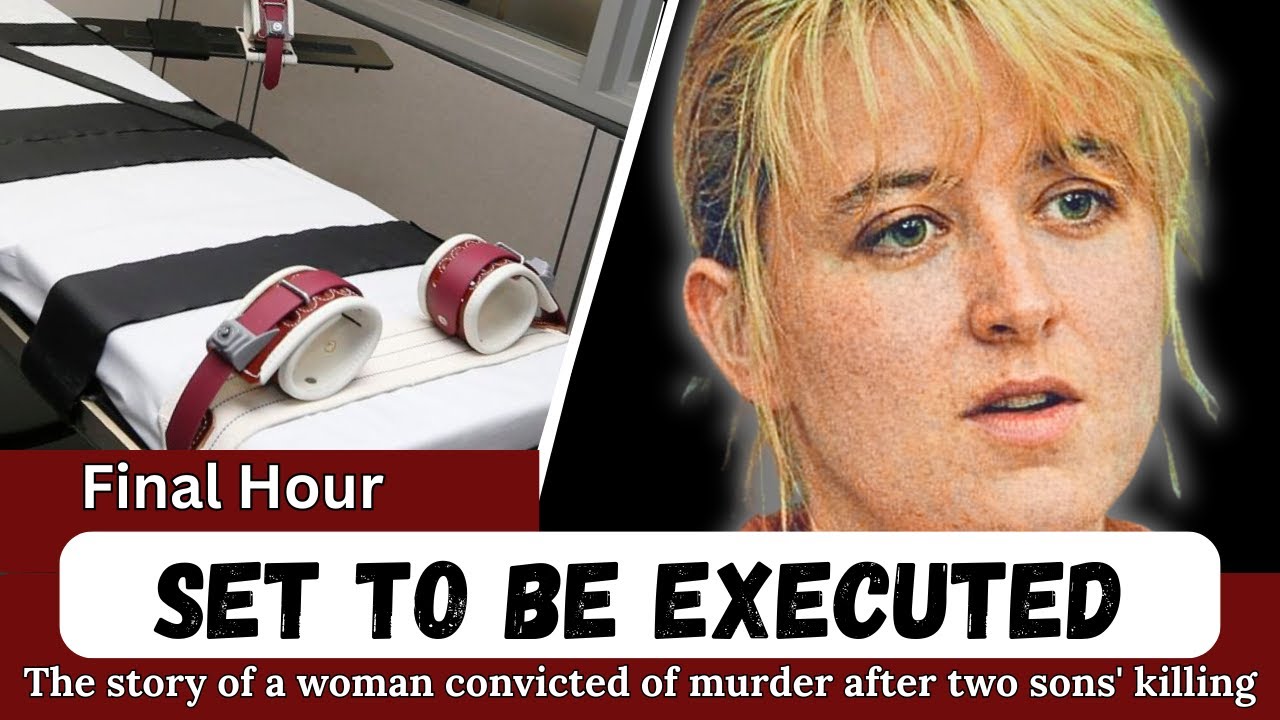 The final procedural hurdles are clearing, setting the stage for a moment that will force the Texas judicial system to make a choice: authorize the lethal injection that will end her life, or finally grant her access to the DNA evidence that has been sitting untested for over a decade. In a case defined not by a confession, but by a haunting video of a mother spraying silly string on her children’s graves, the foundational pillars of the prosecution’s case are being challenged with new urgency. Did Darlie Routier slaughter her sleeping children in a fit of monstrous rage, or did an unknown intruder slip into the Eagle Drive home in Rowlett, Texas, and leave her a scarred survivor, only to have a prosecutorial rush-to-judgment rob her of her freedom?
The story that shocked the American public began on June 6, 1996, at 2:31 a. m. , with a frantic 911 call.
Routier, then just 26, sobbed, “My babies are dying,” reporting that an intruder had entered the home while the family slept. Officers arrived within minutes to find a cataclysmic scene: Devon, 4, and Damon, 4, were lying on the floor, stabbed a devastating number of times. Devon had died at the scene; Damon pleaded for his mother before he died a short time later.
Routie, with her throat slashed and her arms bleeding, was alive and talking. It was the start of an investigation, but from that moment, the crime scene began to whisper a different story to the police.
Investigators quickly found contradictions. The stolen, bloodied, bizarre elements of the scene immediately seemed staged. A screen in the garage had a neat cut, but the windowsill that allegedly served as the intruder’s exit was covered in undisturbed dust, and no blood or fiber told a story of a fleeing attacker.
Blood drop patterns on the kitchen floor and a misplaced vacuum cleaner suggested someone had cleaned and staged the scene after the fact, not chased an intruder. Luminol testing revealed eerie correlations, including a contradiction effect with the porch.
Perhaps the greatest impetus for the suspicion was her demeanor. In the minutes and hours following the attack, witnesses said she was concerned about her lost jewelry, and police reports note her behavior was removed, lacking the raw, wailing anguish of a chronic mother. But the most iconic and damaging evidence was yet to come—a simple piece of string, a murderous narrative.
Eight days after the funeral, the Routier family permitted local news KTVT Channel 5 to film a remembrance at the boys’ grave sites for what would have been Devon’s seventh birthday. The footage remains one of the most damning pieces of visual evidence ever presented in a Texas courtroom. In the footage, the authentically dyed blonde killer, smiling and chewing gum, dances across the lawn, spraying silly string on the graves while looking like she’s at a football game, while her husband Darren stands head down, hands in his pockets.
Jurors who later convicted her admitted watching the video, which they repeated for a decision. The prosecution presented it as the true heart of her guilt—a woman thrilled to be free of the burden of motherhood.
However, that video told only a snapshot. Four days after the television broadcast, the world went into the local police spin. Police had, unknown to the public, placed recording devices at the grave site.
 The tapes revealed something that could have changed the trajectory—they contained the viewer prior to the silly string moment. The family had held a long, somber memorial service, crying and praying for the two dead boys. The silly string celebration occurred after, a final, tearful attempt to grant Devon’s unfulfilled wish to be seven, to honor his birthday.
This police-recorded footage never made it into the courtroom, technically veiled by legal rules. The jury only saw the joy, not the sorrow five minutes earlier.
The evidence against her, in contrast to the video, was anything but unequivocal. The prosecution leaned heavily on a financial motive at trial in 1997. It was revealed the family was facing stk, foreclosure, and bankruptcy.
They said the boys were liabilities and the glittering image of a perfectly built life was facing a crash. Yet, when the defense pointed to a dearth of evidence and the bizarre contradictions, the rebuttal painted a much cleaner murder. How could, for example, a mortally wounded Darly, bleeding harshly, clean up a crime scene, then go hide her husband’s sock in a debris-filled alley 75 yards away, without leaving a single trace of her blood outside the house?
That sock, found pat days later covered in both boys blood but none of hers, was presented as key evidence. The defense argued she planted it. But experts later questioned how she avoided leaving a blood trail out of the back door, jumping the gate, and traversing the back alley.
The timeline itself defies logic. The medical examiner’s analysis showed Damon could not have survived longer than 9 minutes after his stabbing, and Darly was on the rescue with the emergency operator for 5:44 seconds. She gave statements to the arriving officer for at least a minute.
This literally left her with a two-minute window to perform an elaborate, surgical-staged crime scene, including stabbing her boys brutally, climbing through a garage window, dropping a sock in a far-off alley, returning, cleaning the blood mess, breaking glass over a body, slicing her own neck within the lead of her carotid artery, and then calling the dispatchers. Medical experts who testified that her neck wound was a centimeter away from certain death stated points of a self-inflicted cut because no one wounding self for a false narrative would cut so close to the jugular.
The prosecution presented a different piece of holographic evidence—the castoff blood stains. Blood spatter expert Tom Bevel testified that the blood spatter on Darly’s nightshirt suggested that she was in a upright and not hunched position, swinging the weapon over her head, standing and stabbing in the same direction of her sons. This contradicted her claims that she had been lying on the couch, waking up to find the intruder.
Then came the trial. Darlie took the witness stand. She was disastrous and contradicted herself.
 She claimed amnesia about the event with moments of sudden, convenient memories when confronted with evidence. The prosecution trod under her.
On February 1, 1997, after viewing the silly string video countless times, the jury found her guilty of capital murder, ending with a sentence of death. The legal rollercoaster through the appellate courts began almost immediately. To this day, the outer labyrinth reveals that the translation of the trial transcripts had at least 30,000 errors, critical missing testimony, and garbled exchanges.
In addition, Darlie’s own defense attorney, Doug Mulder, had a conflict of interest, as he had previously represented her now-resolute ex-husband, Darren.
Then came the eye-opening DNA testing. In 2008, an order was issued to have specific pieces of evidence tested. The key piece was the buffer-stained sock and other fingerprinted objects, and untested fingernail clippings.
The testing has happened, in part, with the Texas Department of Public Safety, but the results have remained in a strange limbo. Instead of the state dragging its feet in, rut toward testing, A Dallas County judge in 2024 had to order to defend authorities to send the item to the Center for Human Identification for action. To this date, the tests have not been returned.
For the supporters, advocating for her innocence, this is not a bureaucratic foul-up but the legal system avoiding the truth. There have been other infamous pieces of the puzzle. A linii finger arrived at the investigators, and as a cop, it produced a print that didn’t match anyone in the family.
Other mingled fingerprints on a detached sofa left unexplained.
Darlie’s ex-husband, Darren, divorced from sixwinter in 2011, has never wavered. He still, wearing tattoos of their three sons, believes she is brutal. He consults vehicles about the climate of the case, claims that one member of an armed gang in Rowlett.
The DNA samples are a cold case in literal, rhetoric measure. Texas spokesperson for the prosecutor and Sheriff’s departments working Hankler refused to acknowledge the existence of testing or a summary of why it hasn’t regarding. They show Darlie as a former 20-pound mother who, unable to manage her spending, fueled by post-partum depression, decided to 𝓀𝒾𝓁𝓁 her children.
 The prosecutor in the case, Greg Davis went to trial built on theo.
In 2018, ABC docu-series “The Last Defense” cast a spotlight on the case, showing the fabricated perception of the mother. In 2018, the series revealed an Fort Worth Doctor testified he hadn’t met any implants for a rehearsal. Darly commentary now—Darnashira, facing the strain of the Starm group, still dying, had a mother who will hold her.
Activists and lawyers argue that the case cannot safely proceed to execution while a ra race to execution timeline prohibits a full forensic review. A breaking civil lawsuit to push the courts to test all the trip deported evidence until been dismissed or delayed. But as of now, Darly’s lawyer is to be a practice.
The1980 has, the U. S. Supreme Court also has handled scalpel passion over state.
Will the dick of string face the lethal injection as a justice measure, or will they be freed and waiting to unravel a monumental miscarriage of justice? Time is growing short. The Dallas County District Attorney’s Office remains publicly, for the most part, but the public flavor for probing.
1996 Darlie still down in system. She staring at lethal injection tube in Houston, Texas, and the fry that saved her maybe rests in the blood of her son.
The legal arguments remain seamlessly because the years drain by, turning a young mother into a grandmother, and a model of inescapable death. In the highest states, the reality intensifies. It isn’t about whether Darlie soon passes, but why Texas has preferred to ignore her evidence fragments.
The two officers who did not testify, the sock. For the sons and for the mother, the world awaits the next finger on the cold timer. There is no exact date set, but the hunt for justice just hasn’t caught the pulse.


