The snow was coming down hard by the time I hit Iowa, and my fingers were white-knuckled on the wheel. The heater barely kept up. Christmas music played softly like some kind of joke. I’d been driving for eleven hours, surviving on gas station hot dogs, and my mom had ended our phone call with “just get here when you can, Noah.

” As if I hadn’t rearranged my entire work schedule to be home. This was my first Christmas back since Dad died. Part of me thought maybe it would pull the family together. That was a dumb thought.
I’m Noah, twenty-eight, a mechanical engineer. My family has called me “the one who never needed much” since I was fifteen, when I fixed our old washing machine with YouTube videos and a busted screwdriver. Mom bragged about me back then. But somewhere along the way, that line turned into a reason to overlook me, to expect more from me and give me less.
When I was nineteen, my room became a guest room for a little while. The next year, my stuff was boxed up and shoved in the attic. Meanwhile, my sister Claire, two years younger and still living at home, had her room preserved like a museum, fairy lights and swim trophies intact. When I asked Mom about it once, she laughed and said, “Well, Claire’s the sentimental one.
”
As if I didn’t have things worth holding on to. I stopped pushing. I visited less. But I still showed up.
Birthdays, holidays, summer weekends. Claire was the golden girl, cheer captain, married at twenty-four to a solar panel salesman who called me “bro. ” They lived in a fancy rental three towns over and always showed up late, greeted like royalty. I arrived early to set up chairs and fix whatever had broken since my last visit.
This year, I thought it would be different. I was wrong. The house looked the same when I pulled in, snow on the roof, glowing reindeer on the lawn, the wreath Mom had hot-glued together a decade ago. I parked behind an unfamiliar black SUV and grabbed my duffel.
That’s when I noticed the giant paw prints in the snow. Claire met me at the door with a distracted, half-hearted hug. “Hey, Noah. ” She had a phone in one hand and a designer leash in the other.
At the end of it bounced a massive golden doodle with a red velvet bow around its neck. “This is Bentley,” she said, already turning away. “Mom’s letting him stay inside this time. ”
I asked where to put my stuff.
Mom’s smile wavered. “We’ve got a full house,” she said lightly. “Bentley’s a bit anxious in new places, so Claire set him up in your old room. He’s got his crate and toys in there.
It’s the only space quiet enough for him to sleep. ”
I blinked. “You gave my room to the dog? ”
“For a few days,” she said, lifting a folded blanket like a magician.
“You can crash on the couch. You’ve always been adaptable. ”
Adaptable. The dog had a room.
I had a throw blanket and a couch with a spring that poked my ribs. Dinner was in full swing by six. The table was set for nine, and I was squeezed at the end like an afterthought. Bentley had his own dog bed beside Claire’s chair, complete with a stocking and a monogrammed bowl.
Everyone talked about Claire’s new yoga studio, her trip to Napa, whether she should start a dog Instagram. I chewed quietly, trying not to let the frustration creep up my throat like acid. Around eleven, the wine had my uncle telling old stories. Most of them were about how tough I’d always been, how I slept in the garage during summer just for the breeze, how I never complained when my bike got stolen.
“He’s a survivor,” my uncle slurred, raising his glass. “Probably be just fine if we dropped him in a ditch somewhere. ”
Everyone laughed. Mom smiled like it was a compliment.
I slept in my car that night. I didn’t even try the couch. Lying under that thin blanket, listening to Bentley whine from the room that used to be mine, was too much. So I slid into the driver’s seat, reclined it, turned on the heated seats, and stared at the frost on the windshield until I couldn’t keep my eyes open.
At 10:17 the next morning, I canceled the mortgage autopay. They didn’t know it, but they were thirty days from foreclosure, and I had no intention of warning them. The snow melted by the third day, but the frost in the house never left. Not toward me, anyway.
Every hour made the picture clearer. I wasn’t family anymore. I was a guest who showed up uninvited, overstayed his welcome, and was expected to stay quiet, smile, and help with the dishes. I didn’t say anything about sleeping in my car.
I didn’t want to give them the satisfaction of knowing it bothered me. On the fourth morning, I came inside to find Claire wearing one of my old college hoodies, the faded navy one with the university logo that used to hang in my old room. I stared at it too long, and she noticed. “Oh, this.
I found it in one of the attic boxes last year. So comfy, right? ” She grinned like she’d borrowed a shirt from a roommate, not taken a piece of my life and decided it was hers. “Yeah,” I said flatly.
“Real comfy. ”
Bentley barked from the hallway. Claire sighed. “Ugh.
His anxiety is acting up again. Mom says she might need to extend his CBD prescription. ”
I nodded like that sentence made any sense at all. That day, I cleared the driveway, fixed a dripping faucet, and reprogrammed the thermostat.
Nobody asked me to. Nobody thanked me either. That was just what I did. I was useful, not cherished.
The breaking point came on Christmas Eve. Mom had spent the whole day directing people to cook, barking orders, pouring wine, and complaining that this year just didn’t feel the same without Dad. She never once asked about my work or my apartment or whether I was seeing anyone, but she did ask me to run to the store three times. Once for brown sugar, once for wine, once because Claire didn’t like the brand of almond milk I’d picked up the first time.
The table was set again. Bentley had a special lamb and rice meal in a ceramic bowl with his name on it. Claire had brought him a toy shaped like a gingerbread man, which he tore apart in the living room while everyone clapped and laughed. There was an extra seat at the table this time.
I assumed it was for me. It wasn’t. Claire’s husband had invited a coworker named Brent whose Christmas plans fell through. When it came time to plate the food, Mom handed Brent a dish before she handed me one.
She poured him a glass of wine and said, “You’re like family already. ”
I stood there with a dry mouth, still holding the serving spoon I’d used to stir the mashed potatoes. During dinner, Claire brought up Dad casually, like it was small talk. “Mom, did the lawyer ever finish sorting out the last bits of Dad’s estate?
”
Mom looked up from her plate. “Mostly. Just the house left. ”
Claire nodded.
“You’re still planning to add me to the deed, right? ”
I froze. “What? ”
Claire blinked at me like I’d interrupted a private conversation.
“What do you mean, add you to the deed? ” I asked louder. Mom sighed without meeting my eyes. “It’s not a big deal, Noah.
”
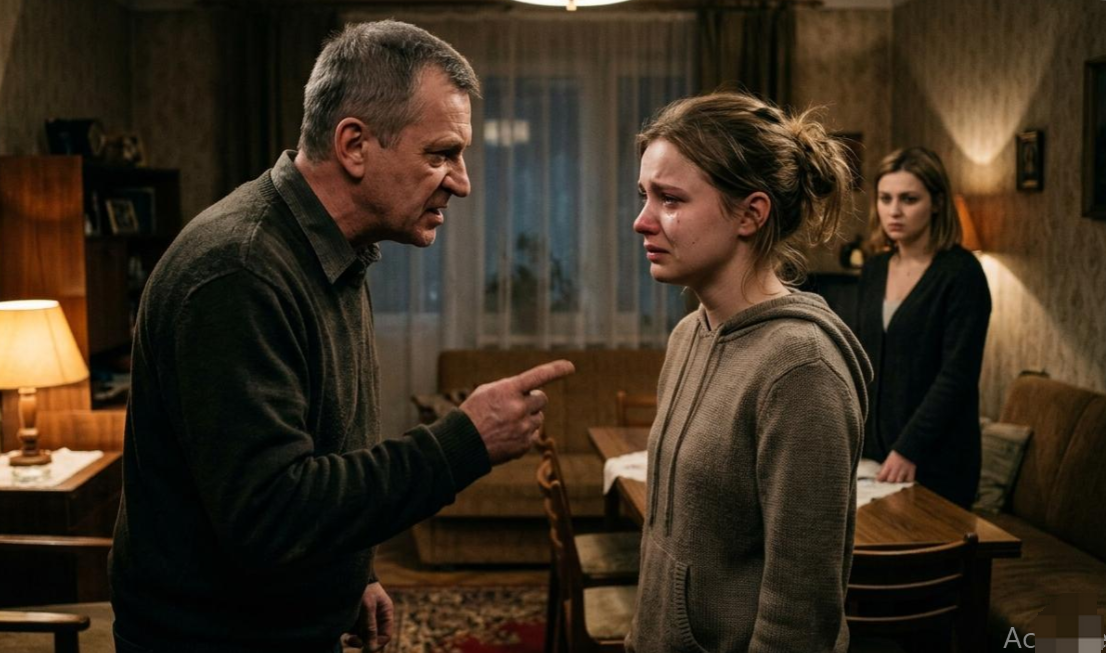
“It’s literally the house Dad built,” I said, my voice sharp. “He and I put in those floorboards. We rewired the basement together. You want to sign it over like it’s a gift basket?
”
Mom finally met my gaze. “Claire’s planning to settle here eventually. You live out of state. You don’t need it.
”
“I don’t need it? ” I repeated, stunned. “You don’t even like this town,” Claire added, sipping her wine. “You always talked about getting out.
”
“That doesn’t mean I wanted to be erased,” I said. “This was our home. ”
“Enough,” Mom said, setting her glass down hard. “We’re not doing this now.
Not at dinner. Not at Christmas. ”
I pushed my chair back and stood. “Noah,” Mom said, her voice firm, but I was already walking out.
Outside, the air was bitter, but it still felt warmer than that room. I sat in my car, staring at the dark house. I thought about Dad, what he would have said. He never would have let this happen.
But he wasn’t here, and they were giving away his legacy like leftovers. I opened my banking app. The mortgage was still under my name. After Dad died, I’d stepped up to take over the financial responsibility.
Mom pleaded, said she couldn’t cover it on her own, and Claire was saving for her future. So I paid it quietly, automatically, every month, like clockwork. Until now. I hovered over the autopay toggle and turned it off.
They had no idea. What they didn’t know was that the mortgage had come up for renewal earlier this year, and Mom had never bothered to reapply for a co-sign. The bank reached out to me, just me, and I restructured the loan under my name entirely. They didn’t read the fine print, but I did.
I hadn’t planned to use that power until that night. Until they looked me in the eye and said I didn’t need it, that I didn’t belong. The next morning, Christmas morning, I woke up in the car with stiff legs and a sore back. I went inside, washed my face in the guest bathroom, and walked into the kitchen.
Claire was eating a cinnamon roll in her pajamas. She looked up, mouth full. “You’re up early. ”
I didn’t respond.
Mom came in, wearing a robe and slippers. She smiled weakly. “Merry Christmas, honey. ”
I nodded.
Nobody asked why I hadn’t been inside last night. Nobody offered me coffee. I went back out to my car, turned on the engine, and sat there as the warmth filled the cabin. And then I started planning.
Because if they wanted to pretend I didn’t matter, they were about to learn exactly how much I did. The clock had already started ticking. Thirty days. Then everything would change.
When I drove away that morning, I didn’t say goodbye. I didn’t hug anyone. I just packed my duffel, got in the car, and pulled out of the driveway without looking back. Bentley barked once from the front window.
Claire waved absent-mindedly. I didn’t go straight home. I stopped halfway at a roadside motel with a flickering neon sign and curtains that smelled like old smoke. I lay in bed for hours, staring at the popcorn ceiling, letting the anger ebb and flow.
I wasn’t just angry at them. I was angry at myself for thinking this year would be different. For hoping they’d finally see me. And most of all, for how long I’d played their game.
When Dad passed, I didn’t grieve publicly. I arranged the funeral, met with the lawyer, signed the mortgage papers because Mom said it would be easier. I stepped up while they fell apart, and somehow that made me disposable. The next morning, I turned my phone off.
I took a few days off work and told my boss I needed time to sort out personal stuff. He understood. He was one of the few people who saw me as more than what I could do for them. I stayed in that motel for three nights.
No TV, no social media, just my thoughts and a notebook. On the fourth morning, I remembered something. A project I’d pitched at work months ago, an energy optimization model for commercial HVAC systems. It had gotten good feedback but was shelved as too ambitious.
In my notebook, I’d sketched the outlines again, sharper this time. I drove home, opened the blinds, cleaned the kitchen, and dove into the work. For the next six weeks, I disappeared into spreadsheets, blueprints, and simulation models. I built a prototype, ran tests, hit walls, broke through them.
I ate frozen meals and lost track of weekends. But I was building something that was mine. For the first time in a long time, I felt like I was becoming someone I actually respected. In mid-February, I presented the model to my boss again.
This time I pitched it like a product, a done deal. He asked if I’d worked on it solo. “Yeah,” I said. “Had some time over the holidays.
”
Three weeks later, it was greenlit for testing. Two weeks after that, the regional office flew me out to demo it in front of the board. I stood in a glass-walled conference room, walking a dozen men in suits through every step of my system. When I finished, the room was quiet.
Then someone clapped. Then they all did. They offered me a promotion on the spot. Project lead, six-figure salary, full autonomy.
I said yes. The night after the offer came through, I sat on my balcony with a bottle of scotch and thought about Dad. About how he taught me to wire a breaker box when I was twelve. About how he used to say, “Let your work speak for you.
”
Mine was shouting. That should have been the end of it. I should have been content to rise quietly and leave the past behind. But the thing about betrayal is that it doesn’t just leave a scar.
It leaves a pulse. And every time it beats, it reminds you of what was taken. It wasn’t just a bedroom or a seat at the table or a line on a mortgage. It was my place in the family.
And they handed it to a dog. It was late March when Claire called. I stared at the screen for a long time before answering. She was too cheerful.
“Hey, stranger. Mom said you’ve been hard to reach. Everything okay? ”
I resisted the urge to laugh.
“Yeah, just been busy with work. ”
“Well, we were just talking and realized we haven’t seen you in a while. Thought maybe we could do a spring dinner or something. And Bentley misses you.
”
I bit down on the inside of my cheek. “Yeah, I’ll think about it. ”
She hesitated. “Also, quick thing.
Mom mentioned something about the mortgage. She got a weird notice in the mail. Something about past due. I thought everything was on autopay.
”
“It was,” I said simply. “I turned it off. ”
Silence. “What?
” She sounded confused, not mad. “Figured you or Mom could handle it now, since you’re planning to be added to the deed and all. ”
Her tone changed. “Noah, are you seriously going to be petty about this?
”
“I’m not being petty,” I said calmly. “I’m being precise. You all made it clear where I stood. I just adjusted accordingly.
”
She hung up without saying goodbye. The next day, I got an email from the bank. Mortgage still unpaid. Final notice before legal action.
I didn’t respond. Then came a text from Mom. “Noah, we need to talk, please. ”
I ignored it.
Then another. “I didn’t realize how upset you were. I’m sorry if we made you feel left out. ”
Two days later: “We’re getting scary letters from the lender.
Can we at least talk? You know I’m not good with this stuff. ”
That was the moment I realized something. They weren’t sorry because they hurt me.
They were sorry because I stopped cushioning their fall. I didn’t reply. I let the silence grow. And in that silence, I kept building.
I invested part of my bonus into a side project I’d been sitting on, a company that retrofitted old homes with modern energy systems. A little homage to the work Dad and I used to do together. By May, we landed our first client. By June, we had three more projects lined up.
I stopped checking my phone. Let the guilt texts pile up. Let the foreclosure clock tick down. I wasn’t their safety net anymore.
I wasn’t the fixer. I was the guy holding the deed. But I wasn’t done yet. There was one more piece I needed to play.
And when I did, it wouldn’t just shake the house. It would split the foundation. I waited until the foreclosure notice turned red. Default.
Not just behind, not just late. Default. The clock wasn’t ticking anymore. It was screaming.
And the best part was, neither Claire nor Mom had any idea what that meant. Because the house wasn’t in their name. It never had been. It was mine, fully, legally, quietly mine.
They hadn’t read the refinance paperwork I asked Mom to sign months after Dad passed. She thought it was just a renewal. But what she signed, what I made sure she initialed on every page, was a complete transfer of mortgage ownership and a co-signer release. She had no equity left, no power, no say.
I didn’t want to just take the house. I wanted them to understand why they were losing it. So I planned something poetic. It started with a phone call to my college friend Manny, who ran a construction crew.
He knew a real estate guy, Luke, who could list a property discreetly and handle family complications. When Luke called, he asked if I was selling my folks’ house. “Technically, my house,” I said. He let out a low whistle.
I explained I needed the house listed privately, no big signs, no public showings, staged and prepped for when the time was right. He said he’d done this dance before. I also called Miss Terrence, the probate attorney Dad had trusted for years. She was semi-retired but sharp.
I remembered her pulling me aside at Dad’s funeral, handing me a card and saying, “If they ever try to twist things, call me. Your father was clear about his wishes. ” We met for coffee. I handed her a folder with every piece of paper I’d been quietly collecting: mortgage statements, signed transfers, refinance documents, bank logs, the text from Clare asking to be added to a deed she had no claim to.
She flipped through it like a thriller novel. When she looked up, her eyes were sharp. “Well, this is airtight. And they have no idea?
” “Not a clue,” I said. She leaned back. “Legally, you’re golden. You can sell it, lease it, bulldoze it, whatever you want.
Personally, I say let them squirm, then crush them with it. ”
From there, the setup became a slow orchestration. Clare left voicemails saying, “Can we please be civil about this? ” and “Mom’s really stressed,” and my personal favorite, “You’re not punishing just her.
You’re punishing all of us. ” As if I hadn’t been punished for years. One afternoon, I got a selfie from Claire’s husband standing next to a shovel in the backyard. The caption said, “Fixing the fence your dad never finished.
Got to keep the legacy strong, bro. ” I stared at it for a full minute. Then I forwarded it to Luke and said, “Let’s start the walkthrough sooner, just in case they decide to fix anything else. ”
Meanwhile, I got my retrofitting company off the ground.
I named it Oak and Iron Systems. Dad would have liked that. Then I sent them an invitation. Formal, printed on thick paper with gold lettering.
“Noah invites you to a family legacy celebration. ” No date, no address, just a line at the bottom: “Details to follow. ”
Claire called within hours. “Is this a joke?
”
“Nope,” I said. “You’ll get the next piece soon. ”
The next piece was the save-the-date card. It looked like a wedding announcement, fancy cursive, white envelope.
Inside it said, “You are cordially invited to a walk down memory lane. Address: 304 Lilac Drive. Date: May 14th. Time: 2 p.
m. Property walkthrough and farewell tour hosted by the sole owner. ” That date was exactly two days before the foreclosure would become a court filing. Two days later, Mom left a voicemail crying.
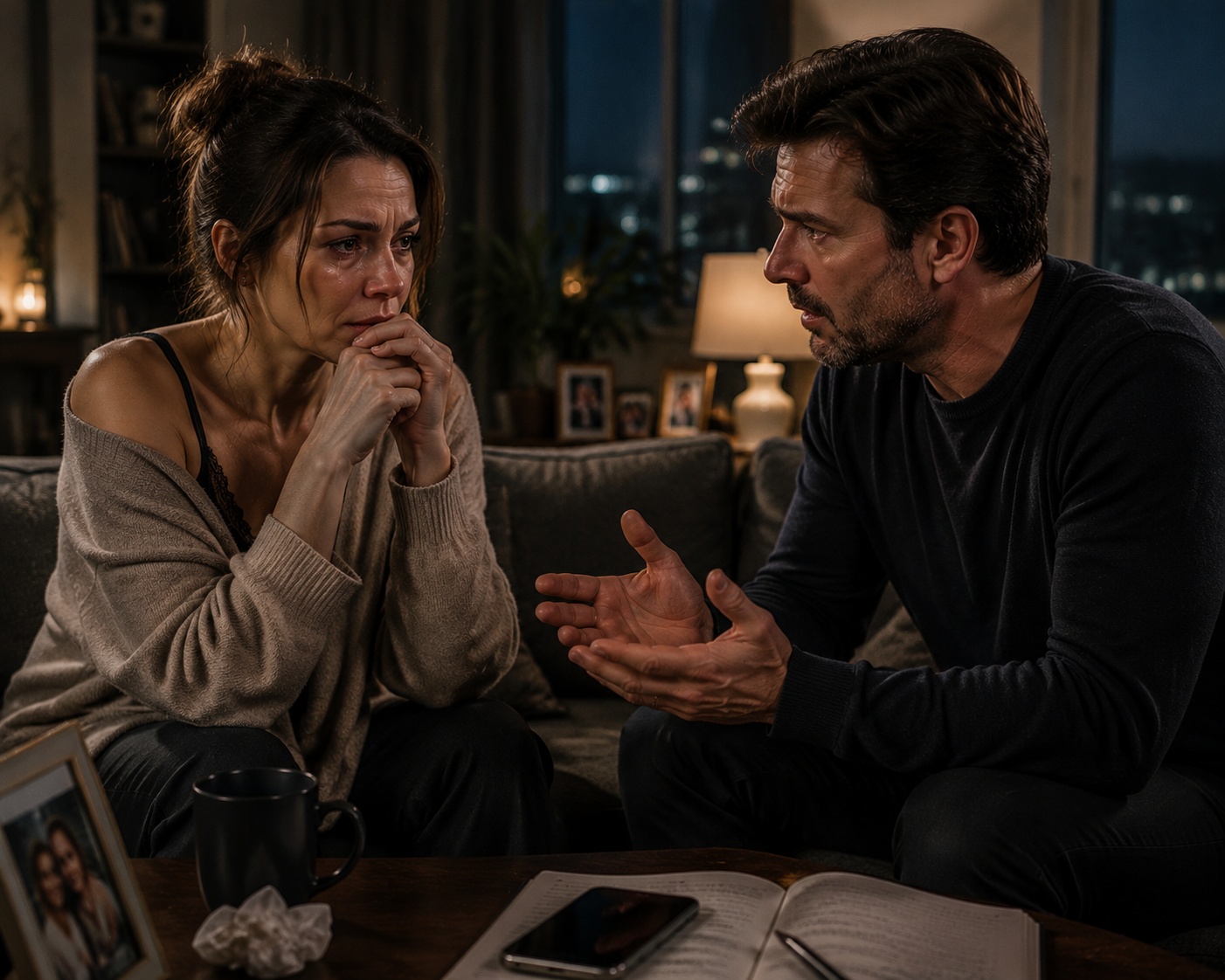
Not the manipulative kind. The real kind. Her voice cracked. She said she didn’t understand, that she thought I was happy helping, that I was always so strong, that she didn’t know I was hurting.
I sat on the edge of my bed, listening with a blank face. That was what it always was, wasn’t it? She didn’t know. She didn’t see.
May 14th arrived like a quiet storm. The sun was out, the breeze was soft. I parked a few houses down, not out of shame, out of design. I wanted them to walk in thinking they still had the upper hand.
I watched as Claire’s SUV pulled in, Bentley prancing beside her. Mom followed in her old sedan, dressed too nicely for a family chat, cream sweater, pearls, soft makeup. She looked nervous. That gave me a flicker of satisfaction.
I waited until they rang the bell and found no one home. Then I stepped out of the car and walked up the drive. I pulled the keys from my jacket pocket, the real set, the ones I’d made after I changed the locks two weeks ago. “Follow me,” I said.
They followed me up the steps, confusion blooming as I unlocked the front door and pushed it open. The house was spotless. Luke’s staging team had worked magic. New neutral rugs, fresh paint, every room looked like a magazine spread.
Still our house, but sleeker, detached from memory. “Why does it look like a showroom? ” Claire asked. “Because it is,” I said, walking into the living room.
Mom stood by the kitchen island, slowly realizing something was wrong. “Noah, why are there brochures here? ”
I handed her one. It was a property listing.
304 Lilac Drive, three bed, two and a half bath, fully modernized, price upon request. Claire read it over her shoulder and turned pale. “Wait, what is this? This isn’t funny.
”
I finally looked them both in the eye. “I told you this was a legacy event. And it is. This house was part of our family legacy, until you both made it clear I wasn’t part of that family.
”
Mom’s lips parted, but no words came out. “You told me I didn’t need a bedroom, that I didn’t belong, that it made more sense to give the space to a dog. ”
Claire scoffed. “Oh my god, are you seriously still mad about that?
That was months ago. ”
“You gave my room to a dog. You gave my dad’s legacy to a fantasy about you settling down someday. And you tried to add yourself to a deed that never had your name on it.
”
“I didn’t know,” Mom started. “No, you didn’t ask,” I said. “None of you ever asked. ”
I pulled a folder from my bag and laid it on the counter.
Everything. The title, the mortgage papers, the release forms, the refinancing under my name. “You signed this,” I said to Mom, tapping one page. “I thought that was—” “You thought I’d just keep paying while you handed the house off like a party favor.
But you signed full ownership over to me last year. This house has been mine. I paid for it. I maintained it.
And now I’m selling it. ”
Claire’s face twisted. “You can’t do that. ”
“I already did.
”
“You’re actually going through with this? Selling Dad’s house? ”
“You mean the one you were planning to claim like a souvenir while I slept in my car out front? That house?
”
Bentley barked once, oblivious. Mom stepped forward, trying to soften her voice. “Noah, this isn’t what your father would have wanted. ”
I took a breath.
That line almost got me. Almost. “No,” I said. “Dad would have wanted you to see me.
”
I let that land. Then I handed her the final paper. The sale agreement, signed, executed, closing in twelve days. Claire snatched it, scanned it, and threw it back on the counter.
“You’re unbelievable. This is revenge, not justice. ”
“No,” I said calmly. “This is consequence.
”
They stood in silence. No more comebacks, no more gaslighting. Just quiet recognition that this time I wasn’t backing down. I turned and walked them toward the front door.
“There’s a storage unit nearby,” I said over my shoulder. “Everything that mattered, photos, heirlooms, boxes of Dad’s stuff. I moved it there. You’ll have two weeks to collect it before I close the account.
”
“You’re actually kicking us out,” Claire muttered, like the idea was too ridiculous to accept. I opened the door for them. “You already kicked me out years ago. ”
Mom stepped outside, shell-shocked.
Claire followed, dragging Bentley behind her. He paused at the door and looked back at me, like he wanted to stay. I closed the door gently behind them. Then I walked through the house one last time.
Room by room. The kitchen where I made pancakes with Dad. The den where he taught me how to repair things. The bedroom that stopped being mine the moment they saw me as convenient instead of family.
And I felt something crack. Not like breaking. Like pressure releasing. When I locked the door and handed the final keys to Luke, I wasn’t angry anymore.
I was free. Twelve days later, the house sold for $714,000. I paid off the remaining mortgage, donated a chunk to a local trade school in Dad’s name, and used the rest to buy a home of my own. Not just a place to sleep, but a space that was mine from the ground up.
When people ask why I walked away from my family, I don’t always tell them the full story. I just say sometimes you have to leave the house that raised you to build the home that will never throw you away.