
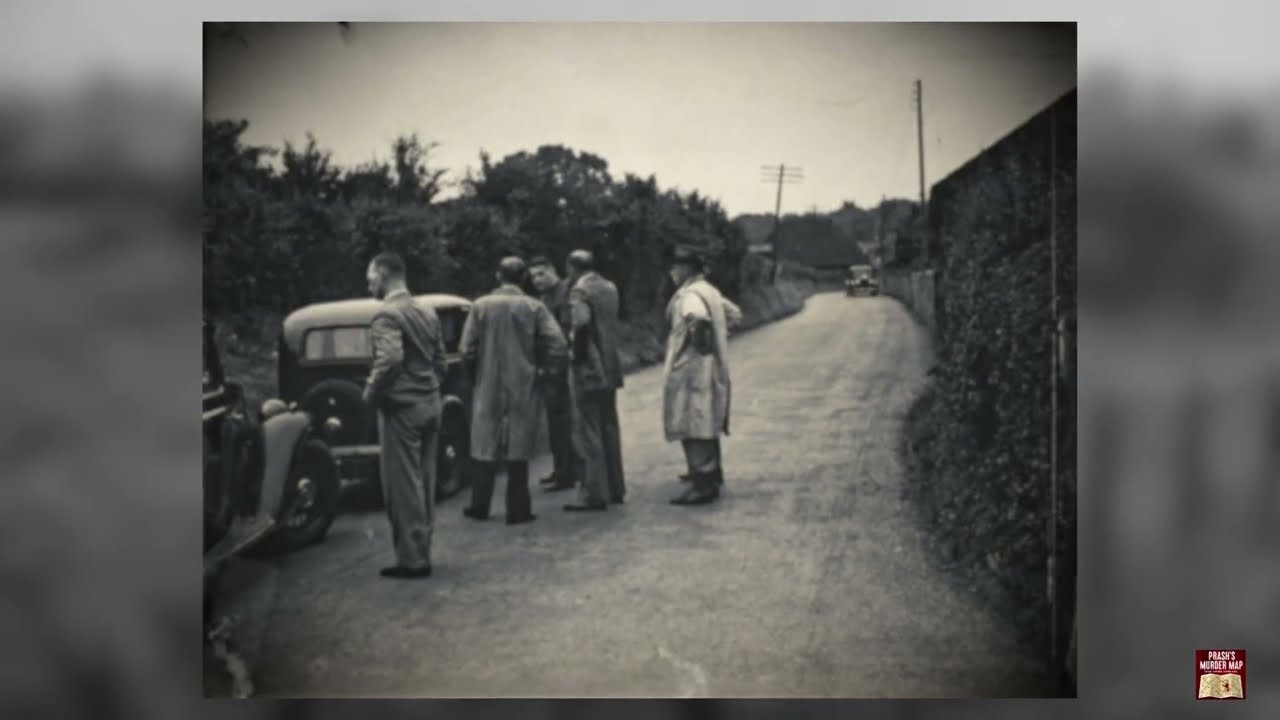
The body of a 48-year-old woman, later identified as Dagmar Peters, was discovered concealed in a dense hedgerow on Wrotham Hill in Kent, England, on Thursday, October 31, 1946, prompting a massive investigation by Scotland Yard’s Chief Inspector Robert Fabian and Kent CID’s Detective Superintendent Frank Smeed. The victim, a quiet and reclusive former telephone operator, was found by lorry driver Joe Hammond, who had stopped his vehicle on the A20 after spotting a lone blue suede shoe on the roadside, a size that matched his wife’s and caught his attention during the austerity of post-war rationing.
Hammond, initially searching for the shoe’s pair to gift his wife, parted the brambles at the edge of the road and stumbled upon the fully clothed body of the woman, who had been strangled, and whose neck was fractured. He immediately drove to a telephone box and called police, who secured the scene with the assistance of a local doctor and a pathologist, Dr. Keith Simpson, the latter arriving later that night to examine the corpse by the headlights of patrol cars, noting no signs of sexual assault and no identification on the body, with the woman’s clothing homemade and lacking any retail labels, suggesting a life of quiet frugality and seclusion.
 Dr. Simpson concluded that Dagmar Peters had been killed elsewhere and then dumped at the roadside, but this was a death that had occurred between 7:00 and 9:00 that morning, and the body’s lividity indicated she had remained upright in a sitting position for a period before being moved. A redescription of the woman was circulated in the press, describing her blue-gray eyes, brown hair, a small scar under her left nostril, and her size six shoe, but with no rings suggesting she was unmarried and likely unmarried, her identity remained a challenge until her mother, 79-year-old Mrs.
May Peters, recognized the description in a newspaper article the following morning.
Mrs. Peters, who lived on Heaver Avenue in West Kingsdown, about four miles from the scene, grew anxious when her quiet daughter, Dagmar, failed to return from a visit to her brother Ralph and his wife Elena in Surrey, and upon reading the paper, she contacted investigators, who then brought her son Ralph to formally identify the body. The grief-stricken family provided detectives with details of Dagmar’s life, revealing she was a solitary woman, born on October 25, 1898, who had worked as a telephone operator for 25 years before suffering a nervous breakdown in 1941, and who then became a self-sufficient hermit in a small, windowless wooden hut, lit only by oil lamps and sparsely furnished with a bed, a table, a sewing machine, and a collection of basic pots and pans.
Dagmar’s mother told police that her daughter was cautious about accepting lifts from private motorists, and after an unsettling experience with a driver, she would only accept rides from lorry drivers, believing they were more accountable since they traveled on business and in company vehicles. Following this lead, detectives began stopping early-morning vehicles on the A20 and questioning drivers, with a number of reports coming in of a brick-laden lorry passing the victim at that time, and another witness described a van parked near the murder site at around 6:00 a. m.
 , with a man nearby. The police also investigated a distinctive yellow string bag that Helena had crocheted for as a birthday gift, and it was a 16-year-old farm worker named Peter Nash who had read about the case and recognized the bag, having pulled an identical one from a private lake at Clare Park in Maidstone.
The lake was not open to the public, but it was fed by a stream from the nearby Goldwell Cider Works in East Malling, and Chief Inspector Fabian tested his theory by dropping and bottle into the water at the Cider Works and timing its arrival at the lake three hours later. Interviewing the foreman at the Cider Works, Fabian saw the delivery note for a brick delivery that had arrived on the morning of the murder, listing the driver as Sydney Sinclair, a name that had now come up twice in the investigation. Police visited Sinclair at his home in Little Abington, Cambridgeshire, on the evening of November 9, but he appeared calm and offered them tea, yet his account of his movements that morning, including a four-hour wait at a cafe and stopping to ask for directions, seemed overly detailed and suspicious.
Officers continued to gather evidence, with the recovery of a man’s white vest and later a brown leather attaché and bag found in Winterfield Lane near the Cider Works, all linked to the victim. When they learned that Sidney Sinclair had left his employment for work as a gardener and was now reporting of anxiety neurosis, they decided to bring him in for questioning, and it was revealed that Sydney Sinclair was just one of his many aliases. The man’s real identity was was as Harold Hagger, a 45-year-old who had a prior criminal record of 16 convictions, including sexual assault, robbery, and assaulting a police officer, and had a hidden wife and son, as well as having molested his other wife’s daughter.
 He was a bigamist, and the police discovered that he had a long history of faking injuries and framing himself to avoid army duty, and he had jumped from a moving train in 1925 to evade arrest, causing a fractured skull.
Under pressure, Hagger changed his story, first saying that he had found the items and thrown them away, but then he admitting, in a third statement, to picking up Dagmar Peters on the morning of the murder. He claimed that an woman asked for a lift to London, and that he had stopped a second one place to check for a radiator, and while they were in the car, she, according to him, touched his jacket and offered sexual favors, at which point he struck her, and he had his wallet, and a struggle ensued. He grabbed the vest that Dagmar had tied around her neck as a scarf, and caused her death.
Hagger claimed he had panicked, carried her body into the hedgerow, a a short distance later, and discarded the rest of her items into the stream. He was charged with murder at the end and was put on trial at Maidstone Assizes on February 24, 1947.
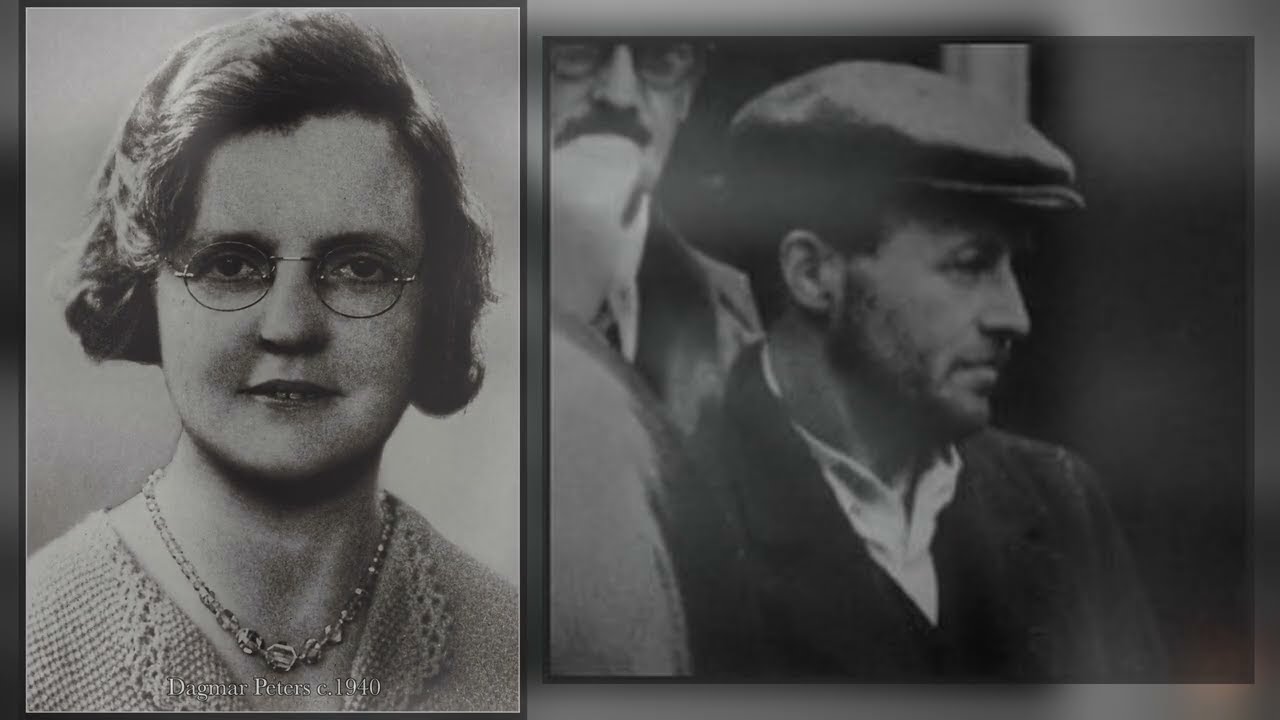 The prosecution, led by Mr. Derek Curtis-Bennett, KC, argued that the story of Dagmar’s apparent sexual proposition was an absurd fabrication, pointing to the postmortem which showed she was a virgin and that the victim was a shy, mild-mannered woman, who was known to offer a lift, like all lorry drivers, to offer payment in exchange for a ride. The defense attorney, Maxwell Fyfe, claimed Hagger had no intention to 𝓀𝒾𝓁𝓁, but the judge, Mr.
Justice Byrne, in his summing up, made the crucial point that although he’s guilty of murder if a death results while intending to cause you harm, even if it was of the result of an act that had no intention to 𝓀𝒾𝓁𝓁 and relied on manslaughter. Hagger was found guilty However, and was sentenced to death, with the defendant, Harold Hagger, alias Sidney Sinclair’s a 45-year-old who was hanged at Wandsworth Prison on April 18, 1947, by executioner Albert Pierrepoint. A rescue story of a happy scene appeared in the days that followed, when a Jack Russell puppy, which was a gift from Dagmar to her brother, was found and taken in by a local roofing company, living a new life, a small element of sadness and a rare drop of hope in an otherwise tragic story of mistrust, criminality, and a life that was cut short.
Dagmar’s mother, Mayme, sold her family’s homes, including the hut, which was demolished, and she moved in with her son’s family, where she remained until her death in 1956. Judge Byrne, who presided over this case, was the same judge who had presided over the controversial trial of Elizabeth Jones and Karl Nulton, who were involved in the murder of George Heath, a crime that has been reconstructed and re-examined in a new book. That work serves as a broader understanding of the criminal justice system, as the story of Harold Hagger reflects the anxiety of a nation adjusting to a life beyond war.


