The Civil War was not only decided on vast battlefields between uniformed armies, but also through a shadow war of ambushes, hit-and-run raids, and brutal guerrilla tactics. Across the divided nation, irregular militias waged unconventional warfare that often blurred the line between soldiers and outlaws, with some fighting for a cause and others exploiting the chaos for personal gain. In the town of LaGrange, Georgia, women found a role in this conflict by joining a local militia known as the Nancy Harts. Named in honor of a Revolutionary War heroine, the group primarily assisted as nurses in military hospitals.

Because their town was situated on a strategic route between Atlanta and Montgomery, the Confederacy’s initial capital, they understood the risk of a Union advance and committed to regular training, practicing marching and marksmanship each week. In mid-April 1865, Union forces advanced into western Georgia, and Brigadier General R. C. Tyler attempted to delay them with 300 Confederate troops.
Despite a resistance that lasted several hours, the Confederates were overwhelmed and forced to retreat. Rather than seek shelter, all 40 members of the Nancy Harts chose to stand with their town. On April 17th, they gathered on the outskirts as Union forces approached, but a peaceful resolution was reached, and the town was surrendered without further conflict. Union troops disabled facilities tied to the Confederate war effort but left private homes intact.
In an unexpected turn, the soldiers were welcomed with a meal prepared by the Nancy Harts before continuing their march to Macon, where they received confirmation that the war had officially ended. In Missouri, John McNeel was tasked by pro-Confederate Governor Claiborne Fox Jackson with assembling a local militia. After facing personal hardships, including the loss of a son and a period of imprisonment, McNeel returned to Virginia and established a cavalry unit known as the McNeel Rangers. The Confederate Congress had passed legislation allowing for partisan ranger groups, giving them independence while still supporting the army.
The McNeel Rangers became known for disrupting Union activities, frequently damaging rail transportation and communication networks. They also became a key supplier of cattle to the Shenandoah Valley, and General Robert E. Lee personally acknowledged their successes on multiple occasions. In one notable operation, just 23 Rangers seized a Union supply train guarded by 150 soldiers, capturing 27 wagons, over 100 horses, and dozens of Union troops.
In 1864, Captain McNeel suffered a critical injury during a raid when he was struck by friendly fire, and he died several weeks later. Local defense groups known as the Home Guard were present in both the North and the South. Composed primarily of older men, boys too young to serve, and wounded veterans, they formed early in the war to protect communities. With many police officers away fighting, the Home Guard often took on law enforcement duties, monitoring prisoners, securing mail routes, and protecting railroads.
In the South, they also oversaw plantations while enslavers were away. As the war ended and Union forces occupied much of the South, most of these units gradually disbanded. Both the Union and the Confederacy recognized the strategic value of gaining support from Native American nations. Tribal leaders were divided in their loyalties, with some siding with a faction and others seeking neutrality.
The Confederacy successfully established treaties with several tribes, believing their warriors would be highly effective in unconventional combat, as many indigenous groups had long used ambushes and swift attacks. An estimated 20,000 Native Americans served in military roles for both sides. Others saw the war as an opportunity to navigate shifting power dynamics or to launch raids to seize livestock and supplies, driven by survival or retribution for past conflicts with settlers. William Quantrill briefly worked as a schoolteacher before turning to gambling and horse theft.
Facing legal trouble in Missouri over a murder charge, he fled the state and became involved in guerrilla warfare. His raiders started as a small group of twelve men, carrying out fast-moving attacks against Union forces. After Union forces imprisoned several female relatives of the group, a makeshift prison collapsed, killing several women. Shortly after, Quantrill led 450 men into Lawrence, Kansas, a strong Union town, where they set fire to buildings and looted businesses in an event that became known as the Lawrence Massacre.
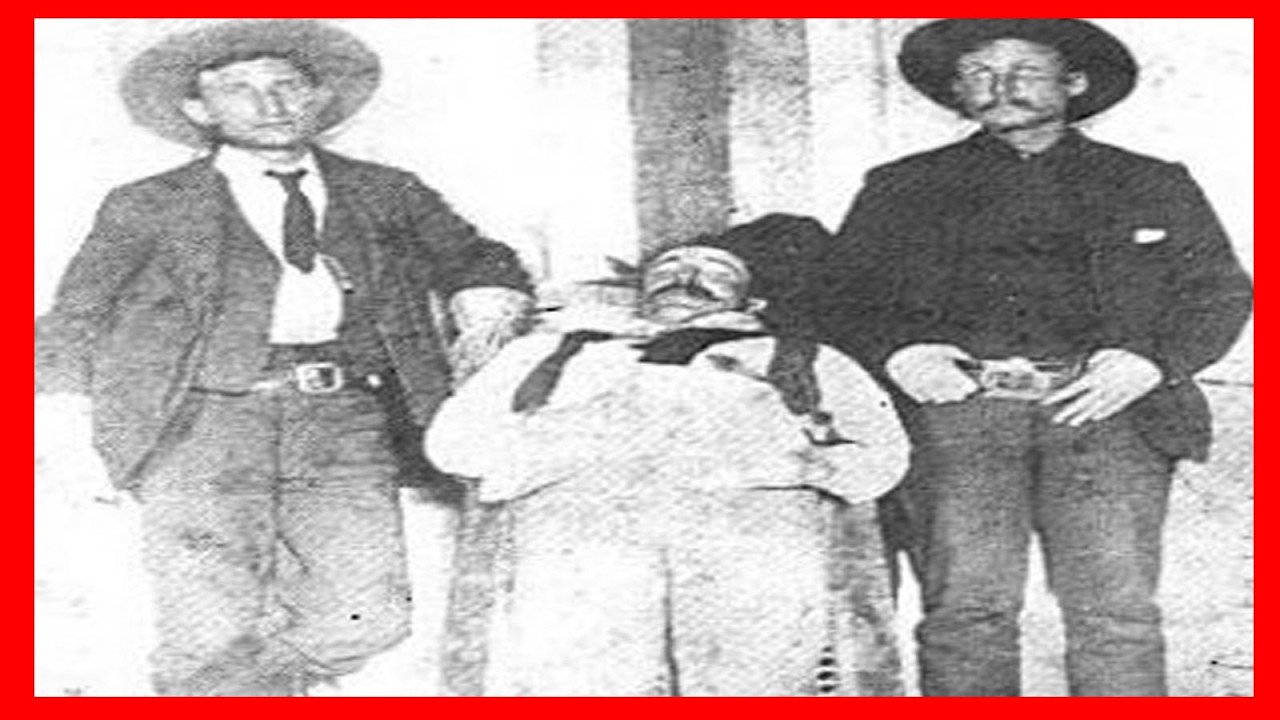
Quantrill was fatally injured during a raid in Kentucky in 1865. Some of his followers, including Frank and Jesse James and Cole and Jim Younger, later used their wartime experience to embark on lives of crime. Quantrill’s group fragmented after he relocated to Texas, and one unit was led by his lieutenant, Bill Anderson. Known as “Bloody Bill,” Anderson commanded approximately 80 men who became feared throughout Missouri for their raids on Union soldiers and civilians.
In 1864, his unit was involved in the Centralia Massacre, where unarmed Union soldiers traveling home on furlough were captured and executed, followed by an ambush of a larger Union force. Within a month, Union forces set a trap, and Anderson was fatally wounded; his body was displayed at a local courthouse as a warning. John Mosby, known as the “Gray Ghost,” commanded the 43rd Battalion, First Virginia Cavalry, famously called Mosby’s Rangers. Operating behind enemy lines, Mosby used disguises to scout raid locations.
In a daring raid at Fairfax Courthouse, his men captured Union Brigadier General Edwin Stoughton and several other officers. President Lincoln reportedly remarked that he was more troubled by the loss of the horses, joking that he could make a brigadier in five minutes, but the horses cost $125 a piece. After the war, Mosby aligned himself with the Republican Party and served under President Ulysses Grant as the US consul in Hong Kong and later in the Department of the Interior. At sea, the Confederacy faced superior Union naval resources.
To disrupt Union trade, they authorized privateers—independent civilian captains—to seize Union merchant vessels. These privateers were allowed to keep captured ships and cargo, dividing the profits among the crew and owners. However, the Union blockade severely limited their effectiveness, as southern ports were under Union control and foreign nations refused to provide assistance. Over time, the risks outweighed the rewards, and privateering declined.
In West Virginia, Captain Perry Connelly headed the Moccasin Rangers, a Confederate-aligned militia. Unlike groups made up of outlaws, the Moccasin Rangers consisted of well-established community members, including landowners and businessmen. Their actions, however, often blurred the line between military engagement and lawlessness, as they forcibly seized resources from local families. In response, local Unionists formed a militia known as the Snake Hunters, who were granted authority to capture and detain the Moccasin Rangers.
Confederate leadership attempted to integrate the rangers into the formal military structure, assigning them as Company A of the 19th Regiment of Virginia Cavalry, but the transition proved ineffective. As Union control solidified over the region, the Moccasin Rangers’ influence faded. Before the war, tensions between Kansas and Missouri escalated into a conflict known as Bleeding Kansas. The Kansas Jayhawkers, who strongly supported the Union and opposed slavery, clashed with pro-slavery militias from Missouri known as Border Ruffians.
When the war began, the Jayhawkers became the Seventh Regiment, Kansas Volunteer Cavalry, tasked with disrupting Confederate activities and countering William Quantrill’s raiders. Following the Lawrence Massacre, Union forces, including the Jayhawkers, enacted severe measures against Missouri residents, forcing civilians from four border counties to leave while homes and infrastructure were systematically destroyed. Led by Colonel Charles Jennison, an uncompromising abolitionist, and Lieutenant Colonel Daniel Anthony, brother of Susan B. Anthony, the unit attracted diverse recruits, including John Brown Jr.
and a young Buffalo Bill Cody. While they played a crucial role in resisting Confederate guerrilla operations, their methods often targeted civilians regardless of political loyalties, confiscating livestock and goods. Their aggressive tactics contributed to deep animosity between Kansas and Missouri that persisted long after the war ended. The guerrilla militias of the Civil War blurred the lines between soldiers and outlaws, heroes and villains.
Their ruthless tactics and unconventional warfare shaped not only the outcome of the conflict, but also the myths and legends of the American Old West.