Hollywood has spent more than a century romanticizing the Wild West saloon as a charming gathering place where honorable cowboys shared drinks. The historical record paints a far darker picture. Sheriff’s journals and local records from the era reveal that these establishments were often filthy, dangerous operations where owners prioritized profit over human life, and where patrons routinely lost their money, their dignity, and sometimes their lives. One of the deadliest hazards was the whiskey itself.
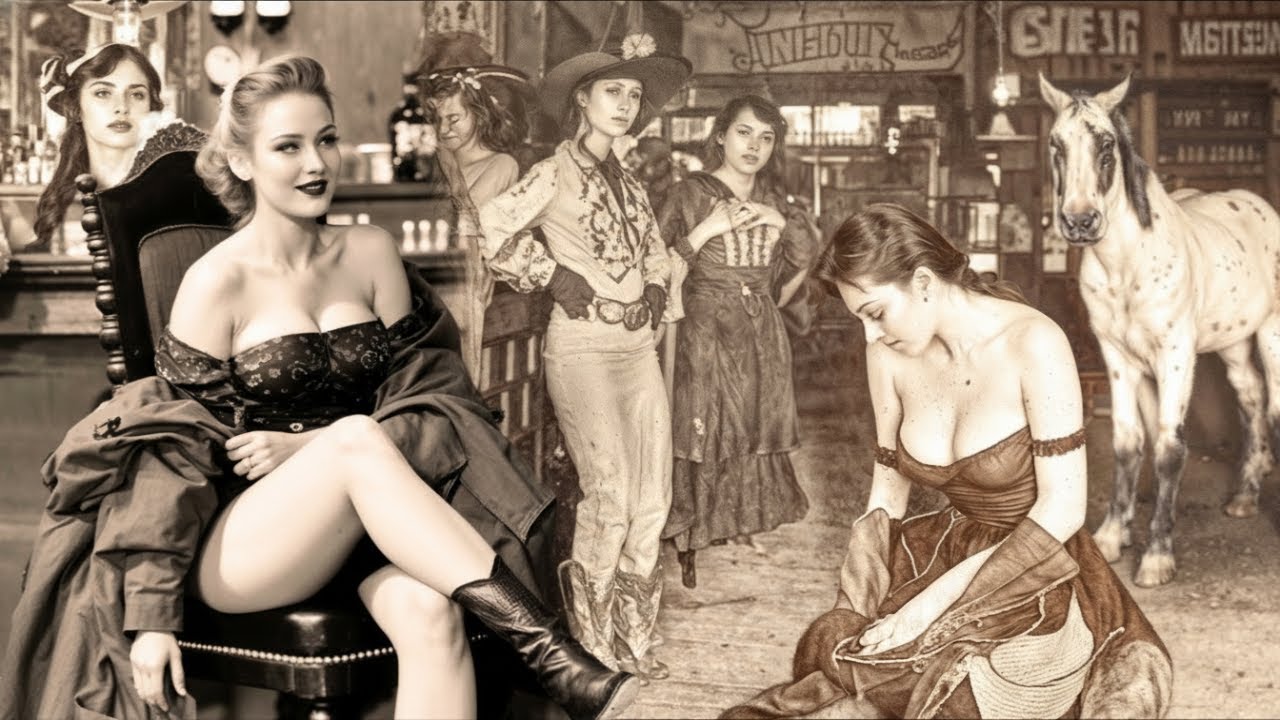
Greedy saloon owners commonly watered down their liquor to stretch profits, then strengthened the mixture with dangerous additives. Some used strychnine, a poison typically reserved for killing rats, in small doses to create a false sense of energy and power. Sulfuric acid was added to produce the burn that customers associated with strong alcohol, while tobacco oil rounded out the scam. The consequences were severe.
The acid ate away at the lining of the stomach, causing ulcers and internal bleeding. Strychnine attacked the central nervous system, triggering seizures, violent muscle spasms, and a condition contemporaries called whiskey madness. Men who drank this concoction for years developed permanent tremors, lost their sight, or simply dropped dead. The owners knew exactly what they were serving; profit came first.
The dangers extended beyond the barroom floor. In Dodge City during the 1880s, women working in the upstairs rooms charged 25 cents for a dance, but the real trade came later. Syphilis spread rapidly, and the era’s treatment was nearly as brutal as the disease. Doctors had patients inhale mercury vapor in sealed chambers.
The saying of the time summed it up: one night with Venus, a lifetime with mercury. The heavy metal attacked the bacteria but also wrecked the body. Teeth fell out, hands shook, and memory loss and hallucinations followed. In severe cases, bones literally dissolved.
Many people chose to hide the disease and die slowly rather than endure years of mercury poisoning. Doctors knew the risks, but they had no alternative until penicillin arrived some 60 years later. Gambling in these establishments was equally rigged. Forget luck; the games were engineered.
American inventors patented devices that worked like precision machines. The most ingenious was the holdout, a mechanical arm hidden up a cheater’s sleeve. With calibrated springs and thin cables, it delivered cards into the palm of the hand in a split second, activated by a simple bend of the elbow. The tables themselves were traps.
Carpenters built false bottoms with compartments that opened with pressure from the knee, allowing the dealer to swap out an entire deck unnoticed. Dice were also dishonest. Some contained liquid mercury in microscopic chambers, shifting weight depending on the angle. Others used melted lead on specific faces, causing the number six to come up three times more often than normal.
In Tombstone, professional dealers used these tricks on miners who arrived with gold in their pockets and whiskey in their blood. Violence was constant, and it often started over nothing. In Abilene during the 1870s, saloons opened at 7 a. m.
and the fights began right after. Cowboys returning from months on cattle drives had money and no patience. A single wrong look was enough to send a chair flying. The punch itself rarely killed on the spot.
The real killer was infection. A bottle cut on the arm, a bite during a fight, or broken teeth punching through a lip created wounds that today would be treated with stitches and antibiotics. Back then, infection was a death sentence. Doctors estimate that fight injuries had an infection rate over 60 percent.
Without penicillin, sepsis took over in days. A man could survive a Saturday beating and die of fever the following Wednesday. Abilene sheriffs recorded more deaths from wound fever than from gunshots. In San Francisco during the 1860s, the back rooms of many saloons hid a profitable opium trade.
These dens were designed with thick walls and no ventilation, allowing the smoke to build up and speed addiction. The pipes used a ceramic bowl that heated the opium to an exact temperature; too hot and it burned, too cold and it failed to release the alkaloids. The gum was processed with lime and boiling water, creating an extract the brain absorbed in seconds. Cowboys blew a month’s pay in a week.
When money ran out, opium became currency, traded for guns, horses, and even land deeds. The operators understood a basic rule of economics: an addicted customer is a guaranteed customer. One dose cost 25 cents, while a worker made a dollar a day. Even the staff had to develop survival tactics.
In Denver during the 1880s, few women worked in saloons, but those who did learned to protect themselves. Martha Canary, known as Calamity Jane, reportedly studied the room before serving anyone. She knew most fights started between the third and fourth round of whiskey and spotted troublemakers early. She kept a sawed-off shotgun under the bar, always on the right side, with boiling water on the stove behind her and a heavy club near the bottles.
She always faced the door and never positioned herself in a corner. When a customer pushed too far, she lowered her voice rather than yelling, understanding that drunk men respond better to calm commands. If words failed, the sound of a hammer being cocked usually settled the matter. Saloon owners also understood human physiology in ways that predated modern science.
When customers ate salted peanuts or ham, sodium entered the bloodstream and raised the salt concentration in the plasma. The brain detected the change in seconds through sensors in the hypothalamus, triggering an automatic response: intense thirst. Owners in the 1870s figured this out through observation. They noticed that men eating free peanuts ordered significantly more beer.
The cost of the salty snacks was pennies compared to the profit on drinks. It was biological manipulation before the term existed. A century and a half later, American bars still use the same tactic with pretzels, peanuts, and potato chips. Human physiology has not changed.
Segregation also shaped the drinking culture. Black men and Native Americans turned away from white establishments created their own spaces, which gave rise to juke joints. These wooden shacks on rural roads served whiskey freely and became the birthplace of the blues. But the liquor was a serious problem.
With no access to regular suppliers, these places relied on homemade or bootleg spirits, much of it cut with kerosene, chewed tobacco, or even rat poison to strengthen it. Blindness, paralysis, and death were real risks for a night out. Meanwhile, in Texas, Jim Crow laws were locking segregation into place, making it not just custom but law. Many juke joints survived for decades, hidden in the woods, and became the foundation of an entire American music culture.
Music itself was a tool of manipulation. In Kansas City during the 1890s, saloon owners discovered that fast music makes people drink faster. Ragtime was not chosen by accident; its syncopated rhythm, between 120 and 150 beats per minute, worked like an invisible metronome. Bodies synced with the music without conscious awareness, sip after sip timed to the piano.
The musicians, called professors, were paid twice: once for their talent and once for keeping quiet. When fights broke out or shots were fired, the pianist cranked up the volume and tempo so that nobody on the street heard a thing. The constant noise also covered illegal business talk, while the faster rhythm emptied glasses and filled cash registers. Scams extended to the gold trade itself.
In California during the 1850s, exhausted miners walked into saloons with nuggets that could be real gold or painted trash. Bartenders became the West’s first chemical detectives. The test was simple physics. Gold weighs 19.
3 grams per cubic centimeter, while painted lead weighs only 11. 3, and pyrite, the famous fool’s gold, just 5. A nugget too light for its volume was clearly fake. Some bartenders bit the metal; pure gold is soft and leaves a tooth mark, while pyrite is hard and chips enamel.
The acid test was the final word. Nitric acid dissolves lead and copper in seconds, but real gold is untouched. Scammers were exposed on the spot, and many paid with their lives over a painted nugget. Before banks arrived, prospectors stored their gold with saloon owners, who kept steel safes bolted to the floor.
The safes used cast iron plates half an inch thick, screwed and riveted together. But they were far from unbreakable; dynamite went through them like hot butter. Many owners chained the safe to the building’s frame, betting thieves would not have time to saw through everything before the sheriff arrived. In Deadwood during the 1870s, robberies were so common that some saloons charged up to 15 percent just to hold a customer’s gold dust.
It was a steep fee, but losing everything was worse. Absinthe arrived in the West with a reputation for causing visions and madness. Drinkers called it the green fairy and swore men lost their minds after a few sips. Modern science tells a different story.
Thujone, the compound in absinthe, acts on the brain’s GABA receptors, similar to some sedatives, but the amount in the drink was too low to cause real hallucinations. The real culprit was the brutal 70 percent alcohol content, compared to whiskey at around 40 percent. When cowboys said they were seeing strange things, it was severe alcohol intoxication, not green magic. Current studies show a person would have to drink liters of absinthe for thujone to take effect, but the alcohol would kill them first.
Absinthe madness was ordinary alcoholism wrapped in European mystery that sold well behind American bars. The saloon also functioned as the town’s communication hub. With no fixed addresses in the West, letters arrived by stagecoach and piled up on the bar, making the saloon the community’s mailbox. Customers tipped the bartender to hold their mail and tipped again to keep him from reading it.
The bartender knew who owed money, who was involved with someone else’s wife, and which outsiders were dangerous. He controlled the flow of news like a human algorithm, deciding what to spread and what to keep quiet. In 1870s Wyoming, a delayed letter could mean a lost deal or a fiance who did not wait. Men pulled guns over less.
The bartender was the social network of his time. Some establishments doubled as intelligence hubs. In Colorado during the 1880s, women working in saloons developed a sophisticated system for gathering information. Drunk men talked too much about where they had found gold, and that information was worth money.
Large mining corporations paid well for those details, wanting the exact location of new veins before small-time miners could file claims. The women memorized technical details, place names, and access routes, and some kept hidden notebooks with precise notes. By the time a miner woke up the next morning, his secret had already been sold. It was industrial espionage decades before the term existed.
Debts were another flashpoint. In El Paso during the 1880s, cash was rare and credit ran on a man’s word. Bartenders kept tabs, recording every whiskey or beer sold on credit. Those debts were honor contracts.
Not paying meant publicly calling the bartender a sucker, and in the Wild West, men died for less. Police records show dozens of shootouts that began this way. A cowboy returned, the bartender asked for payment, words were exchanged, and guns came out. It was not about the pennies; it was about reputation.
A man who would not honor a small debt would not honor anything, and he would lose credit all over town. That is why bartenders stayed armed, and why many cowboys paid their bills even without a cent in their pockets. Justice itself was often served at the bar. In Montana during the 1870s, with no public buildings available, judges set up court in saloons.
The same bar that served whiskey at night became a judge’s bench in the morning. Everyone drank during proceedings, including judges, jurors, lawyers, and witnesses. In Virginia City, a jury deliberated for three hours while the bar owner kept pouring rounds; the verdict came out along with the fifth bottle. Conflicts of interest were rampant.
The judge might owe the saloon keeper money, the defendant might be a regular, and the witnesses just wanted to get back to drinking. In some cases, the sentence depended on who bought the next round. Cattle theft, brawls, and even murder cases were decided this way. These bar trials show how the West created its own version of justice, flawed, drunk, but functioning as best it could.
Even bizarre practices had a basis in science. In Arizona during the 1880s, cowboys swore that whiskey containing a rattlesnake cured hangovers and gave men bull strength. Snake venom is essentially protein, and the strong alcohol in whiskey breaks the bonds that keep the toxin functional, a process biochemists call denaturation, similar to what happens when an egg is fried. The venom in the glass hit the stomach already scrambled, unable to attack the nervous system, and stomach acid finished the job.
The real danger came if the drinker had an ulcer or any wound in the digestive tract, allowing leftover toxin to enter the bloodstream directly. Many people learned that the hard way. Finally, the very architecture of these buildings served a double purpose. Kansas saloons in the 1870s were designed with a front bar, card tables, and a door visible from the main street, all perfectly normal.
But a narrow hallway led to the back, where tiny cubicles, some barely two square meters, were officially rooms for travelers to rest. Everyone in town knew what actually went on there. A separate exit opened onto an alley, so nobody saw who went in or out of the cribs. Owners made money twice, on drinks and on the rooms, and tax documents from the time show room rentals listed as declared income.
The architecture protected reputations, and the secrets stayed hidden behind the bar.