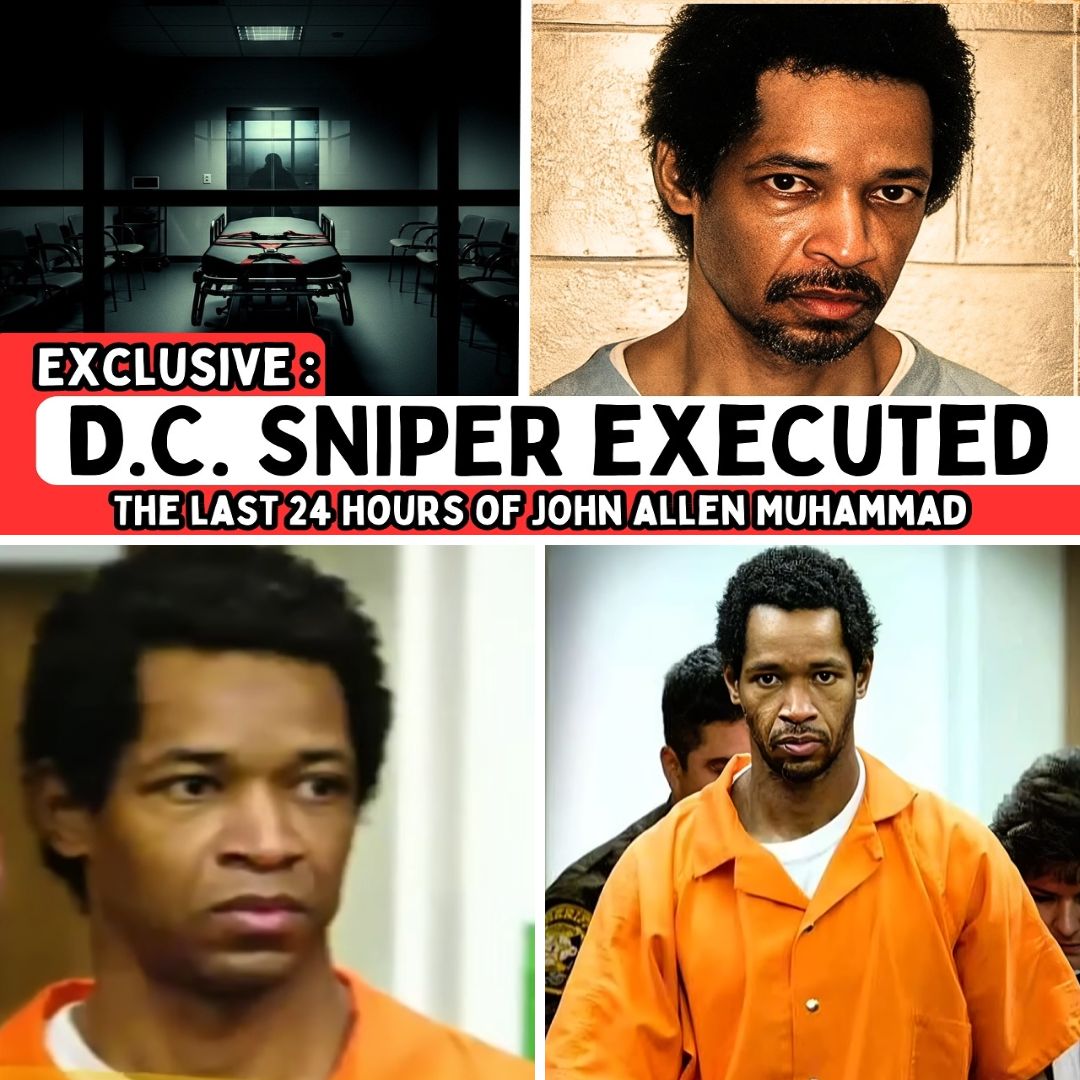
On November 10, 2009, at the Greensville Correctional Center in Jarratt, Virginia, John Allen Muhammad was executed by lethal injection for his role in the 2002 D.C. sniper attacks — one of the most terrifying crime sprees in modern American history. The former U.S. Army veteran and his teenage accomplice, Lee Boyd Malvo, paralyzed the Washington, D.C. metropolitan area for three weeks, killing 10 people and wounding three others in a series of seemingly random shootings that instilled widespread fear across multiple states.
Muhammad’s execution closed a painful chapter for victims’ families but left unresolved questions about radicalization, manipulation, and the psychological dynamics of a deadly mentor-protégé relationship that Malvo later described with the haunting phrase: “You made me a monster.”
The Reign of Terror: October 2002
The attacks began in earnest on October 2, 2002, when a bullet ripped through a Michaels craft store window in Aspen Hill, Maryland, killing 55-year-old James Martin. Over the next three weeks, the pair struck with chilling precision, often from a modified blue 1990 Chevrolet Caprice turned into a rolling sniper’s nest with a hole cut in the trunk for shooting. Victims ranged from a 13-year-old boy shot outside his school to a bus driver, a taxi driver, and ordinary citizens going about daily life.

The randomness of the attacks — at gas stations, parking lots, and highways — created mass panic. Schools locked down, outdoor activities were canceled, and residents avoided public spaces. Law enforcement faced intense pressure as the death toll mounted. The shooters left taunting notes and made cryptic phone calls, including the infamous “You have a problem. I have a problem. I will solve my problem” message.
Muhammad, 41 at the time, was the strategic mastermind. A Gulf War veteran with a troubled personal history — multiple failed marriages, child custody battles, and a conversion to the Nation of Islam — he channeled his grievances into a deadly campaign. Malvo, a vulnerable 17-year-old Jamaican immigrant he had taken under his wing, became both accomplice and surrogate son in a relationship marked by manipulation and indoctrination.
The Manhunt and Capture
After weeks of fruitless leads, a tip about the modified Caprice and a description of the suspects led authorities to a rest stop in Myersville, Maryland. On October 24, 2002, Muhammad and Malvo were arrested sleeping in the car. Inside, police found a Bushmaster .223 rifle, ammunition, and evidence linking them to the shootings. Ballistics and witness descriptions sealed their fates.
Muhammad was tried first in Virginia, where he was convicted of capital murder for the shooting of Dean Meyers at a gas station. The jury recommended the death penalty, citing the multiple murders and the terror inflicted on the community. Malvo, tried as a juvenile, received multiple life sentences without parole after cooperating and providing disturbing insights into Muhammad’s control.
Trial, Appeals, and Execution
Muhammad maintained a defiant posture throughout his legal proceedings, often representing himself and espousing conspiracy theories. His appeals dragged on for years, focusing on claims of ineffective counsel, mental health issues, and procedural errors. In 2009, after exhausting most avenues, Virginia carried out the execution. Muhammad declined a final meal and offered no final words, meeting his end in relative silence compared to the chaos he had unleashed.
Lee Boyd Malvo, who has expressed remorse in interviews and artwork, later revealed the depth of Muhammad’s psychological manipulation. He described being groomed, radicalized, and turned into a killer under the older man’s influence — a dynamic that raised complex questions about culpability, trauma, and the making of a “monster.”
Lasting Impact and Lessons Learned
The D.C. sniper attacks left an indelible mark on American society. They exposed vulnerabilities in public safety, intelligence sharing between agencies, and the challenges of tracking mobile, low-profile threats. The case prompted improvements in rapid response protocols, ballistics databases, and threat assessment for domestic extremism.
For the victims’ families, justice was bittersweet. Many expressed relief at Muhammad’s execution but noted that no punishment could restore their loved ones. The attacks also highlighted racial and religious dimensions, as Muhammad’s motivations were tied to his interpretation of Islam and grievances against the U.S. government — themes that continue to resonate in discussions of homegrown terrorism.
Malvo’s ongoing imprisonment and periodic public reflections serve as a living testament to the long-term consequences of such crimes. His statements about Muhammad’s influence underscore the power of charismatic manipulation, particularly over impressionable young people.
Broader Reflections on Capital Punishment and Trauma
Muhammad’s case remains a flashpoint in debates about the death penalty. Supporters argue it was the only fitting punishment for the calculated terror he inflicted. Critics point to questions about his mental state and the moral implications of executing someone who may have been deeply disturbed. The execution also reignited conversations about juvenile justice, as Malvo’s age at the time of the crimes factored heavily into his sentencing.
Nearly two decades after the attacks and years after the execution, the D.C. sniper case continues to fascinate and horrify. It stands as a grim reminder of how personal failures, ideological extremism, and unchecked manipulation can converge into national tragedy. For the survivors and families, the scars remain. For society, the lessons — about vigilance, mental health intervention, and the fragility of public safety — are as relevant today as they were in the fearful autumn of 2002.


