Long before the political scandals of the Gilded Age, a woman known as Fanny White built a fortune in the shadows of 19th-century New York, catering to some of the most powerful men in America. Her rise from poverty to wealth placed her at the center of a web involving politicians, diplomats, and a future president’s inner circle. Born Jane Augusta Funk on March 22, 1823, in Cherry Valley, New York, she was the eldest daughter of Jacob Funk, a German immigrant, and his wife Jane. After her mother’s death in the early 1830s, the family settled on a substantial farm at Wallabout Bay on Long Island, a property that allowed them a degree of comfort.
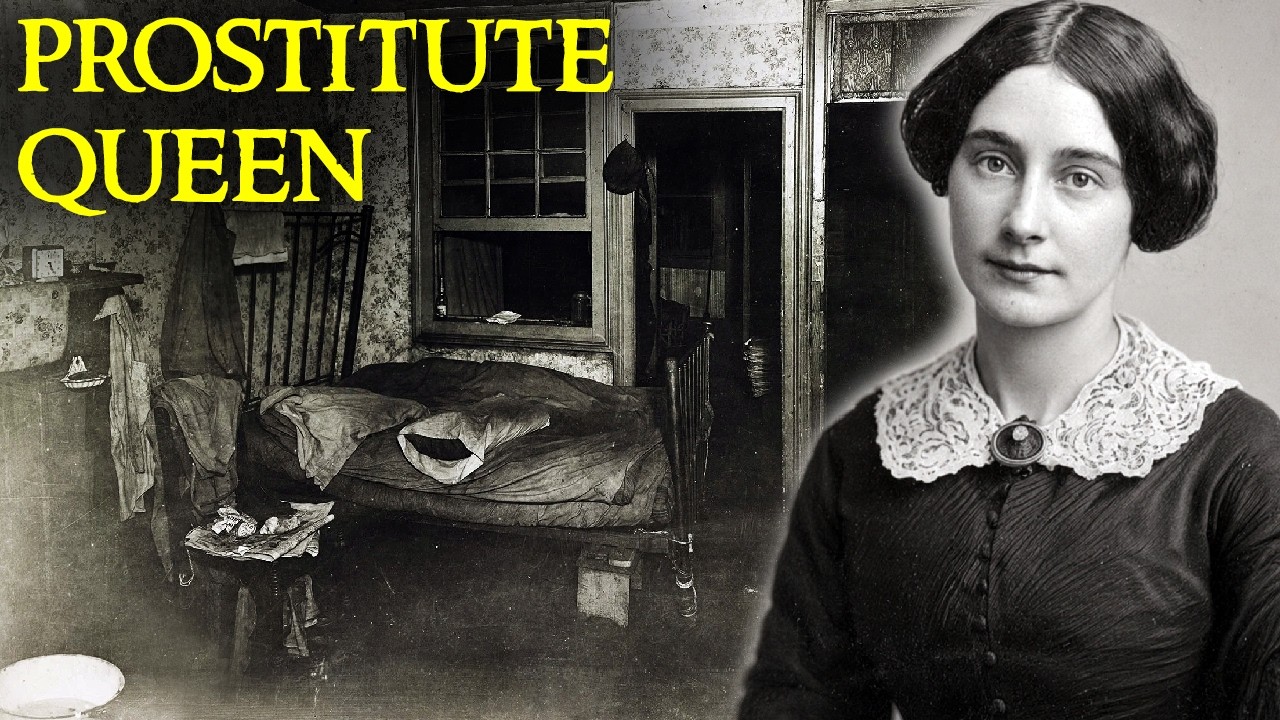
Jane received a solid education for a woman of her time and was described as bookish and intelligent. Later accounts claim that at 17 or 18, she was seduced by an older man who promised marriage before abandoning her, a scandal that could destroy a woman’s reputation in that era. Around age 19, she moved to New York City, where her brother worked as a carpenter. The city was expanding rapidly, but Jane arrived with few connections and found only exhausting, poorly paid work at a hotel.
Soon, however, she entered a darker world, adopting the working name Fanny White and joining the thousands of women working in the city’s hidden network of brothels. By the mid-1840s, she was living at a brothel on Leonard Street in Lower Manhattan, where her friend Kate Hastings operated a similar establishment across the street. In 1851, Fanny acquired her own property at 119 Mercer Street, transforming it into a discreet, luxurious retreat for merchants, businessmen, congressmen, and members of the diplomatic corps. Running such an establishment required discretion and good relations with police and city officials.
Although prostitution was publicly condemned, the city profited from taxing it heavily, and legal records show that women like Fanny often challenged those taxes in court. By 1853, she was assessed on $11,000 in real estate and another $5,000 in personal property, making her a wealthy woman by the standards of the time. Her life might have remained a footnote had it not been for her relationship with Daniel Sickles, an ambitious New York politician connected to the Tammany Hall machine. They met around 1847, when he was about 28 and she about 24, and their relationship deepened by 1850.
Sickles showed no discretion, once arriving at the state assembly in Albany with Fanny, introducing her to people at his hotel, and even reportedly spending a night in jail with her after an evening out with her disguised as a man. The relationship became more scandalous in 1852, when Sickles married Teresa Bagioli, the 16-year-old daughter of an Italian composer. He continued openly seeing Fanny. Tax records for her brothel listed a Mr.
Bagioli as the taxpayer, suggesting either that Teresa’s father was a customer or that Sickles used his future father-in-law’s name to establish credit. The marriage itself was widely seen as an attempt to avoid scandal after Teresa became pregnant. When Fanny learned of the marriage, rumors spread that she confronted him with a riding whip. In 1853, President Franklin Pierce appointed Sickles as secretary to James Buchanan, the American ambassador to Britain.
Sickles left his new wife and infant daughter at home and took Fanny White with him to London instead. After turning over her brothel’s management to Kate Hastings, Fanny joined Sickles in Europe. Their presence caused uproar, particularly when Sickles reportedly introduced her to Queen Victoria as “Mrs. Bennett,” a joke aimed at James Gordon Bennett, editor of the New York Herald, whom Sickles disliked.
Fanny later crossed to France, embarking on a lavish tour through Paris and other cities, where she attracted attention, including an alleged ejection from a Paris opera house for visible intoxication. Fanny returned to New York in 1854, unfazed by the European scandal. She continued to count wealthy clients among her acquaintances, including a playboy heir named Jake LeRoy, who drove her around Broadway in a flashy carriage. Sickles returned from London in 1855 and won election to Congress the following year, but the relationship between him and Fanny never fully resumed.
In 1859, Sickles shot and killed Philip Barton Key II, the U. S. State Attorney for the District of Columbia, after discovering Key’s affair with his wife Teresa. Sickles was acquitted, becoming the first person in U.
S. history to successfully use the defense of temporary insanity. By 1856, in her mid-30s, Fanny showed signs of tiring of her profession. She turned over management of her brothel to Clara Gordon, a protégé of Kate Hastings, and moved into a residence on 12th Street with two other women, apparently for companionship.
She owned several houses and had thousands of dollars in liquid assets. Not long after retiring, she began a relationship with Edmund Blankman, a criminal defense lawyer in his late 20s who was unperturbed by her past. They married two years later, when Fanny was 36 and Edmund 29. The marriage proved troubled, as Edmund showed interest in one of her nieces and pressured her to sign over the title of one of her Manhattan properties.
Fanny died under mysterious circumstances on October 12, 1860, at age 37. The official autopsy concluded she suffered a stroke, but her brother suspected Edmund had poisoned her and requested an inquest. The re-examination found signs of tuberculosis, syphilis, cardiovascular disease, and extensive bleeding in the brain, but it did not change the official verdict. A bitter legal struggle followed between Fanny’s family and her husband.
Since she had no children but had amassed a fortune, her relatives accused Edmund of forging her will to seize control of her estate. In the end, Edmund prevailed, walking away with the bulk of the wealth she had built over 18 years. At her death, she owned three fine city mansions and other properties, estimated to be worth between $50,000 and $100,000, a multimillionaire fortune in modern terms. She had been generous to her extended family, giving thousands of dollars to her brother and other relatives, paying for her nieces’ education, helping family members lease homes, and assisting a sibling in finding work.
She was buried in the Blankman family plot at Green-Wood Cemetery in Brooklyn, despite her family allegedly wanting her laid to rest in their own plot. Fanny White’s story is a striking example of how a woman from humble beginnings could rise from the shadows of high society in the booming America of the 1840s and 1850s, amass enormous wealth, and become the center of endless scandal. Yet she did not live long enough to enjoy what she had gained.
Her sudden rise ended almost as quickly as it began.