
The Pinkerton National Detective Agency, the most feared private security force in America, has declared an open war of vengeance against the outlaw Jesse James and his gang, following the brutal murders of three of its operatives in the Missouri countryside. The conflict, which has been simmering for months, has now erupted into a bloody and personal feud, with the agency’s founder, Allan Pinkerton, vowing to hunt down the James-Younger gang with a ferocity never before seen in the annals of frontier law enforcement. The death of Detective Joseph Witcher, found riddled with bullets and bearing a taunting note pinned to his corpse, has pushed the agency past the point of no return, signaling a new, more dangerous phase in the pursuit of the most notorious outlaws in the post-Civil War West.
The violence began in earnest on March 11th, when the body of Detective Joseph Witcher was discovered on a lonely road near the James family farm in Clay County, Missouri. Witcher, a seasoned operative, had made a fatal error upon his arrival in Liberty, registering at a local hotel under his real name and foolishly announcing his undercover intentions to the county sheriff and a local bank president. Despite dire warnings from former Sheriff Op Moss, who cautioned that “if Jesse and Frank didn’t 𝓀𝒾𝓁𝓁 him, then the old woman would,” Witcher proceeded with his plan to infiltrate the outlaw’s homestead.
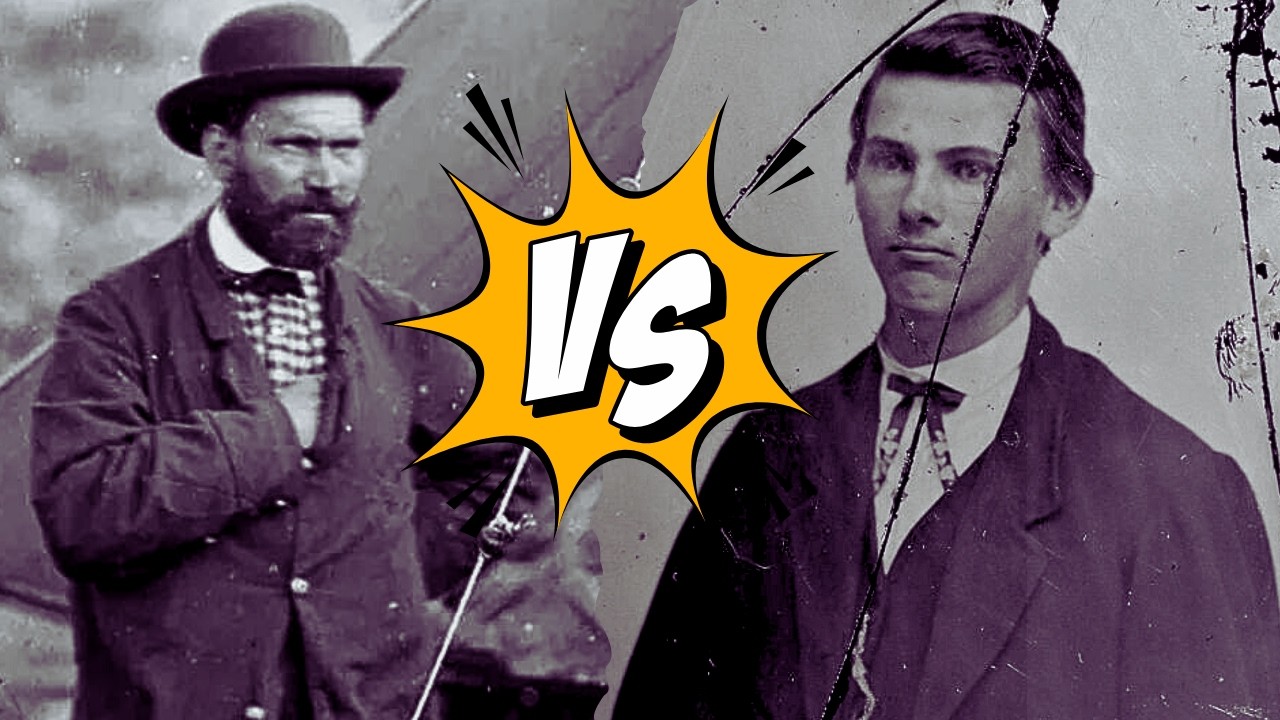 He was last seen alive walking towards the farm, and his body was found the next morning with three new bullet holes, a grim testament to the gang’s ruthless efficiency and their uncanny ability to sniff out a spy.
A note was reportedly pinned to Witcher’s body, addressed to all detectives, a chilling message that made clear the James gang would not be taken alive. The murder of Witcher was followed just days later by a second, equally bloody encounter. Detectives Louis Lull and John Boyle, along with former deputy Edwin Daniels, stumbled upon Jim and John Younger, brothers of the infamous Cole Younger, at a farm near Monegaw Springs.
The ensuing gunfight was a disaster for the Pinkertons; John Younger and Daniels were killed instantly, and Lull was mortally wounded, dying two days later. Only Detective Boyle, who was riding ahead and escaped before the shooting started, survived the ambush. The James-Younger gang had now killed three men associated with the agency in less than a week, transforming a professional manhunt into a personal vendetta for Allan Pinkerton.
Allan Pinkerton, a man whose reputation was built on his unyielding determination, has responded to the deaths of his men with a chilling proclamation. “I know that the James and the Youngers are desperate men and that when we meet it must be the death of one or both of us,” he stated. “My blood was spilled and they must repay.
There is no use talking, they must die.” This declaration marks a significant escalation in the conflict, as Pinkerton is known for his methodical and often ruthless tactics. He has been quoted as saying he will stop at nothing to bring the outlaws to justice, and he is reportedly pouring his own personal fortune into the manhunt after express companies began to pull back their funding.
The agency has shifted its strategy from simple capture to outright destruction, a decision that will have tragic and unforeseen consequences.
The roots of this bloody feud stretch back years, to a time when Jesse James was not just a bandit but a Confederate guerrilla fighter. James, along with his brother Frank, rode with the notorious William Quantrill and “Bloody Bill” Anderson during the Civil War, committing atrocities that left deep scars on the Unionist population of Missouri. After the war, they refused to surrender, continuing their campaign of violence under the guise of outlaws, robbing banks, stagecoaches, and trains.
Their first train robbery, a daring heist near Adair, Iowa, in July 1873, involved derailing the train by pulling spikes from the track, causing a fatal crash that killed the engineer and injured several passengers. This act of wanton destruction, coupled with their political posturing as modern-day Robin Hoods, made them folk heroes to many disenfranchised Southerners but public enemy number one to the establishment.
The gang’s tactics have become increasingly bold and theatrical. During their robbery at Gads Hill, Missouri, in January 1874, they forced the townspeople to stand on the platform and wait for the train, then robbed the passengers with a theatrical flair, even returning money to a self-proclaimed minister and asking for a prayer. Jesse James has also shown a keen understanding of public relations, leaving behind press releases for friendly newspapers and wearing Ku Klux Klan-style hoods during robberies to make a political statement about Southern defiance.
This cultivation of a Robin Hood image, largely orchestrated by his friend, the newspaper editor John Newman Edwards, has made him a hero to many poor farmers who resent the railroads and banks, making it nearly impossible for law enforcement to get reliable information or assistance from the local populace.
The Pinkerton’s failure to capture the gang through conventional means has led them to employ increasingly desperate and underhanded tactics. They have infiltrated the area around the James farm, recruiting local Unionists and former militiamen to act as spies. One such recruit, a man named Daniel Askew, whose property was directly adjacent to the James farm, allowed the agency to use his land as a staging ground.
This network of informants has been quietly gathering intelligence on the movements of Jesse and Frank James, waiting for the perfect opportunity to strike. The agency has also procured a shipment of weapons and a mysterious “special device” from the Rock Island Arsenal, a device that would soon prove to be both controversial and deadly, as the agency prepares to launch a direct assault on the outlaw’s home.
In the early hours of January 25th, 1875, the Pinkerton’s plan was set into motion. A special train carrying eight or nine operatives arrived near Carney, Missouri, where they offloaded their gear and were met by a guide with horses. They traveled through the cold, dark forest to the James farm, arriving around midnight.
Their orders from Allan Pinkerton were explicit and brutal: “Above all else, destroy the house. Wipe it from the face of the Earth.” The operatives began by attempting to set the exterior of the home on fire using hollowed-out tubes filled with a combustible material.
When this failed to produce the desired conflagration, they resorted to their “special device,” a cast-iron ball filled with a highly flammable liquid known as “Greek Fire,” a modern version of an ancient Byzantine weapon, which they hurled through a window of the home.
The device, described by a family servant as looking like a “ball or something that was red,” landed inside the home where the James family was sleeping. Jesse’s stepfather, Reuben Samuel, grabbed the flaming sphere with a shovel and tossed it into the fireplace, hoping to contain the blaze. However, the intense heat of the existing fire caused the device to overheat and explode violently.
The explosion sent a hail of shrapnel tearing through the room. A piece of metal struck Reuben on the head, another tore through the arm of Jesse’s mother, Zerelda Samuel, and a third, more tragic piece, struck her 8-year-old son, Archie, in the side, burning a hole through his innards. The Pinkerton operatives, hearing the explosion and the ensuing chaos, fled the scene, leaving the family to deal with the carnage they had wrought.
The young boy, Archie Samuel, was mortally wounded. Despite the frantic efforts of four doctors who were summoned to the farm, there was nothing they could do to save him. His mother, Zerelda, who was herself gravely injured, held her dying son as he uttered his final words: “Tell my ma good-bye.”
The death of the innocent child has sent a shockwave of horror and outrage throughout the nation, turning public opinion sharply against the Pinkerton agency. Zerelda, who lost her right arm to amputation the following day without anesthetic, has given a harrowing account of the attack, describing the night as a “hellish” 𝒶𝒻𝒻𝒶𝒾𝓇 and expressing her profound grief. “I used to be a woman of fortitude and resolution,” she said.
“It is all gone now. I could stand anything but this.”
The attack on the James farm has been a catastrophic failure for the Pinkertons. Not only did they fail to capture or 𝓀𝒾𝓁𝓁 their intended targets—Jesse and Frank James were not even in the house at the time, having left earlier that evening—but they have succeeded in martyring an innocent child and galvanizing support for the outlaws. The agency is now facing intense public scrutiny and legal repercussions, with indictments being sought against Allan Pinkerton and the operatives involved.
The tragedy has also served to deepen the resolve of Jesse James, who was reportedly enraged by the death of his young half-brother. He has vowed to exact a terrible revenge on those responsible, and the killing of Daniel Askew, the neighbor who allowed the Pinkertons to stage their attack, is believed to be the first act of that vengeance.
On the evening of April 12th, 1875, Daniel Askew was shot three times in the head while drawing water from his well. The assassins, who spoke in hushed tones before opening fire, fled into the night, stopping at a neighboring farm to boast of their deed. “We have killed Dan Askew tonight,” they said.
“If anyone wishes to know who did it, say the detectives did it.” While no one has been officially charged, it is widely believed that Jesse James himself was one of the gunmen, exacting a brutal and personal retribution for the death of his brother. The murder has sent a clear message to anyone who would collaborate with the Pinkertons: the James family will not rest until they have settled the score, and the war in the Missouri countryside is far from over.
The conflict has now entered a new and even more dangerous phase. Allan Pinkerton, his reputation tarnished and his men killed, is reportedly more determined than ever to see the James gang destroyed, even as he faces potential criminal charges for his role in the botched raid. Jesse James, fueled by grief and rage, has become more elusive and more violent, with a price on his head that has grown to an astronomical sum.
The governors of Missouri and Kansas have placed bounties totaling thousands of dollars on his head, but he continues to evade capture, protected by a network of sympathizers and his own ruthless cunning. The feud between the Pinkertons and the James-Younger gang has become a national obsession, a bloody saga of revenge and retribution that shows no signs of ending.
This is not merely a story of outlaws and lawmen; it is a reflection of the deep divisions that still plague the nation a decade after the Civil War. Jesse James is viewed by many in Missouri as a hero of the lost cause, a man who is fighting against the oppressive forces of Reconstruction, the railroads, and the banks. The Pinkertons, as agents of corporate power, are seen as the enforcers of a hated establishment.
The death of Archie Samuel has only served to deepen these divisions, with pro-Confederate newspapers using the tragedy to paint the James gang as victims of a tyrannical government. The agency’s use of “Greek Fire,” a weapon of mass destruction, has been condemned as an act of terrorism, and the public is increasingly questioning the lengths to which law enforcement should be allowed to go.
The hunt for Jesse James has become a war of attrition, a deadly game of cat and mouse that is playing out across the plains of Missouri and Kansas. The James gang continues to rob trains and stagecoaches, always staying one step ahead of their pursuers. They are known to have a network of safe houses and sympathizers who provide them with food, shelter, and information.
The Pinkertons, meanwhile, are relying on a network of spies and informants, many of whom live in constant fear of reprisal from the outlaw gang. The atmosphere in Clay County is one of terror and suspicion, as neighbors are forced to choose sides in a conflict that has already claimed the lives of too many innocent people. The law, it seems, is powerless to stop the bloodshed, and the feud between Jesse James and the Pinkerton Agency is spiraling towards a final, violent confrontation.
The next chapter in this bloody saga is expected to unfold in the coming weeks, as Jesse James and his gang are rumored to be planning another major heist. The Pinkertons, desperate to redeem themselves, are reportedly massing their forces and preparing for a final showdown. Allan Pinkerton has personally taken charge of the investigation, and he is known to be a man who does not forgive or forget.
The outlaws, for their part, are aware that they are being hunted and are prepared to fight to the death. The stage is set for a dramatic and bloody conclusion to one of the most infamous manhunts in American history. The only question that remains is who will be left standing when the smoke clears, and how many more innocent lives will be lost in the crossfire of this private war.


