On April 6, 1941, under the code name Operation Punishment, Nazi Germany launched its invasion of Yugoslavia, bombing Belgrade and other cities across the country. The objective was to secure the Balkans and protect Germany’s southern flank before the planned advance toward the Soviet Union. Within 11 days, Yugoslav resistance collapsed, and the kingdom was carved up among the Axis powers, ushering in years of brutal occupation marked by reprisals against civilians and partisan forces. Three years later, beneath the slopes of Mount Kamešnica, that brutality reached its peak.
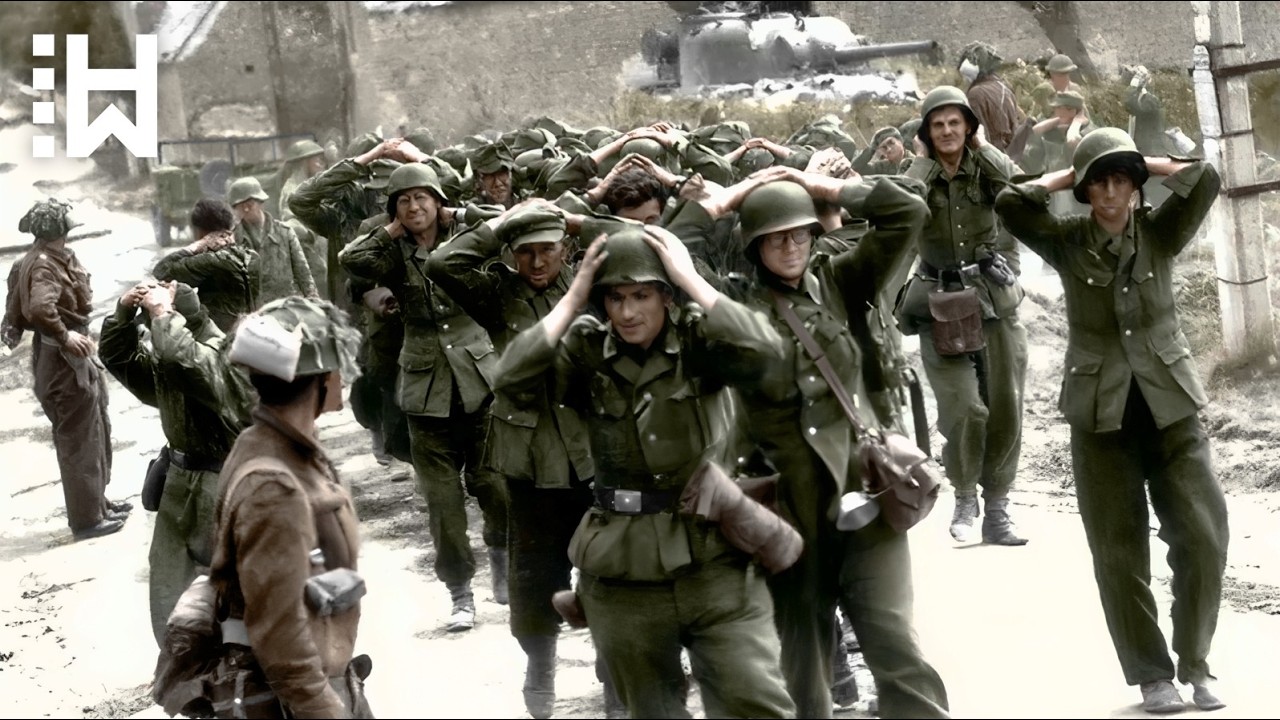
Between March 26 and March 30, 1944, troops of the 7th SS Volunteer Mountain Division “Prinz Eugen,” joined by the 369th Infantry Division, descended on Croatian villages in what was officially described as an antipartisan operation. Instead, it became a massacre of civilians in which thousands of women, children, and elderly people were murdered. The wider conflict had begun on September 1, 1939, when Nazi Germany invaded Poland. In the late autumn and winter of 1940–1941, Germany’s ally Italy failed to conquer Greece, and the successful Greek defense allowed Britain to establish a foothold on the European continent.
To conquer Greece and push the British out, Nazi Germany sought to bring Yugoslavia and Bulgaria into the Axis Alliance. On March 25, 1941, Yugoslavia joined the Axis and agreed to permit German troops to transit its territory on the way to Greece. The agreement was deeply unpopular, especially in Serbia and Montenegro, and the Yugoslav government soon announced it would not honor its obligations. Adolf Hitler was furious.
Although Prime Minister General Dušan Simović attempted to retract the statement within days, Hitler ordered the invasion of Yugoslavia on the evening of March 27. Following the invasion and occupation, Dalmatia, the historical region along the Adriatic coast of what is now Croatia, fell under fascist Italian control. The mountainous interior, known as the Dalmatian hinterland, became a stronghold of partisan resistance. When Italy surrendered to the Allies in September 1943, German forces moved in to seize control of the region, taking over Italian positions and imposing martial law.
The 7th SS Volunteer Mountain Division “Prinz Eugen” was one of two divisions deployed to suppress the growing insurgency. Formed in 1941, the division was already infamous for its brutality against civilians across the Balkans. Its ranks were filled with ethnic German volunteers from Yugoslavia, Hungary, and Romania. The other unit was the 369th Infantry Division, a German army formation made up mostly of Croatian troops serving under the fascist Ustaša regime.
As partisan activity intensified in the Dalmatian mountains around Mosor and Kamešnica, German authorities accused local Croatian villages of helping the partisans. What began as a counterinsurgency campaign soon turned into collective punishment. In late March 1944, the German command ordered a punitive operation in the Kamešnica Valley, one that would culminate in one of the bloodiest massacres in Dalmatia during the war. The operation began on March 26, 1944.
German forces and their local collaborators advanced from the direction of Mosor toward the Kamešnica Valley, pursuing retreating partisan units. When the partisans slipped away into the mountains, the Nazis turned their fury on the local population. Villagers were accused of sheltering the resistance, and reprisals began almost immediately. On March 28, the divisions swept through the villages of Otrk, Ruda, and Donji Dolac, one after another.
In a single day, 834 people were murdered, including women, children, and the elderly. More than 500 homes were burned, and everything of value was taken. Soldiers tore rings, watches, and other valuables from the bodies of the dead. Families were gathered into courtyards and barns, then shot with machine guns while grenades were thrown among the wounded.
Others were locked inside their homes, which were soaked with petrol and set on fire. In one house in the village of Otrk, 45 burnt bodies were found. In another, 22 corpses lay piled together. In the village of Ruda, locals were rounded up and executed in one place.
Anyone who tried to hide or run was hunted down and killed on the spot. The Nazis and their collaborators also murdered those who had offered them food or shelter out of fear, and even those who had been forced to follow the soldiers to carry ammunition and supplies. Not even infants in their mothers’ arms were spared. Witnesses later said the massacres had been carefully prepared in advance, as the villagers had offered no resistance and had given the Germans no reason for reprisal.
By the time the operation ended on March 30, the valley beneath Mount Kamešnica lay in ruins. Among the worst affected were the villages of Donji Dolac and Voštane. Donji Dolac lost 272 inhabitants, including 103 children. Voštane suffered the heaviest losses, with between 337 and 400 civilians killed, including 143 children.
Estimates of the total death toll vary. At least 1,500 civilians were confirmed killed, while other wartime reports place the number as high as 3,000. The Hostages Trial, one of the postwar Nuremberg follow-up trials, later recorded 2,014 victims across 22 villages. In the months following the massacre, the men of the “Prinz Eugen” and the 369th Infantry Divisions continued their brutal campaign across Yugoslavia, especially in Bosnia and Croatia, leaving behind burned villages and murdered civilians as they retreated north.
Though many of those responsible for atrocities across the region never faced trial, justice would eventually catch up with the perpetrators of the Kamešnica massacre. In the final weeks of the war, the remnants of the 7th SS Volunteer Mountain Division “Prinz Eugen” retreated north through Bosnia and Croatia, trying to reach Austria and surrender to the Western Allies. On May 10, 1945, they reached the Slovenian town of Celje, and the following day they laid down their arms before units of the Yugoslav People’s Army, three days after Germany’s capitulation. All personnel of the “Prinz Eugen” division taken prisoner by the Yugoslav army were then killed.
Most were executed wholesale without trial and disposed of through various methods immediately after their surrender. The killings, which were never punished, were ordered by local Yugoslav commanders, who apparently acted in direct violation of Marshal Josip Broz Tito’s instructions to detain the captives in prison camps and screen them for war criminals. In 2010, a large mass grave was uncovered near the Slovenian village of Brezice, containing the remains of around 2,000 “Prinz Eugen” soldiers. They had been stripped naked, bound together with telephone wire, and shot, their bodies buried in a trench during a summary mass execution on May 22, 1945.
Many of the soldiers’ relatives later perished during the expulsion and killing of German-speaking civilians across Eastern Europe. The commander of the “Prinz Eugen” division, SS-Brigadeführer August Schmidhuber, met a similar fate. On May 11, 1945, he was captured by Yugoslav partisans and handed over to authorities in Belgrade. A Yugoslav military tribunal tried him on charges of massacres, deportations, and atrocities against civilians and sentenced him to death by hanging.
He was executed in February 1947 in Belgrade. The 369th Infantry Division would soon share that fate. Initially numbering around 14,000 troops and organized into two infantry regiments, it was commanded by about 3,500 German officers, non-commissioned officers, and specialists. The division had fought against the partisans throughout the war, but by April 1945, it was reduced to battle group strength, numbering only about 3,000 men, most of its German officers already dead or missing.
In the final weeks of the war, the remnants of the division retreated through northwestern Bosnia and the Croatian region of Slavonia toward Austria. Scattered and exhausted, the surviving troops were intercepted by Yugoslav partisans near the town of Dravograd in Slovenia. On May 11, 1945, the division, apart from a single company, was disarmed. The few who tried to fight their way across the border were defeated within days.
A total of 160 officers and nearly 2,900 men surrendered to British forces. Because the division consisted of both Germans and Croatians, the German members were held in Austria, while the Croatian soldiers were handed over to the partisans, who executed most of them. The division’s commander, Generalleutnant Fritz Neidholdt, was extradited to Yugoslavia, tried for war crimes, and hanged in Belgrade in February 1947. It is estimated that during the Second World War, around 1.
2 million people were killed in Yugoslavia, of whom approximately 581,000 were civilians.