WASHINGTON — The man who would decide the fate of the atomic bomb had never been told it existed. Harry S. Truman had been vice president of the United States for eighty-two days when Franklin Delano Roosevelt died of a cerebral hemorrhage at Warm Springs, Georgia, on April 12, 1945.
In that time, Roosevelt had not briefed him on the Manhattan Project, had not invited him to a single wartime strategy session, and had barely acknowledged his existence beyond formal pleasantries. Truman stepped into the Oval Office that evening knowing the world was at war. He did not know that the most powerful weapon in human history was ninety days from completion, or that the men surrounding him had spent a decade building a government that answered to a single man, a man who was now dead.
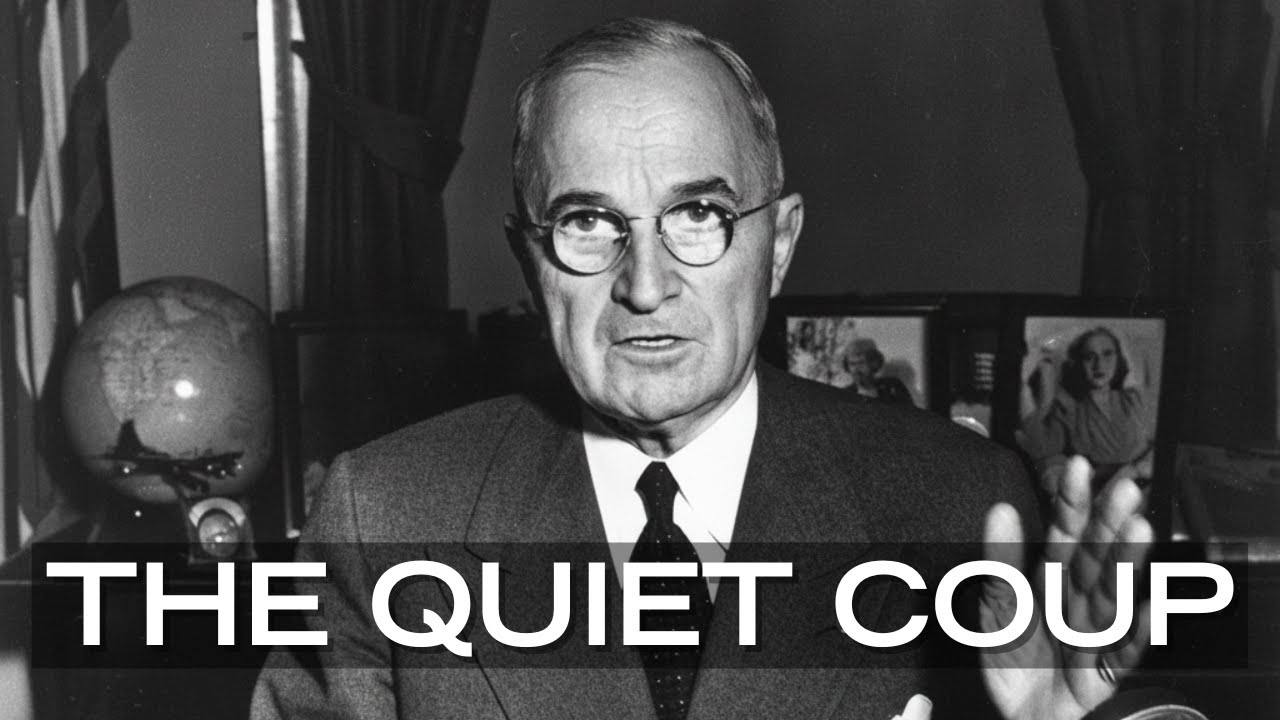 The transition that followed was not a handover of power. It was a collision between a living legend and a practical politician from Missouri, a man who had run a haberdashery before he ran for county judge. The White House Truman inherited was not a functioning institution designed to serve the presidency.
It was a court. A court built around Roosevelt’s personal magnetism, his secretive methods, his habit of playing advisers against one another, and his absolute control over every major decision for more than twelve years. The people who staffed that court had not signed up to serve the United States government.
They had signed up to serve Franklin Roosevelt. And they were not prepared to serve anyone else.
Truman felt the resistance immediately. It was not overt insubordination. It was something far more corrosive.
It was the quiet assumption, communicated through a thousand small gestures and phrases, that the real president had just stepped out of the room and would be back any moment. Advisers opened meetings with the phrase, “Well, Franklin would have,” as if the Oval Office still belonged to their former chief. Cabinet members referenced Roosevelt’s preferences as if they were binding legal precedent.
The message was unmistakable. Truman was not the president. He was a caretaker, a placeholder, a man occupying a seat that belonged to a ghost.
The first cabinet meeting set the tone. Truman walked into the room as the newly sworn-in commander in chief, and the men and women around the table looked at him with something between pity and suspicion. They had watched Roosevelt operate for years.
They had seen him charm congressmen, intimidate generals, and manipulate foreign leaders with a combination of wit and will that no one else could replicate. Truman was a different creature entirely. He was plain-spoken, direct, and uncomfortable with the theatrical flourishes that had defined Roosevelt’s public persona.
He did not have the patrician accent, the cigarette holder, the aristocratic ease. He was a product of the Pendergast machine in Kansas City, a man who had learned politics in smoky back rooms, not Ivy League drawing rooms. And the Roosevelt court judged him accordingly.
What Truman discovered in the first weeks of his presidency was worse than disrespect. It was systematic information control. He asked for a detailed briefing on the Yalta Conference, where Roosevelt had met with Stalin and Churchill to divide the postwar world.
He received a carefully curated summary that smoothed over the concessions Roosevelt had made to the Soviet dictator. He asked about Roosevelt’s health in the final months of his life, when the decline had begun, who had known about it, and how it had been managed. The answers were evasive, reluctant, and deeply uncomfortable.
Truman later learned that Roosevelt had been gravely ill for months, possibly years. Doctors, aides, and senior advisers had known. The public had not.
Truman certainly had not. The secrecy was not an oversight. It was a structural failure of the Roosevelt system, a system that treated information as a personal asset rather than a national resource.
The realization hit Truman like a physical blow. He had inherited a government that did not report to him. The intelligence briefings were filtered through the lens of Roosevelt’s worldview, a worldview that believed Stalin could be trusted, that the Soviet Union would honor its promises, that the postwar order could be built on personal diplomacy rather than institutional strength.
Truman asked for raw intelligence on Soviet intentions in Eastern Europe. The summary he received was astonishingly optimistic. It downplayed Soviet aggression in Poland, minimized concerns from American diplomats on the ground, and suggested that Stalin would honor every promise made at Yalta.
Truman compared that summary to the raw reports from the field. The differences were stark. Someone, somewhere, had softened the truth.
Whether out of habit, ideology, or loyalty to Roosevelt’s optimistic view of the Soviet leader, the old guard had reshaped reality to fit the deceased president’s assumptions.
 Truman was furious. But more than fury, he felt alarm. He could not lead a nation heading into the Cold War with advisers who filtered reality through the memory of a man who was gone.
The stakes were too high. The Soviet Union was hardening its grip on Eastern Europe. Winston Churchill was warning about an iron curtain descending across the continent.
China was descending into civil war. America had used atomic weapons for the first time in history, a decision Truman made with information that had been kept from him until after he took office. The planet was reorganizing itself politically, militarily, and morally.
Truman needed unity at the top. He needed honesty. He needed advisers who gave him unfiltered facts, not carefully curated versions of the truth designed to preserve Roosevelt’s legacy.
The shift inside the White House did not begin with a dramatic firing or a slammed door. It began with a single realization that came to Truman late one night in the early summer of 1945. He later described it privately in his diary.
“I am responsible for the world,” he wrote. “Yet the world does not report to me.” That sentence captured the paradox of his position.
He was the most powerful man on earth, and he was also the most isolated. The men and women around him were not his people. They were Roosevelt’s people.
And their loyalty was not to the presidency as an institution, but to a specific president who was no longer alive.
Truman turned first to the man he trusted most, James F. Byrnes. Byrnes had served in Congress, on the Supreme Court, and in the Roosevelt administration.
He had been closer to Roosevelt than Truman had ever been. But Byrnes also knew what it was like to be denied influence by Roosevelt’s inner circle. He had been passed over for the vice presidency in 1944, a slight that had never fully healed.
Truman saw in Byrnes not just a friend, but a bridge, a connection to Roosevelt’s world without the emotional baggage of loyalty to Roosevelt’s memory. Byrnes told Truman exactly what no one else dared say. “You cannot run this government with Franklin’s people,” he said.
“You must build your own.”
The advice was bold, maybe even dangerous. But it was the truth Truman needed to hear. And the first test of that truth came faster than expected.
The war in Europe ended in May 1945. The war in the Pacific ended in August, after Truman authorized the use of atomic weapons against Hiroshima and Nagasaki. The decisions were his alone.
He made them with clarity and resolve, but he made them knowing that the intelligence he had received had been filtered through a system he did not trust. He could not undo the past. He could only build a future that did not depend on the old guard.
The first major departure was Francis Biddle, the attorney general. Truman respected Biddle’s intelligence and integrity, but he recognized that Biddle was still operating as if Roosevelt were alive. Legal opinions were shaped by assumptions rooted in the New Deal era.
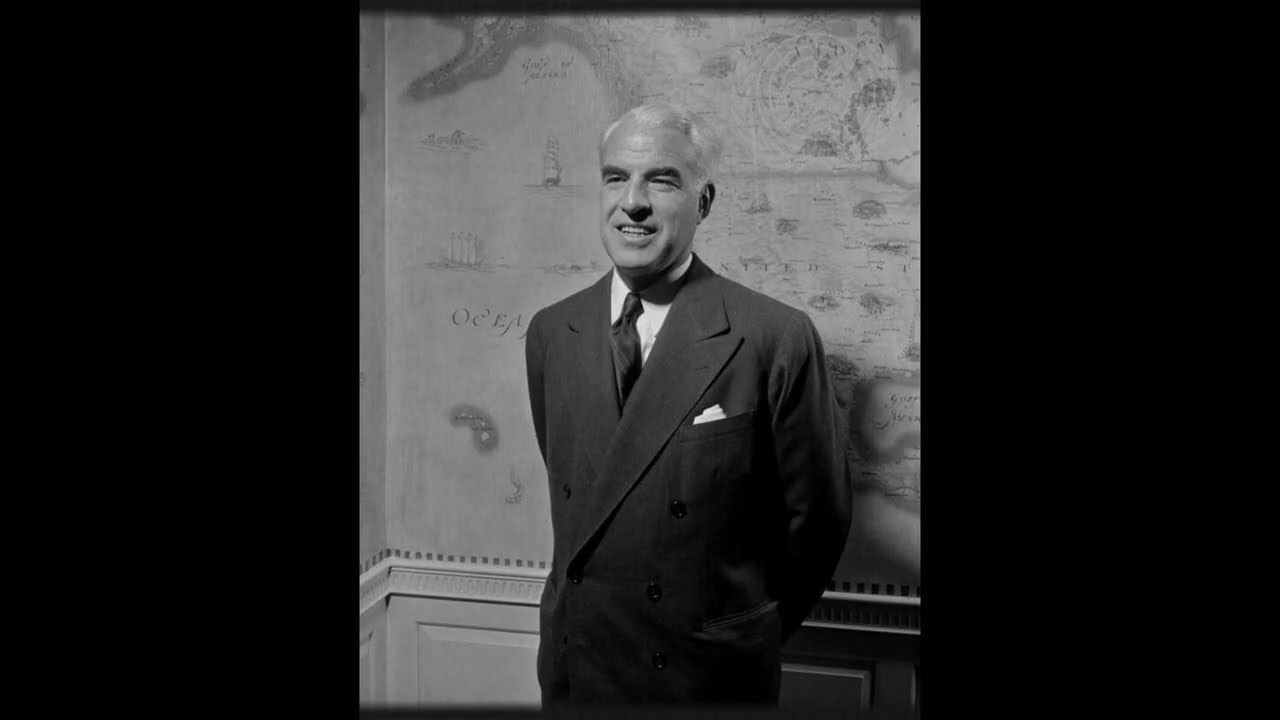 Decisions came framed in terms of Roosevelt’s philosophy. Truman needed a top law officer who spoke his language, not his predecessor’s. Biddle resigned with grace, but the shock waves traveled far beyond the Department of Justice.
Soon after, Frances Perkins, one of the most iconic figures in Roosevelt’s administration, found herself facing the same reality. Truman admired her accomplishments and her pioneering role as the first woman in the cabinet. But she was inseparable from Roosevelt’s memory.
In meetings, she continued to reference how Roosevelt handled labor unrest, what he would advise, his commitments to workers. When Truman privately told her he needed someone fully aligned with the new administration, she understood. It was painful, but she stepped aside.
Henry Morgenthau Jr.’ s departure was more tumultuous. Morgenthau had been a close friend of Roosevelt, a man who helped design the New Deal and finance the war.
He had expected to remain central to the postwar economic order. But Truman saw things differently. Morgenthau’s policy positions were increasingly incompatible with Truman’s vision for postwar recovery, especially his hardline stance on Germany’s economic future.
The clash over the harsh Morgenthau Plan for Germany was the final straw. The two disagreed sharply on how to stabilize Europe and how to deal with the Soviet Union. Truman valued Morgenthau’s expertise, but he needed someone more flexible, someone who could navigate a world that was rapidly shifting from the Great Depression mindset to the emerging Cold War.
When Morgenthau was informed he would not continue, he left the White House visibly stunned. The newspapers framed it as Truman removing a pillar of Roosevelt’s legacy. To Truman, it was simpler.
He needed a Treasury Secretary he could trust.
Edward Stettinius Jr. , Roosevelt’s Secretary of State, resigned after realizing that Truman was bringing in Byrnes to take over foreign policy. Stettinius had been a loyal diplomat, but he was closely tied to Roosevelt’s personal style of international relations.
Truman wanted clarity, not charisma. He wanted a system, not a network. Byrnes became his new Secretary of State.
Inside the White House itself, Truman quietly restructured the staff. He replaced appointment secretaries, communications officers, and press liaisons, many of whom had long-standing personal ties to Eleanor Roosevelt or to the New Deal coalition. Truman did not remove them out of hostility.
He removed them because they reported to the past, not the present.
Even Admiral William Leahy, Roosevelt’s closest military adviser, essentially the chairman of the entire wartime command structure, saw his influence shrink. Truman kept Leahy out of respect and necessity, but he began shifting decision-making power toward military figures he trusted, George Marshall, Dwight Eisenhower, Chester Nimitz. By the autumn of 1945, the pattern was visible to everyone paying attention.
Truman was quietly, methodically, and confidently building a government aligned with his leadership. The newspapers began calling it the Truman shakeup. Some FDR loyalists whispered that the new president was dismantling Roosevelt’s legacy.
But Truman knew something they did not. The world was changing faster than anyone realized.
Truman appointed Tom Clark as attorney general, a man he trusted completely. He sought advisers who valued clarity, structure, and transparency, traits Truman demanded after years of Roosevelt’s highly personalized, often secretive methods. This was not a rebellion against Roosevelt.
 It was a rejection of the idea that Roosevelt’s way was the only way. Truman understood and respected Roosevelt’s genius. But he also knew that Roosevelt’s genius had created a government that functioned through relationships rather than systems, through personal charm rather than clear lines of authority.
Truman, who had begun his career as a county judge and believed deeply in rules, order, and accountability, had no patience for a government built on unwritten traditions and personal loyalties.
He began holding daily briefings, a practice Roosevelt had never followed. He reorganized communication channels, demanded consistent reporting, and forced agencies to provide him with summaries. Roosevelt had often allowed his inner circle to filter information.
Truman wanted it raw. He wanted to see the contradictions, the uncertainties, the uncomfortable truths that the old guard had smoothed over. Little by little, the machinery of government began to shift.
Staffers stopped referencing Roosevelt’s preferences. Advisers began tailoring their recommendations to Truman. Cabinet members understood they were working for a new president with new priorities.
By the end of 1946, the transformation was largely complete. The White House staff was new. The cabinet was almost entirely Truman’s.
The government that had once been a monument to Roosevelt had reshaped itself into a machine aligned with Truman’s leadership. The process had not been quick. It had not been brutal.
It had not been a purge driven by resentment or revenge. It had been the necessary evolution of a government transitioning from one extraordinary presidency to another profoundly different one. Roosevelt had been a visionary who governed through intuition and charisma.
Truman was a pragmatist who governed through discipline and clarity. Roosevelt charmed. Truman confronted.
Roosevelt improvised. Truman demanded structure.
And in the end, it was Truman’s structure, not Roosevelt’s charisma, that the postwar world required. He oversaw the end of the war in the Pacific. He approved the Marshall Plan, the massive aid program that rebuilt Western Europe and contained Soviet influence.
He helped found NATO, the military alliance that deterred Soviet aggression for four decades. He navigated the first years of the Cold War, from the Berlin Airlift to the Korean War. He led the country through one of the most consequential transitions in American history.
He succeeded not because he imitated Roosevelt, but because he finally stopped trying to. The shadow lifted when Truman accepted that he would never be Roosevelt and did not need to be.
History often remembers the clash between Truman and Roosevelt’s old guard as a battle of personalities. But the truth is quieter and far more human. Truman had inherited a government built around a single irreplaceable figure.
He had been denied the tools a successor normally receives. He had stepped into one of the most dangerous moments the world had ever known. He could not lead with borrowed authority.
He could not depend on inherited loyalties. He could not govern in a dead man’s shadow. So he rebuilt.
Not out of spite, but out of necessity. Not out of anger, but out of clarity. Not to destroy Roosevelt’s legacy, but to create a space where he could build his own.
The United States did not get another Roosevelt. It got Harry Truman. And in the world that emerged after 1945, that was exactly what it needed.


