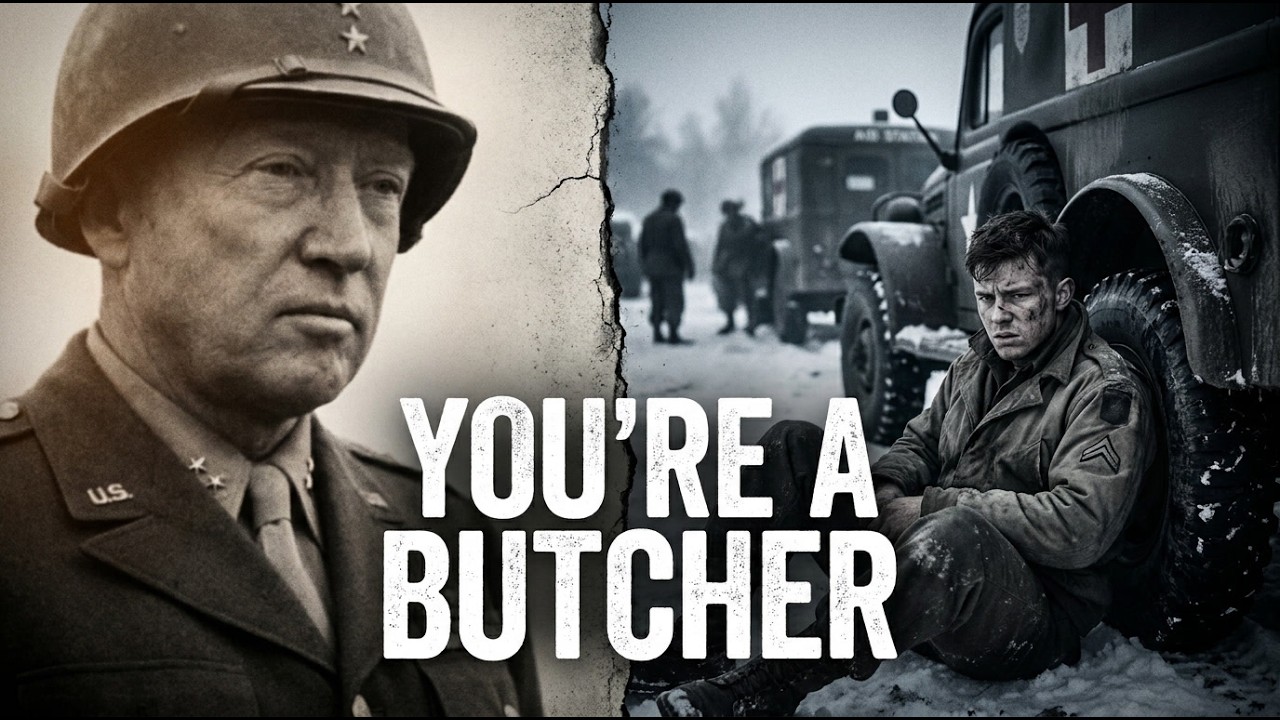
HEIDELBERG, Germany — The year was 1974, and the world believed it knew George S. Patton. The swaggering, ivory-handled revolver-toting warrior who smashed through Nazi Germany’s defenses was a fixed star in the American firmament.
But behind the myth, locked in a family archive for nearly three decades, lay a different truth. A truth so raw, so politically explosive, and so deeply stained with racial hatred that it threatened to redefine the legacy of America’s most famous combat general.
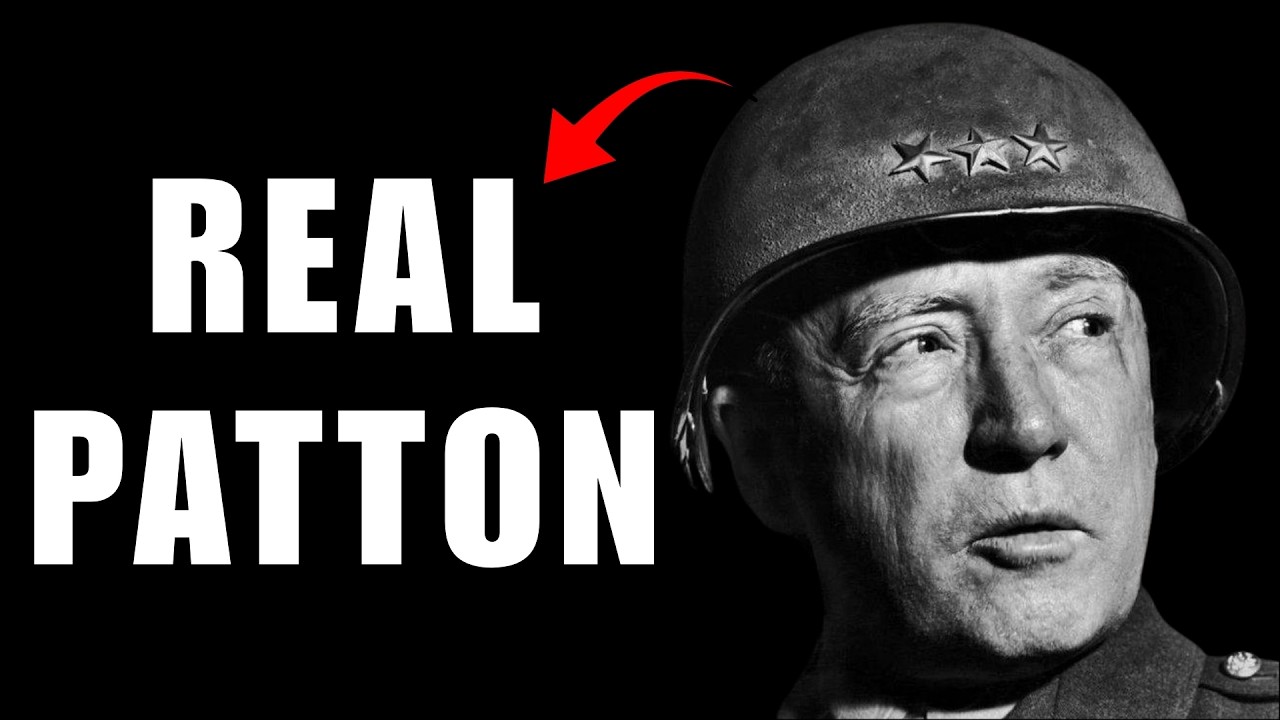 For twenty-nine years, the Patton family held the keys to a vault containing the general’s private diaries and personal correspondence. They guarded these documents with a silence that spoke volumes. Then, in 1974, they made a decision that would rock the historical establishment and shatter the sanitized image of the World War II icon.
They opened the archive. They handed historian Martin Blumenson the keys. And they authorized the publication of everything—the heroism, the brilliance, and the ugly, unfiltered bigotry that Patton never intended for public consumption.
The release of The Patton Papers was not a celebration. It was a reckoning. The diaries, spanning his command in North Africa, Sicily, and across Europe, revealed a man at war not only with the Axis powers but with his own demons.
They showed a general who, in the summer of 1945, was less concerned with the remnants of the German army and increasingly obsessed with a new enemy: the Soviet Union. His entries from that period are not the measured assessments of a strategist. They are visceral, venomous outpourings, filled with dehumanizing language and racist epithets that shocked reviewers and historians alike.
The most damaging revelation came from a letter dated July 21st, 1945, written to his wife, Beatrice. Patton had just visited Berlin, witnessing the devastation of the city and the occupation zone controlled by the Red Army. What he saw, or what he believed he saw, triggered a torrent of prejudice.
In the letter, he described Soviet forces using language that stripped them of their humanity. He characterized them as subhuman, a horde threatening to engulf Europe. He expressed a profound despair that America had destroyed the Third Reich only to hand the continent to Stalin’s clutches.
This was not a diplomatic cable or a strategic memo. It was a private venting to his most trusted confidante, a window into a mind seething with racial animus and geopolitical dread.
The diary entries from May 1945 are equally damning. On May 14th, after attending formal dinners and meetings with Red Army officers, Patton recorded his assessments. He did not critique their military tactics or political ideology.
Instead, he resorted to derogatory racial terminology, questioning their fitness for leadership and describing them in bigoted, harsh language. He was not speaking to the press or his superiors. This was his pressure valve, his private space to release frustrations he could not express publicly.
But the pattern was unmistakable and escalating.
Patton’s obsession with the Soviets had begun almost immediately after Victory in Europe Day on May 8th, 1945. Expecting a triumphant return or a command in the Pacific, he was instead assigned as military governor of Bavaria. He hated the administrative post.
 He hated the occupation duty. And he hated the fact that the United States was now allied with a power he viewed as a mortal threat. On May 18th, 1945, he wrote in his diary that the American army could easily defeat Soviet forces if conflict arose.
He was calculating capabilities, weighing logistics, and considering the possibility of war. His conclusion was stark: America should confront the Soviets immediately, while the army was still mobilized and the Red Army was exhausted from four years of brutal conflict. He shared this view with subordinates.
He shared it with Dwight D. Eisenhower. According to multiple accounts, Eisenhower told him to stop making such statements.
Patton did not stop. He just wrote them down.
The contrast between the public and private Patton is staggering. Publicly, he attended joint victory celebrations with Soviet officers, toasted Stalin, and smiled for cameras. He followed orders and maintained the facade of Allied unity.
Privately, his diary was a repository of contempt. He wrote that the alliance was a mistake, that the Soviets were dangerous, and that America should fight them. He used racist terminology repeatedly, calling the Soviet system barbaric and predicting an inevitable conflict between the United States and the USSR.
Every entry grew more bitter. Every observation grew harsher. He was not writing for history.
He was writing to survive the moment.
Academic reviewers who later analyzed the papers noted that Patton, like most diarists, used his journal as a release mechanism. But they also noted the stark contrast between his recorded private opinions and his public behavior. This was not unusual for public figures, they argued.
The difference was that Patton’s private thoughts were now placed beside his public statements for direct comparison. The result was a portrait of a man who was simultaneously a tactical genius and a profound bigot. He was prescient about the Cold War, predicting Soviet domination of Eastern Europe and communist expansion with chilling accuracy.
 But his analysis was filtered through a lens of racial superiority that rendered his judgments morally bankrupt.
The diaries also revealed that Patton’s prejudice was not limited to the Soviets. A letter to Frederick Ayer, dated May 5th, 1943, expressed contempt for Arab populations using sweeping racist generalizations. Multiple entries showed prejudice against various groups, documenting a pattern of intolerance that was systemic, not situational.
The publication of these documents forced a re-evaluation of the general. He was no longer just the audacious commander who relieved Bastogne. He was a man who harbored views that were abhorrent then and remain abhorrent now.
Why did the family do it? Why release material that would tarnish the legacy of their famous patriarch? The decision was deliberate.
They knew the diary damaged Patton’s reputation. They knew the racist quotes would define the coverage. They knew the controversy would overshadow the heroism.
They published anyway. There are several possible reasons. First, historical truth.
Patton valued history. He took photographs throughout the war, wrote constantly, and wanted an accurate record. The family honored that commitment, even when the truth was ugly.
Second, timing. By 1974, the Cold War had shifted perceptions. The Soviet Union was the clear adversary.
Patton’s anti-Soviet views, while still extreme, seemed less like the ravings of a madman and more like the warnings of a prophet. His predictions had been partially vindicated. The timing softened the impact of his racism, framing it within a context of geopolitical fear.
Third, completeness. A half-truth is worse than a full truth. The sanitized Patton already existed in movies and biographies.
 The family decided that if you want the real Patton, here is everything—good and bad, heroic and ugly, complicated and human.
The publication of The Patton Papers in 1974 was a watershed moment in military history. It demonstrated that the last battlefield for any great leader is not the war they fought, but the archive they leave behind. Who controls the papers controls the story.
Patton’s family controlled his papers, and they chose transparency over myth. They allowed history to see the full human being, not the sanitized version. The result was a legacy that is more complex, more difficult, and ultimately more honest.
Patton saved thousands of American lives with his aggression. He also held racist views that shocked readers. Both are true.
Both are in the diary. The family published both.
The general died on December 21st, 1945, in Heidelberg, a victim of a car accident that left him paralyzed for twelve days. He was 60 years old. He was buried in the Luxembourg American Cemetery, surrounded by the soldiers he led.
His diary was locked away, a time bomb waiting to detonate. Twenty-nine years later, the Patton family made a choice. They could have protected the myth.
They could have kept the archive sealed. They could have let the legend stand. Instead, they opened the vault.
They gave the world the truth, in all its ugly, brilliant, prejudiced, prescient, and human complexity. The myth is easy. The archive is not.
Patton’s family chose the archive. And history is still grappling with what they found.