A wave of quiet panic swept through network screening rooms and regional affiliate offices in 1967, forcing several major television stations to yank a scheduled episode of the iconic sci-fi series Lost in Space from their primetime lineups, replacing the Robinson family’s interstellar adventures with syndicated movies and reruns. The unprecedented blackout, triggered by what executives deemed a deeply offensive ethnic caricature in the episode titled “Castles in Space,” sparked a viewer backlash that would lead to the installment being quietly suppressed and shelved for decades, cementing its status as one of the most controversial and banned chapters in television history.
The incident, which occurred during the show’s third season, was a stark departure from the series’ usual brand of colorful, family-friendly escapism. Originally premiering in 1965 with a tense, survivalist edge as the pioneering Robinson family navigated the perils of deep space, the series had, by its third year, leaned heavily into extravagant space fantasies, featuring cosmic gladiators, intergalactic carnivals, and eccentric planetary warlords. However, the 14th episode of that season pushed the boundaries too far for many network standards.
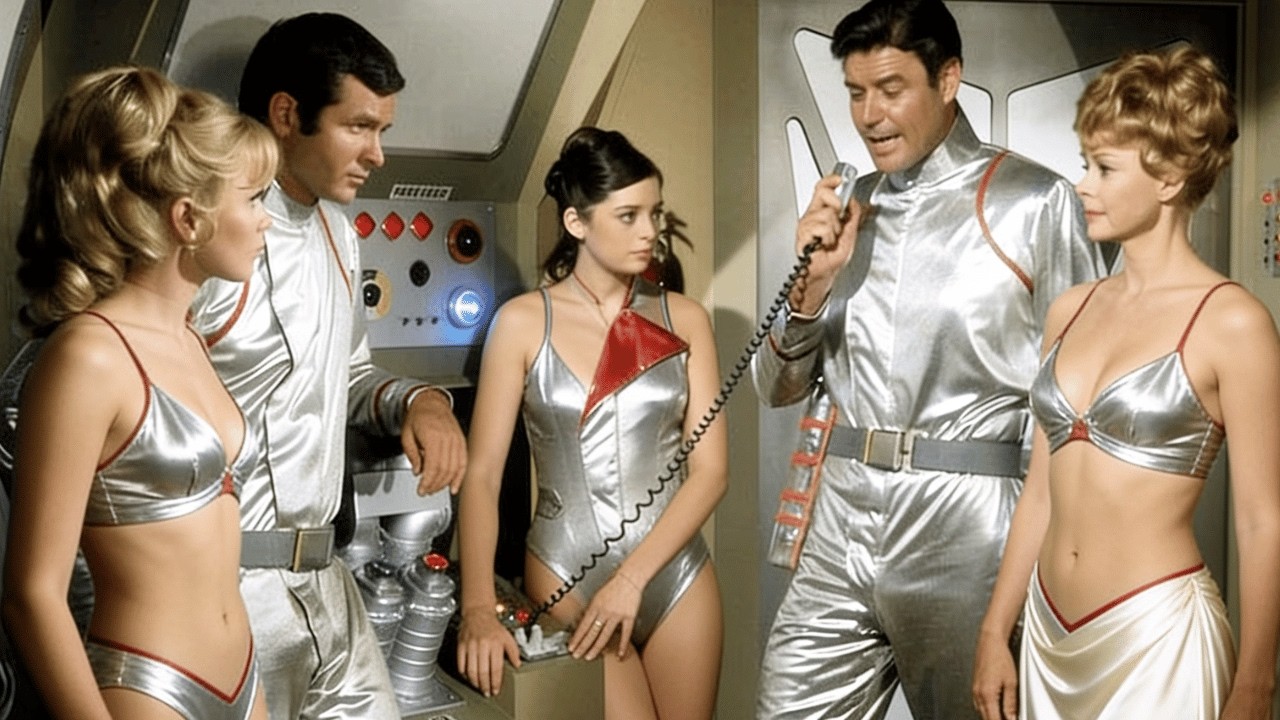 The plot of “Castles in Space” dropped the crew onto a freezing, desolate planet where an ice princess, thawed by the bumbling Dr. Smith, is pursued by a ruthless, silver-skinned bounty hunter named Chavo. While the story was pitched as a swashbuckling adventure, the execution of the antagonist ignited immediate and ferocious controversy.
The source of the fury was the portrayal of Chavo, played by character actor Alberto Monte. Clad in heavy makeup and exaggerated costuming, Chavo was written as a stereotypical bandit figure, speaking in a grotesque accent and brandishing a weapon like a Wild West outlaw. The character’s traits mirrored deeply insensitive ethnic stereotypes, a misstep that was made all the more egregious by a particularly absurd plot point where Chavo gets the robot drunk on tequila to extract information.
As the master tapes reached local program directors, the pushback was swift and severe. Several prominent TV affiliates, particularly in major metropolitan markets, refused to air the content. Viewers tuning in for the Robinson family were met with black screens or entirely different programming without warning, while network switchboards lit up with complaints from viewer advocacy groups demanding higher standards for primetime broadcasts.
The controversy forced studio executives to reassess their tolerance for racial caricatures, and although the episode was logged in original network records, it was flagged and repeatedly skipped in syndication packages for fear of renewed backlash, leaving the tapes quietly relegated to obscurity as a prime example of cultural insensitivity turning a mainstream hit into a target of network censorship.
This was not the only instance of the network locking away content, as the controversy followed a far more expensive secret buried deep within the studio vaults for nearly three decades: a lost, $600,000 pilot episode that was deemed too dark and disturbing for airwaves. In the mid-1960s, spending over half a million dollars on a single television pilot was an astronomical gamble, a sum that, adjusted for modern inflation, represents millions poured into just 49 minutes of footage. Producer Irwin Allen invested the fortune into sweeping cinematic matte paintings, expensive mechanical miniatures, and high-octane action sequences to secure a primetime slot.
Yet, despite the staggering financial investment, the original 1965 pilot, titled “No Place to Hide,” was flatly rejected by network executives and sealed inside a metal vault. The reason was not a lack of production quality but a radical mismatch in tone. The pilot was designed strictly as a serious, hard-edged survival 𝒹𝓇𝒶𝓂𝒶 following the crew of the Gemini 12, a sleek, saucer-shaped vessel on a mission to colonize Alpha Centauri.
 When a meteor shower strikes, the controls lock, stranding the astronauts on a hostile, sub-zero world with towering Cyclops giants.
But when executives screened the reel, they felt an unsettling void. The pilot was undeniably dark, heavy on technical jargon, and emotionally distant, and it was missing the two pivotal figures that would define the show’s pop culture identity: there was no scheming villain and no environmental control robot. Without a central antagonist to drive conflict or a metallic foil to bring humor and warmth, the network feared the series would prove too bleak and terrifying for family viewing.
Instead of scrapping the entire investment, executives ordered Allen to overhaul the premise entirely. The original pilot was pulled from schedules, kept strictly out of public sight, and chopped up to be blended with newly filmed scenes to create a far lighter, campier series premiere, a pivotal turning point in television history that altered the course of mid-century science fiction. Had the network aired that footage as originally filmed, viewers would have received a gritty space survival epic, but instead, the studio heads opted for a character-driven format that fundamentally changed the show’s trajectory.
The emergency overhaul to fix the vaulted pilot brought in a new villain, but that actor soon hijacked the entire production from the inside, leading to yet another layer of banned and re-edited content. Executives knew the show needed a catalyst for friction, so they introduced Dr. Zachary Smith, a cold-blooded, calculating foreign operative played by Jonathan Harris, tasked with sabotaging the mission.
In the original script, Smith was devoid of warmth, a lethal agent who programmed the robot to destroy the ship’s guidance systems until his own treachery trapped him aboard. However, Harris recognized a fatal flaw: a purely evil, static villain had a short shelf life on a family program. Determined to save his job, Harris began taking unauthorized creative liberties, abandoning the menacing tone of a Cold War spy for a theatrical, cowardly, and pompously articulate persona.
 He improvised iconic alliterative insults, transforming tense life-threatening scenes into moments of dark comedy, and when producers saw the footage, they realized he had unlocked a completely unexpected dynamic that prompted emergency re-edits of the premiere. Darker, more threatening dialogue was dubbed over or cut entirely, and scenes depicting Smith as an irredeemable killer were scrubbed from the broadcast master, softening his actions to remain palatable to censors and young viewers.
The radical restructuring of the series premiere was a gamble that paid off immensely, launching the show into a primetime phenomenon that exceeded all expectations. When Lost in Space debuted on CBS in September 1965, it was not merely another program joining the fall lineup; it was a bold, expensive gamble that revolutionized science fiction, coinciding with NASA’s real-world Gemini missions which had the public’s fascination with space travel at a fever pitch. The series boasted incredible production values, including intricate miniature models and the iconic Jupiter 2 spacecraft, which cost tens of thousands of dollars to construct, giving the production cinematic weight.
The first season, filmed in atmospheric black and white, maintained a tense dramatic edge that crushed competing programs, proving audiences would eagerly tune in for serialized space exploration. However, the show’s greatest test arrived in early 1966 with the explosion of ABC’s campy Batman series, which forced CBS to pivot radically. Starting in season two, the show made a triumphant leap into brilliant saturated Technicolor, shifting away from survival 𝒹𝓇𝒶𝓂𝒶 to theatrical space opera, featuring space pirates and galactic leprechauns.
Central to this victory was the electrifying chemistry between Harris, young Bill Mumy, and stuntman Bob May inside the B-9 robot suit, a trio that became the emotional core of the series and dominated primetime ratings throughout the mid-60s, paving the way for decades of space-bound television epics.
Despite the massive success, the show’s journey was riddled with legal battles that nearly crushed it before it ever aired. Long before the Robinson family debuted, in December 1962, publisher Western Publishing launched a comic series titled Space Family Robinson, featuring a family of space travelers with the same surname and similar premise. When CBS greenlit Allen’s new series in late 1964, Western Publishing’s legal department immediately filed claims of copyright infringement.
 To avoid a costly public court war, CBS struck a quiet out-of-court settlement, paying an undisclosed licensing fee for the rights to use the character name, while Western Publishing was granted the right to append the subtitle “Lost in Space” to their comic book covers. This secret legal pact saved the show from an injunction that would have frozen production, remaining one of Hollywood’s best-kept secrets during the original run. Had those negotiations failed, the Robinson family might have had their names forcibly changed, or the show would have been legally locked away before ever reaching an antenna.
The show’s immense popularity also unlocked a massive revenue stream that permanently altered how networks monetize sci-fi shows, as it pioneered modern merchandising. While primetime shows rarely capitalized on toy sales systematically, Allen recognized that children were obsessed with the gadgets, lasers, and monsters. Remco Toy Company released a line of motorized plastic B-9 robots and miniature Jupiter 2 spacecraft, turning a prop into one of the most sought-after gifts of 1966.
The 1967 dome-top lunchbox became a massive cultural staple, now one of the most expensive vintage collectibles, and Topps produced a popular trading card set. This retail boom proved that a show’s financial value was no longer limited to advertising spots, laying the blueprint for media franchising long before Star Wars revolutionized the concept in 1977.
When the series concluded its 83-episode run in the spring of 1968, television critics were quick to dismiss it as a victim of its own absurdity, lamenting that a show that began with high-stakes survival had devolved into a weekly circus of talking carrots and space warlords. Yet, critics fundamentally misunderstood the secret of its enduring success. While reviewers dissected narrative realism, millions of families were gathering to share a joy-filled experience, embracing the colorful high-concept monsters and theatrical banter as imaginative escapist entertainment.
When the series entered syndicated rerun packages, its popularity exploded, airing every weekday afternoon and reaching a new generation who discovered its catchphrases, transforming it into a multi-generational cultural phenomenon. The show’s legacy was cemented across media formats, from a high-budget 1998 feature film to a critically acclaimed Netflix series that paid homage to the original, featuring cameo appearances from surviving cast members.
The legacy of the cast themselves remains a topic of fascination, as their lives offscreen were filled with dramatic shifts. Guy Williams, who played Commander John Robinson, grew frustrated with his diminished screen time as the show shifted focus, and following cancellation, he retired to Argentina where his legacy as Zorro made him a beloved hero. June Lockhart brought warmth as the matriarch, continuing a vibrant decades-long acting career and becoming a passionate advocate for NASA education.
Jonathan Harris, who brilliantly reinvented his character, worked extensively as a voice actor until his passing in 2002, while Bill Mumy transitioned into a remarkably versatile career as a musician, voice actor, and star of Babylon 5. The tight-knit ensemble formed an enduring bond that proved the heart of the show was the genuine affection they shared, a testament to a series that, despite its vaulted pilot, banned episodes, and secret legal wars, became an immortal icon of American imagination that continues to shine bright for generations to come.