The world stood still on a crisp autumn morning in 1946, not for a military victory, but for a reckoning. The gallows at Nuremberg had just claimed the life of Julius Streicher, the venomous propagandist whose final scream of “Purim Fest 1946” echoed the fanatical hatred that had consumed a continent. Yet, the question that haunted the rubble of Europe was not merely about the guilt of the men in the dock, but about the genesis of the evil they represented.
Why did Adolf Hitler, a failed artist from a provincial Austrian town, orchestrate the systematic murder of six million Jews? The answer, as revealed in newly synthesized historical analysis and survivor testimony, is not a single cause, but a catastrophic convergence of ancient prejudice, modern pseudoscience, and a political machine built on the exploitation of national trauma.
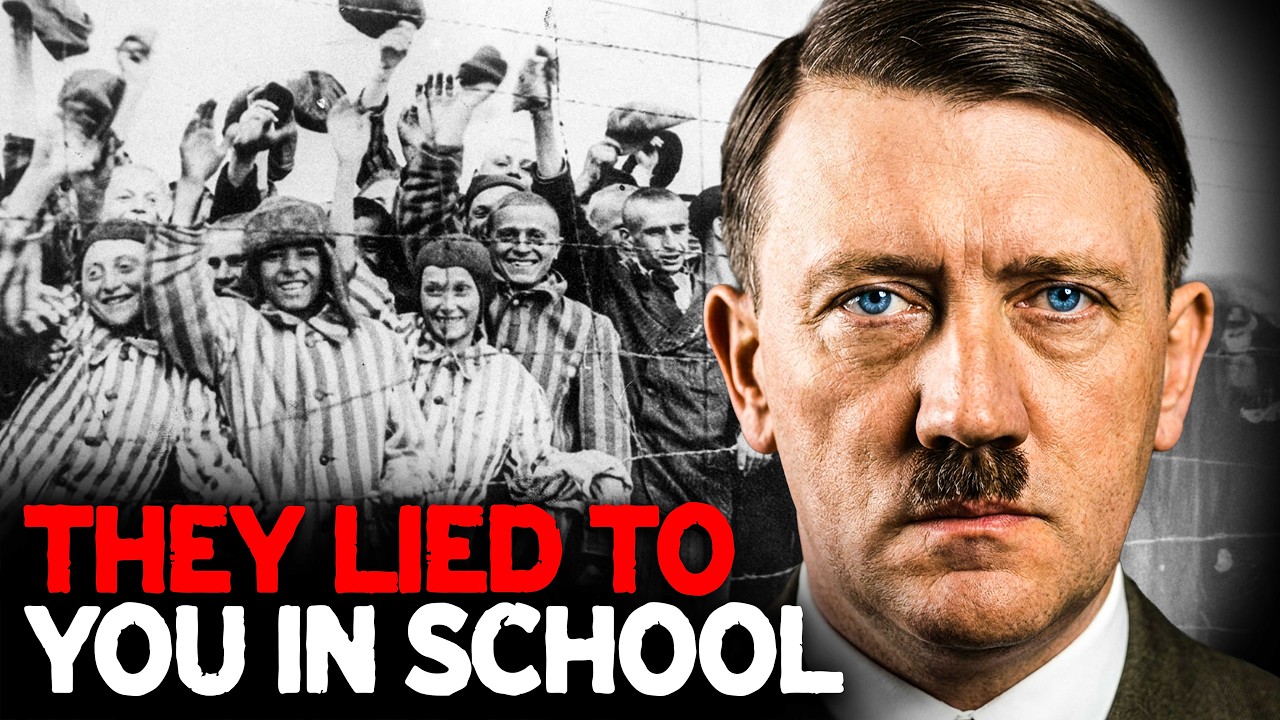 The roots of this catastrophe do not begin in the beer halls of Munich, but in the medieval squares of Europe. For centuries, the Jewish people were the perpetual “other” in the Christian imagination. The theological accusation of deicide, the charge that Jews bore collective guilt for the crucifixion of Christ, provided a religious veneer for relentless persecution.
This was not a fringe belief; it was the bedrock of European culture. From the blood libels of 12th-century England, which falsely accused Jews of murdering Christian children, to the scapegoating of Jewish communities during the Black Death, the narrative of the Jew as a malevolent, parasitic force was woven into the fabric of society. Martin Luther, the father of the Reformation, wrote in 1543 that Jews were a “base, whoring people,” calling for the burning of their synagogues and the destruction of their homes.
This was the inheritance Hitler received—a ready-made enemy, deeply embedded in the psyche of the very population he sought to control.
However, the 19th century transformed this religious animosity into something far more lethal: racial antisemitism. The Enlightenment had brought emancipation, allowing Jews to enter universities, professions, and cultural life with remarkable success. This visibility, paradoxically, fueled a new resentment.
Thinkers like Arthur de Gobineau and Houston Stewart Chamberlain dressed old hatreds in the language of biology, arguing that history was a racial struggle for survival. They posited the existence of a superior “Aryan” race, locked in an existential war against the Jews, whom they defined not by faith, but by blood. This pseudoscientific framework was crucial.
It meant that conversion was no longer an escape. A Jew was a Jew by birth, an immutable biological threat to the German nation. This was the intellectual soil in which Hitler’s worldview took root.
Hitler’s personal radicalization occurred in the grimy hostels of Vienna, a city that was a cauldron of racial politics. Rejected twice from the Academy of Fine Arts, a failure in his mother’s eyes and his own, he drifted into poverty and resentment. In Vienna, he witnessed the political success of Mayor Karl Lueger, who weaponized antisemitism to mobilize the lower middle class.
Hitler absorbed the pamphlets of Lanz von Liebenfels, which mixed occultism with racial theory, and he saw a city where Jewish success in finance and culture was met with virulent envy. It was here, between 1908 and 1913, that his inchoate anger crystallized into a coherent, obsessive ideology. He did not invent the hatred; he inherited it, sharpened it, and made it the lens through which he interpreted the world.
The trauma of World War I was the catalyst that turned this personal obsession into a national one. Germany’s sudden, humiliating defeat in 1918 was inexplicable to a nation that had been told victory was imminent. The military establishment, desperate to avoid blame, propagated the “Stab-in-the-Back” myth—the claim that the army had been undefeated on the field, but had been betrayed from within by socialists, communists, and, most prominently, Jews.
This myth was a psychological salve for a wounded nation. It redirected the rage of defeat away from the military leadership and toward a visible, successful minority. Never mind that over 100,000 German Jews had served in the army and 12,000 had died for the Fatherland.
 In the paranoid logic of the far right, their presence was proof of their sinister influence. Hitler absorbed this mythology completely, making it the cornerstone of his political message.
When Hitler joined the German Workers’ Party in 1919, he found his stage. His oratory was not merely persuasive; it was hypnotic. He had an uncanny ability to voice the inarticulate rage of a population shattered by hyperinflation, unemployment, and the humiliation of Versailles.
In speech after speech, he laid the blame at the feet of an “international Jewish conspiracy.” This was not just a cynical tool; it was a genuine conviction. In Mein Kampf, dictated from Landsberg prison, he laid out his blueprint with terrifying clarity.
He argued that history was a racial struggle, that the Aryan was the “Prometheus of mankind,” and that the preservation of his blood was the highest duty. The Jews were not merely a different religion; they were a “parasitic entity” threatening the biological vitality of the German race. He framed the removal of Jews not as persecution, but as self-defense, a biological necessity for survival.
The seizure of power in January 1933 did not immediately unleash the gas chambers. Instead, it began a calculated, incremental process of dehumanization designed to habituate the German public to each new atrocity. The first phase, from 1933 to 1935, was legal and economic strangulation.
The April 1933 boycott of Jewish businesses was a public ritual of exclusion. The Law for the Restoration of the Professional Civil Service purged Jews from government, law, and academia. These measures were not merely administrative; they were designed to isolate the Jewish community and strip them of their economic means, making emigration increasingly difficult.
The Nuremberg Laws of 1935 were the legal culmination of this phase, defining Jewishness by blood and stripping them of citizenship. They transformed Jews from citizens into a legally inferior caste, making it impossible to integrate or assimilate.
The year 1938 marked a violent escalation. Kristallnacht, the Night of Broken Glass, was a state-organized pogrom that saw synagogues burned, businesses smashed, and 30,000 Jewish men sent to concentration camps. The pretext was the assassination of a German diplomat in Paris, but the violence was premeditated.
The regime then fined the Jewish community one billion Reichsmarks for the damage it had caused, confiscating insurance payouts. This was a clear signal that the persecution was not going to moderate. It was a demonstration of the regime’s willingness to use physical violence on a mass scale, and it accelerated the desperate flight of Jews from Germany, though the doors of the world were closing.
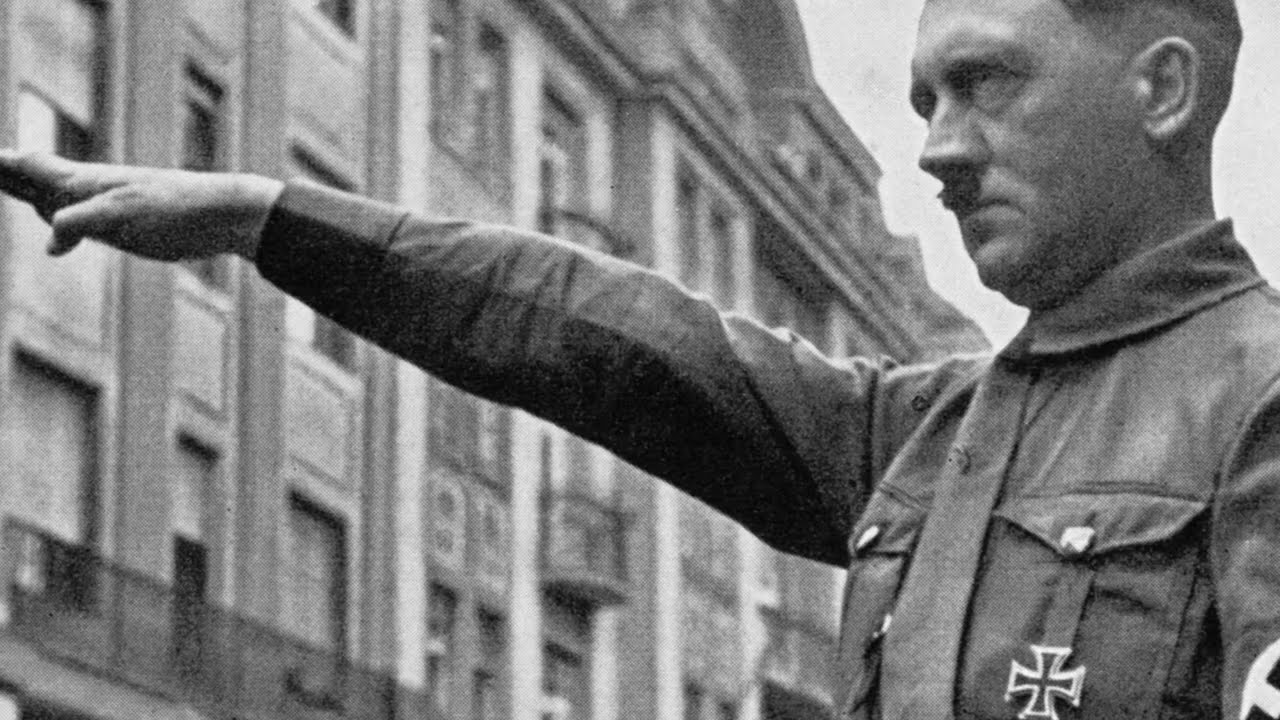 The Evian Conference of 1938, where 32 nations refused to significantly expand Jewish immigration, was a green light for Hitler. He cited the world’s indifference as proof that no one cared about the fate of the Jews.
The invasion of Poland in 1939 brought 3 million more Jews under German control, creating a “problem” of unprecedented scale. The initial solution was the ghetto, a sealed urban prison designed for slow death by starvation and disease. The Warsaw Ghetto, holding over 400,000 people in 1.
3 square miles, was a lethal experiment in population reduction. But the true turning point was the invasion of the Soviet Union in June 1941. This was conceived as a war of racial annihilation.
Following the advancing armies were the Einsatzgruppen, mobile killing units that systematically shot over 500,000 Jews in the first six months. The massacre at Babi Yar, where 33,771 Jews were murdered in two days, demonstrated the logistical and psychological limits of mass shooting. The executioners were suffering from the strain of killing at close range.
This bureaucratic problem, the need for efficiency, led directly to the construction of extermination camps using poison gas.
The Wannsee Conference in January 1942 was not the decision point, but the coordination point. It was a meeting of bureaucrats, chaired by Reinhard Heydrich, to organize the logistics of the “Final Solution” across Europe. The minutes, written by Adolf Eichmann, are chilling in their bureaucratic banality.
They discuss the murder of 11 million Jews in the antiseptic language of administration, using euphemisms like “evacuation” and “special treatment.” This sanitization of language was essential. It allowed middle managers to participate in genocide without confronting the moral reality of their actions.
The camps—Auschwitz-Birkenau, Treblinka, Sobibor—were industrial facilities designed for one purpose: to 𝓀𝒾𝓁𝓁 as many people as possible, as quickly as possible. At its peak, Auschwitz was murdering over 10,000 people a day, using Zyklon B gas, a pesticide. The Sonderkommando, Jewish prisoners forced to operate the crematoria, were the most tragic figures, trapped in a “gray zone” of impossible moral choice.
The question of knowledge is central to understanding the complicity. Ordinary Germans knew. They saw their neighbors deported from town squares.
 They received letters from soldiers describing the massacres in the East. The SS tracked public knowledge, noting with concern that people were discussing the fate of the Jews. The economic plunder, the “Aryanization” of Jewish property, gave millions of Germans a material stake in the persecution.
They acquired Jewish businesses, apartments, and belongings at knockdown prices, binding their self-interest to the regime’s crimes. This was not a nation of ignorant bystanders; it was a society of collaborators, beneficiaries, and passive conformists. The failure of the churches to speak out definitively, with notable exceptions like Dietrich Bonhoeffer, removed the last institutional check on the regime’s radicalism.
Why did Hitler persist even when the war was lost? The evidence from 1944 is decisive. In Hungary, with the Red Army at the gates of the Reich, Hitler insisted on using vital military trains to deport over 400,000 Hungarian Jews to Auschwitz for immediate gassing.
This was not the behavior of a cynical politician; it was the behavior of a zealot who considered the murder of Jews more important than the survival of Germany. The ideology had become an end in itself. The persecution was not a means to consolidate power; it was the ultimate goal.
Hitler’s anti-Semitism was the core of his being, the lens through which he interpreted every failure and every success. He believed he was fighting a cosmic battle against an existential enemy, and he was willing to burn his own nation to the ground to achieve his genocidal aim.
The legacy of this horror is not merely historical. It is a warning about the fragility of civilization. The Holocaust was not a medieval pogrom; it was a modern, bureaucratic operation made possible by the rationalization of violence, the application of pseudoscience, and the failure of ordinary people to resist incremental evil.
The stages of genocide—classification, symbolization, dehumanization, organization—are not unique to Nazi Germany. They are latent in human societies, waiting for the right conditions of fear, economic despair, and political opportunism. The story of why Hitler persecuted the Jews is a story about the terrifying ease with which a civilized society can be captured by extremism, and the profound moral obligation of every individual to recognize the warning signs and refuse to look away.
The six million demand nothing less than our full attention to the truth, however uncomfortable it may be.


