The frozen, fog-choked roads of the Ardennes Forest had become a death trap. By December 19, 1944, the 101st Airborne Division and elements of the 10th Armored Division were completely encircled in the vital crossroads town of Bastogne. The temperature had plummeted to minus 15 degrees Celsius.
Ammunition was dwindling. Fuel reserves were nearly nonexistent. The German 5th Panzer Army, a battle-hardened force that had cut its teeth on the Eastern Front, was tightening a steel ring around roughly 20,000 American soldiers.
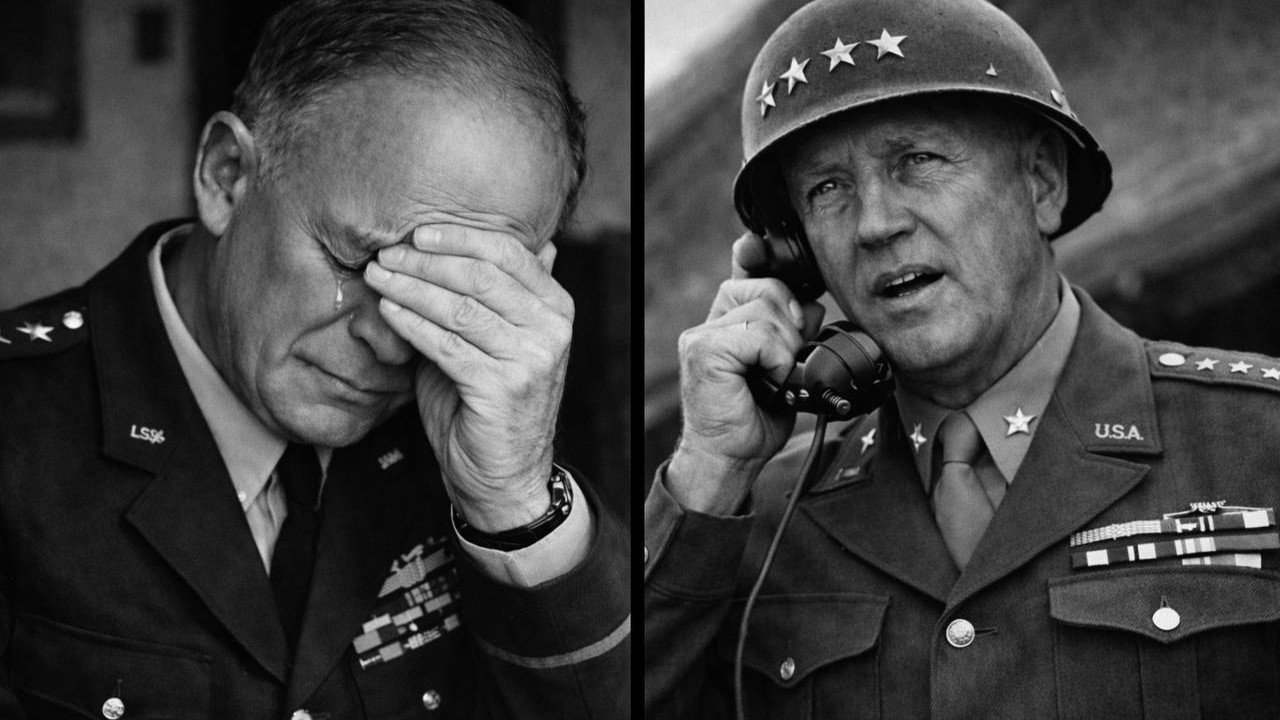 Every military expert on the Allied side of the line agreed on one grim prognosis: a rescue was impossible. The weather grounded all aircraft, the roads were sheets of ice, and the nearest friendly force was nearly 150 kilometers to the south, moving in the wrong direction. Hope was not just fading; it was freezing solid.
At the Supreme Headquarters Allied Expeditionary Force in Verdun, General Dwight D. Eisenhower convened an emergency meeting with his top commanders. The atmosphere was thick with tension and the grim arithmetic of a looming catastrophe.
The question posed to the assembled brass was brutally simple: How long would it take to organize a counterattack to break through to Bastogne? The answer from most of the room was a collective shrug of resignation. Estimates ranged from a week to ten days, a timeline that would almost certainly guarantee the annihilation or capture of the surrounded garrison.
The meeting was on the verge of conceding the loss of the town and the strategic collapse of the entire Allied front line. Then, a voice cut through the despair.
General George S. Patton, the commander of the U. S.
Third Army, looked Eisenhower dead in the eye. His answer was not a request for time, but a declaration of intent. “Forty-eight hours,” he said.
The room fell into a stunned silence. Officers exchanged glances of disbelief. Some thought the man was mad.
Others assumed he was grandstanding. Patton’s Third Army was currently engaged in offensive operations to the south, pushing eastward. To relieve Bastogne, he would have to halt his advance, pivot his entire army 90 degrees, re-route supply lines, and move multiple divisions across frozen, narrow roads in the dead of winter.
It was a logistical nightmare that defied conventional military doctrine. But Patton was not waiting for permission; he had already set the wheels in motion.
Unknown to most of the generals in that room, Patton had been planning this exact maneuver for days. He had instructed his chief of staff to begin drafting orders for a northward turn before he even left his headquarters. While the other commanders were still calculating the risks, Patton’s staff was already moving fuel convoys and redirecting artillery units.
The pivot was not a spontaneous act of bravery; it was a premeditated gamble born of aggressive tactical foresight. He understood that the only way to save Bastogne was to move faster than the German High Command thought possible. Speed was not just an advantage; it was the only weapon that could break the siege.
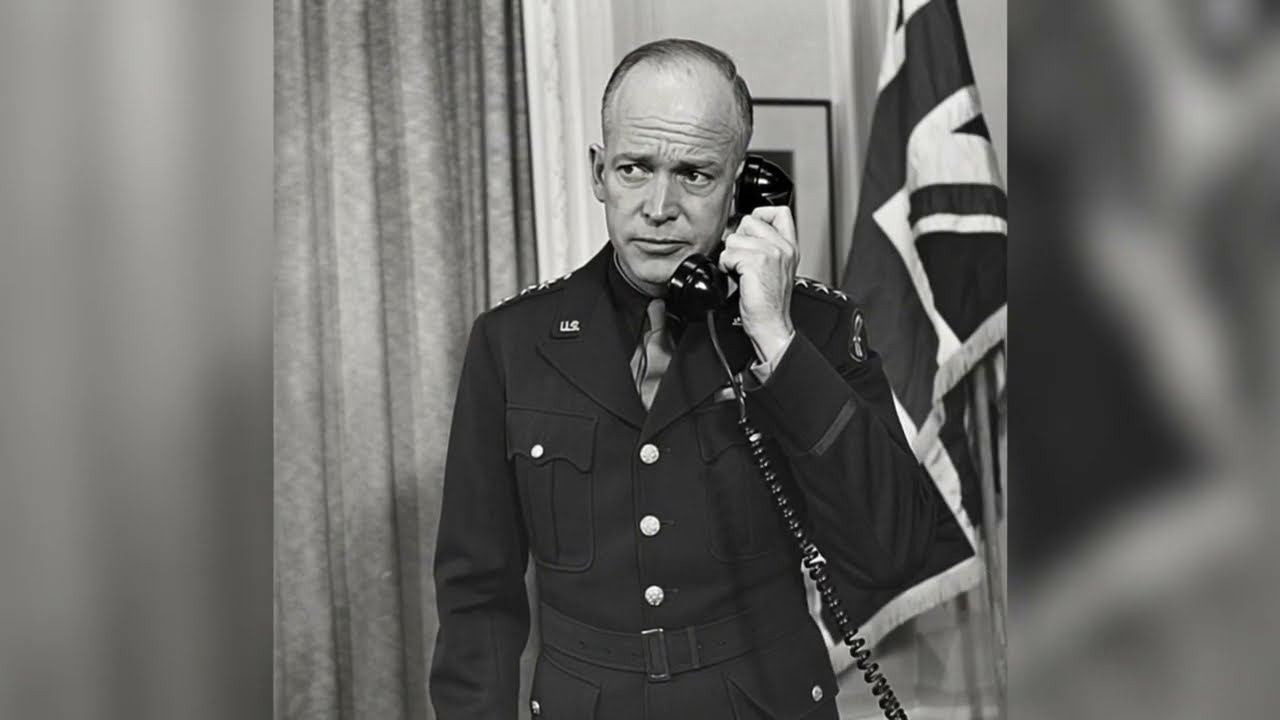
That night, while the Third Army began its massive logistical contortion, Patton made a phone call that would become the stuff of legend. He dialed Eisenhower’s headquarters directly. The line crackled with the static of the winter air, but Patton’s voice was calm, devoid of hesitation.
 He spoke four words that cut through the bureaucratic fog of war: “I can attack now.” The simplicity of the statement belied the immense risk behind it. If Patton launched the attack and failed, the Third Army could be cut off and destroyed in a counter-encirclement.
If he succeeded, he would save 20,000 men and potentially the entire Western Front. According to officers present in the room, Eisenhower paused, weighing the gravity of the moment.
The pause was a lifetime. Eisenhower understood that he was approving a gamble that could end Patton’s career and his own. But he also understood the alternative.
If Bastogne fell, the German armored columns would have open road access to the Meuse River. From there, the path to Antwerp—the port through which nearly 70 percent of Allied supplies flowed—would be wide open. The loss of Antwerp would cripple the Allied war machine, causing fuel shortages, ammunition scarcity, and operational paralysis.
It could split the British and American forces, creating political fractures and prolonging the war by months, if not years. Eisenhower gave the order. The attack was approved.
Within hours, the movement began. The 4th Armored Division, under the command of General Hugh Gaffey, took the lead. Behind them, the 26th and 80th Infantry Divisions followed in a relentless column of steel and flesh.
Over 100,000 men changed direction in winter conditions that would have halted a lesser army. M4 Sherman tanks, M10 tank destroyers, and M7 Priest self-propelled artillery pieces rolled north. Supply trucks, fuel convoys, and medical units clogged the narrow, ice-covered roads.
Bridges that had been destroyed by German demolition teams had to be bypassed or hastily repaired. Traffic jams stretched for miles, making the columns vulnerable to attack. Yet, the advance never stopped.
Between December 21 and December 23, the lead elements of Patton’s army pushed forward nearly 150 kilometers. The men drove through freezing wind and blinding snow, often fighting off German rearguard units that tried to slow their progress. The pace was brutal.
Mechanics worked on engines that froze solid overnight. Infantrymen marched with frostbitten feet, their rifles wrapped in rags to keep the mechanisms from jamming. But the momentum was undeniable.
Patton’s gamble was paying off, not because of luck, but because of sheer, unyielding willpower. The Third Army was doing the impossible, and they were doing it at a speed that left the German High Command scrambling to respond.
 Then, on December 23, the weather broke. For the first time in days, the heavy cloud cover lifted, revealing a brilliant winter sky. The Allied air forces, which had been grounded and useless, suddenly took to the skies in overwhelming numbers.
Fighter-bombers swooped down on German positions, strafing columns and bombing supply depots. C-47 transport planes flew low over Bastogne, dropping critical supplies of ammunition, food, and medical equipment to the beleaguered defenders below. The arrival of the air support was a turning point.
The Germans, who had been relying on the weather to shield their offensive, were now 𝓮𝔁𝓹𝓸𝓼𝓮𝓭 and vulnerable. The siege was no longer a one-way street.
On December 26, 1944, the 4th Armored Division broke through the German lines at the southern edge of Bastogne. The encirclement was shattered. The ring of steel that had threatened to crush the 101st Airborne was broken.
The lead tank, commanded by Lieutenant Charles Boggess, rumbled into the town’s outskirts, where it was met by exhausted but overjoyed American paratroopers. The relief was not just a military victory; it was a psychological one. The soldiers in Bastogne had been told that rescue was coming, but many had started to doubt it.
The arrival of Patton’s tanks proved that the Allies could still strike back with devastating force, even in the darkest hour.
The strategic implications of the relief were immense. The German objective in the Ardennes was not merely to capture territory; it was to seize the port of Antwerp and split the Allied armies. If Bastogne had fallen, the German 5th Panzer Army would have had a clear path to the Meuse River.
From there, the drive to Antwerp would have been a race against time. The port was the lifeline of the Allied supply chain. Its loss would have starved the front lines of fuel and ammunition, forcing a halt to all offensive operations.
The British and American forces could have been separated, leading to a fractured command structure and a potential political crisis within the alliance.
The German High Command was counting on exactly that scenario. They believed that a divided Allied front would lead to delays, bickering, and a temporary success that could prolong the war by several months. In December 1944, the Allies were already exhausted after months of brutal fighting through France.
Additional months of war would not have meant symbolic losses; they would have meant tens of thousands of additional casualties on both sides. The relief of Bastogne did not just save 20,000 soldiers; it prevented the collapse of the entire Western Front. It denied the Germans their final strategic gamble and set the stage for the final push into Germany.
 George Patton was not a perfect commander. He was aggressive to the point of recklessness, controversial in his personal conduct, and often clashed with his peers. He was known for his slapping incident with a soldier in a field hospital, an event that nearly ended his career.
But in December 1944, his flaws became his greatest assets. His aggression was exactly what the situation demanded. His willingness to ignore conventional wisdom and trust his instincts saved the day.
He understood something critical about modern warfare: momentum is everything. If you hesitate, you lose the initiative. If you lose the initiative, you lose lives.
Patton acted before the situation became irreversible, and that is what separated him from the other commanders in that room.
The phone call to Eisenhower was more than just a status report. It was a declaration that the impossible was already in motion. “I can attack now” was not a boast; it was a statement of fact.
Patton had already moved his army, already redirected his supply lines, already committed his forces to the gamble. The call was simply a formality, a way to inform the Supreme Commander that the dice were already rolling. Eisenhower, to his credit, recognized the audacity of the moment and gave his approval without hesitation.
It was a partnership of two men who understood that the war would not be won by caution.
History often remembers battles by numbers: divisions, tank columns, kilometers on a map. But sometimes, history turns on something much smaller—a decision, a risk, a moment when one man says, “I will move.” If Bastogne had fallen, thousands of American soldiers would have marched into captivity.
The German advance toward Antwerp might have regained momentum, and the war in Western Europe could have dragged on longer, costing even more lives on both sides. Instead, one army turned north in the snow. One commander chose speed over caution.
And one phone call became part of history. The legacy of that December is not just a military victory; it is a testament to the power of decisive action in the face of overwhelming odds.