The rust-streaked hull of a 120-year-old vessel, a silent veteran of the greatest amphibious invasion in military history, is slowly being consumed by the tidal mud of a Welsh river, abandoned by the nation it once served. Moored along a scrapyard in Neath, the former light vessel known as Juno is a fading monument to the 1944 D-Day landings, a relic that no one seems to want to save. As the 80th anniversary of Operation Overlord approaches, this forgotten ship—a floating lighthouse that guided thousands of Allied troops to the beaches of Normandy—faces a final, ignoble end unless a buyer emerges from the shadows.
The ship, officially designated Light Vessel 72, has spent the last five decades tied up on the River Neath, her once-proud superstructure now a skeletal framework of peeling paint and corroded metal. She is a ghost from a time when the world’s fate hung in the balance, yet her current reality is one of neglect, with her hull slowly sinking into the silt with each passing tide. The vessel’s story, once central to the survival of the Allied war effort, is now a desperate plea for preservation, a stark contrast to the heroism she once witnessed.
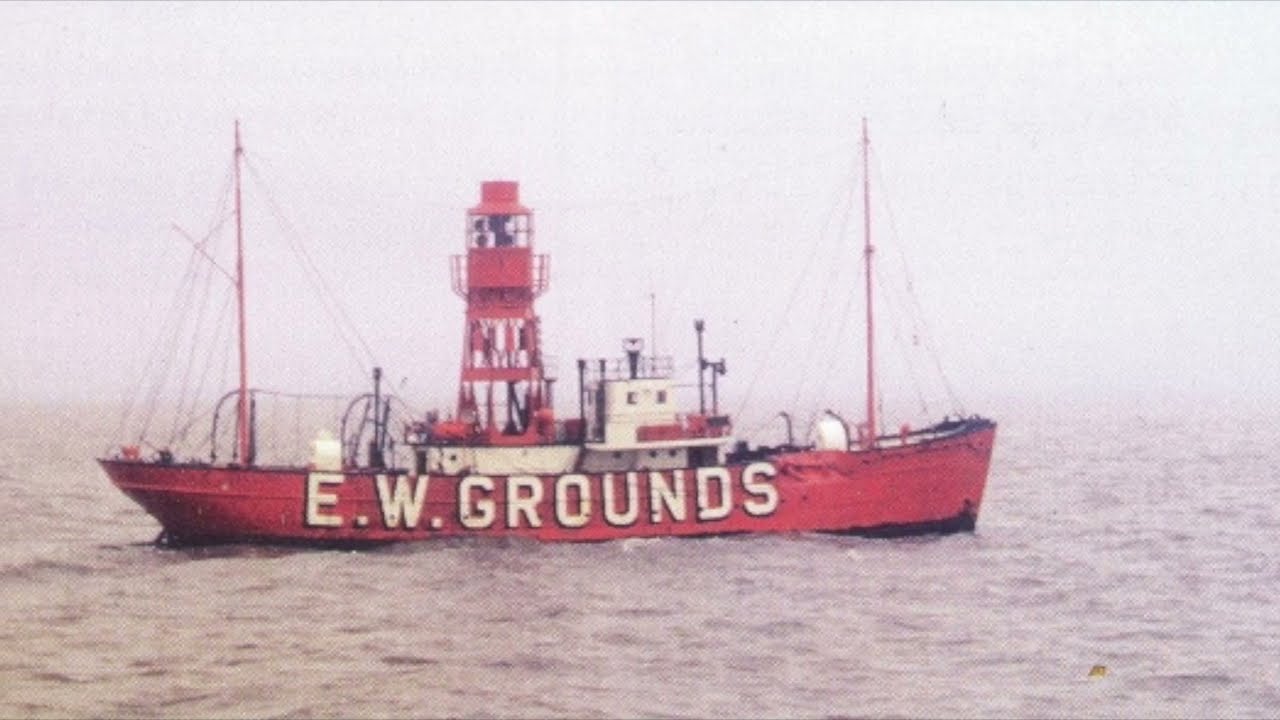
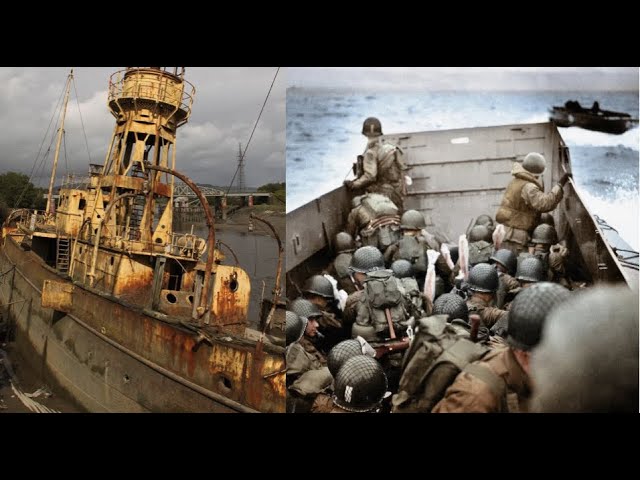 Built in Sunderland, England, in 1903, Light Vessel 72 was already a seasoned mariner by the time World War II erupted across Europe. She had served her peacetime duty in the treacherous waters of the Bristol Channel, the Channel Islands, and even off the coast of Gibraltar, her powerful paraffin lamp a beacon of safety for merchantmen and warships alike. But it was in the early summer of 1944 that this unassuming vessel was thrust into the very heart of history, receiving the codename “Juno” for a mission that would determine the fate of the free world.
The success of Operation Neptune, the naval component of the D-Day invasion, hinged on a complex and dangerous choreography. As the vast armada of over 6,000 ships assembled off the coast of England, the English Channel was a lethal maze of German mines, a watery graveyard waiting to swallow the invasion force whole. Naval minesweepers worked feverishly to carve out ten safe channels through these deadly fields, but clearing the path was only half the battle; the channels had to be marked, or the entire fleet would be lost in the darkness.
Trinity House, the British authority responsible for lighthouses and navigational aids, was tasked with this critical mission. Two of their light vessels, Juno and her sister ship, Light Vessel 68, codenamed Kansas, were selected to deploy special marker buoys with attached lights to delineate the safe passageways. On the 6th of June 1944, as the first wave of troops stormed the beaches of Normandy, these two civilian-manned ships slipped into position, their crews risking everything to lay the navigational lifelines that would guide the mightiest fleet ever assembled to the shores of France.
Following the initial assault, Juno was anchored off the French coast, tasked with marking the approaches to the three British and Canadian beaches—Sword, Gold, and Juno—while her sister ship Kansas covered the American sectors of Omaha and Utah. For months after the invasion, these vessels remained on station, operating as floating lighthouses for the relentless stream of supply ships, troop transports, and reinforcements that flowed between England and the continent. The civilian crews aboard these ships faced the same perils as their naval counterparts, vulnerable to U-boat attacks, the lightning-fast strikes of German E-boats, Luftwaffe bombing runs, and the ever-present threat of drifting mines.
The men aboard Juno were not soldiers, but they lived under the constant shadow of death, their unarmed vessel a sitting duck in the war-torn waters. They endured violent storms, the chaos of near-collisions in the crowded shipping lanes, and the terrifying scream of incoming artillery from the French coast. Their bravery was a quiet, unsung heroism, a testament to the civilian resolve that underpinned the military might of the Allied forces.
They remained at their posts, their lamp burning bright, ensuring that the lifeline to the beachhead was never severed, even as the Germans fought fiercely to repel the invaders.
Juno’s service in the war was not without cost. By January 1945, she had suffered significant damage from storms and a collision, forcing her withdrawal to Le Havre, France, for repairs. She was eventually towed back to Harwich, England, in March 1945, her wartime mission complete.
She had played her part in the liberation of Europe, a small but vital cog in the immense war machine that had crushed the Third Reich. After the war, she returned to her peacetime duties in the Bristol Channel, a quiet sentinel guiding ships through the often-choppy waters of the Severn Estuary.
Her long career finally ended in 1973 when, at the age of 70, she was sold for scrap to a steel supply company in Neath, Wales. It was a fate that seemed sealed, a final voyage to the scrapper’s torch. But then, a remarkable act of foresight intervened.
 The manager of the company at the time recognized the historic significance of the vessel he had just purchased. He understood that this was not just an old ship; this was a living piece of history, a direct participant in the most consequential event of the 20th century. Instead of cutting her into pieces, he moored her alongside the scrapyard, a silent monument to the past.
That decision, made half a century ago, has led to the current predicament. For 50 years, Juno has sat in the river, untouched, forgotten, and slowly deteriorating. She has been added to the National Historic Ships register, a designation that acknowledges her importance but provides no funding for her preservation.
A recent survey of her hull offers a glimmer of hope, revealing that she could potentially float again with relatively minor repairs, suggesting that the iron lady still has life in her. Yet, despite this, no one has stepped forward with the necessary funds to buy and restore her.
The steel company that owns her is asking a mere £40,000 for the vessel, a sum that is a fraction of what a piece of D-Day history should command. However, the true cost lies in the restoration, which would require a considerable investment to bring her back to her former glory and find a suitable location for display. The challenge is daunting, but the alternative is unthinkable: the loss of a tangible link to the 1944 invasion, a physical artifact that witnessed the turning of the tide against tyranny.
The story of Juno is a stark reminder of how quickly we forget the sacrifices of the past. Here is a ship that was nine years old when the Titanic sank, a vessel that served her country in its darkest hour, and yet she is left to rot in the mud of a Welsh river. She is a symbol of the 156,000 troops who landed on D-Day, of the thousands of sailors who manned the ships, and of the often-overlooked civilian crews who ensured they could reach their destination.
Her neglect is a disservice to their memory.
As the years pass, the elements take their toll. The saltwater, the wind, and the rain are slowly consuming her steel frame. The paint that once bore the proud name “Juno” is now a faded memory, obscured by rust and grime.
The question is not whether she will eventually collapse into the river, but when. The window of opportunity to save her is closing rapidly, and with each passing tide, the chance to preserve this D-Day veteran slips further away.
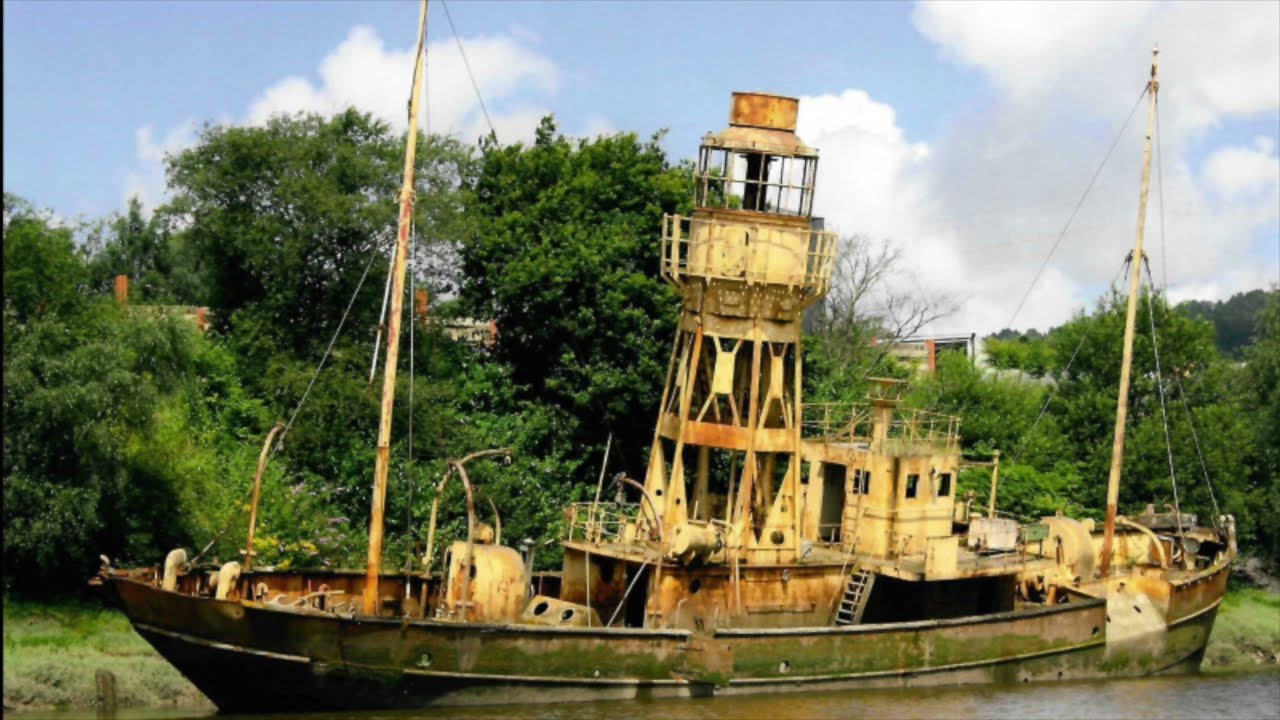 There is a desperate need for a benefactor, a museum, or a heritage organization to step forward and purchase this vessel. The £40,000 asking price is a bargain for a piece of history of this magnitude. The restoration would be a labor of love, a project that would honor the men who served on her and the cause for which she stood.
But it would require vision, dedication, and a significant amount of money to bring her back to a state where she could be displayed as a memorial to the past.
The fate of Light Vessel 72 hangs in the balance. She is a relic of a time when the world united against a common enemy, a floating testament to the courage and resilience of the human spirit. To let her perish would be a tragedy, a silent admission that we no longer value the physical remnants of our history.
The ship that helped guide the liberation of Europe deserves better than a slow death in an obscure river.
The call to action is clear: someone must step forward before it is too late. The vessel is a unique survivor, one of the few remaining ships that played an active role in the D-Day landings. Her story is not just about the military might of the Allies, but about the unsung heroes who worked behind the scenes to make the invasion possible.
The Trinity House crews who manned her were civilians, but they displayed a bravery that matched any soldier on the beach.
The clock is ticking for Juno. The 80th anniversary of D-Day will be commemorated in 2024, a moment when the world will pause to remember the sacrifices of that generation. It would be a poignant and fitting tribute if this ship could be saved and restored in time for that anniversary.
But without immediate action, she will likely be nothing more than a pile of rust in the mud, a forgotten casualty of a war that ended nearly eight decades ago.
 The steel company in Neath has held onto this vessel for half a century, perhaps hoping that someone would eventually recognize her worth. Now, they are openly offering her for sale, a final chance for history to be preserved. The ball is in the court of the public, of heritage groups, and of wealthy individuals who have the means to make a difference.
The question is whether anyone will answer the call.
The story of Juno is a microcosm of a larger issue: the struggle to preserve our historical artifacts in the face of apathy and limited resources. It is a battle that is being fought across the globe, as aging ships, buildings, and monuments from significant eras are lost to time. But some things are worth fighting for, and this D-Day veteran is certainly one of them.
She is a piece of living history, a tangible connection to a past that is rapidly receding from living memory.
How much longer can she hold on? 𝓮𝔁𝓹𝓸𝓼𝓮𝓭 to the elements, her hull corroding, her superstructure crumbling, it is anyone’s guess. But the experts who surveyed her believe she is still salvageable, that with the right care, she could be restored to her former glory.
The potential is there; it is only the will and the funding that are lacking. The vessel waits, a silent sentinel on the River Neath, hoping that someone will remember her service before it is too late.
The irony is palpable. A ship that once guided thousands to safety now needs someone to guide her to safety. She is a veteran of the greatest naval operation in history, yet she is abandoned in a scrapyard.
Her story deserves to be told to future generations, to serve as a reminder of the cost of freedom and the bravery of those who secured it. But if no one acts, her story will end in silence, swallowed by the river and lost to history forever.
The plea is simple: buy the ship, restore the ship, and honor the ship. The £40,000 price tag is a small price to pay for a piece of the D-Day legacy. The restoration will be a challenge, but it is a challenge worth undertaking.
Juno is not just an old ship; she is a monument to the past, a symbol of hope, and a reminder of what can be achieved when nations unite against tyranny. She deserves a future, not a slow, watery grave. The time to act is now, before the tide of neglect claims another victim.