The grim reality of postwar Britain for two of its most celebrated Allied commanders is a chapter of history that remains a profound and enduring disgrace, a stark betrayal of the men who helped liberate Europe from the tyranny of Nazism. Major General Stanisław Maczek and Major General Stanisław Sosabowski, heroes of the Polish Armed Forces in the West, were not rewarded with honor and comfort but were instead cast into the shadows of poverty and humiliation, their sacrifices met with bureaucratic indifference and political cowardice.
The story of General Maczek is one of extraordinary military achievement followed by a descent into heartbreaking obscurity. A veteran of the First World War and the 1939 defense of Poland, Maczek was a master of armored warfare whose tactical brilliance was tragically ignored by the French High Command. After escaping to Britain, he was given command of the Polish 1st Armoured Division, a unit that would etch its name into the annals of military history with its ferocious fighting in Normandy.
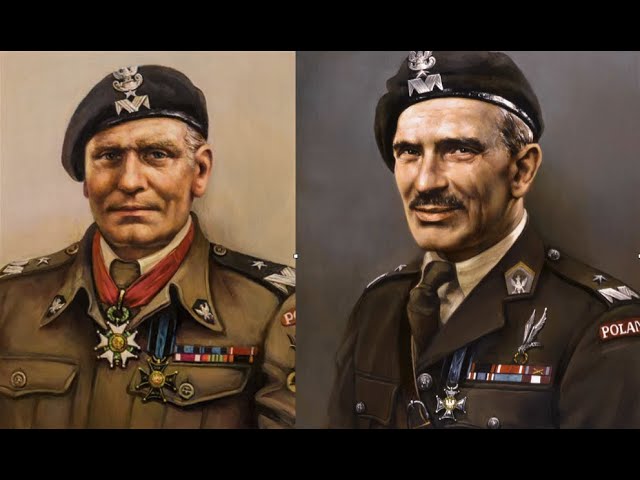 Maczek’s division played a pivotal role in the Battle of Falaise, slamming the door shut on the trapped German Seventh Army and preventing the escape of over a hundred thousand enemy troops. His men fought with a desperate courage, knowing that their homeland had been abandoned to the Soviets, and that their only hope for a free Poland lay in the victory of the Western Allies. They pushed through France and into Belgium, finally liberating the Dutch city of Breda in a hard-fought campaign that miraculously spared the civilian population from the horrors of urban warfare.
The liberation of Breda was a triumph that endeared Maczek to the Dutch people forever, a bond of gratitude that would later prove to be his only lifeline in a sea of British neglect. At the war’s end, Maczek was a triumphant commander, having accepted the surrender of the German naval base at Wilhelmshaven, capturing an entire garrison and over two hundred warships. He was promoted to Major General and given command of the Polish 1st Corps, a position he held until the Polish forces were stood down in 1947.
He was showered with honors from France, Belgium, and the Netherlands, and the British government awarded him the Distinguished Service Order and made him a Companion of the Order of the Bath. Yet this decorated warrior, a man of immense stature and respect, was left to face a future of destitution. The new Soviet-backed communist government in Poland stripped him of his citizenship, rendering him a stateless man, unable to return to a homeland that now considered him an enemy.
The British government, which had so readily accepted his service and his blood, refused to grant him a military pension. The reasons for this denial have never been satisfactorily explained, but the result was devastating. General Maczek, a man who had commanded tens of thousands of soldiers in the most brutal conflict in history, was forced to take a job as a bartender in an Edinburgh hotel just to survive.
For twenty years, he pulled pints, a silent, dignified figure serving drinks to a public that largely had no idea of the titan in their midst.
The indignity was profound. The hotel bar was a regular haunt for Polish veterans, men who had fought under his command. Before ordering their drinks, they would snap to attention and salute their old general, a poignant and heartbreaking ritual that underscored the shameful reality of his situation.
 The only official assistance Maczek received came from the Dutch, who never forgot their liberator. When his chronically ill daughter required specialist treatment in Spain in 1965, the Dutch people launched a national fundraising campaign to help. Yet even then, the Dutch government, fearing diplomatic fallout with communist Poland and embarrassment for Britain, refused to grant him a formal pension.
It was only in 1989, after the fall of communism, that the Polish government finally apologized to Maczek. In 1994, he received Poland’s highest decoration, the Order of the White Eagle. He died in December of that year at the incredible age of 102, having requested to be buried among the Polish soldiers he had led, in the Dutch city of Breda that he had liberated.
His final wish was granted, and a life-size bronze statue of the general now stands in Edinburgh, a belated tribute to a man who was treated with such disgrace in life.
General Maczek’s fate was not an isolated tragedy. His compatriot, Major General Stanisław Sosabowski, suffered a similarly cruel postwar existence. Sosabowski, the brilliant and outspoken commander of the Polish 1st Independent Parachute Brigade, is forever linked with the doomed Operation Market Garden.
A veteran of the Austro-Hungarian Army in World War I and a decorated hero of the 1939 campaign, Sosabowski was a meticulous and demanding commander who made his first parachute jump at the age of 49.
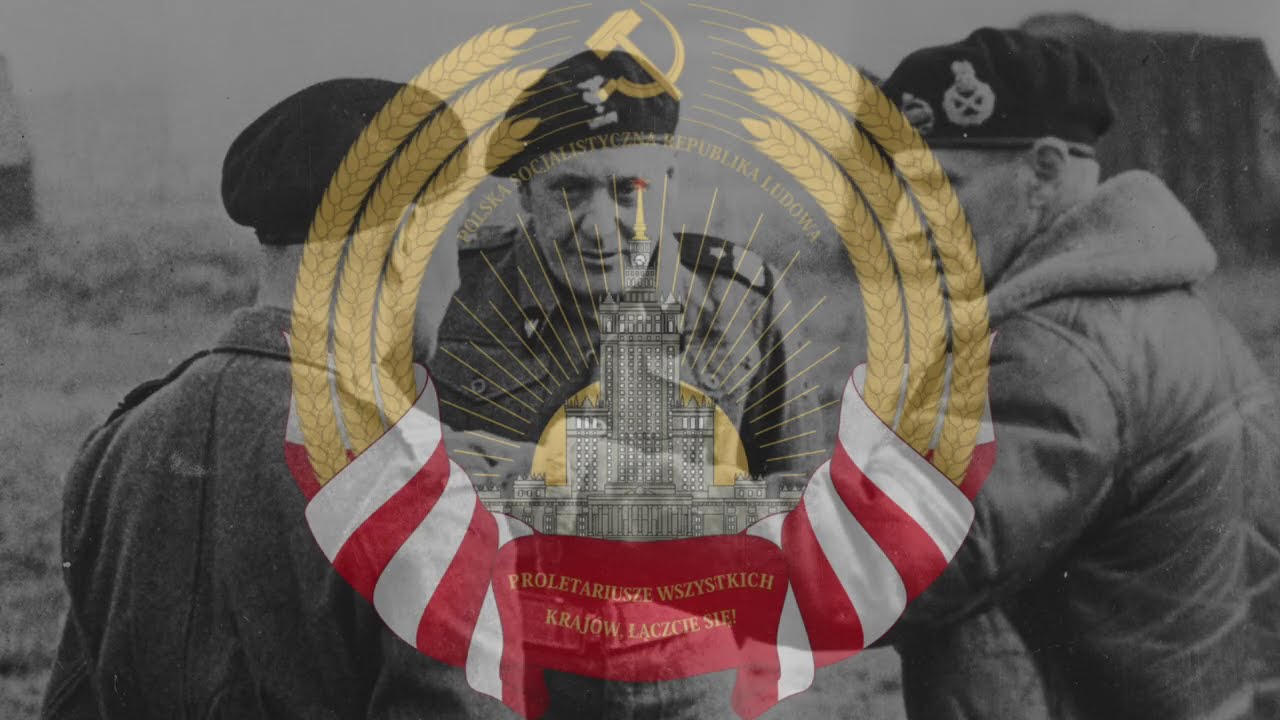 He had grave misgivings about the Market Garden plan from the very beginning, famously criticizing its ambitious scope and the dangerous drop zones proposed for his men. His warnings were ignored, and his fears were tragically realized. His brigade was dropped into the hell of Arnhem, landing on top of German forces and suffering catastrophic casualties, with forty percent of his men becoming casualties in the brutal fighting.
In the aftermath of the failed operation, Field Marshal Bernard Montgomery, seeking a scapegoat for his own strategic blunder, blamed Sosabowski and his Polish troops. The British military establishment leaned on the Polish General Staff, who were effectively forced to remove Sosabowski from his command. He was given a meaningless desk job, awarded a CBE as a consolation prize, and demobilized in July 1948.
The man who had been proven tragically right was cast aside, his reputation smeared to protect the ego of a British field marshal.
Sosabowski, who had managed to get his wife and son out of Poland before the communist takeover, settled in West London. He was forced to find work as a manual laborer in an electrical assembly factory in Acton, a far cry from the command of an elite airborne brigade. He worked there until his death in September 1967, a broken and forgotten hero.
It was only in 1969 that the Polish government allowed his remains to be repatriated to Warsaw, a gesture that did little to erase the decades of neglect.
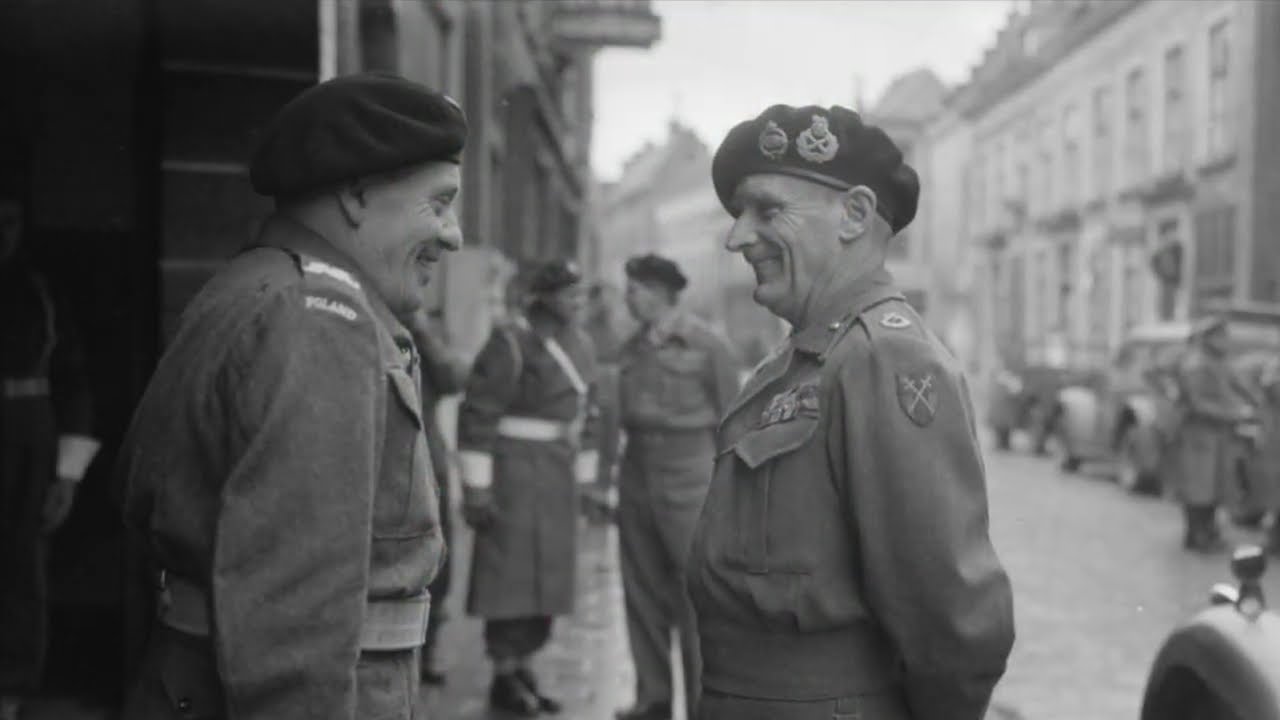 Like Maczek, Sosabowski was only properly recognized after his death. In 2006, Queen Beatrix of the Netherlands awarded him the Bronze Lion, a high gallantry award, a formal acknowledgment of his brigade’s sacrifice. In 2013, a bust of the general was erected in a park in Krakow, Poland.
But these honors came far too late for a man who spent his final years in obscurity and manual labor.
The treatment of these two generals is a stain on the honor of Britain. No British or Canadian general who fought in Northwest Europe was reduced to such a state of penury. The British government’s refusal to provide for Maczek and Sosabowski was a policy of profound ingratitude, a betrayal of men who had given everything for a cause that Britain claimed to champion.
The political expediency of appeasing Stalin and the new communist Poland was placed above the welfare of the very men who had fought and bled for the Allied cause.
The legacy of these men is one of immense bravery, skill, and sacrifice, but it is also a cautionary tale about the fickleness of nations and the ease with which heroes can be discarded. Their stories serve as a powerful reminder that the gratitude of a nation can be fleeting, and that the true cost of war is often paid long after the guns have fallen silent. The memory of General Maczek pulling pints in Edinburgh and General Sosabowski working on an assembly line should forever shame those who allowed such injustice to occur.
Their fight for freedom was not just for Poland, but for all of Europe, and the manner in which they were treated in return remains a bitter and unforgivable chapter in the history of the postwar world.