In a haunting echo of a dark chapter in American history, John Allen Muhammad, the infamous D.C. sniper, was executed in Virginia last night. As the clock struck 9:00 p.m., the man responsible for a chilling spree of random killings that gripped the nation finally faced justice—seven years and twelve days after his capture.
 Muhammad’s actions transformed everyday life into a landscape of fear. For three harrowing weeks in October 2002, a sniper’s bullets claimed the lives of ten innocent people, leaving communities on edge. The terror began on October 2, when a shot fired through a craft store window narrowly missed a cashier, marking the start of a deadly campaign that would leave a lasting scar on the Washington D.C. area.
By the end of the first day, five individuals had been shot, with victims ranging from a landscaper to a woman reading a book. The randomness of the attacks sent shockwaves through the region, prompting officials to heighten security measures and urging citizens to remain vigilant. Montgomery County Police Chief Charles Moose famously placed schools on high alert, while gas stations erected tarps to shield customers from potential gunfire.

As the days unfolded, the sniper’s reign of terror escalated. Victims were shot in broad daylight, engaged in mundane activities—pumping gas, walking to their cars, or simply enjoying a moment of peace. The chilling message left at one scene, reading “Your children are not safe anywhere at any time,” underscored the pervasive fear that gripped the community.
The man behind the rifle, John Allen Muhammad, was born on December 31, 1960, in Baton Rouge, Louisiana. His early life seemed stable, yet cracks began to show during his military career, which included a stint in the Gulf War. After his discharge, Muhammad’s life spiraled, marked by failed businesses and troubled relationships. His second wife, Mildred, filed for a restraining order, citing fears for her safety.
Muhammad’s life took a dark turn when he met Lee Boyd Malvo, a troubled teenager from Jamaica. Muhammad became a father figure to Malvo, but this relationship morphed into a sinister bond of manipulation and control. Reports suggest that Muhammad conditioned Malvo to follow his every command, turning the young boy into an accomplice in a series of murders that would shock the nation.
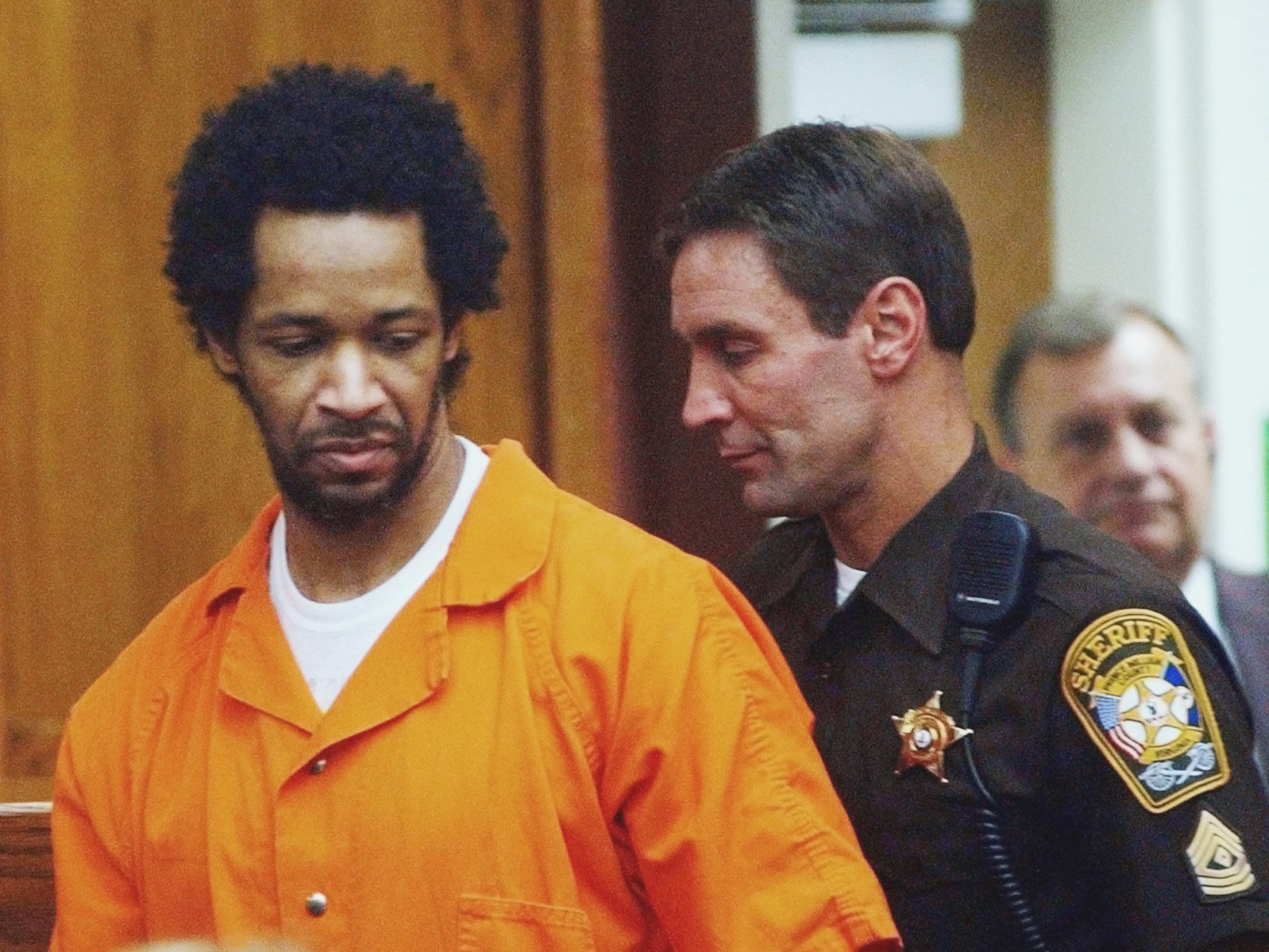
The sniper’s attacks led to the largest manhunt in U.S. history, with law enforcement agencies mobilizing across multiple states. Despite numerous sightings of their vehicle, the killers eluded capture until a tip led authorities to their location on October 24, 2002. Inside their car, investigators uncovered evidence linking them to the killings, including a rifle and a laptop with maps of shooting sites.
The ensuing trials revealed the depth of Muhammad’s depravity. He was convicted on multiple counts of capital murder and terrorism, ultimately receiving the death penalty. His final moments were marked by silence; he offered no last words before being executed. Witnesses noted the eerie timing of his death—pronounced dead at 9:11 p.m., a detail that resonated with many.
As Muhammad’s life came to an end, questions about his motives and the impact of his actions lingered. His partner in crime, Lee Boyd Malvo, remains incarcerated, with his case still unfolding. The story of the D.C. sniper attacks serves as a grim reminder of the fragility of safety in everyday life.
What remains to be seen is how society will continue to grapple with the aftermath of these events and the legacy left behind by both men.


