Resting Is the Biggest Mistake for Joint Pain
I still remember a patient named Robert who walked into my clinic one Monday morning. He was 68 years old, but the way he moved made him look much older. Before he even sat down, he grabbed the armrest tightly and lowered himself into the chair with a painful sigh.
“Doctor,” he said with a tired smile, “I think my body is finally giving up on me.”
I asked him what made him believe that.
He looked at me and replied, “Every morning my knees are stiff. My fingers won’t close properly. My hips hurt when I get out of bed. So I’ve stopped walking as much. I stay home most days because I don’t want to make things worse.”
I nodded because, over the years, I had heard those exact words from hundreds of patients.
Then I told him something he wasn’t expecting.
“Robert,” I said, “the biggest mistake you can make with chronic joint pain is resting too much.”
He stared at me in disbelief.
Ironically, twenty years ago, I would have given him completely different advice. Back then, many of us believed painful joints needed as much rest as possible. We told patients to avoid movement, protect the joint, and wait for the pain to settle down.
Today, I know that advice was wrong.
Modern medicine has completely changed the way we understand aging joints.
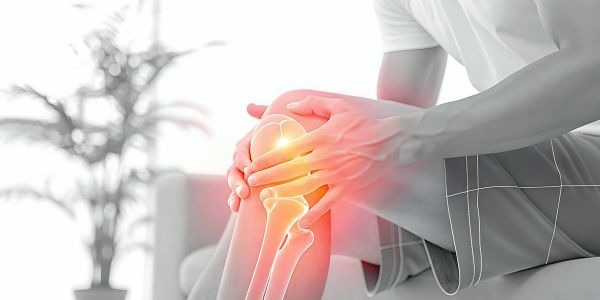
When most people think about cartilage, they imagine something lifeless—almost like the rubber on a car tire that slowly wears out over time. But cartilage isn’t simply dead material. It depends on movement to stay healthy.
Here’s the easiest way I explain it to my patients.
Imagine holding a kitchen sponge under water.
When you squeeze it, the dirty water comes out.
When you release it, fresh water rushes back in.
Now imagine repeating that over and over.
That simple process keeps the sponge clean and hydrated.
Your joint cartilage works in almost exactly the same way.
Every time you stand up, take a step, bend your knee, or open your hand, the cartilage is gently compressed. As the pressure is released, fresh joint fluid flows back inside, bringing oxygen, nutrients, and lubrication.
Without movement, that exchange slows down dramatically.
The cartilage isn’t being protected.
It’s being starved.
That’s why so many people wake up feeling stiff every morning.
During the night, your joints barely move. The lubricating fluid becomes thicker, almost like honey that’s been sitting in a cold pantry. The first few steps after getting out of bed feel uncomfortable because everything needs time to start flowing again.
Have you ever noticed that your joints often feel much better after twenty or thirty minutes of gentle movement?
That’s not your imagination.
It’s your body doing exactly what it was designed to do.
Movement restores circulation inside the joint.
It allows fresh nutrients to reach the cartilage.
It helps your natural lubricant spread evenly across the joint surfaces.
This is one of the reasons I encourage my patients to stop fearing every little ache.
Pain doesn’t always mean damage.
Sometimes it simply means the joint has been inactive for too long.
Of course, if a joint is swollen, hot, or injured after an accident, that’s a different situation and should always be evaluated by a physician.
But for the millions of older adults living with long-term stiffness and osteoarthritis, avoiding movement often creates an endless cycle.
The less you move…
the weaker your muscles become.
The weaker your muscles become…
the less support your joints receive.
Then everyday activities become harder, the pain increases, and you become even less active.
I’ve watched this cycle steal years of independence from people who believed they were protecting themselves.
The good news?
It can be reversed.
And it often begins with something far simpler than most people expect.
A few weeks after Robert started following my advice, he came back for a follow-up visit.
The first thing I noticed wasn’t what he said.
It was how he walked.
He wasn’t rushing, and he certainly wasn’t pain-free, but he no longer reached for the wall every few steps. He sat down without bracing himself, smiled, and said, “Doctor, I don’t think my knees have changed… but somehow, I have.”
That sentence has stayed with me ever since.
Many people believe the pain they feel is determined entirely by what appears on an X-ray. They assume that if the image looks terrible, they’re destined to live with severe pain forever. But after decades of practicing medicine, I’ve learned that the human body is far more complicated than that.
I’ve treated patients whose X-rays showed advanced osteoarthritis, yet they continued hiking, gardening, and playing with their grandchildren with only mild discomfort.
I’ve also met patients whose scans looked almost normal, yet every step they took was painful.
Pain is real, but it isn’t measured by an X-ray alone.
Your muscles, your nervous system, inflammation, sleep quality, stress levels, and even your confidence in moving all influence how your joints feel.
That’s why I always tell my patients that an X-ray shows the past.
Your daily habits shape the future.
So where should you begin?
Not with an intense workout.
Not with expensive exercise equipment.
And certainly not by trying to “push through” severe pain.
I recommend starting with just ten minutes of gentle movement every day.
If your knees are stiff, sit in a sturdy chair and slowly straighten one leg until it’s almost fully extended. Hold it for a second, then lower it again with control. Repeat ten times on each side.
It seems almost too simple.
But every repetition gently compresses and releases the cartilage, allowing fresh joint fluid to circulate while strengthening the muscles that protect the knee.
For stiff fingers, spread your hand as wide as you comfortably can, then slowly close it into a relaxed fist. Open. Close. Repeat.
These tiny joints often respond surprisingly quickly to regular movement.
Many of my patients tell me they can button a shirt or hold a coffee mug more comfortably after only a couple of weeks.
Your shoulders deserve attention too.
Stand beside a table for support, lean forward slightly, and allow one arm to hang freely. Gently swing it back and forth, then in small circles.
There should be no force.
No strain.
Just smooth, relaxed motion.
Finally, don’t forget your hips.
While lying on your back with both knees bent, slowly let one knee fall outward as far as it can without pain, then return to the center. Alternate sides in a slow, controlled rhythm.
You don’t need perfection.
You need consistency.
I often remind my patients that feeding your joints is like watering a plant.
A little every day is far more effective than flooding it once a week.
Of course, movement is only part of the picture.
What you eat and drink matters more than many people realize.
Joint fluid is made mostly of water. If you’re dehydrated, that fluid becomes thicker and less effective at lubricating your joints. That’s one reason I encourage my patients to drink a full glass of water shortly after waking up.
It’s one of the simplest habits you can build.
I also encourage foods that naturally support a healthy inflammatory response—fatty fish rich in omega-3 fatty acids, colorful vegetables packed with vitamin C, walnuts, berries, and spices like turmeric paired with black pepper.
No single food will erase arthritis.
But small choices repeated every day can make a meaningful difference over time.
Just as importantly, try to limit highly processed foods and excess sugar, both of which may contribute to inflammation throughout the body.
Before we finished that appointment, Robert asked me a question I’ll never forget.
“So, Doctor… are you telling me that getting older doesn’t automatically mean getting weaker?”
I smiled.
“No,” I answered.
“I’m telling you that your joints are still listening to what you do every single day.”
Age changes the body.
That’s inevitable.
But growing older doesn’t mean giving up your ability to move.
It doesn’t mean accepting pain without trying to improve it.
And it certainly doesn’t mean spending the rest of your life in a chair because you’re afraid of making things worse.
If there’s one lesson I’ve learned after treating thousands of patients, it’s this:
Your joints were designed to move.
Treat them with patience.
Feed them with gentle movement.
Support them with healthy habits.
And give them time.
You may be surprised by how much they can still do for you.