THE SISTER WHO BUILT THE COMPANY
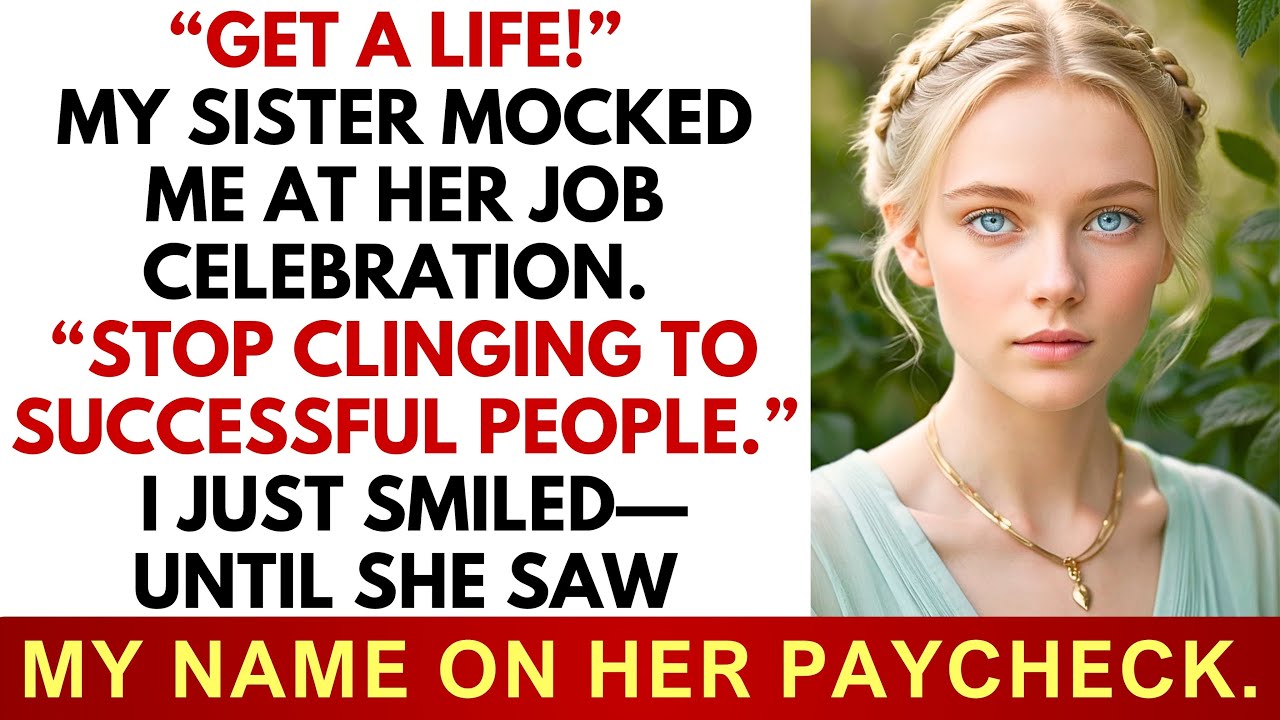
Before you judge my sister too harshly, or before you think I enjoyed watching her confidence fall apart, stay with me until the end. Because the most painful thing about being underestimated is not that people laugh at you. It is that, after years of silence, you start wondering if maybe they were right.
The morning it all began, I was sitting at the far end of a brunch table in a bright little restaurant near Green Lake, stirring cold coffee I had no intention of drinking. My family had been coming there every Sunday for years. Same table. Same predictable conversations. Same invisible place reserved for me.
My older sister, Vivian Hart, sat across from me with sunlight hitting her diamond earrings like a spotlight had been designed just for her. She had always known how to take up space. Even as a child, she entered a room like applause was waiting somewhere behind the walls.
“So, Nora,” she said, dragging my name out with a smile, “are you still doing that little computer thing from your apartment?”
My mother lowered her fork. “Vivian.”
“What?” Vivian laughed. “I’m just asking. I mean, she’s thirty-three. At some point, you need a real career, not just hiding behind a laptop in sweatpants.”
No one laughed. Not even my father. But no one defended me either.
That was how it had always been.
Vivian performed. I absorbed.
She shined. I disappeared.
I looked down at my coffee and smiled faintly. “Something like that.”
Vivian leaned back, pleased with herself. “Well, luckily some of us are making moves. I applied to this tech company downtown. DataVine. Apparently, they’re expanding fast and need someone who understands budgets.”
My hand stopped moving.
DataVine.
For the first time that morning, I looked straight at her.
She didn’t notice.
“They’re supposed to be worth, like, ninety million now,” she continued. “The founder is some guy named Miles Carter. Very mysterious company. People say there’s another founder, but nobody’s ever seen her. Probably just a legal name on paper.”
I pressed my lips together.
A legal name on paper.
That was one way to describe me.
Seven years earlier, Miles and I had built DataVine from a rented storage office with bad lighting and one broken heater. He was the salesman, the charming one, the man who could walk into a room full of investors and make them believe the future had already arrived. I was the architect. I wrote the first predictive engine, designed the financial risk models, built the security framework, and spent three years sleeping beside a humming server rack because one crash could destroy everything.
Miles became the face.
I chose the shadows.
It was not fear. At least, that was what I told myself. I said I hated attention, hated cameras, hated the way people smiled at successful women as if waiting for proof they didn’t deserve it. So I stayed invisible. My legal name appeared on ownership documents, board approvals, and major contracts, but publicly, I was no one.
To my family, I was still quiet Nora, the girl who missed birthdays because of “some coding thing,” the daughter who wore plain sweaters and never had exciting stories.
Vivian lifted her mimosa. “If they’re smart, they’ll hire me.”
My father smiled proudly. “They’d be lucky to have you.”
I looked back into my cold coffee.
And for the first time in years, I almost laughed.
Because Vivian had no idea that her application was already sitting in my private approval queue.
That night, from my apartment overlooking the Seattle skyline, I opened my laptop and logged into the executive system. Rain streaked down the windows, turning the city into a blur of silver lights. My apartment was quiet, almost too quiet, the kind of quiet I had built my whole life around.
The file appeared at the top of the screen.
Vivian Hart — Senior Budget Analyst Candidate.
Her photo looked polished, confident, untouchable. Her resume was not bad. She had experience, even if she had exaggerated parts of it. She knew numbers. She knew presentation. She knew how to make people listen.
I hovered over the decision button.
Miles called before I clicked.
“You saw it?” he asked.
“I saw it.”
“You don’t have to approve her.”
“I know.”
“She was cruel to you.”
I leaned back, staring at Vivian’s smiling headshot. “She was also qualified.”
Miles was silent for a moment. “Nora, this could get messy.”
“Only if she makes it messy.”
“And if she finds out?”
I thought of Vivian at brunch, laughing at my life while unknowingly reaching for a door I had built with my own hands.
“Then maybe she finally learns where the door came from.”
I approved her application.
Vivian started two weeks later.
I did not attend orientation. I rarely came into the office during normal hours. Most employees knew me only as E. Hart, Chief Systems Strategist, the executive who signed off on major budgets and appeared in email threads at strange hours. Some believed I was elderly. Some believed I was Miles’s secret investor. One intern had apparently started a rumor that I was artificial intelligence.
I found that one flattering.
For the first month, I watched Vivian from a distance. Not through anything illegal or strange, just through ordinary executive reports, meeting summaries, and budget memos that crossed my desk. She was good when she focused. Sharp, organized, persuasive. She spotted waste in two marketing campaigns and saved the company nearly $300,000 by renegotiating a vendor contract.
I approved her recommendations without comment.
Then, one Tuesday evening, everything changed.
I was in the server room after hours, checking a deployment issue before a major hospital client went live. The office was mostly empty. Blue lights blinked along the racks. The air smelled faintly metallic, cold and clean.
The door opened behind me.
I turned.
Vivian stood there in a camel coat, holding a folder against her chest. Her face shifted from surprise to suspicion.
“Nora?”
“Vivian.”
“What are you doing here?”
I closed the server panel calmly. “Working.”
She looked at the restricted access sign beside the door. “This area is for senior technical staff.”
“Yes.”
Her eyes narrowed. “Since when are you senior technical staff?”
Before I could answer, Miles stepped into the hallway, phone in hand.
“Nora,” he said, distracted, “the hospital model is still showing latency. Can you sign off after you review the patch?”
He stopped when he saw Vivian.
The silence that followed was small, but sharp enough to cut skin.
Vivian looked from Miles to me. “You know each other?”
Miles, to his credit, recovered fast. “Nora handles high-level system architecture.”
Vivian blinked. “Nora?”
I took the folder from Miles. “I’ll review it tonight.”
Vivian did not speak again. But as I walked past her, I felt her stare burning into the back of my coat.
The next morning, she began digging.
At 9:14, accounting flagged her request for founder-level approval records.
At 10:02, she searched my executive initials.
At 11:37, she opened an archived budget document from DataVine’s second year. My signature sat at the bottom.
Eleanor Hart, Co-Founder and Chief Technical Architect.
At noon, Miles texted me.
She knows something.
I stared at the message, then closed my eyes.
I had always imagined this moment would feel satisfying.
It didn’t.
It felt like standing at the edge of a stage while someone pulled the curtain open before I was ready.
At 3:40 that afternoon, Vivian found me in the private conference room on the tenth floor.
She did not knock.
She walked in holding printed documents, her face pale with anger and disbelief.
“You’re the other founder.”
I looked up from my laptop.
“Yes.”
Her laugh came out thin and humorless. “No. No, that’s not possible.”
“It is.”
“You built this company?”
“With Miles.”
Her eyes flashed. “And you let me sit at that brunch table making a fool of myself?”
I closed my laptop slowly. “You didn’t need my help for that.”
The words landed harder than I intended.
Vivian flinched.
For the first time in my life, I saw her without performance. No smirk. No polished confidence. Just shock, humiliation, and something dangerously close to fear.
“How long were you going to keep this from me?” she asked.
“As long as you kept assuming there was nothing to know.”
She gripped the papers tighter. “So what now? You fire me? Embarrass me? Tell everyone I mocked my own boss?”
“No.”
“Then what do you want?”
That question stayed in the air between us.
What did I want?
Revenge would have been easy. A colder person might have enjoyed it. One email, one boardroom reveal, one public correction, and Vivian’s perfect self-image would have cracked in front of everyone.
But I did not build DataVine to become the kind of person my family had trained me to fear.
“I want you to do your job,” I said. “And I want you to understand something. I didn’t hire you because you’re my sister. I hired you because you were qualified. Don’t make me regret being fair.”
Her mouth parted slightly.
Then her phone buzzed.
She glanced down, and her whole expression changed.
“What is it?” I asked.
She swallowed.
On the screen was a message from our mother.
Nora needs to know the truth before the gala. Your father says we can’t hide it anymore.
Vivian looked up at me.
All the anger had drained from her face.
“What truth?” I asked.
But she didn’t answer.
She just whispered, “You really don’t know, do you?”
PART 2
I had spent my entire life believing my family overlooked me because I was quiet.
That afternoon, standing in the tenth-floor conference room with Vivian’s phone glowing between us, I learned silence had never been the full story.
Vivian sat down as if her legs had stopped working.
“Nora,” she said carefully, “the reason Mom and Dad pushed me forward so much… it wasn’t just favoritism.”
I stared at her. “Then what was it?”
She pressed her hands together. “When we were kids, Grandma Hart left money for both of us. Education accounts. Equal amounts. Yours was supposed to go toward college, housing, whatever you needed.”
My chest tightened.
“I never had an education fund.”
“Yes,” Vivian whispered. “You did.”
The room went still.
Outside the glass wall, employees moved through the office with coffee cups and laptops, living ordinary minutes while mine split open.
“What happened to it?”
Vivian looked down.
“My dance career happened.”
I did not speak.
She continued, voice shaking. “The competitions got expensive. Travel, costumes, private coaching. Mom and Dad thought I could go professional. They said you were smart enough to get scholarships. They said you didn’t need as much help.”
A cold pressure filled my throat.
I remembered being seventeen, filling out financial aid forms alone at the kitchen table while Vivian tried on a sequined costume in the living room. I remembered Dad telling me community college was “practical.” I remembered Mom saying, “You’re independent, Nora. Vivian needs support differently.”
I had believed them.
“Did you know?” I asked.
Vivian’s eyes filled with tears. “Not then. Later. When I was twenty-three. I found old bank statements. I asked Mom, and she said it was already done, and bringing it up would only hurt everyone.”
“Everyone,” I repeated.
Everyone had meant them.
Not me.
I stood and walked to the window. Seattle stretched beneath me, gray and beautiful, the city where I had built an empire from exhaustion because the path that should have helped me had been sold beneath my feet.
Vivian’s voice broke behind me.
“I’m sorry.”
I turned back. “Are you sorry because it happened, or because I found out?”
She didn’t answer fast enough.
That was answer enough.
The DataVine five-year gala was three days away. It was supposed to be my first public appearance as co-founder. Miles had been urging me for months to step forward, to claim my work, to stop letting mystery become another form of hiding.
Now the timing felt cruel.
My family had confirmed they were attending. My parents were suddenly proud. Suddenly excited. Suddenly telling relatives their younger daughter had “always been brilliant,” as if they had been saying it all along.
For three days, I ignored their calls.
On the evening of the gala, I stood backstage in a black dress I had bought and almost returned twice. My hands were cold. Beyond the curtain, hundreds of people filled the glass ballroom near Lake Union. Investors. Employees. Clients. Press.
And somewhere among them, my parents.
Miles stood beside me. “You don’t have to do this tonight.”
“Yes,” I said. “I do.”
He studied my face. “Which version of the speech are you giving?”
I looked at the cards in my hand.
“The honest one.”
The announcer called our names.
Applause rose like thunder.
Miles walked out first, easy and smiling. Then I stepped into the light.
For one terrifying second, I could not breathe.
Every face turned toward me.
Then I saw Vivian near the back of the room. She was standing alone, no champagne in her hand, no bright smile. Just watching.
My parents sat at a front table, stiff with pride and panic.
Miles spoke about growth, innovation, and the future of ethical analytics. Then he turned to me.
The room quieted.
I took the microphone.
“Most of you know me as E. Hart,” I began. “Some of you may have thought I was a rumor. A few of you apparently thought I was an AI system, which I take as a compliment.”
Soft laughter moved through the room.
I smiled, then looked down at my notes.
“I spent most of my life believing that quiet work did not need recognition. And sometimes that is true. The best systems are invisible when they work well. The best foundations are rarely admired. But there is a danger in being invisible too long. People start mistaking your silence for absence.”
My mother lowered her eyes.
Vivian did not move.
“I helped build DataVine because I believed information could reveal patterns people refused to see. Risk patterns. Financial patterns. Human patterns. But the hardest pattern I ever had to recognize was in my own life.”
The room grew completely still.
“I learned that being underestimated can become fuel. But it should never become home.”
I paused, feeling my voice steady.
“So tonight, I’m not stepping forward because I need applause. I’m stepping forward because every quiet builder in this room deserves to know this: you do not have to be loud to be powerful, and you do not have to be seen from the beginning to own what you created.”
The applause came slowly at first, then louder, rising until the floor seemed to tremble beneath me.
I did not look at my parents.
I looked at Vivian.
She was crying.
But this time, it was not the kind of crying that asked for attention. It was quiet. Private. The kind that comes when a person finally sees the damage clearly.
After the gala, my parents cornered me near the terrace.
Mom reached for my hand. I stepped back.
“Nora,” she whispered, “we are so proud of you.”
I almost laughed. Not because it was funny. Because the sentence arrived years too late and dressed itself as if it had always belonged there.
Dad cleared his throat. “About the account… we wanted to tell you.”
“When?” I asked. “After I became successful enough for it not to matter?”
His face reddened.
Mom began to cry. “We made choices we thought were best at the time.”
“For Vivian.”
“For the family.”
“No,” I said softly. “You made choices for the daughter who demanded attention and took from the daughter who didn’t.”
Neither of them answered.
For once, silence belonged to them.
I left before they could apologize again.
Two weeks later, Vivian asked to meet me at the same brunch spot where she had mocked me.
I almost refused.
But curiosity is a strange thing. So is grief.
She was already there when I arrived, sitting at the far end of the table. My old seat.
No makeup. No jewelry except a simple watch. In front of her sat two coffees, one black, one with cream, because she remembered how I drank mine.
That small detail hurt more than I expected.
“I resigned from the sponsorship committee,” she said.
I frowned. “Why?”
“Because I don’t want to build a program about helping overlooked women while pretending I didn’t benefit from overlooking one.”
I sat slowly.
She slid an envelope across the table.
“What is this?”
“My savings. Not all of what was taken from you. Not even close. But it’s a start. I’m setting up monthly payments too.”
I stared at the envelope. “Vivian—”
“No,” she said, voice trembling. “Please let me say this before I lose courage.”
I leaned back.
She took a breath. “I spent years thinking you were small because it made me feel bigger. Mom and Dad clapped for me so loudly that I never noticed what they took from you to keep me on stage. That doesn’t excuse me. It makes it worse because once I knew, I stayed quiet.”
Her eyes met mine.
“You gave me a job when you could have humiliated me. You judged my work fairly when I never judged you fairly once. I don’t deserve that, but I’m grateful for it.”
For a long time, I said nothing.
Outside, rain slid down the restaurant windows. Inside, plates clinked, people laughed, life went on as if my childhood wasn’t sitting in an envelope between us.
Finally, I pushed it gently back toward her.
“I don’t want your savings.”
Her face fell.
“I want something else.”
“Anything.”
“At the next family brunch, when someone makes me small, don’t let silence do the work for them.”
She nodded. “Okay.”
The next Sunday, my uncle made the mistake.
“So, Nora,” he said over waffles, smiling like he was harmless, “now that everyone knows you’re a big deal, should we start calling you boss lady?”
A few people chuckled.
Not cruelly, maybe. But carelessly.
Before I could answer, Vivian set down her fork.
“Actually,” she said, “you can call her what she is. The person who built something none of us understood while we were too busy underestimating her.”
The table froze.
My uncle blinked. “I was joking.”
“I know,” Vivian said. “That’s how we usually hide it.”
My mother looked down. My father shifted in his chair. No one knew what to do with the truth once it arrived in daylight.
I looked at Vivian.
She did not smile, did not perform, did not ask me to rescue her from the awkwardness.
She simply stayed there.
For the first time, she stood beside me without needing a spotlight.
Months passed.
Vivian stayed at DataVine. She worked hard. Quietly, at first. Then with purpose. She helped design a financial mentorship program for first-generation students entering tech. She asked me to review the first proposal, and at the bottom, beneath the budget section, she had written one line.
For every quiet builder who deserved support sooner.
I approved it.
As for me, I stopped hiding.
Not completely. I still loved quiet mornings, clean code, and walking through the city without anyone knowing my name. But I no longer treated invisibility as safety. I spoke at universities. I mentored young engineers. I put my full name on the company website.
Eleanor “Nora” Hart.
Co-Founder.
Chief Technical Architect.
One year after that first brunch, Vivian and I sat together in the same restaurant, side by side this time, not across from each other.
She stirred her coffee slowly and smiled.
“You know,” she said, “you were never a flashlight.”
I raised an eyebrow. “No?”
“No,” she said. “Flashlights help people see in the dark. But you built the whole power grid.”
I laughed before I could stop myself.
And somehow, that laugh felt like forgiveness.
Not the easy kind. Not the kind that erases what happened. But the kind that says the past no longer owns every room inside you.
So tell me, what would you have done in Nora’s place? Would you have exposed Vivian, walked away from the family, or given her one chance to change? Share your thoughts, and follow for more emotional stories where the quietest person in the room may be the one holding the whole world together.
I had spent my entire life believing my family overlooked me because I was quiet.
That afternoon, standing in the tenth-floor conference room with Vivian’s phone glowing between us, I learned silence had never been the full story.
Vivian sat down as if her legs had stopped working.
“Nora,” she said carefully, “the reason Mom and Dad pushed me forward so much… it wasn’t just favoritism.”
I stared at her. “Then what was it?”
She pressed her hands together. “When we were kids, Grandma Hart left money for both of us. Education accounts. Equal amounts. Yours was supposed to go toward college, housing, whatever you needed.”
My chest tightened.
“I never had an education fund.”
“Yes,” Vivian whispered. “You did.”
The room went still.
Outside the glass wall, employees moved through the office with coffee cups and laptops, living ordinary minutes while mine split open.
“What happened to it?”
Vivian looked down.
“My dance career happened.”
I did not speak.
She continued, voice shaking. “The competitions got expensive. Travel, costumes, private coaching. Mom and Dad thought I could go professional. They said you were smart enough to get scholarships. They said you didn’t need as much help.”
A cold pressure filled my throat.
I remembered being seventeen, filling out financial aid forms alone at the kitchen table while Vivian tried on a sequined costume in the living room. I remembered Dad telling me community college was “practical.” I remembered Mom saying, “You’re independent, Nora. Vivian needs support differently.”
I had believed them.
“Did you know?” I asked.
Vivian’s eyes filled with tears. “Not then. Later. When I was twenty-three. I found old bank statements. I asked Mom, and she said it was already done, and bringing it up would only hurt everyone.”
“Everyone,” I repeated.
Everyone had meant them.
Not me.
I stood and walked to the window. Seattle stretched beneath me, gray and beautiful, the city where I had built an empire from exhaustion because the path that should have helped me had been sold beneath my feet.
Vivian’s voice broke behind me.
“I’m sorry.”
I turned back. “Are you sorry because it happened, or because I found out?”
She didn’t answer fast enough.
That was answer enough.
The DataVine five-year gala was three days away. It was supposed to be my first public appearance as co-founder. Miles had been urging me for months to step forward, to claim my work, to stop letting mystery become another form of hiding.
Now the timing felt cruel.
My family had confirmed they were attending. My parents were suddenly proud. Suddenly excited. Suddenly telling relatives their younger daughter had “always been brilliant,” as if they had been saying it all along.
For three days, I ignored their calls.
On the evening of the gala, I stood backstage in a black dress I had bought and almost returned twice. My hands were cold. Beyond the curtain, hundreds of people filled the glass ballroom near Lake Union. Investors. Employees. Clients. Press.
And somewhere among them, my parents.
Miles stood beside me. “You don’t have to do this tonight.”
“Yes,” I said. “I do.”
He studied my face. “Which version of the speech are you giving?”
I looked at the cards in my hand.
“The honest one.”
The announcer called our names.
Applause rose like thunder.
Miles walked out first, easy and smiling. Then I stepped into the light.
For one terrifying second, I could not breathe.
Every face turned toward me.
Then I saw Vivian near the back of the room. She was standing alone, no champagne in her hand, no bright smile. Just watching.
My parents sat at a front table, stiff with pride and panic.
Miles spoke about growth, innovation, and the future of ethical analytics. Then he turned to me.
The room quieted.
I took the microphone.
“Most of you know me as E. Hart,” I began. “Some of you may have thought I was a rumor. A few of you apparently thought I was an AI system, which I take as a compliment.”
Soft laughter moved through the room.
I smiled, then looked down at my notes.
“I spent most of my life believing that quiet work did not need recognition. And sometimes that is true. The best systems are invisible when they work well. The best foundations are rarely admired. But there is a danger in being invisible too long. People start mistaking your silence for absence.”
My mother lowered her eyes.
Vivian did not move.
“I helped build DataVine because I believed information could reveal patterns people refused to see. Risk patterns. Financial patterns. Human patterns. But the hardest pattern I ever had to recognize was in my own life.”
The room grew completely still.
“I learned that being underestimated can become fuel. But it should never become home.”
I paused, feeling my voice steady.
“So tonight, I’m not stepping forward because I need applause. I’m stepping forward because every quiet builder in this room deserves to know this: you do not have to be loud to be powerful, and you do not have to be seen from the beginning to own what you created.”
The applause came slowly at first, then louder, rising until the floor seemed to tremble beneath me.
I did not look at my parents.
I looked at Vivian.
She was crying.
But this time, it was not the kind of crying that asked for attention. It was quiet. Private. The kind that comes when a person finally sees the damage clearly.
After the gala, my parents cornered me near the terrace.
Mom reached for my hand. I stepped back.
“Nora,” she whispered, “we are so proud of you.”
I almost laughed. Not because it was funny. Because the sentence arrived years too late and dressed itself as if it had always belonged there.
Dad cleared his throat. “About the account… we wanted to tell you.”
“When?” I asked. “After I became successful enough for it not to matter?”
His face reddened.
Mom began to cry. “We made choices we thought were best at the time.”
“For Vivian.”
“For the family.”
“No,” I said softly. “You made choices for the daughter who demanded attention and took from the daughter who didn’t.”
Neither of them answered.
For once, silence belonged to them.
I left before they could apologize again.
Two weeks later, Vivian asked to meet me at the same brunch spot where she had mocked me.
I almost refused.
But curiosity is a strange thing. So is grief.
She was already there when I arrived, sitting at the far end of the table. My old seat.
No makeup. No jewelry except a simple watch. In front of her sat two coffees, one black, one with cream, because she remembered how I drank mine.
That small detail hurt more than I expected.
“I resigned from the sponsorship committee,” she said.
I frowned. “Why?”
“Because I don’t want to build a program about helping overlooked women while pretending I didn’t benefit from overlooking one.”
I sat slowly.
She slid an envelope across the table.
“What is this?”
“My savings. Not all of what was taken from you. Not even close. But it’s a start. I’m setting up monthly payments too.”
I stared at the envelope. “Vivian—”
“No,” she said, voice trembling. “Please let me say this before I lose courage.”
I leaned back.
She took a breath. “I spent years thinking you were small because it made me feel bigger. Mom and Dad clapped for me so loudly that I never noticed what they took from you to keep me on stage. That doesn’t excuse me. It makes it worse because once I knew, I stayed quiet.”
Her eyes met mine.
“You gave me a job when you could have humiliated me. You judged my work fairly when I never judged you fairly once. I don’t deserve that, but I’m grateful for it.”
For a long time, I said nothing.
Outside, rain slid down the restaurant windows. Inside, plates clinked, people laughed, life went on as if my childhood wasn’t sitting in an envelope between us.
Finally, I pushed it gently back toward her.
“I don’t want your savings.”
Her face fell.
“I want something else.”
“Anything.”
“At the next family brunch, when someone makes me small, don’t let silence do the work for them.”
She nodded. “Okay.”
The next Sunday, my uncle made the mistake.
“So, Nora,” he said over waffles, smiling like he was harmless, “now that everyone knows you’re a big deal, should we start calling you boss lady?”
A few people chuckled.
Not cruelly, maybe. But carelessly.
Before I could answer, Vivian set down her fork.
“Actually,” she said, “you can call her what she is. The person who built something none of us understood while we were too busy underestimating her.”
The table froze.
My uncle blinked. “I was joking.”
“I know,” Vivian said. “That’s how we usually hide it.”
My mother looked down. My father shifted in his chair. No one knew what to do with the truth once it arrived in daylight.
I looked at Vivian.
She did not smile, did not perform, did not ask me to rescue her from the awkwardness.
She simply stayed there.
For the first time, she stood beside me without needing a spotlight.
Months passed.
Vivian stayed at DataVine. She worked hard. Quietly, at first. Then with purpose. She helped design a financial mentorship program for first-generation students entering tech. She asked me to review the first proposal, and at the bottom, beneath the budget section, she had written one line.
For every quiet builder who deserved support sooner.
I approved it.
As for me, I stopped hiding.
Not completely. I still loved quiet mornings, clean code, and walking through the city without anyone knowing my name. But I no longer treated invisibility as safety. I spoke at universities. I mentored young engineers. I put my full name on the company website.
Eleanor “Nora” Hart.
Co-Founder.
Chief Technical Architect.
One year after that first brunch, Vivian and I sat together in the same restaurant, side by side this time, not across from each other.
She stirred her coffee slowly and smiled.
“You know,” she said, “you were never a flashlight.”
I raised an eyebrow. “No?”
“No,” she said. “Flashlights help people see in the dark. But you built the whole power grid.”
I laughed before I could stop myself.
And somehow, that laugh felt like forgiveness.
Not the easy kind. Not the kind that erases what happened. But the kind that says the past no longer owns every room inside you.
So tell me, what would you have done in Nora’s place? Would you have exposed Vivian, walked away from the family, or given her one chance to change? Share your thoughts, and follow for more emotional stories where the quietest person in the room may be the one holding the whole world together.