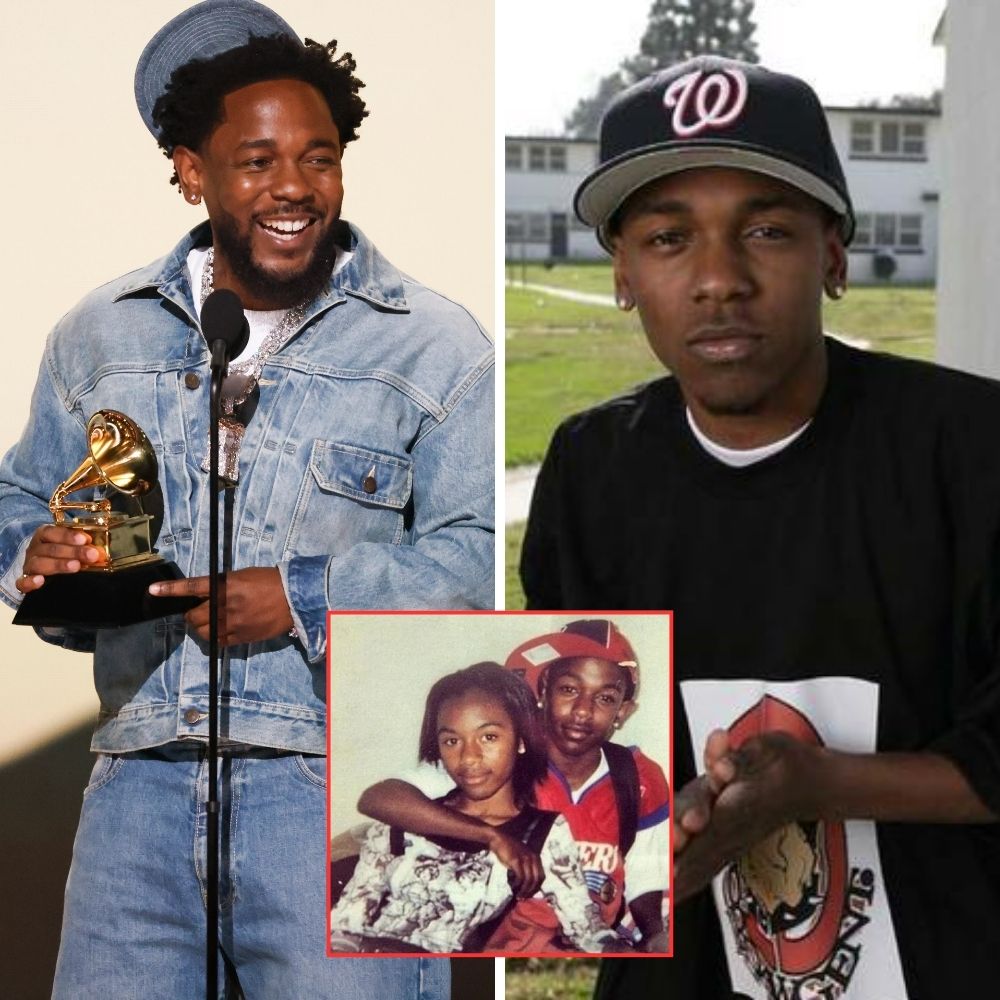
He Saw a Man Shot Dead Right Outside His Apartment Door at Age 5 — Now He’s a Pulitzer Prize Winner Who Healed Millions: The Powerful True Story of Kendrick Lamar

Born Kendrick Lamar Duckworth on June 17, 1987, in Compton, California — one of America’s most dangerous cities during the peak of the crack epidemic and deadly gang wars — Kendrick grew up surrounded by poverty, violence, and uncertainty. His parents, Kenny Duckworth and Paula Oliver, had fled gang life in Chicago with almost nothing, hoping for a better future in California. Instead, they ended up in Section 8 housing on West 137th Street, relying on welfare, food stamps, and whatever jobs they could find.
Life was unstable. There were periods of homelessness, hunger, and constant fear. Kendrick’s mother worked as a hairdresser and at McDonald’s, while his father took shifts at KFC. As a young boy, Kendrick carried the weight of his environment. At just five years old, he stood outside his apartment and watched a drug dealer get gunned down in cold blood right in front of him. The image of blood on the pavement never left him. As he grew older, he lost friends to gang shootings, witnessed families torn apart by the Bloods vs. Crips rivalry, and saw the daily cycle of police brutality and street temptations.
Yet in the middle of all that pain and chaos, music became his sanctuary and his voice.

From K.Dot to Cultural Icon
Kendrick started writing rhymes as a quiet, observant kid. Under the name K.Dot, he released early mixtapes that showed raw talent and deep storytelling. He signed with Top Dawg Entertainment (TDE) and later formed the supergroup Black Hippy with Ab-Soul, Jay Rock, and Schoolboy Q.
His major breakthrough came in 2012 with the album good kid, m.A.A.d city — a cinematic, concept-driven masterpiece that told the true story of his Compton upbringing. It captured the fear, guilt, temptation, and search for identity with unmatched honesty. The album became a modern classic.
Then came To Pimp a Butterfly (2015) — a revolutionary jazz-soaked, funk-filled project that tackled Black identity, systemic racism, self-love, depression, and healing. It wasn’t just an album; it was a cultural movement. President Barack Obama named one of its tracks his favorite song of the year.
In 2018, Kendrick made history with DAMN. — winning the Pulitzer Prize for Music, becoming the first non-classical, non-jazz artist ever to receive the award. The Pulitzer board praised his “virtuosic song collection” and ability to capture “the complexity of modern African-American life.”

Beyond the Music
Kendrick has headlined the Super Bowl halftime show, won multiple Grammy Awards (holding several records for a rapper), and used his platform to spark real conversations about mental health, faith, generational trauma, survivor’s guilt, and personal responsibility. His 2022 album Mr. Morale & the Big Steppers was an unflinching, deeply personal look at his own therapy sessions, vulnerabilities, and growth as a man.
Despite global fame, Kendrick has stayed deeply rooted in Compton. He continues to support his community and shows that true success doesn’t mean forgetting where you came from.
The Real Message
Kendrick Lamar’s journey is one of the most powerful in modern hip-hop. From Section 8 housing in Compton, witnessing murder at age 5, and growing up surrounded by death and despair — to becoming a Pulitzer Prize-winning artist whose music has healed and inspired millions.
He has said:
“I can’t change the world until I change myself first.”
His story proves that your environment does not have to define your destiny. Pain, when turned into honest art and purpose, can become a light for others. Kendrick didn’t just escape the streets — he carried Compton with him and used it to create something beautiful that transcends music and touches the soul.
From a scared little boy watching violence outside his window to a global icon standing on the biggest stages in the world, Kendrick Lamar shows us that true greatness comes from honesty, vulnerability, courage, and the willingness to face your scars.
He turned trauma into triumph and gave a voice to the voiceless.