Paul McCartney Finally Admitted the Truth About George Harrison — The Beatles’ Hidden Rivalry, Betrayal, and the Friendship That Survived Everything
For decades, the world has celebrated The Beatles as the greatest band in music history. Their songs changed popular culture forever, their melodies became timeless, and their name became synonymous with creativity and innovation. But behind the fame, behind the screaming crowds, and behind the image of four young men changing the world, there was another story — one filled with tension, jealousy, emotional wounds, and a friendship that was tested for decades.
Paul McCartney and George Harrison were not just bandmates.
They were childhood friends.
They were like brothers.
But they were also two creative forces struggling to find their place inside the same legendary band.
Their relationship began with admiration and loyalty, but as The Beatles grew bigger, the balance between them started to change. Paul became the group’s driving creative force, while George struggled with feeling ignored and underestimated. The friendship that began on the streets of Liverpool would eventually face years of silence, frustration, and unresolved pain.
Yet when George Harrison’s life came to an end, Paul was left with something far more powerful than regret.
He was left with the realization that despite every argument, every disagreement, and every moment of distance, George had always been family.
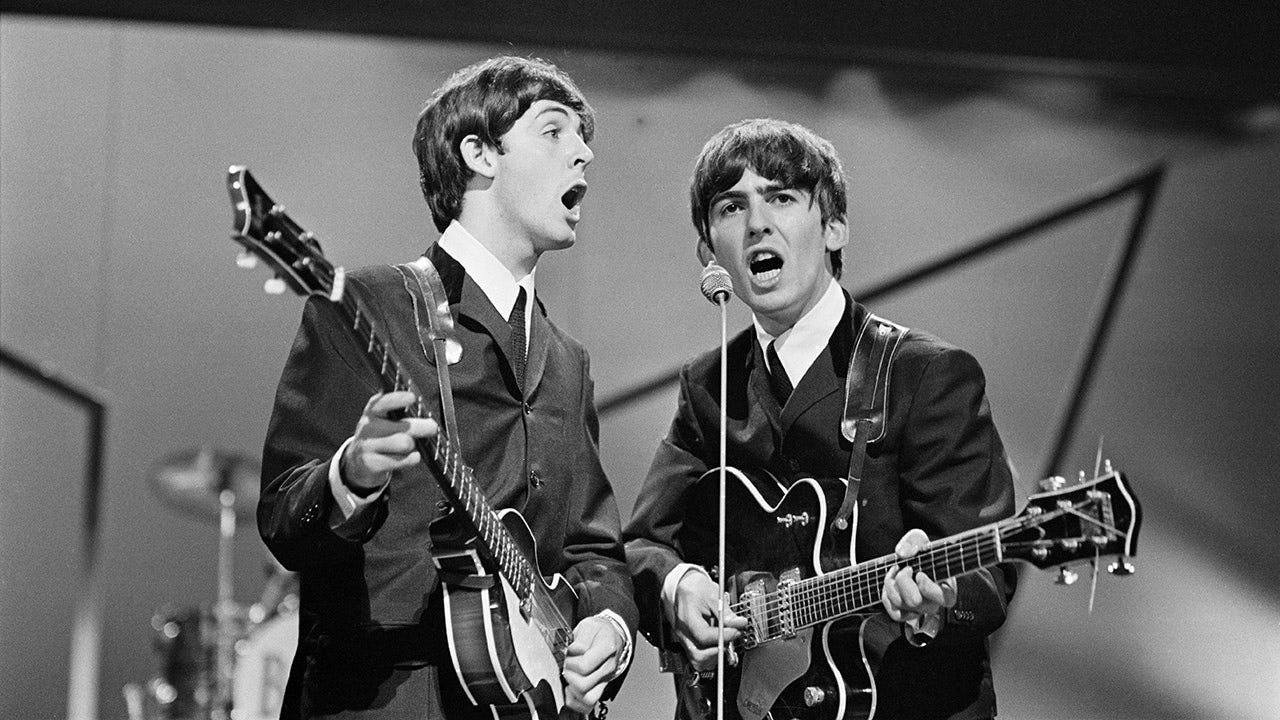
Long before Beatlemania took over the world, Paul McCartney and George Harrison were just two teenagers trying to escape the pressures of ordinary life.
Their friendship began in Liverpool during the 1950s when both attended the Liverpool Institute High School for Boys. Paul was slightly older and already had a reputation as a talented and confident young musician. George was younger, quieter, and often felt uncomfortable in the strict school environment.
Years later, George would describe his school experience bluntly.
“It was the worst time of my life.”
The classroom was not where George felt alive.
Music was.
Their friendship grew during long bus rides through Liverpool. Away from teachers, uniforms, and expectations, the two boys discovered they shared the same obsession: rock and roll.
Paul carried his guitar, and George immediately noticed.
The conversations quickly moved away from school and toward music.
They talked about Elvis Presley, Little Richard, Buddy Holly, and the new sounds coming from America. For George, music was more than entertainment. It was an escape.
He would spend hours drawing guitars in his notebooks and practicing until his fingers hurt.
Paul came from a musical family. His father, Jim McCartney, had played in jazz bands and introduced him to music from an early age. Paul quickly recognized something special in George.
The younger boy was not just interested.
He was committed.
George wanted this more than anything.
By 1957, Paul had joined John Lennon’s band, The Quarrymen. When they needed another guitarist, Paul immediately thought of George.
But John Lennon was not convinced.
George was younger.
He looked too young.
Lennon reportedly believed he was just a kid who might not fit with the older musicians.
But George had something that changed everything.
Talent.
One evening on the upper deck of a Liverpool bus, George performed a flawless version of the instrumental “Raunchy” for John Lennon.
After hearing him play, Lennon could not deny it.
George Harrison was in.
And with that decision, the foundation of The Beatles was complete.
At first, Paul was not just George’s bandmate.
He was almost a mentor.
George looked up to Paul because Paul had confidence, experience, and a natural ability to lead. For George, joining the group meant finally finding somewhere he belonged.
But success changed everything.
When The Beatles exploded worldwide in the early 1960s, the four boys from Liverpool became the biggest musicians on the planet.
And fame brought pressure.
Paul increasingly became the person pushing the band forward. He was constantly experimenting, arranging songs, and demanding perfection in the studio.
For Paul, that dedication was part of what made The Beatles great.
For George, it became frustrating.
The problem was simple:
George was no longer just the young guitarist following Paul’s ideas.
He had become a songwriter himself.
But the world still viewed The Beatles as Lennon and McCartney’s band.
And George felt trapped in their shadow.
The tension became impossible to ignore during the recording of Sgt. Pepper’s Lonely Hearts Club Band in 1967.
The album was largely driven by Paul’s creative vision.
It became one of the most influential records ever made.
But George struggled to find his own space.
His song “Within You Without You” reflected his growing interest in Indian philosophy and spirituality. It was deeply personal, but it existed separately from the rest of the album.
To Paul, it was another song on a legendary record.
To George, it represented something much deeper.
It was his identity.
His voice.
His attempt to show that he was more than just the guitarist in the background.
The differences between Paul and George became even clearer during The Beatles’ famous trip to India in 1968.
George had become deeply interested in meditation and spirituality. He saw it as something that could transform life.
Paul, however, was less convinced.
According to accounts from the period, Paul would joke with George, trying to lighten the seriousness of the situation.
“Calm down, Georgie boy,” Paul would say.
But George did not see it as a joke.
For him, this was important.
He believed The Beatles were chasing fame, money, and success while ignoring something more meaningful.
Their priorities were changing.
And so were they.
By 1969, the relationship between Paul and George reached a breaking point.
During the recording of Let It Be, cameras captured the tension between the musicians.
Paul often directed the sessions, giving suggestions about how songs should sound.
George, after years of feeling controlled, finally pushed back.
At one point, frustrated by Paul’s instructions, George reportedly responded:
“I’ll play whatever you want me to play, or I won’t play at all if you don’t want me to. Whatever it is that will please you, I’ll do it.”
The words revealed years of frustration.
George was not just angry about one rehearsal.
He was angry about feeling invisible.
Behind the scenes, he had been writing powerful songs for years.
“Something.”
“Here Comes the Sun.”
“All Things Must Pass.”
But many of his compositions were pushed aside because Lennon and McCartney dominated the group’s songwriting.
Then, on January 10, 1969, George finally reached his limit.
He walked away.
For a moment, The Beatles were falling apart.
The younger guitarist who had once been grateful just to be included was now refusing to accept being treated as secondary.
George later explained that staying in that environment had become unhealthy.
He eventually returned, but the damage had already been done.
The friendship had changed forever.
Then came the moment that finally proved George Harrison was no longer in anyone’s shadow.
During the recording of Abbey Road, George delivered two songs that became among The Beatles’ greatest achievements.
“Here Comes the Sun.”
And “Something.”
Suddenly, the world saw what George had always known.
He was not just a guitarist.
He was a songwriter.
Frank Sinatra would later call “Something” one of the greatest love songs ever written.
Even John Lennon praised it as one of the strongest songs on the album.
For George, it was validation.
After years of being overlooked, he finally received the recognition he deserved.
But by then, The Beatles were already breaking apart.
The band officially ended in 1970.
And the two childhood friends went their separate ways.
After The Beatles, both men built successful solo careers.
George released All Things Must Pass, an album that shocked the world with its emotional depth and songwriting power.
Paul created Wings and continued achieving commercial success.
But the old wounds remained.
In interviews, George was honest about his frustrations.
He admitted that Paul could be overpowering.
He even suggested that while he could imagine working with John Lennon again, working with Paul would have been more difficult.
Those words hurt.
Because beneath the criticism was something deeper.
Disappointment.
George did not hate Paul.
He wanted recognition from someone who had once been like a brother.
And Paul slowly began realizing something important.
He had underestimated George.
In the 1990s, time began healing some of the old wounds.
In 1994, Paul, George, and Ringo Starr reunited to work on unfinished John Lennon recordings.
For fans, it felt impossible.
The Beatles were together again.
But even then, the old personalities remained.
George insisted that producer Jeff Lynne should guide the project.
He understood the danger of putting the three former Beatles together without someone controlling the process.
Paul later admitted George had been right.
“He said we needed a producer,” Paul recalled.
“Otherwise, it could get dangerous. Egos flying around.”
Even after decades apart, George understood them better than anyone.
They created “Free as a Bird” and “Real Love,” songs that connected the past with the present.
The reunion was not perfect.
There were disagreements.
Different opinions.
Different visions.
But they made it work.
Because underneath everything, there was still history.
When George Harrison’s health began declining, the relationship between the two men changed completely.
George faced cancer and serious health problems in his final years.
The old arguments suddenly seemed meaningless.
The rivalry disappeared.
Only friendship remained.
Paul visited George during his final months.
And one of their last meetings became one of Paul’s most emotional memories.
They sat together and talked.
They laughed about old stories.
They joked like they were teenagers again.
For a moment, they were not famous musicians.
They were just two boys from Liverpool who had once dreamed about changing the world.
Paul later remembered holding George’s hand.
Something that would have seemed impossible during their younger years.
“He was my little baby brother,” Paul said.
The man he once argued with.
The man who challenged him.
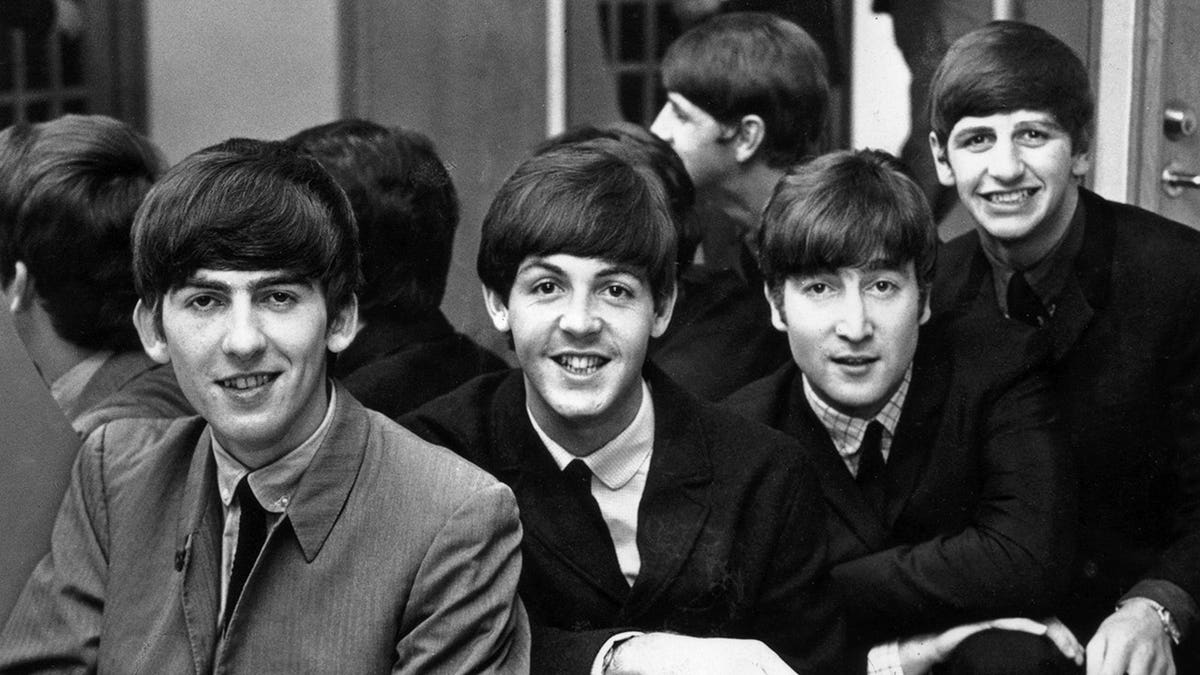
The man he sometimes failed to understand.
Was still family.
George Harrison passed away on November 29, 2001, at the age of 58.
The world lost one of its greatest musicians.
But Paul lost something more personal.
He lost a friend who had been part of his life since childhood.
After George’s death, Paul spoke emotionally about him.
“He was a lovely man and a very brave man,” Paul said.
“He’ll be remembered as a great man in his own right.”
Years later, Paul continued honoring George’s memory.
Near his home stands a tree that George once gave him.
Whenever Paul passes it, he quietly says:
“Hi, George.”
To Paul, it is more than a tree.
It is a reminder.
A reminder that friendships can survive anger.
That love can survive distance.
And that some bonds never truly disappear.
The story of Paul McCartney and George Harrison was never just about music.
It was about two boys from Liverpool who became legends, lost their way, hurt each other, and eventually understood what mattered most.
They were rivals.
They were collaborators.
They were brothers.
And even after everything, they remained what they had always been:
Family.